

How to Unlock YouTube Shorts Monetization and Start Earning
Why YouTube Shorts Monetization Eligibility Matters More Than Most Creators Realize
YouTube Shorts monetization eligibility determines whether — and how much — you get paid for your short-form content in 2026. Here is a quick breakdown of what you need to qualify:
YouTube Shorts Monetization Eligibility at a Glance (2026)
| Tier | Subscribers | Views / Watch Hours | What You Unlock |
|---|---|---|---|
| Tier 1 (Early Access) | 500 | 3M Shorts views in 90 days or 3,000 watch hours in 12 months | Fan funding (Super Thanks, Memberships) |
| Tier 2 (Full YPP) | 1,000 | 10M Shorts views in 90 days or 4,000 watch hours in 12 months | Ad revenue sharing + fan funding |
A few things to know upfront:
- Shorts watch time does not count toward the 4,000 watch hour requirement — that path is for long-form videos only.
- Once approved, creators receive 45% of the Shorts ad revenue pool (versus 55% for long-form videos).
- A Short with 1 million views typically earns between $30 and $100 — so ad revenue alone is rarely a full income.
- You must manually enable the Shorts Monetization Module inside YouTube Studio after YPP approval.
The numbers can feel discouraging at first. One well-known creator channel published a Short that hit 468,500 views and earned just $16.61. That is roughly $0.10 per 1,000 views — and that was after a significant improvement from earlier rates.
Shorts ad revenue is low by design. The real opportunity is using Shorts as a growth engine that feeds bigger income streams.
I’m Samir ElKamouny, an entrepreneur and marketing strategist who has helped scale businesses by turning audience growth into real revenue — including navigating the evolving landscape of YouTube Shorts monetization eligibility to build systems that go far beyond ad income. In this guide, I’ll walk you through exactly how eligibility works, what traps to avoid, and how to stack revenue streams so your Shorts actually pay off.
Youtube shorts monetization eligibility terms to remember:
YouTube Shorts Monetization Eligibility: Requirements and Paths in 2026
To start earning directly from YouTube, you must gain admission to the YouTube Partner Program (YPP). YouTube offers two distinct entry paths depending on your primary content format.
Think of this as choosing between a sprint and a marathon. The long-form path relies on accumulating 4,000 valid public watch hours over a rolling 12-month period. The Shorts path, designed specifically for rapid-fire vertical content, bypasses watch hours entirely. Instead, it requires you to hit a specific view threshold within a strict, rolling 90-day window.
Crucially, these paths do not mix. If you spend months racking up millions of views on your Shorts, none of those watch hours will count toward the 4,000-hour requirement for long-form monetization. If you are primarily a Shorts creator, you must focus entirely on the 90-day view threshold.
Beyond views and subscribers, your channel must meet fundamental compliance standards. This includes setting up two-step verification on your Google account, linking an active AdSense account, and ensuring you have no active Community Guidelines strikes.
Tier 1 vs. Tier 2: Navigating YouTube Shorts Monetization Eligibility
YouTube’s tiered YPP system allows smaller channels to start earning through fan funding before they are eligible for ad revenue sharing.
| Feature / Requirement | Tier 1 (Early Access) | Tier 2 (Full YPP) |
|---|---|---|
| Subscribers Required | 500 | 1,000 |
| Shorts Views (90 Days) | 3 Million | 10 Million |
| Alternative Watch Hours | 3,000 hours | 4,000 hours |
| Ad Revenue Sharing | No | Yes |
| Fan Funding (Super Thanks, Memberships) | Yes | Yes |
| YouTube Shopping Integration | Yes | Yes |
Tier 1 acts as an early-access bridge. If you have 500 dedicated subscribers and can generate 3 million views in 90 days, you can begin building direct-support relationships with your audience. However, you will not receive a single cent from the ads running between your videos until you cross the Tier 2 threshold.
To understand the core rules that govern these tiers, check out the YouTube Shorts monetization policies – Google Help. If you are eager to speed up your growth and cross these thresholds, read our guide on how to Stop Scrolling and Start Earning with YouTube Shorts Monetization.
How the Shorts Ad Revenue Sharing Model Works
The way you make money from Shorts is fundamentally different from traditional YouTube videos. On long-form videos, an ad plays directly on your video, and you keep 55% of that specific ad’s revenue. Because Shorts are viewed in an endless vertical feed, ads run between videos, meaning no single creator can claim ownership of a specific ad impression.
To solve this, YouTube uses a pooled revenue model:
- Pooling: All ad revenue generated from the Shorts Feed is pooled together monthly.
- Creator Pool Allocation: YouTube determines how much of that pool belongs to creators. A portion of the total money is used to pay for music licensing. The remaining funds make up the “Creator Pool.”
- Distribution: The Creator Pool is distributed to monetizing creators based on their share of total views. If your eligible Shorts represent 1% of the total views in your region, you receive 1% of the Creator Pool.
- The 45% Split: From your allocated share of the Creator Pool, you keep 45%, and YouTube keeps 55%.
This structure means your RPM (revenue per 1,000 views) is highly dependent on platform-wide variables, including music licensing costs and regional advertiser demand. For a deeper look at this payment structure, read our breakdown of YouTube Shorts Revenue Share or explore the YouTube Shorts Monetization: Requirements & Pay (2026) – Shopify Hong Kong SAR details.
Eligible vs. Ineligible Views: Protecting Your YouTube Shorts Monetization Eligibility
Not all views are created equal. YouTube’s automated systems filter out low-quality and non-original views to protect advertisers, directly affecting your youtube shorts monetization eligibility.
To ensure your views count toward your milestones and payouts, avoid these common traps:
- Reused Content: Compilations of TV shows, movie clips, or other creators’ videos with minimal editing or commentary are ineligible.
- Low-Effort AI Content: Mass-produced, automated slideshows or generic text-to-speech videos over stock footage are routinely flagged.
- Artificial Traffic: Buying views or using bots to loop your videos will result in those views being discarded—and can lead to channel termination.
- Watermarked Reposts: Reuploading videos containing watermarks from other short-form platforms (like TikTok or Instagram Reels) will disqualify those views from monetization.
For an honest look at the realities of short-form payouts and how to keep your channel compliant, read The Short Truth about Making Big Bank on YouTube Shorts.
Step-by-Step: How to Apply and Enable Monetization
Once you meet the criteria, you must take manual action to start earning.
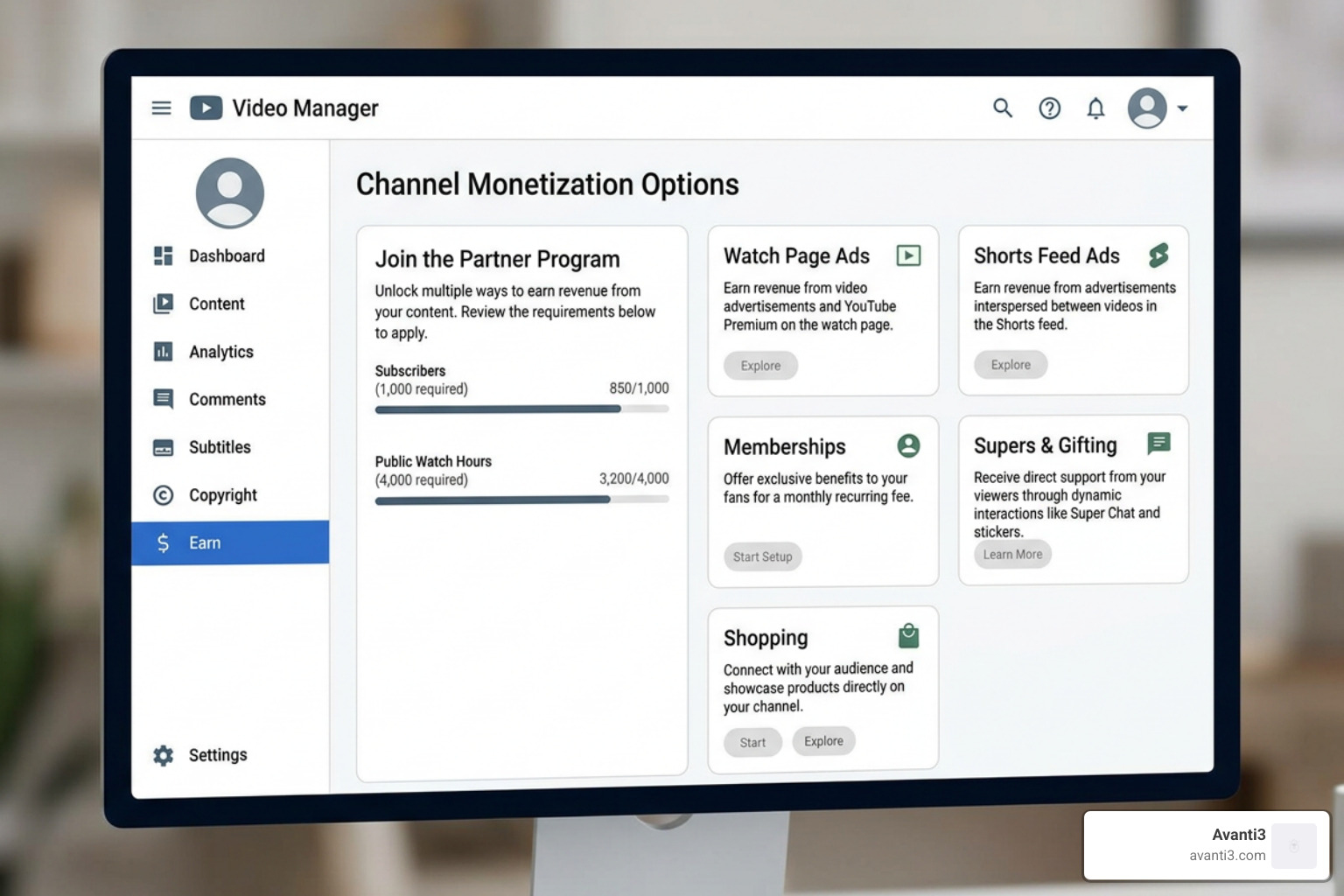
Follow these steps to submit your application and activate your earnings:
- Check Status: Open the YouTube Studio app or desktop site, and click on the Earn tab to monitor your progress toward Tier 1 or Tier 2.
- Apply: Once the thresholds are met, click Apply Now.
- Review Terms: Read and accept the YouTube Partner Program base terms.
- Link AdSense: Connect an existing Google AdSense account or set up a new one to receive your monthly payouts.
- Wait for Approval: YouTube will review your channel to ensure compliance with all policies. This process typically takes 1 to 4 weeks.
- Activate the Module: Once accepted, you must navigate back to the Earn tab and manually accept the Shorts Monetization Module. If you skip this step, you will not earn ad revenue from your Shorts Feed views.
For a comprehensive walkthrough of the setup process, refer to our guide on how to Get Paid for YouTube Shorts.
The Music Licensing Factor: How Copyrighted Tracks Affect Your Pay
One of the most unique aspects of Shorts is the ability to use commercial music. However, using these tracks directly impacts your revenue.
When you use licensed music from YouTube’s official audio library, the revenue allocation for that specific video is split:
- No Music: 100% of the revenue generated by your Short’s views goes into the Creator Pool (of which you get 45%).
- One Track: The revenue is split 50/50. Half goes to the music publishers, and half goes into the Creator Pool.
- Two Tracks: The revenue is split 66/33. Two-thirds goes to music publishers, and one-third goes into the Creator Pool.
If you want to maximize your ad earnings, your best bet is to use original audio, royalty-free tracks, or voiceovers. To understand how these splits affect your monthly payments, read our analysis of YouTube Shorts Ad Revenue.
Maximizing Your Earnings Beyond Ad Revenue
Relying solely on Shorts ad revenue is a losing battle for most creators. Because the typical RPM sits between $0.03 and $0.10, even a channel pulling in 5 million views a month might only make $150 to $500 in ad revenue.
To build a sustainable business, you must treat Shorts as a discovery tool—the wide top of your marketing funnel—and stack alternative revenue streams on top of it.
Stacking Revenue Streams: Building a Sustainable Creator Business
The most successful creators use short-form content to capture attention, then redirect that attention to high-margin monetization methods.

By diversifying your income, you protect yourself from algorithm shifts and low ad rates:
- Brand Deals & Sponsorships: Brands pay a premium for targeted reach. A dedicated product integration in a Short can yield thousands of dollars, far outpacing platform ad revenue.
- Affiliate Marketing: Placing high-converting affiliate links in your pinned comments or channel bio allows you to earn commissions on products your audience trusts.
- Digital Products & Merch: Selling courses, e-books, templates, or physical apparel lets you retain the majority of your earnings.
- Fan Funding: Encourage your most loyal viewers to support you via Channel Memberships or Super Thanks.
- The Long-Form Funnel: Use Shorts as trailers or teasers to drive traffic to your long-form videos, where CPMs are 10x to 100x higher.
For creators looking to take complete control of their business, we at Avanti3 integrate Web3 technologies like NFTs, blockchain, AR/VR, and AI to empower creators and brands with customizable engagement tools and fintech solutions. By offering unique digital experiences, rewards systems, and community-building opportunities, we help you set a new standard in digital engagement and fan monetization.
Ready to transition from basic ad revenue to true audience ownership? Explore how to scale your business with our Avanti3 Web3 Creator Platforms.