

Stop Scrolling and Start Earning with YouTube Shorts Monetization
Why Most Creators Get YouTube Shorts Monetization Wrong
Monetization on YouTube Shorts works very differently from long-form video — and most creators don’t realize this until they check their first payout.
Here’s a quick breakdown of how it works in 2026:
| What You Need to Know | The Fast Answer |
|---|---|
| Who can earn ad revenue? | YouTube Partner Program members who accept the Shorts Monetization Module |
| Subscriber requirement | 1,000 subscribers + 10 million Shorts views in 90 days |
| Early access (fan funding only) | 500 subscribers + 3 million Shorts views in 90 days |
| How revenue is calculated | Pooled ad revenue split — you earn 45% of your share |
| Typical RPM | $0.03 to $0.10 per 1,000 views |
| 1 million views earns roughly | $30 to $100 |
| Does licensed music reduce earnings? | Yes — significantly |
| Do Shorts views count toward 4,000 watch hours? | No — Shorts have their own 10M view threshold |
The platform pulls in 70 billion views every single day, and the average Short runs just 33 seconds. That’s a massive, fast-moving audience. But the old YouTube Shorts Fund that rewarded creators directly? It ended in 2023. What replaced it is a pooled ad revenue model that pays far less per view than most creators expect.
That gap between expectation and reality is exactly what this guide is here to close.
I’m Samir ElKamouny — entrepreneur, marketing strategist, and someone who has spent years helping creators and brands unlock real revenue from platforms like YouTube, including navigating the nuances of monetization on YouTube Shorts. In the sections ahead, I’ll walk you through everything from eligibility requirements and revenue mechanics to building income streams that go well beyond ad revenue alone.
Explore more about monetization on youtube shorts:
Mastering Monetization on YouTube Shorts: Requirements and Revenue Mechanics
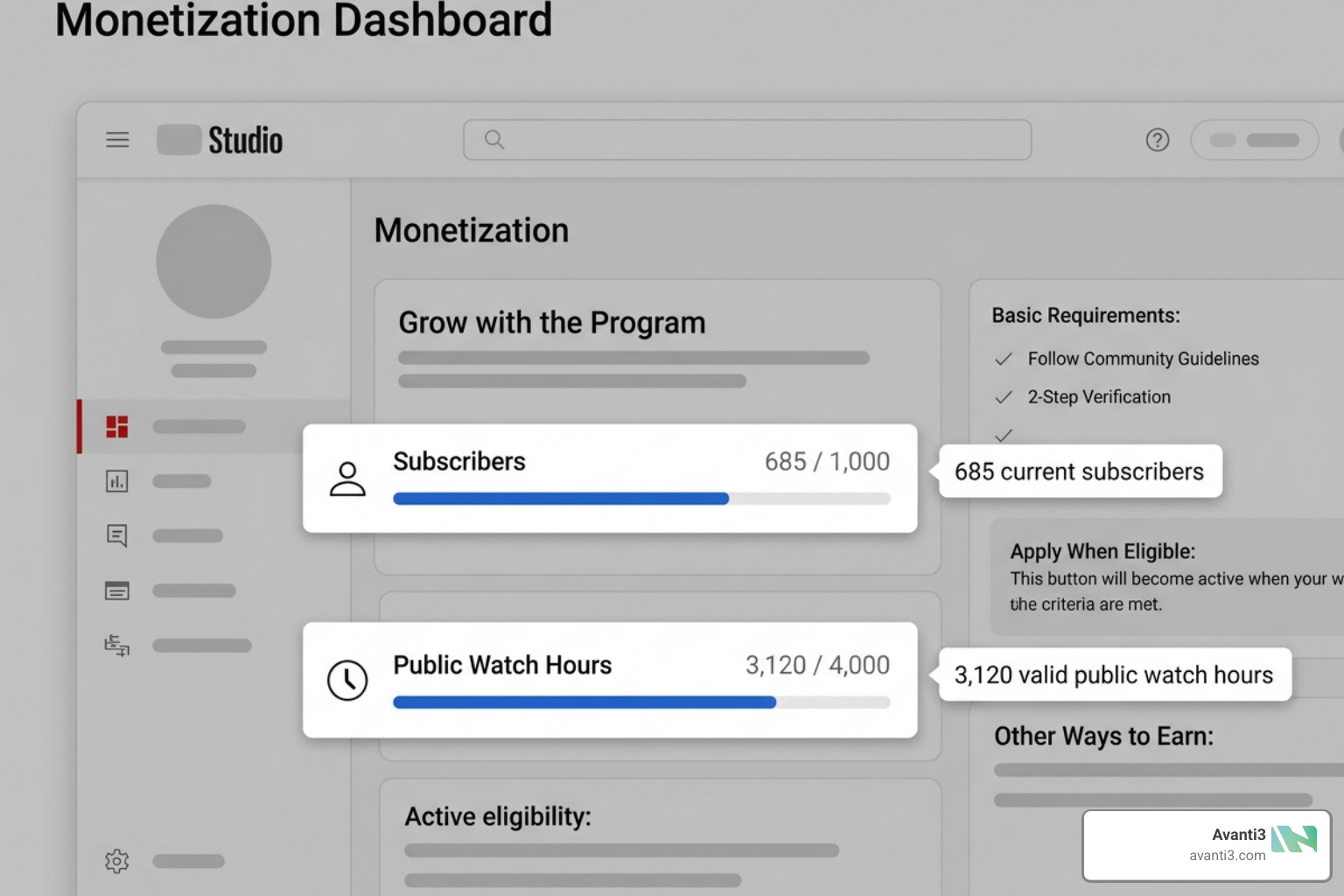
To truly understand how to make money from short-form content, we must first look at the official framework YouTube has built. Unlike the early days when YouTube simply handed out arbitrary bonuses, today’s system is highly structured, governed by strict YouTube Shorts monetization policies – YouTube Help.
By accepting the Shorts Monetization Module within the YouTube Partner Program (YPP), we gain access to YouTube Shorts Ad Revenue. However, this revenue is not calculated on an individual video basis. Instead, it relies on a collective system designed to handle the rapid-scrolling nature of the Shorts feed.
YPP Eligibility and the Rules for Monetization on YouTube Shorts
To get our hands on ad revenue, we have to unlock the gates of the YouTube Partner Program. YouTube offers two main pathways for creators depending on their content style:
- The Shorts Pathway (Full Monetization): We need at least 1,000 subscribers and 10 million valid public Shorts views within a rolling 90-day window.
- The Long-Form Pathway: We need 1,000 subscribers and 4,000 public watch hours on long-form videos within the past 12 months.
It is a common trap to assume that watching Shorts will build up those 4,000 watch hours. Let’s clear this up once and for all: Shorts watch time does not count toward the 4,000-hour requirement. If you want to unlock ad revenue strictly through vertical scrolls, you must hit that 10-million-view threshold.
For smaller channels, there is also an Early Access Tier. With 500 subscribers and 3 million public Shorts views in 90 days, we can unlock fan-funding features like Super Thanks, Channel Memberships, and Super Chats. While this tier doesn’t pay out ad revenue, it is a fantastic way to start building community support early on. For a deeper look at qualifying, check out the YouTube Shorts Monetization Requirements 2026 & How to Earn guide and learn how to officially Get Paid for YouTube Shorts.
How the Pooled Revenue Model and Music Licensing Work
Once we are eligible, how does the money actually flow?
Unlike long-form videos where an ad plays directly on your video, Shorts ads run between videos in the feed. Because of this, YouTube pools all the ad revenue generated from the Shorts feed.
Here is how the money is distributed:
- The Creator Pool: YouTube aggregates the ad revenue and allocates a portion to the global “Creator Pool” based on total views.
- The 45% Split: From the Creator Pool, we receive 45% of the revenue allocated to our channel based on our share of total views. YouTube keeps the remaining 55% to cover platform costs.
- The Music Factor: This is where many creators lose money without realizing it. If we use copyrighted music from YouTube’s library, the revenue allocated to our Short is split to cover music licensing.
- If we use one music track, the revenue is split 50/50 between the Creator Pool and the music publishers.
- If we use two music tracks, the split becomes 66/33 (two-thirds to music publishers, one-third to the Creator Pool).
- If we use original audio, 100% of the allocated revenue stays in the Creator Pool, maximizing our payout.
Additionally, we receive a proportional share of YouTube Premium revenue based on how many Premium subscribers watch our content. To understand these complex calculations, read more about the YouTube Shorts Revenue Share mechanics.
Realistic RPM: What YouTube Shorts Actually Pay in 2026
Let’s talk real numbers. What is the actual Revenue Per Mille (RPM)—the amount we earn per 1,000 views—in 2026?
On average, YouTube Shorts RPM ranges between $0.03 and $0.10. This means that if our video gets 1 million views, we can realistically expect to make between $30 and $100 from AdSense.
However, this rate fluctuates wildly based on two primary factors:
- Niche: Advertisers pay premium rates to appear on content related to finance, technology, or business. Entertainment, comedy, and gaming niches sit on the lower end of the spectrum.
- Audience Location: Views from Tier-1 countries (like the United States, United Kingdom, and Canada) generate significantly higher RPMs than views from Tier-3 regions due to advertiser demand.
To see how these numbers stack up, we can look at the latest benchmarks from YouTube Shorts Pay Per View 2026: $0.03-$0.50/1K and The Ultimate Guide to YouTube Shorts Earn Potential and Payouts.
| Niche | Typical Shorts RPM (per 1,000 views) | Typical Long-Form RPM (per 1,000 views) |
|---|---|---|
| Finance & Investing | $0.08 – $0.35 | $8.00 – $20.00 |
| Technology & Reviews | $0.05 – $0.20 | $5.00 – $14.00 |
| Education & DIY | $0.04 – $0.12 | $4.00 – $10.00 |
| Gaming & Comedy | $0.01 – $0.04 | $1.00 – $4.00 |
Beyond the Ad Pool: Building a Sustainable Creator Business

Looking at the table above, the reality is clear: relying solely on ad revenue from monetization on YouTube Shorts is a tough way to make a living. To build a highly profitable business, we have to look past AdSense limitations and focus on revenue diversification. For a candid look at this reality, explore The Short Truth About Making Big Bank on YouTube Shorts.
Maximizing Your Earnings with a Hybrid Content Strategy
The most successful creators in 2026 do not view Shorts as their primary paycheck; they view them as a top-of-funnel growth engine.
Because the algorithm distributes short-form videos to massive, cold audiences, Shorts are incredibly efficient at bringing in new subscribers—generating an average of 16.9 subscribers per 10,000 views. By strategically placing links in our Shorts’ descriptions or pinned comments, we can funnel those viewers directly to our high-RPM long-form videos, newsletters, or digital products.
This hybrid approach allows us to get the best of both worlds: massive reach from vertical scrolls and high-paying ad rates from traditional videos. Learn more about the math behind this strategy in How Much YouTube Shorts Pay Per Million Views in 2026 and optimize your overall YouTube Shorts Revenue.
Can You Leverage AI for Monetization on YouTube Shorts?
With the rise of automated editing and scripting tools, many creators ask: Can we monetize AI-generated Shorts?
The answer is yes, but with strict caveats. YouTube’s policy explicitly targets “repetitive” and “reused” content. If we simply upload low-effort AI compilations, static image slideshows, or cloned voiceovers with no creative input, our channel will likely be flagged as ineligible.
To successfully monetize AI-assisted content, we must add transformative value. This means writing original scripts, inserting unique commentary, adding creative visual edits, and using AI as a productivity partner rather than a lazy replacement for human creativity. Keeping our content original is key to maintaining a steady Income from YouTube Shorts.
Diversifying Income Streams and the Future of Fan Engagement
To truly maximize our earnings, we must build a robust monetization stack around our audience. This includes:
- Brand Deals & Sponsorships: Even with low RPMs, a Short that consistently gets hundreds of thousands of views is highly valuable to brands looking for quick product integrations.
- Affiliate Marketing: Recommending tools, gear, or clothing in our description can generate passive monthly commissions.
- Fan Funding: Utilizing YouTube’s native Super Thanks, Channel Memberships, and digital merchandise shelves.
As we look toward the future of the creator economy, the ways we connect with and monetize our audience are evolving. At Avanti3, we are pioneering the integration of Web3 technologies—including NFTs, blockchain-backed loyalty programs, AR/VR digital assets, and customized AI engagement tools—to help creators build direct-to-fan revenue streams. By establishing decentralized rewards systems, we help you step away from relying entirely on unpredictable platform algorithms.
By combining modern video strategies with cutting-edge digital experiences, we can turn casual viewers into active, supporting communities. To discover how to build your own sustainable creator ecosystem, check out The Secret Sauce for YouTube Creator Monetization Success and explore our specialized Avanti3 Web3 Creator Platforms.