

Augmented Reality in Social Media: Making Your Marketing Pop Off the Screen
Why Augmented Reality in Social Media Marketing Is the Biggest Shift in Digital Engagement Right Now
Augmented reality in social media marketing is the use of real-time digital overlays — filters, 3D objects, virtual try-ons, and interactive effects — layered onto a user’s camera view on platforms like Snapchat, TikTok, and Instagram to create immersive brand experiences that drive engagement, conversions, and loyalty.
Here is a quick snapshot of what you need to know:
- What it is: AR adds digital elements to the real world through a smartphone camera. It does not replace reality like VR does — it enriches it.
- Why it works: AR ads perform 28% better than standard video ads, and brands using AR see up to a 94% increase in sales conversions.
- Where it lives: Snapchat, TikTok, and Instagram are the primary platforms, with WebAR expanding access directly through mobile browsers — no app download needed.
- Who it reaches: Over 200 million Snapchat users engage with AR every single day.
- The bottom line: 57% of consumers are more likely to buy from a brand offering AR experiences, and 64% say it increases their loyalty to that brand.
Think back to the moment Pokémon Go launched and millions of people were suddenly pointing their phones at parks and sidewalks to catch digital creatures. That was AR breaking into mainstream culture — and brands have been racing to harness that same magnetic pull ever since.
We are now in 2026, and the technology has matured far beyond novelty filters. AR is a conversion tool, a storytelling medium, and a direct answer to the ad fatigue that affects roughly three in four social media users today.
I’m Samir ElKamouny, an entrepreneur and marketing expert who has spent years scaling businesses through innovative digital strategies, including augmented reality in social media marketing. In this guide, I’ll walk you through everything you need to evaluate, build, and profit from AR as a core part of your social media strategy.
Basic augmented reality in social media marketing glossary:
The Strategic Power of Augmented Reality in Social Media Marketing
In the attention economy of 2026, static images and standard videos often struggle to stop the scroll. We’ve found that AR provides a psychological shift from passive viewing to “feeling” the product. It’s the difference between looking at a photo of a burger and seeing a 3D, steaming version of it on your own kitchen table.
The following table breaks down the fundamental differences between AR and VR in the advertising space:
| Feature | Augmented Reality (AR) | Virtual Reality (VR) |
|---|---|---|
| Environment | Real-world surroundings with digital overlays | Fully immersive, computer-generated world |
| Hardware | Smartphones, tablets, or AR glasses | Dedicated VR headsets (Oculus, etc.) |
| Accessibility | High — anyone with a phone can use it | Medium to Low — requires specific gear |
| Marketing Goal | Engagement, try-ons, and local foot traffic | Deep storytelling and “transportive” experiences |
The stats speak for themselves: AR ads perform 28% better than standard video ads. Why? Because AR invites the user to participate. When a customer interacts with an AR experience, they aren’t just an observer; they are the protagonist. This creates a sense of “visual validation,” where the buyer journey is shortened because the uncertainty of “will this look good on me?” or “will this fit in my room?” is removed instantly.
By providing this immediate satisfaction, we see a massive 94% increase in sales conversions for marketing that features AR integration. This technology acts as a powerful Ad Fatigue Solution by replacing repetitive ads with interactive play. For more on how these tools drive results, check out our Ar Marketing Solutions.
Driving eCommerce with Augmented Reality in Social Media Marketing Try-Ons
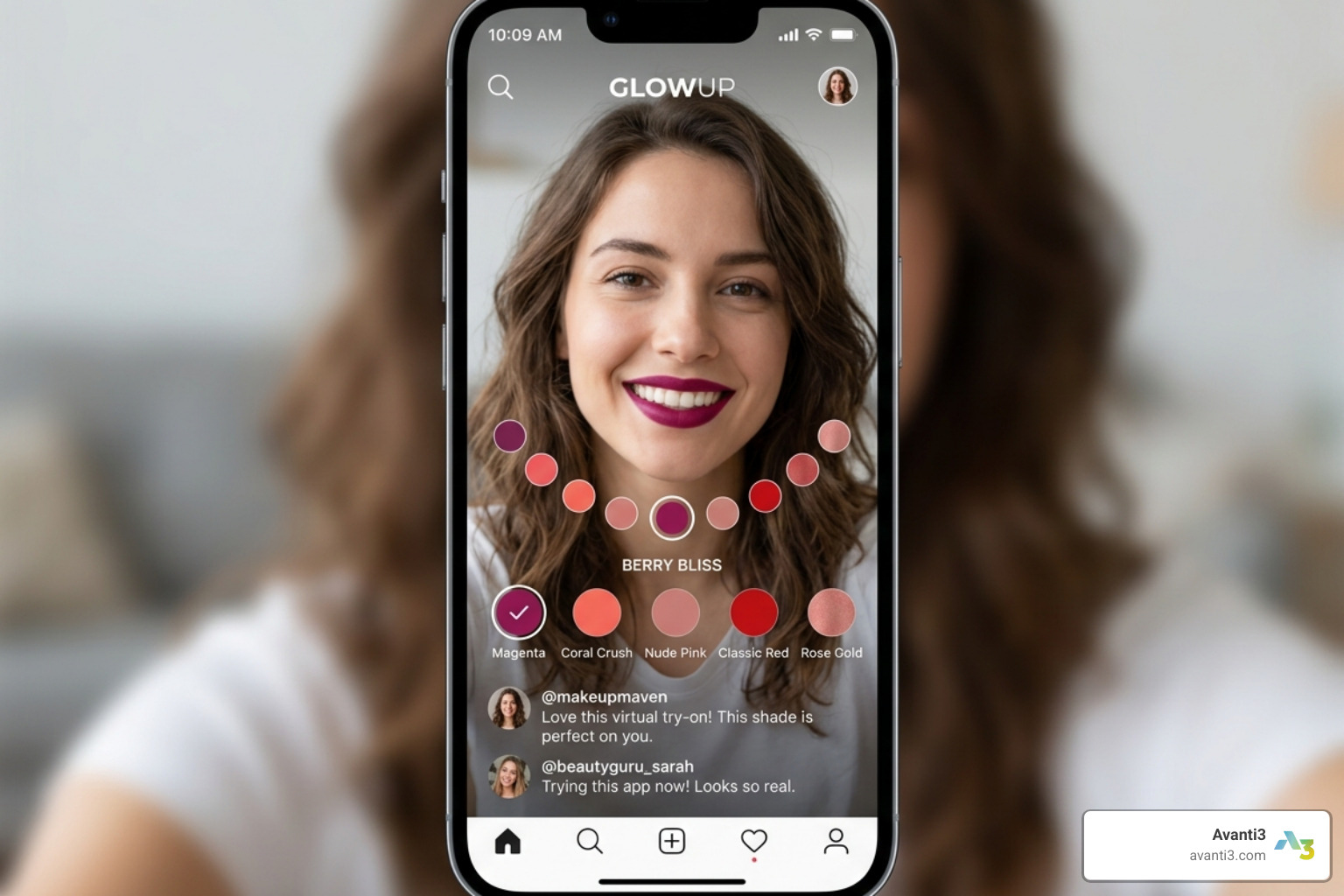
One of the most practical applications of augmented reality in social media marketing is the virtual try-on. For industries like beauty, fashion, and home decor, AR has become the “magic mirror” of the digital age.
Take Sephora or Nike as examples. By allowing users to virtually apply lipstick shades or see how a pair of sneakers looks on their actual feet, these brands have bridged the gap between the physical and digital shopping experience. This isn’t just about “cool” tech; it’s about the bottom line. Retailers using AR/VR for marketing have reported a 25% decrease in product returns. When a customer can see the realistic texture and fit of a product before hitting “buy,” they are much more likely to be satisfied with their purchase.
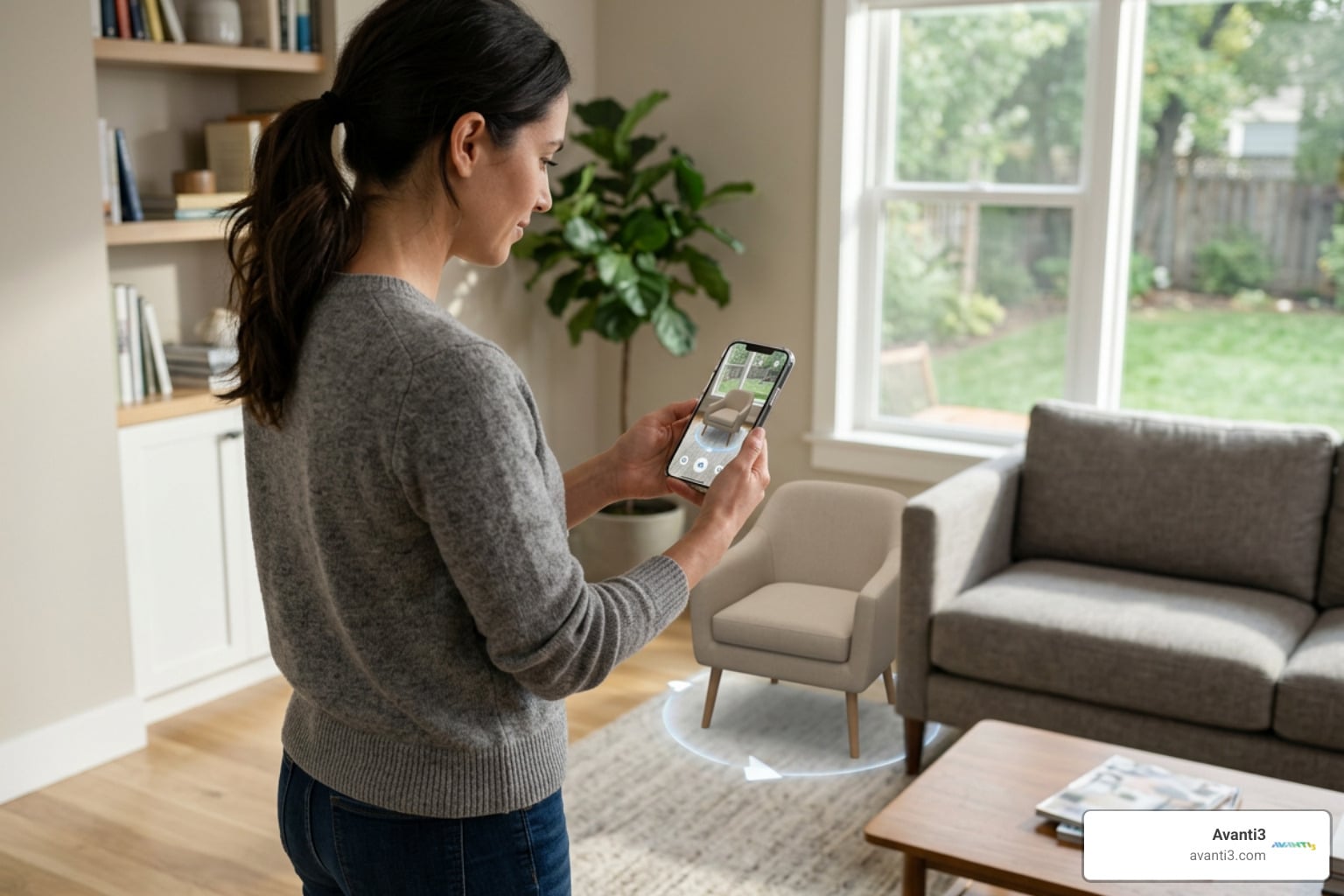
IKEA Place revolutionized home shopping by letting users place true-to-scale 3D models of furniture in their living rooms. This eliminates the “measuring tape anxiety” and builds immense consumer confidence. As noted in this guide on AR Applications and Benefits, these 3D modeling tools remove purchase friction, turning a hesitant browser into a confident buyer.
Boosting Engagement Through Branded Filters and Lenses

If virtual try-ons are about utility, branded filters and lenses are about virality and emotion. We’ve seen brands like Taco Bell and Pepsi create cultural moments through simple, interactive lenses. Taco Bell’s Cinco de Mayo Snapchat lens, which turned users’ faces into tacos, was viewed a staggering 224 million times.
This is the power of User-Generated Content (UGC). When a user applies your filter, they are essentially becoming a brand ambassador to their entire friend list. This creates “episodic memory,” which is far stronger than the “recognition memory” triggered by a static ad. People remember how they felt while playing with your filter, and they are 40% more likely to share an AR experience than any other type of brand post.
To learn how to craft these experiences yourself, explore our resources on Ar Content Creation and Ar Powered Brand Engagement. Whether it’s a face-tracking filter that responds to a wink or a gamified lens where users catch falling products, the goal is to create a shareable, interactive story.
Tools and Platforms for Augmented Reality in Social Media Marketing Development
Developing AR used to require a team of specialized engineers, but the landscape has democratized. Today, each major platform has its own dedicated creation suite:
- Spark AR Studio (Meta): The go-to for Instagram and Facebook. Even though Meta has shifted its custom filter strategy recently, it remains a powerhouse for branded effects.
- Lens Studio (Snapchat): Arguably the most advanced tool for face tracking and world-mapping. Snapchat is still the king of driving local foot traffic through AR.
- Effect House (TikTok): The fastest-growing platform for viral AR effects, perfect for tapping into Gen Z and Millennial audiences.
- 8th Wall & WebAR: This is the future of “frictionless” AR. It allows users to trigger experiences via QR codes or mobile browsers without needing to download a specific app.
With the rollout of 5G, these experiences are becoming faster and more complex. We can now host virtual concerts or high-fidelity 3D product demos without the lag that used to plague mobile AR. By using Immersive Marketing Solutions That Dont Suck, brands can reach customers across every device and platform.
Future-Proofing Your Brand with Immersive Technology
Measuring Success and ROI
You can’t manage what you can’t measure. When evaluating augmented reality in social media marketing, we look beyond simple “likes.” Key performance indicators (KPIs) for AR include:
- Dwell Time: How long is the user interacting with the AR effect? Average AR engagement lasts between 20 to 75 seconds — significantly higher than the 2 seconds spent on a static post.
- Share Rate: How many users are sending your AR experience to their friends?
- Conversion Tracking: Using unique promo codes unlocked within the AR experience to track direct sales.
- Sentiment Analysis: Monitoring comments and UGC to see how the AR interaction has improved brand favorability.
By focusing on Beyond The Screen Ars Impact On Customer Engagement, we can see that businesses incorporating AR see a 20% increase in customer satisfaction.
Integrating AR with Web3 and AI
The real magic happens when we combine AR with Artificial Intelligence and Web3 technologies. Imagine an AR mirror that doesn’t just show you a dress, but an AI assistant that analyzes your style and suggests the perfect accessories to match. This hyper-personalization is already here.
In the Web3 space, AR allows for the “physicalization” of digital assets. You could own a limited-edition NFT sneaker and use AR to “wear” it in your social media photos or videos. This creates a new level of digital ownership and community building.
AI-powered AR can also analyze user behavior in real-time to adjust the experience. If a user is lingering on a specific 3D model, the AI can trigger a personalized discount code to nudge them toward a purchase. For a deeper dive into this synergy, read How Ai And Ar Are Getting Personal With Your Customers.
Conclusion: Scaling Your Strategy with Avanti3
The transition from passive scrolling to active interaction is the most significant psychological shift in digital marketing history. Augmented reality in social media marketing is no longer a “nice-to-have” gimmick; it is a strategic necessity for brands that want to remain relevant in 2026.
At Avanti3, we specialize in bridging the gap between cutting-edge technology and real-world business results. We integrate Web3 technologies like NFTs, blockchain, and AR/VR with AI to empower creators and brands. Whether you’re looking to build a virtual try-on experience, a viral branded lens, or a full-scale metaverse activation, we provide the customizable engagement tools and fintech solutions you need to win.
We don’t just create content; we build immersive brand activations that win hearts and minds. By focusing on fan monetization and community-building, we help you set a new standard in digital engagement.
Ready to transform your brand? Explore our Augmented Reality Marketing solutions and let’s make your marketing pop off the screen together.