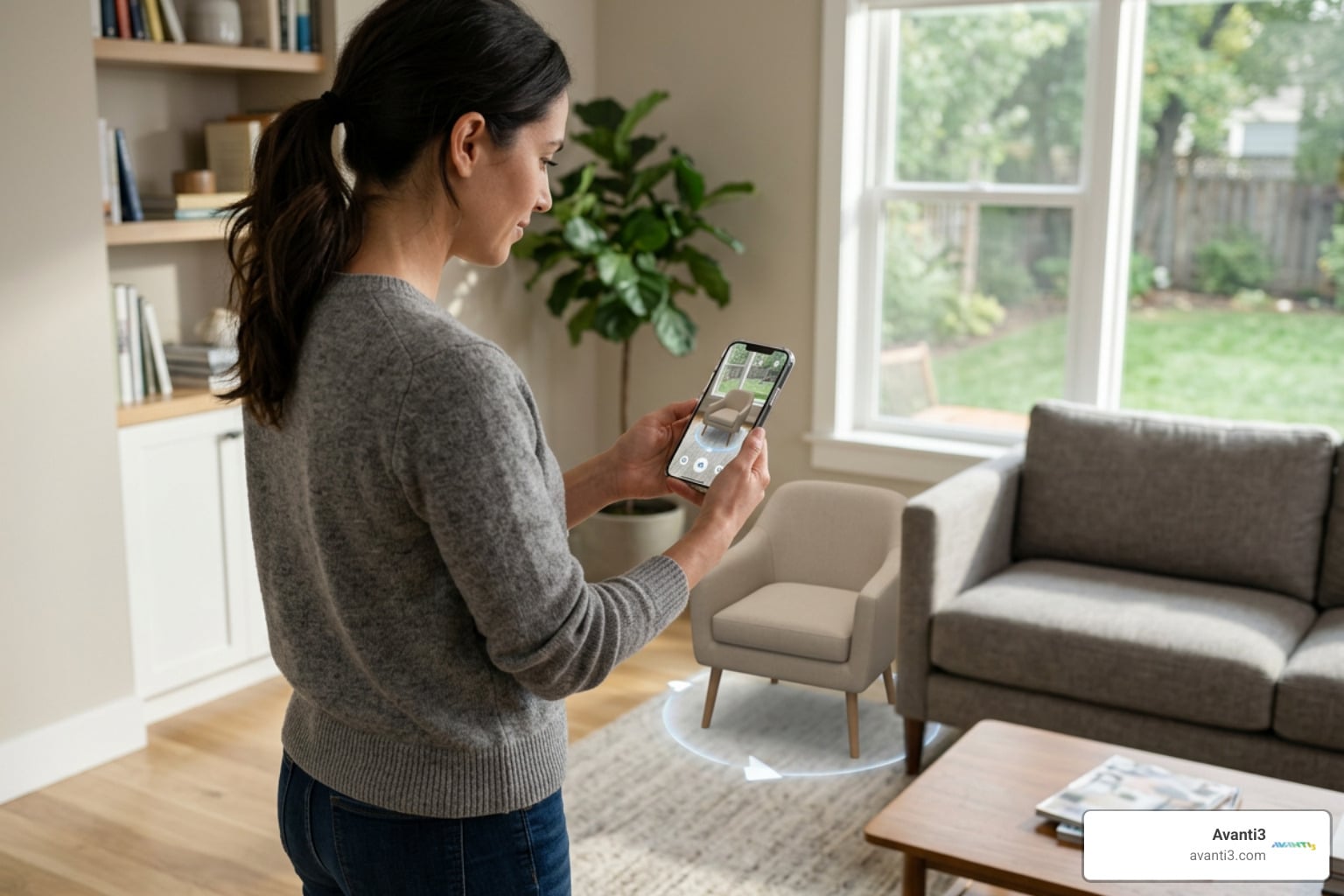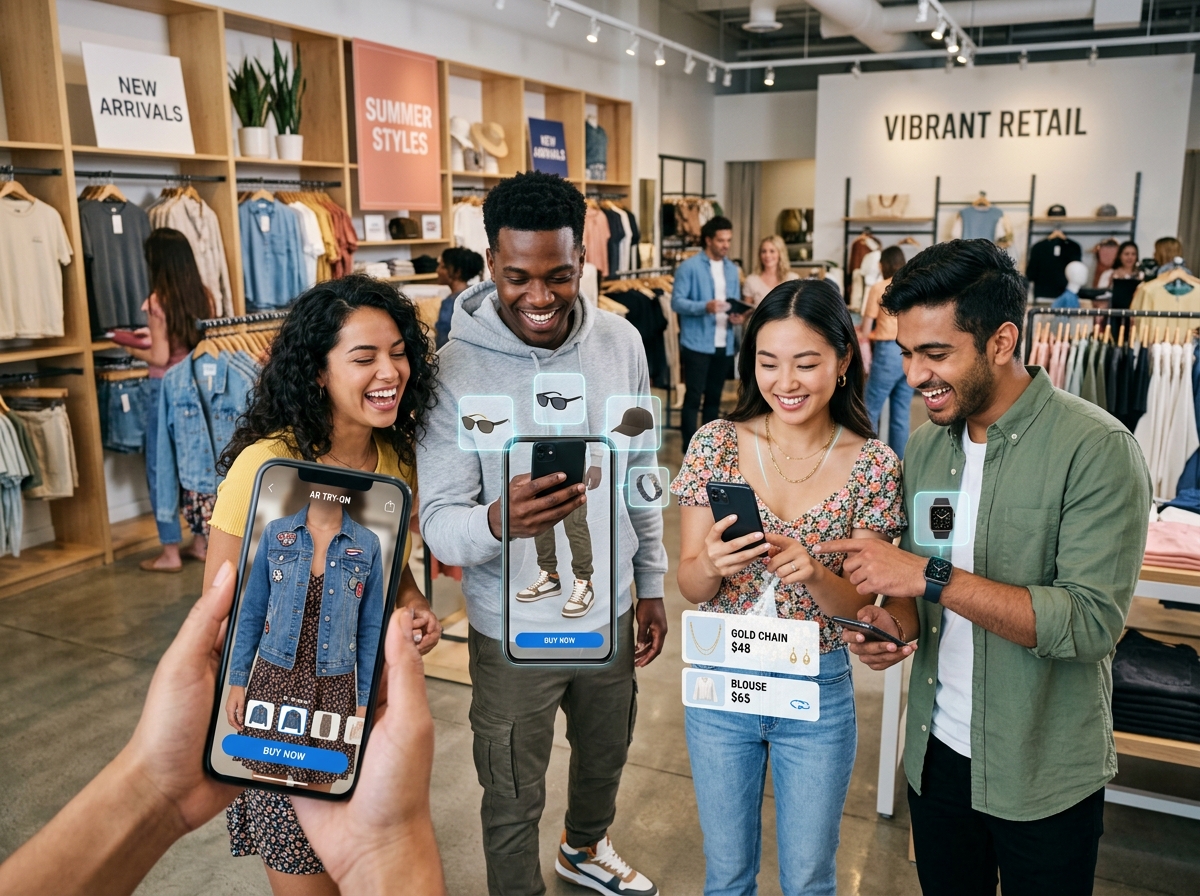


How AI and AR are Getting Personal with Your Customers
Top AI AR Personalization Tools for Immersive Marketing
AI AR personalization tools are software platforms that combine artificial intelligence with augmented reality to deliver real-time, tailored experiences — like virtual try-ons, branded face filters, and AI-generated product previews — directly to your customers.
Here’s a quick look at the types of solutions available in the market:
| Solution Type | Best For | App Required? |
|---|---|---|
| Fan Engagement Engines | Branded events & social sharing | No |
| Beauty Virtual Try-ons | Makeup & skincare visualization | No |
| AI Diagnostics | Personalized skincare routines | No |
| Developer SDKs | Custom app integrations | Integrates into apps |
| 3D Visualization Tools | Product previews & e-commerce | No |
| AR Virtual Assistants | Customer support via QR | No |
| No-code WebAR Builders | Rapid campaign deployment | No |
The numbers behind these tools are hard to ignore. Brands using AI-powered AR try-ons report up to a 35% lift in conversions. Return rates drop by as much as 20%. And over 75% of customers say they feel frustrated when brands don’t personalize their experience.
Put simply: customers expect more, and AI AR is how forward-thinking brands are delivering it.
I’m Samir ElKamouny — entrepreneur and marketing strategist who has spent years helping brands scale through innovative digital strategies, including AI AR personalization tools that turn passive audiences into loyal, engaged communities. In this guide, I’ll walk you through the best platforms available and how to put them to work for your brand.
We live in an era where the “one-size-fits-all” approach to marketing is effectively dead. Today’s consumers don’t just want to see a product; they want to see it in their living room, on their face, or integrated into their lifestyle before they hit the “buy” button. This shift is driven by the fusion of Generative AI and Augmented Reality.
AI AR personalization tools work by using machine learning models to analyze user data—such as facial features, skin tone, or even room dimensions—and then rendering high-fidelity 3D assets in real-time. This isn’t just a gimmick; it’s a fundamental shift in how we handle AI digital marketing.
The Shift to WebAR: Accessibility vs. Performance
One of the biggest hurdles in early AR was the “app friction” problem. Nobody wants to download a 200MB app just to see how a pair of sunglasses looks. Modern tools have solved this through WebAR.
| Feature | Web-Based AR (WebAR) | App-Based AR |
|---|---|---|
| User Friction | Low (Scan QR & Go) | High (Requires Download) |
| Accessibility | Works on any modern browser | Requires specific OS/Store |
| Performance | High (improving rapidly) | Ultra-High (Native rendering) |
| SEO Impact | Increases on-site session time | None (Lives in App Store) |
By leveraging AI Personalization: A Complete Guide – Salesforce, we can see that real-time adaptation is the gold standard. When a user scans a code, the AI doesn’t just show a generic model; it adapts the light, shadow, and fit to that specific user’s environment. For brands looking to scale, these AR marketing solutions are becoming essential infrastructure rather than experimental toys.
Generative AI for 3D Asset Creation with AI AR Personalization Tools
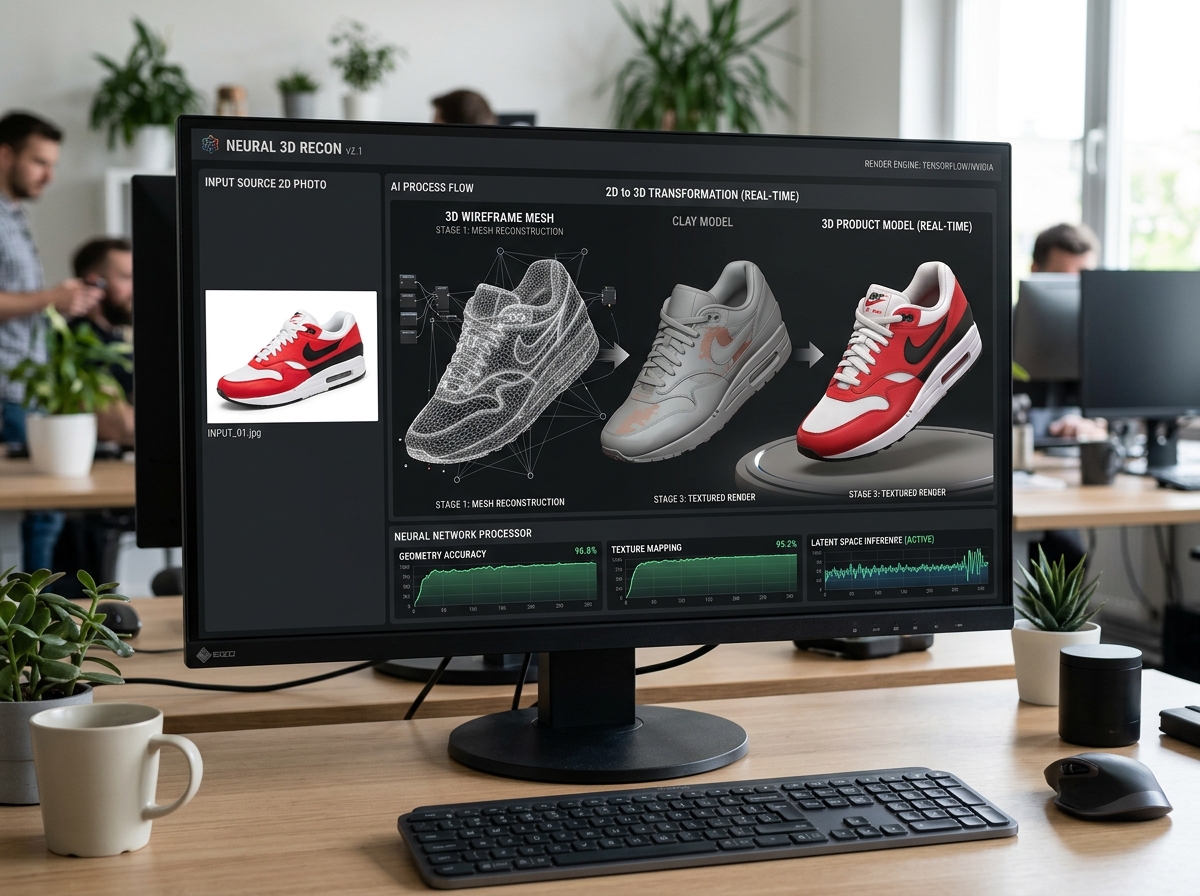
Traditionally, creating 3D models for AR was expensive and slow. You needed a team of specialized artists and weeks of lead time. Now, advanced AI-driven modeling tools are flipping the script.
Through “Image-to-3D” and “Text-to-3D” technology, we can now turn a single high-resolution photo into a production-ready AR asset in minutes. This rapid prototyping allows brands to:
- Scale massively: Instead of picking five products for AR, you can digitize your entire catalog.
- Automate modeling: AI handles the complex geometry and texture mapping, ensuring the model looks realistic under different lighting conditions.
- Empower creators: With AI tools for creators, even small teams can launch immersive campaigns that previously required enterprise budgets.
AI-Powered Virtual Try-On and Beauty Advisors
The beauty and fashion industries have been the biggest winners in the AI AR revolution. Modern platforms have moved beyond simple “filters” to medical-grade skin diagnostics.
When a customer uses an AI beauty advisor, the tool analyzes millions of pixels to identify skin concerns, tone, and texture. It then uses AI AR personalization tools to recommend a specific skincare regimen or makeup shade. This level of personalized data usage has led to:
- 35% increase in conversion rates for top-tier beauty implementations.
- 25% boost in repeat purchase rates because the recommendations are actually accurate.
- 20% reduction in returns because “it didn’t look like the photo” is no longer an issue.
Interactive AI AR Personalization Tools for Fan Engagement
In sports and live events, engagement is the currency. We’ve seen incredible success with advanced AI personalization engines. Imagine a fan at a stadium scanning a QR code and instantly seeing themselves transformed into a stylized “elf” or a “superhero” using brand-specific art styles.
These aren’t just static photos; they are generative art experiences. By using custom machine learning models (like LoRA adaptations), these tools can apply a brand’s specific aesthetic to a user’s photo while maintaining their likeness. This creates a powerful “shareable moment” that boosts AI customer engagement and creates a community of fans who feel personally connected to the brand storytelling.
Implementing AI AR Personalization for Measurable ROI

Investing in shiny new tech is fun, but as business owners, we need to see the ROI. The good news is that AI-powered personalization is one of the most measurable sectors of modern marketing. When you integrate these tools, you aren’t just guessing; you’re tracking.
The Technical Backbone: CDPs and Headless CMS
To achieve personalization at scale, your AR tools need to talk to your data. This is where Customer Data Platforms (CDPs) and Headless CMS come in.
- CDP: Unifies your data from social, web, and email into a single profile. This tells the AI that “User A” likes blue shoes and has sensitive skin.
- Headless CMS: Delivers the content (the AR model or the AI recommendation) via API to any device—be it a smartphone, a store kiosk, or a smart mirror.
This setup ensures that the experience is consistent across all touchpoints. Whether they are at home or in-store, the AI remembers their preferences, leading to a “hyper-relevant” journey.
Data Privacy and Security
With great data comes great responsibility. Implementing AI AR personalization tools requires a strict adherence to GDPR and CCPA. We always recommend:
- Transparent data usage: Tell users exactly why you need to access their camera.
- On-device processing: Whenever possible, use tools that process facial data locally on the phone rather than sending it to a server.
- Encryption: Ensure all user-uploaded photos are encrypted and deleted after the session unless explicit consent is given.
Seamless Integration via WebAR and QR Codes
The “magic” of modern AR is the QR code. By placing these codes on product packaging, at event booths, or in email campaigns, you provide a friction-less gateway.
- No App Required: Modern WebAR solutions allow users to interact with a virtual assistant or try on a product directly in Safari or Chrome.
- Instant Insights: In retail, a scan can provide instant sizing guides or “frequently bought together” recommendations, reducing the burden on floor staff by up to 47%.
Future Trends: Web3 and Hyper-Personalization
As we look toward the future, the line between the physical and digital worlds will continue to blur. At Avanti3, we are particularly excited about how Web3 technologies like augmented reality NFTs will change the game.
Imagine owning a digital fashion item as an NFT that you can actually “wear” in AR across different social platforms. Or a loyalty program where your AI AR interactions earn you blockchain-based rewards. This isn’t science fiction; it’s the next step in community building.
Ethical AI and Situational Context
The next generation of AI AR personalization tools will move into “predictive engagement.” This means the AI won’t just react to what you do; it will anticipate what you need based on situational context—like the time of day, your location, or even the weather.
- Hyper-Personalization: Using data to offer a “cool-toned” makeup look on a cloudy day versus a “sun-kissed” look in the summer.
- Ethical AI: Ensuring that algorithms are free from bias, especially in skin diagnostics and facial recognition, to provide an inclusive experience for all users.
Getting Started with Your AI AR Strategy
If you’re ready to dive in, don’t try to boil the ocean. Start small and optimize.
- Tech Stack Audit: Check if your current e-commerce platform (Shopify, Magento, etc.) supports AR integrations. Most modern AR platforms have “no-code” plugins.
- Define Your KPIs: Are you trying to reduce returns? Boost social shares? Increase time-on-site? Choose one primary metric to track.
- Launch a Pilot: Pick your top 5 best-selling products and create AR experiences for them. Use QR codes in your next email blast to test the waters.
- Collect Feedback: Use tools to ask users about their AR experience. Did it help them make a decision? Was it easy to use?
- Optimize and Scale: Use the data from your pilot to refine your AI models and expand to the rest of your catalog.
The world of augmented reality marketing is moving fast. By adopting these AI AR personalization tools today, you aren’t just following a trend—you’re building the infrastructure for the future of your brand.
Ready to transform your customer journey? Explore Augmented Reality Marketing with Avanti3 and let’s build something immersive together.