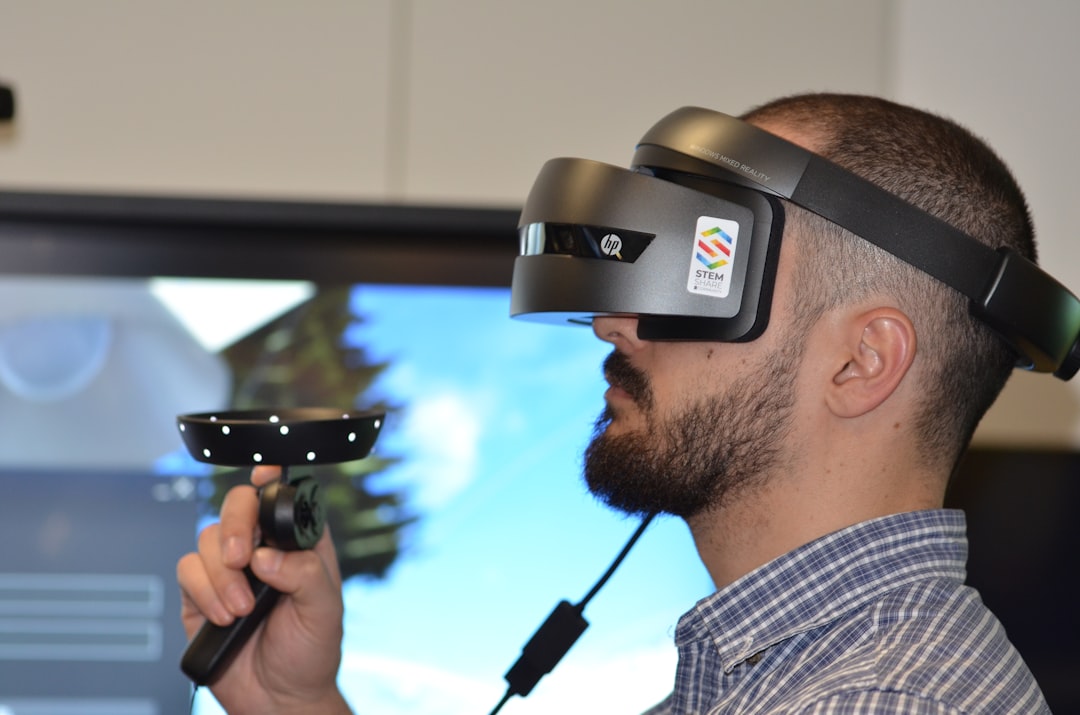


A Virtual Reality Game for Your Fourth Dimension
What Is a 4D Virtual Reality Game — and Why It Changes Everything
A 4d virtual reality game takes immersive gaming beyond the three dimensions we know and adds a fourth — either as an extra spatial axis you can move through, or as physical sensations like wind, vibration, and haptics that make the virtual world feel real.
Here’s a quick breakdown of what “4D” means across different gaming contexts:
| Type of 4D | What It Means | Example |
|---|---|---|
| Fourth spatial dimension | A true mathematical 4th axis alongside X, Y, Z | 4D Toys, 4D Miner |
| Physical/sensory effects | Real-world haptics synced to VR (wind, vibration) | Delusion ROOMSCAPE 4D, VEX Adventure |
| AR + VR combined | 3D graphics enhanced with augmented reality layers | Wild Animals VR Kid Game |
In May 2026, this category is growing fast — and it’s one of the most exciting frontiers in immersive technology.
Whether you want to explore a procedurally generated four-dimensional world, physically feel a virtual environment through haptic floors and wind, or watch a hypercube materialize in front of you, 4D VR is no longer just a concept. It’s playable right now.
I’m Samir ElKamouny, an entrepreneur and marketing expert who has spent years studying how cutting-edge technologies — including 4d virtual reality game — create transformative experiences for brands and communities. In this guide, I’ll walk you through everything you need to know to understand, access, and leverage this next dimension of immersive gaming, including how it compares to a standard 3d experience vr, what defines the most realistic virtual reality game, and a look at the best vr games so far.
Understanding the 4D Virtual Reality Game Experience
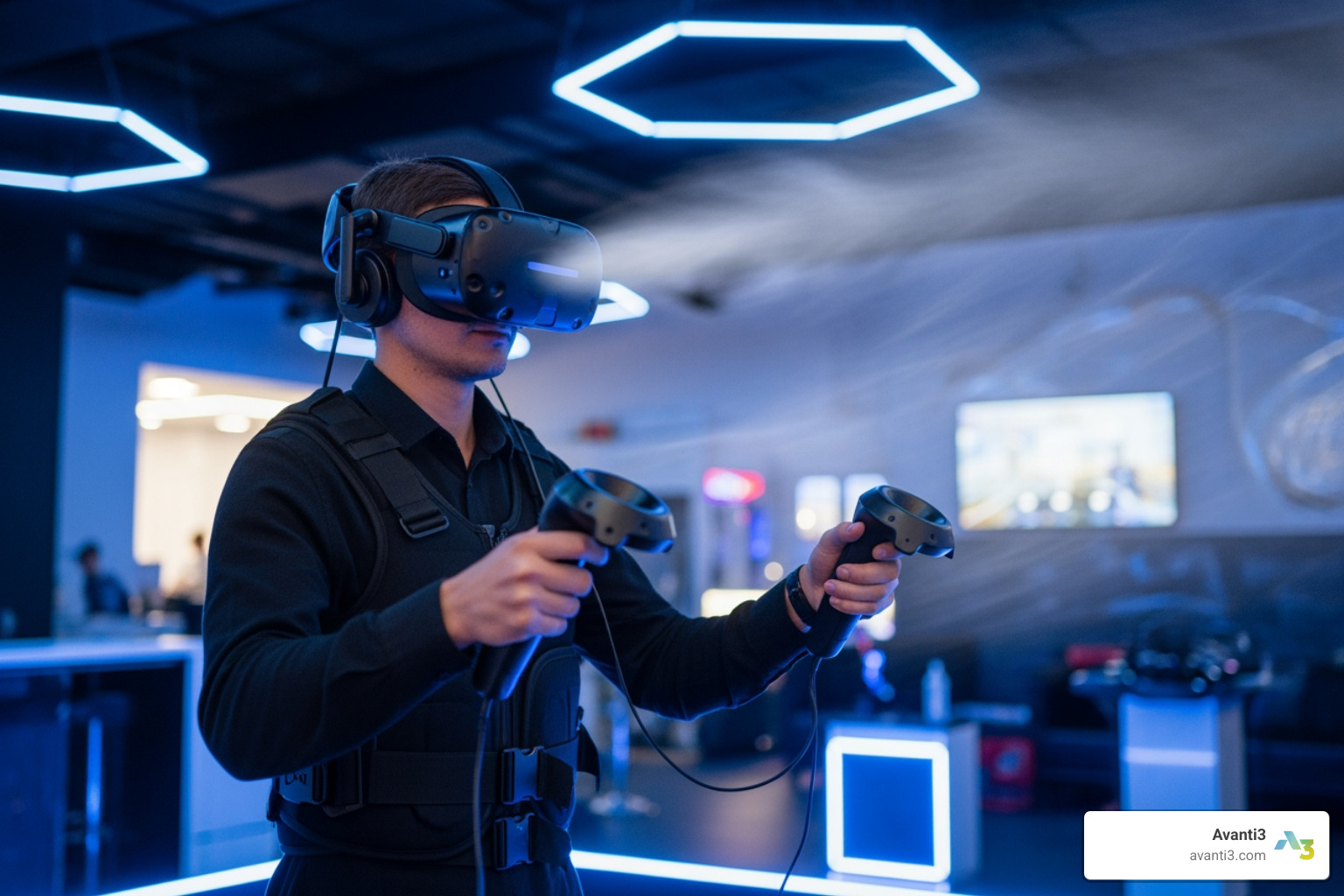
When we talk about a 3D virtual reality game, we are referring to depth, width, and height. However, a 4d virtual reality game introduces elements that challenge our biological perception. There are two primary schools of thought in the industry regarding what constitutes “4D.”
The first is the mathematical 4D. This involves a fourth spatial dimension. Imagine being able to move “left” or “up,” but also moving along a fourth axis that we cannot see in the physical world. In these games, you can walk through walls by simply sidestepping into the fourth dimension and popping back into 3D space somewhere else.
The second is the sensory 4D. This is common in location-based virtual reality experiences like Sandbox VR or VEX Adventure. Here, the “fourth dimension” is the physical environment. If you walk through a digital swamp, the floor beneath you actually vibrates. If a dragon breathes fire, you feel a gust of warm air. This level of virtual reality solutions bridges the gap between digital code and physical reality.
Visualizing the Fourth Dimension in a 4D Virtual Reality Game
How do we see something that our eyes aren’t evolved to process? Developers use a technique called “3D slicing.” Think of a 3D object as a series of 2D MRI slices. To visualize a 4D object (like a Tesseract or hypercube), the game shows us a 3D “slice” of it.
In titles like 4D Toys on Steam, players use a slider to move through these slices. As you move the slider, objects might appear to shrink, grow, or vanish entirely as they pass through our 3D field of vision. It’s like being a 2D drawing on a piece of paper watching a 3D ball pass through the page; to the drawing, the ball looks like a circle that grows and then disappears.
Another mind-bending mechanic is planar rotation. In our 3D world, objects rotate around an axis (like a spinning top). In a 4D environment, objects rotate around entire planes. This is beautifully demonstrated in 4D Toys. An interactive toy for 4D children., where you can unbind rings that appear locked in 3D by simply rotating them through the fourth dimension.
Physical Immersion and Haptic Feedback
For those seeking the most realistic virtual reality game experience, physical effects are the key. Commercial operators have mastered the art of “Hyper-Reality.” This includes:
- Wind Simulation: Fans synchronized to your movement speed.
- Vibrating Floors: Used to simulate explosions, heavy machinery, or even the footsteps of a giant dinosaur.
- Full-Body Tracking: Systems that track your entire body so you can see your friends’ actual movements in the game.
- Scent Synthesis: Some high-end 4D setups even include “scent cannons” to mimic the smell of gunpowder or forest pine.
These physical layers ensure that the immersion isn’t just visual; it’s a total body experience.
Top Titles Redefining the 4D Virtual Reality Game
Several games have stepped up to define this genre. Here are the must-play titles as of 2026:
- 4D Miner: This is a 4-Dimensional Survival Sandbox Game where you explore an infinite, procedurally generated 4D world. It takes the familiar “craft and survive” loop and adds the complexity of navigating a world with four spatial axes.
- Slice 4D Shooter: As the first 4D multiplayer shooter, this game allows for tactical maneuvers that are impossible in 3D. You can literally flank an enemy by moving “around” them through the fourth dimension, appearing behind them without ever crossing their line of sight.
- 4D Toys: Described in the 4D Toys – VR & AR Wiki, this is a physics sandbox. It features over 100 interactive scenes where you can play with 4D dice (some with 600 sides!), roll 4D marbles down slopes, and smash stacks of hypercubes.
The Future of Multi-Dimensional Gaming
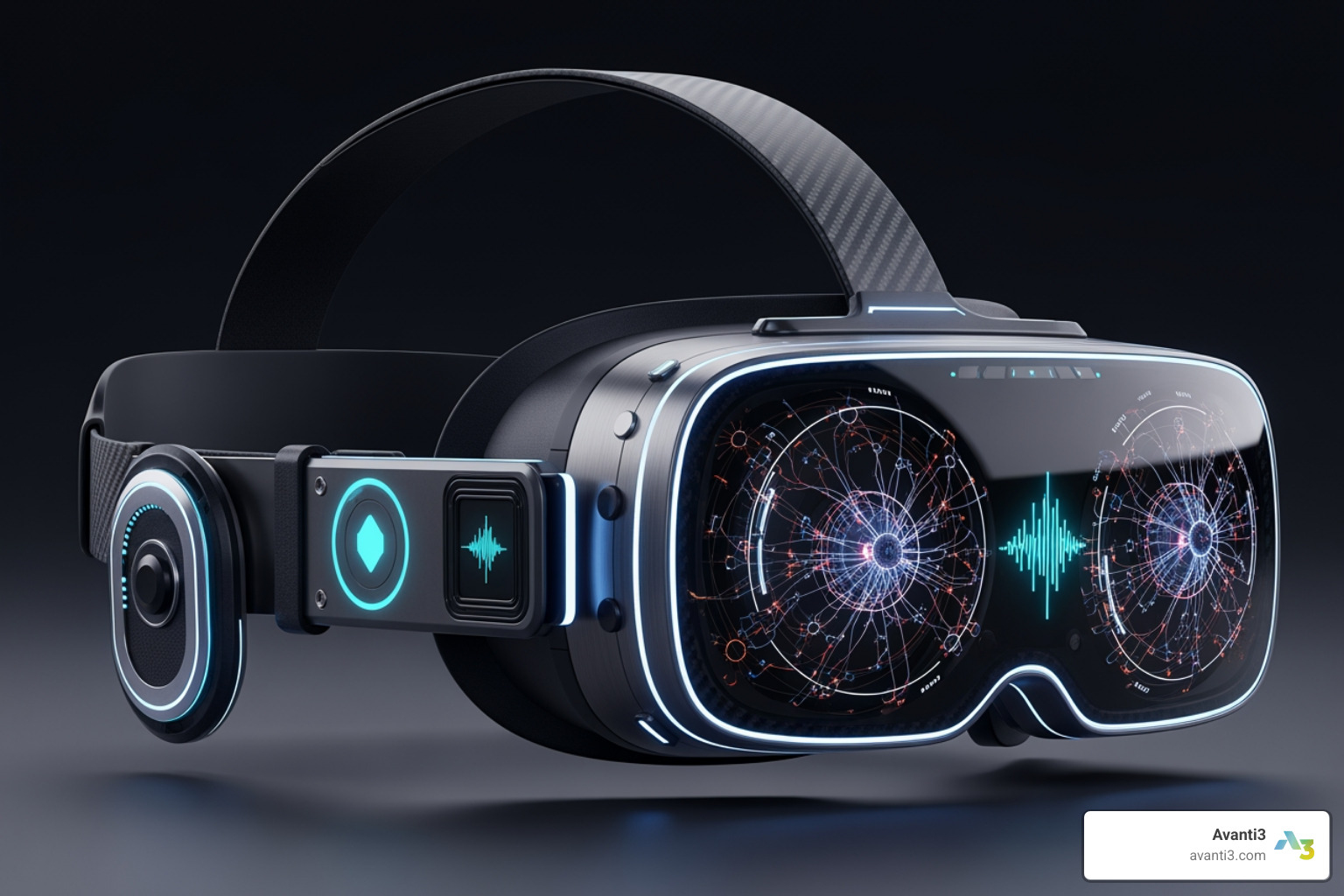
As we look toward the late 2020s, the market potential for 4d virtual reality game technology is massive. We are seeing a shift where these experiences are no longer just for “math nerds” or high-end arcades.
At Avanti3, we believe the next step is the integration of Web3 and blockchain. Imagine owning a rare 4D artifact as an NFT that you can carry between different 4D worlds. Or participating in 4D esports tournaments where the rewards are distributed instantly via smart contracts. The price of virtual reality game gear is also dropping, making high-end spatial simulations more accessible to the average home user.
If you are looking for where to find these experiences physically, check out The Ultimate Guide To Indoor Virtual Reality Games And Where To Find Them.
Educational Benefits of Higher-Dimensional Physics
One of the most surprising outcomes of the 4d virtual reality game trend is its educational value. Visualizing 4D math on a chalkboard is nearly impossible for most students. However, VR provides a “show-don’t-tell” tool that creates a “light-bulb moment” for learners.
By using the “Flatland” analogy — where players learn 4D concepts by first seeing how a 2D being would perceive a 3D world — games like 4D Toys make complex geometry intuitive. You can see this in action in videos like 4D Toys VR: Manipulate Objects in the 4th Dimension. This is a prime example of how non-game VR experiences are revolutionizing the classroom.
Hardware Requirements for 4D Environments
Playing a 4d virtual reality game requires more than your standard mobile VR headset. Because 4D visualization is mathematically intensive and often requires high-fidelity physical syncing, your gear matters.
| Requirement | Spatial 4D (At Home) | Physical 4D (Location-Based) |
|---|---|---|
| GPU | Nvidia RTX 3060 or better | Commercial Grade Servers |
| RAM | 16 GB (2 GB minimum for 4D Toys) | Specialized High-Speed Nodes |
| Tracking | Room-scale 6DOF | Full-body motion capture |
| Haptics | Haptic vests (optional) | Vibrating floors & wind fans |
| Headset | Dive Into The Best VR Games Right Now for recommendations | Vive Focus 3 / Vive Pro |
For a smooth experience in games like Slice 4D, an RTX 3060 is highly recommended. For spatial toys like 4D Toys, you can get away with a GTX 970, but more power always equals more immersion.
Conclusion: Stepping Into the Next Dimension
The world of the 4d virtual reality game is a testament to how far we’ve come from simple 2D pixels. Whether it’s the mind-bending physics of a four-dimensional sandbox or the heart-pounding realism of a haptic-filled arena, the fourth dimension is our new playground.
At Avanti3, we are dedicated to helping you navigate these new digital frontiers. By integrating Web3 technologies like NFTs and blockchain with AR/VR, we empower creators to build communities that aren’t just playing a game — they are living in a new dimension. From fan monetization to unique digital rewards, the future is multi-dimensional.
Ready to see what the next dimension holds for you? Explore our curated Virtual Reality Experiences and join the revolution today. The fourth dimension is waiting.