


Stop Stressing and Start Planning with These Top Event Management Tools
The Fastest Way to Find the Right Event Management Tool in 2026
Event management tools are software platforms that help you plan, promote, and run events — from registration and ticketing to check-in, attendee engagement, and post-event analytics.
Here are the top options based on event type and team size:
| Tool Type | Best For | Starting Price |
|---|---|---|
| Enterprise Platforms | Large-scale corporate events | Custom pricing |
| Conference Apps | Multi-track conferences, networking | Custom pricing |
| Venue Management Software | Venues and catering businesses | ~$199/month |
| B2B Marketing Platforms | B2B conferences, ROI tracking | From $17,999/year |
| Self-Service Ticketing | Public, recurring, or small events | Commission-based |
| Corporate RSVP Tools | Corporate, nonprofit, simple setup | Free to start |
| All-Format Suites | All formats, commission-free ticketing | Free to start |
| Virtual Expo Platforms | Virtual job fairs, expos, global meetups | Custom pricing |
If you’ve ever tried to manage an event using a mix of Google Sheets, emailed PDFs, and three different calendar apps, you already know the pain. Planning is fragmented. Data lives in six places. And on event day, something always falls through the cracks.
The good news? The right tool can fix that — completely.
Modern event management platforms handle everything in one place: registration, marketing, on-site check-in, attendee engagement, and reporting. Some teams have cut their planning labor by over 200 hours simply by switching from manual processes to a single platform.
But with dozens of tools available — each claiming to be the best — choosing the right one isn’t easy. The wrong pick wastes budget, frustrates your team, and leaves attendees underwhelmed.
This guide breaks it all down so you can make a confident choice.
I’m Samir ElKamouny, an entrepreneur and marketing expert who has helped scale countless businesses — including navigating the full stack of event management tools to drive real audience growth and revenue. In this guide, I’ll walk you through exactly what to look for and which platforms are worth your time in 2026.
Essential Categories of Event Management Tools
Every event has its own unique rhythm. A local charity gala needs seamless table seating and simple ticketing, while a global multi-track B2B conference requires complex speaker portals, virtual exhibitor booths, and deep CRM integrations. Because event formats have expanded dramatically, understanding how different tools handle in-person, virtual, and hybrid setups is the first step to eliminating planning chaos.
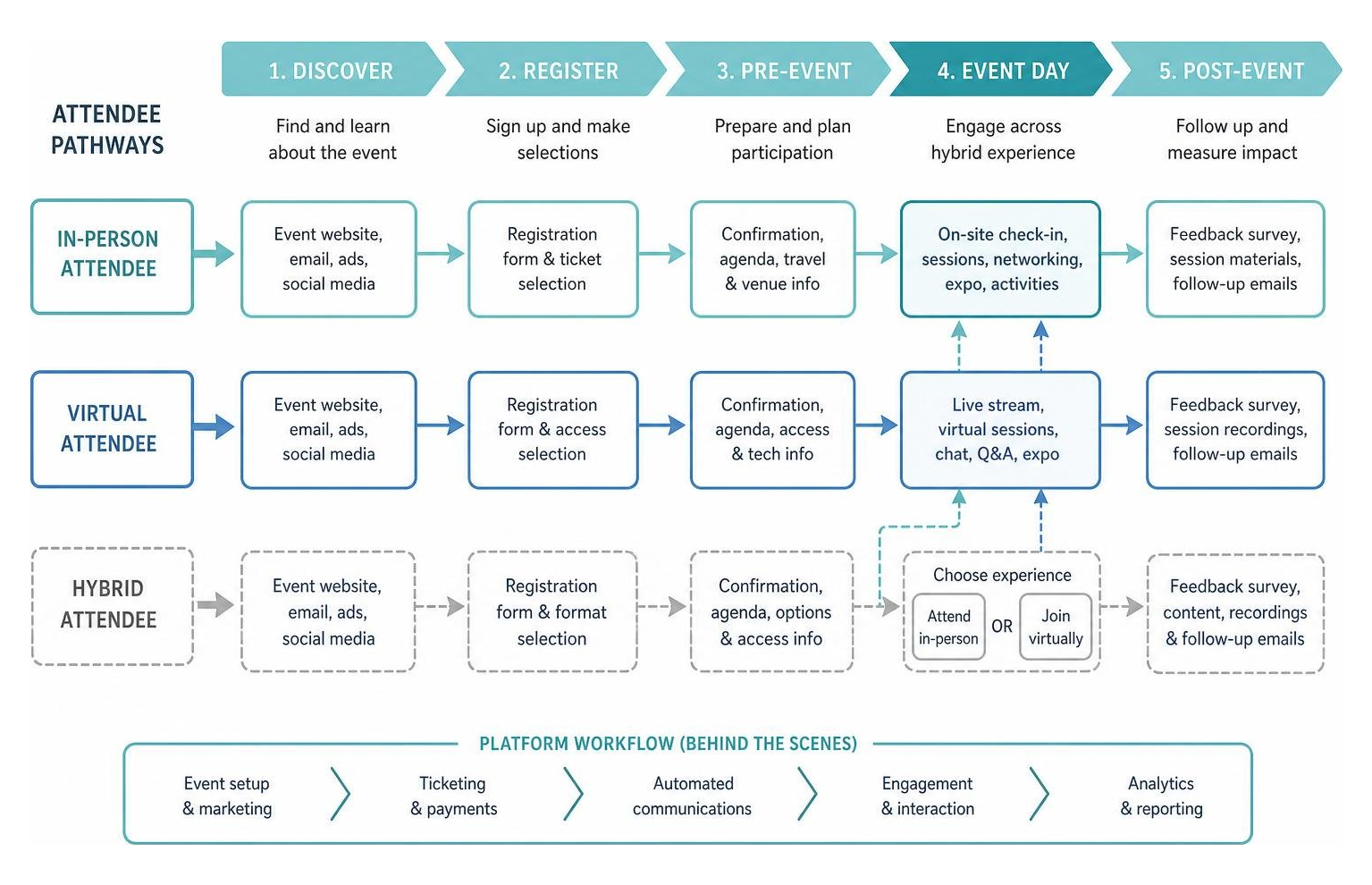
Modern workflow automation sits at the heart of these categories. Instead of chasing speakers for bios or manually updating a spreadsheet when a schedule shifts, the right software automates these repetitive tasks, letting you focus on crafting an unforgettable experience.
All-in-One Event Management Software for Seamless Execution
For those who want a single login to rule them all, all-in-one platforms are the gold standard. They eliminate “tool fatigue” by housing the website builder, registration, attendee app, and analytics under one roof.
Enterprise-grade platforms are incredibly robust, helping large organizations scale their operations. For example, some enterprise users have achieved a 3x increase in executed events and a 30x increase in client engagement. However, these massive suites can carry a steep learning curve for smaller teams.
For mid-sized conferences and community events, modern event apps are highly praised for cutting hundreds of planning hours by consolidating registration, speaker management, and attendee networking into an intuitive interface.
If you run a physical space or manage catering, venue-first operations software is designed specifically for your needs. It replaces fragmented tools with banquet event orders (BEOs), floor plans, and automated payments, helping venues grow their bookings by an average of 64% and save up to 62 hours of busywork per month.
For B2B conferences focused heavily on marketing and revenue, specialized event experience operating systems help small teams clone and scale complex event programs quickly.
If you prefer a modular approach, some platforms let you pick and pay for only the components you need (like ticketing or on-site badge printing), reducing check-in times to under 60 seconds. Meanwhile, other integrated suites provide 0% commission ticketing, or offer highly streamlined, browser-based workspaces featuring private AI-assisted session planners to resolve scheduling conflicts before they go live.
Specialized Registration and Blockchain Event Ticketing
Sometimes, you don’t need a massive suite; you just need a flawless way to get people through the door. Specialized registration tools focus entirely on custom forms, smooth checkout flows, and reliable on-site check-in. Modern registration builders let you build a gorgeous, fully white-labeled event website in minutes to collect registrations without writing a line of code.
However, traditional ticketing models often come with high commission fees per ticket. This is driving a massive industry shift toward decentralized technology. By implementing Blockchain Event Ticketing, organizers can eliminate expensive middlemen, prevent ticket scalping, and create collectible digital keepsakes for attendees.
A Blockchain Based Ticketing System secures transaction data on an immutable ledger. This means tickets cannot be counterfeited, and organizers can even program royalty rules to earn a percentage of secondary market sales.
Audience Engagement and Virtual Reality Exhibits
Getting people to register is only half the battle; the real magic happens when you keep them engaged. Traditional tools use live polling, Q&As, and basic gamification (like quizzes and leaderboards) to keep attendees off their phones and tuned into the presentations.
But as we look to the future, Virtual Event Engagement is moving far beyond simple chat boxes. Forward-thinking brands are turning to immersive technologies to make virtual and hybrid spaces feel alive. By looking at Virtual Reality Events Examples That Actually Worked, we can see how companies are building fully interactive 3D environments where attendees can walk up to booths, view products, and network naturally.
For trade shows and corporate summits, reading The Ultimate Guide to Virtual Reality Exhibits for Conferences reveals how virtual booths can replicate the excitement of a physical expo hall. When combined with modern Fan Engagement Tools, these digital experiences transform passive viewers into active participants, building deep community loyalty.
Selecting and Integrating Your Event Technology Stack
Choosing the right software comes down to balancing your budget, technical resources, and integration needs.
Key Features to Look For in Event Management Tools
When comparing different event management tools, it helps to understand what you get with an all-in-one platform versus a specialized tool:
| Feature | All-in-One Platforms | Specialized Tools |
|---|---|---|
| Primary Focus | End-to-end event lifecycle | Best-in-class single feature (e.g., polling or badging) |
| Data Flow | Automatically centralized | Requires custom integrations or Zapier |
| Speaker/Exhibitor Portals | Built-in, self-service portals | Rarely included |
| Security & Compliance | Often SOC 2 Type 2 certified | Varies widely |
For complex events, look for platforms that offer dedicated speaker and exhibitor portals. These portals allow speakers to upload their own bios and session details directly, eliminating endless email chains. Additionally, ensure your platform of choice takes data security seriously, particularly if you are handling sensitive corporate data or payment details. For a useful baseline, review the AICPA overview of SOC 2 when evaluating vendor security claims.
Integrating Event Tech with CRMs and Marketing Automation
An event shouldn’t be a data silo. The engagement signals your attendees send — which sessions they attend, which questions they ask, and which booths they visit — are incredibly valuable for your sales and marketing teams.
By choosing enterprise-grade options, you gain access to seamless integrations with your existing systems. Syncing your event software directly with CRMs like Salesforce or HubSpot allows you to:
- Instantly update lead profiles when an attendee checks in.
- Automate post-event email follow-ups based on the specific sessions attended.
- Track real-time registration revenue alongside your overall marketing budget to prove direct ROI.
Future-Proofing Events with Web3 and Avanti3
As we navigate 2026, the boundaries between physical, virtual, and digital ownership are dissolving. Standard event platforms are excellent for logistics, but they often miss the opportunity to build long-term, self-sustaining communities.
This is where we come in. At Avanti3, we bridge the gap between traditional event planning and the future of digital interaction. By integrating Web3 technologies like NFTs, blockchain-based ticketing, AR/VR experiences, and AI-driven matchmaking, we empower brands to design highly customizable engagement tools and fintech solutions.
Imagine an event where your ticket is a secure digital asset that unlocks exclusive token-gated community channels, grants access to immersive virtual reality exhibits, and rewards real-time participation with digital loyalty points. With our unique digital experiences and fan monetization tools, we are setting a brand-new standard for how audiences gather, connect, and grow.
Ready to take your events to the next level? Stop fighting outdated spreadsheets and start building the future of engagement with Avanti3 today.