


AR Marketing & Services: What Brands Need to Know Before Hiring
Why AR Marketing & Services Matter for Brands in 2026
AR marketing & services help brands turn a phone camera, product package, ad, or website into an interactive experience. Before hiring a provider, look for three things: strong creative and 3D production skills, a delivery method that fits your audience (usually WebAR or an app), and reporting that connects engagement to leads, sales, or lower returns.
Unlike a static digital ad, augmented reality lets people try, place, explore, or customize a product in their own space. That can mean testing lipstick shades, viewing a sofa at home, scanning packaging for a product demo, or opening a 3D vehicle configurator.
The opportunity is no longer niche. Mobile AR users were forecast to reach 1.106 billion in 2026, while the AR marketing services market is projected to grow from $6.31 billion in 2026 to $12.95 billion by 2031. For brands, the question is less whether AR can create attention and more whether a campaign is designed to create useful, measurable action.
I’m Samir ElKamouny, an entrepreneur and marketing strategist who helps businesses turn ambitious ideas into practical growth plans. My experience with AR marketing & services is grounded in connecting emerging technology to clear business outcomes, audience trust, and sustainable revenue.
Ar marketing & services terms you need:
Introduction: The State of Augmented Reality in Brand Strategy
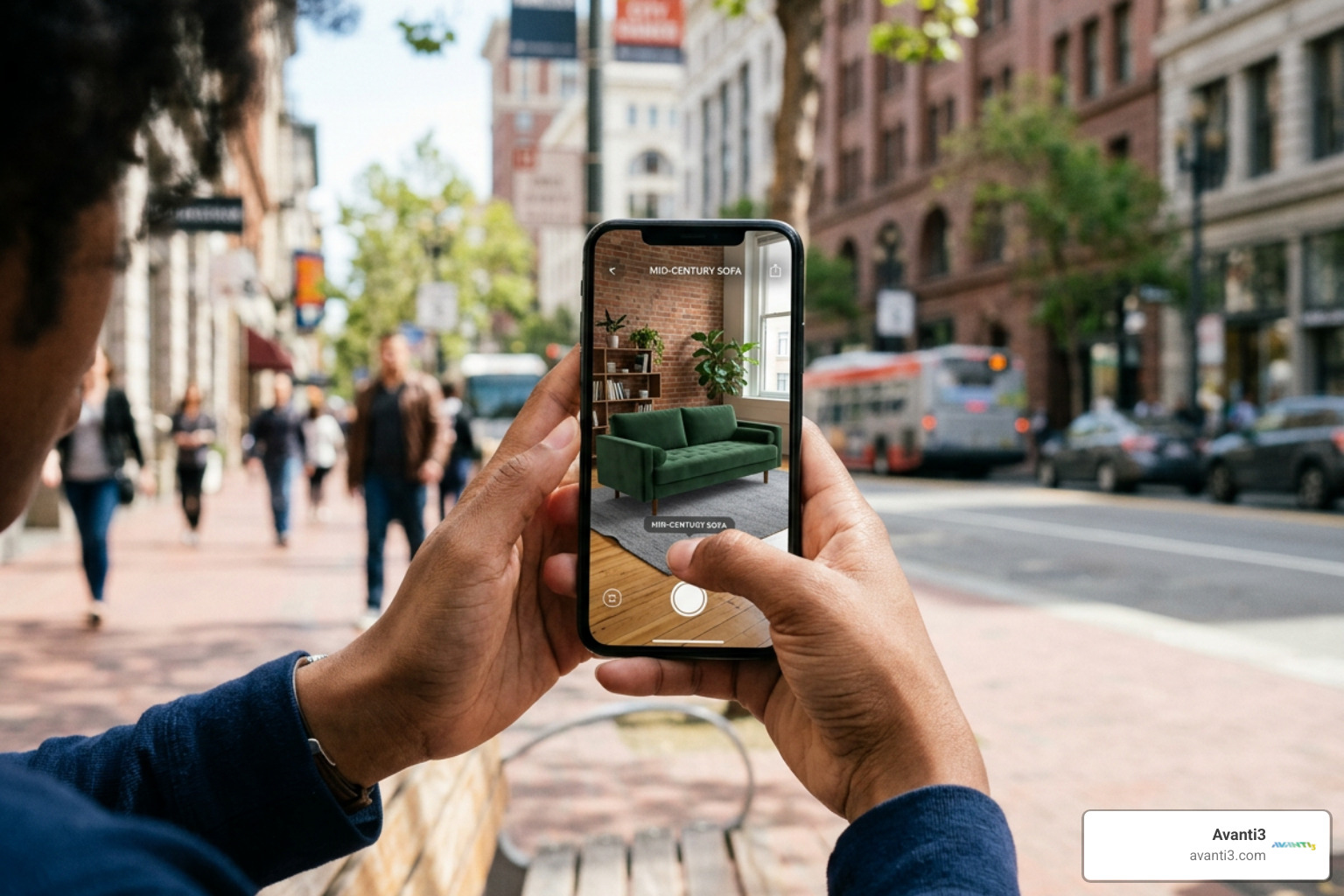
Augmented reality has evolved from a novelty filter experiment into a primary driver of experiential commerce. While traditional display and video ads deliver passive impressions, spatial computing turns the user into an active participant. With mobile AR adoption surpassing 1.106 billion active users in 2026, consumer interaction paradigms have shifted permanently. Today’s audiences expect to interact with products directly within their physical surroundings before making purchasing decisions.
This shift presents a major opportunity for brands. Experiential activations blend digital utility with emotional connection, creating a measurable impact across the full customer lifecycle. When evaluating partners, companies must seek specialized ar marketing solutions that bridge the gap between creative storytelling, technical asset delivery, and conversion optimization.
Core Capabilities and Solutions in Modern AR Marketing & Services

The market for specialized augmented reality agencies is experiencing rapid acceleration. Valued at USD 6.31 billion in 2026, the sector is forecast to reach USD 12.95 billion by 2031, expanding at a compound annual growth rate (CAGR) of 15.49%, according to the AR Marketing Services Market Size, Share & 2031 Growth Trends Report.
North America led the space with a 39.80% market share in 2025, driven by mature platform ecosystems and brand investments. Meanwhile, the Asia-Pacific region represents the fastest-growing market, projected to expand at a 16.11% CAGR through 2031. Within this ecosystem, AR Campaign Design and Creative Development represents the largest segment, capturing 31.80% of total service demand.
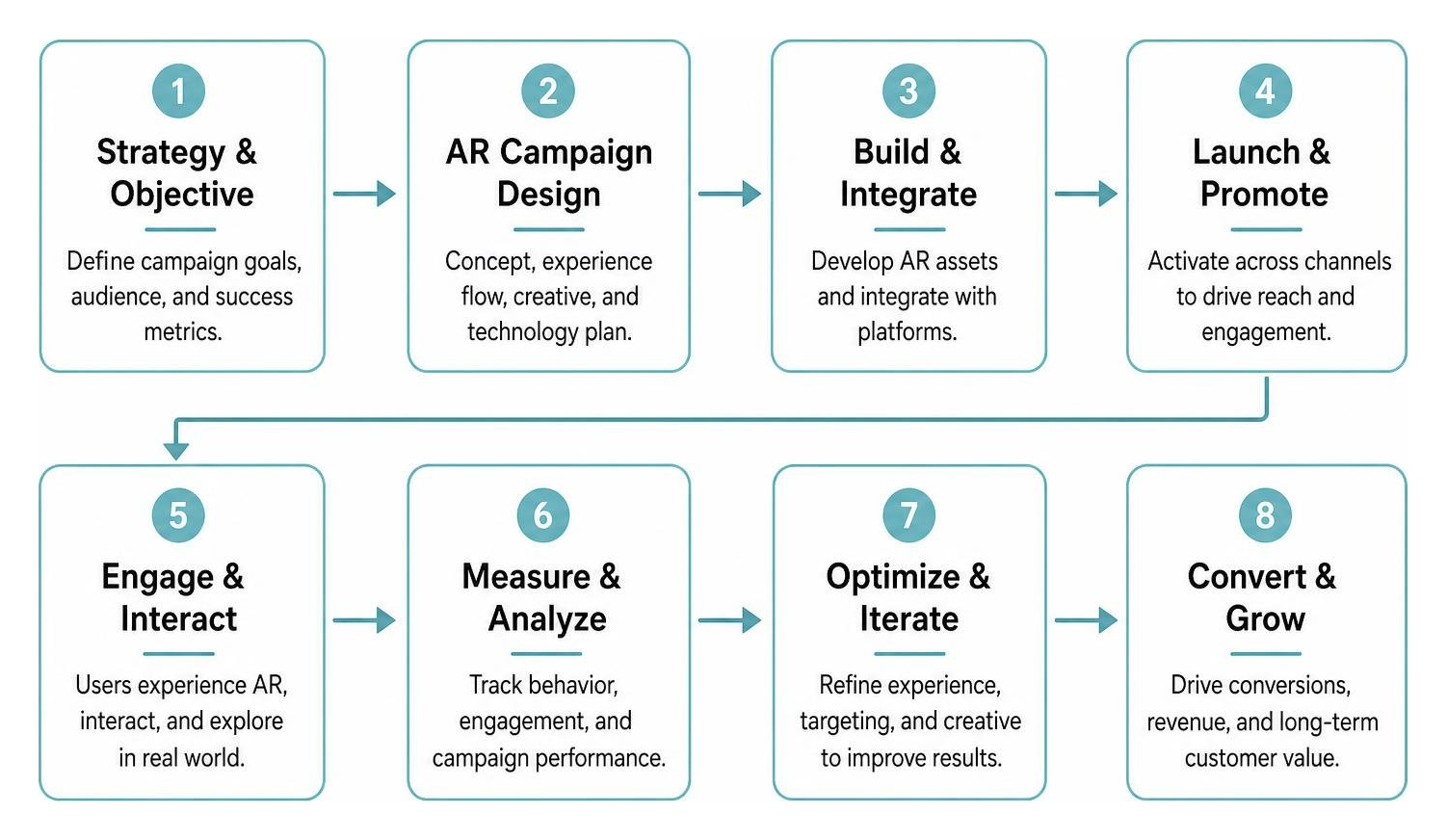
Essential AR Marketing & Services for Commerce and Try-On Solutions
Retail and e-commerce accounted for 24.80% of the market in 2025, largely because seeing is believing why ar product visualization is the new normal. Virtual Try-On (VTO) and 3D product visualization services—projected to grow at a 15.78% CAGR through 2031—have proven instrumental in lifting add-to-cart conversion rates while slashing expensive return rates.
Beyond traditional retail, specialized visualization services are transforming other major sectors:
- Healthcare & Life Sciences: Emerging as the fastest-growing vertical (16.34% CAGR through 2031), deploying 3D Mechanism of Action (MOA) animations for medical education and physician detailing.
- Automotive: Interactive 3D configurators that let buyers place true-to-scale vehicles in their driveways, customize trim levels, and inspect interiors.
- Home Furnishings & Luxury: True-scale spatial placement that removes spatial hesitation during high-consideration purchasing journeys.
Technical Delivery and Platform Selection for AR Marketing & Services
A critical decision when hiring an agency is selecting the right deployment architecture. The industry has largely bifurcated into browser-based WebAR and native application ecosystems.
| Feature / Criteria | WebAR (Browser-Based) | Native App AR |
|---|---|---|
| User Friction | Zero app downloads; launched via URL or QR code | Requires dedicated app installation |
| Rendering Engine | WebGL / WebXR standards | Native platform SDKs (ARKit, ARCore) |
| Hardware Access | Standard mobile cameras and sensors | Advanced LiDAR, depth sensors, raw GPU access |
| Reach & Scalability | Universal cross-platform compatibility | Constrained to iOS/Android app store installs |
| Best Use Case | Broad-reach ad campaigns, packaging, retail point-of-sale | Persistent loyalty apps, complex spatial tools, high-end gaming |
For broad-scale promotional activations, deploying a web based ar solution on established augmented reality platforms minimizes friction and maximizes engagement rates across mobile devices.
Omnichannel Integration Across Social, Print, and Physical Spaces
Augmented reality does not operate in a vacuum. The most effective campaigns weave spatial triggers across physical and digital touchpoints to create continuous conversion funnels, as outlined in academic research on Augmented Reality Marketing: Definition, Insights, Besonderheiten.
Agencies deploy several key omnichannel tactics:
- Interactive Print Media: Transforming traditional direct mail, brochures, and catalogs into trackable digital gateways using dynamic QR triggers.
- Packaging Activations: Converting consumer product packaging into interactive storytelling touchpoints and onboarding guides.
- Out-of-Home (OOH) Billboards: Connecting physical public displays with mobile WebAR to drive localized engagement and digital retargeting loops.
- Social Camera Filters: Scaling interactive branded lenses across platforms like Snap and TikTok to drive organic user-generated content.
Connecting physical media with interactive digital experiences demonstrates how immersive ads and how ar vr advertising captivates audiences while capturing actionable attribution data.
Strategic Frameworks for Selecting and Evaluating AR Providers
Hiring the right partner requires vetting candidates across creative, technical, and strategic capabilities. Whether you are an enterprise brand or a growing business, agencies must offer end-to-end capabilities spanning 3D asset production, platform integration, and data analytics.
For small and mid-sized businesses, agencies leveraging modern no-code authoring tools and white-label platforms can deliver cost-effective solutions without the overhead of custom software engineering. When choosing an agency partner, consider whether their pricing model aligns with your operational cadence:
- Project-Based Engagements: Best for seasonal product launches, trade show activations, and isolated promotional stunts.
- Retainer-Based Partnerships: Ideal for continuous e-commerce 3D catalog maintenance, monthly social filter drops, and ongoing campaign optimization.
Compliance, Biometrics, and Generative AI Asset Pipelines
As virtual try-on solutions capture facial geometry and body landmarks, compliance has become a central concern. Regulations such as the Illinois Biometric Information Privacy Act (BIPA) and GDPR Article 9 impose strict consent and data retention standards on biometric processing. Leading AR service providers mitigate these risks by using on-device edge processing, ensuring spatial and facial calculations execute locally within the mobile browser without transmitting personal identifiable data to external servers.
Simultaneously, the integration of generative AI into 3D asset production is transforming turnaround times. Text-to-3D synthesis and AI-assisted mesh optimization allow agencies to cut production costs and asset delivery timelines by more than half, enabling rapid scaling of multi-SKU e-commerce catalogs.
Quantifying Campaign ROI and Enterprise Performance Metrics
To prove business value, AR marketing campaigns require clear performance metrics beyond top-of-funnel impressions:
- Dwell Time & Attention: Average active interaction time (often averaging 45 to 90 seconds per session).
- Camera Engagement Rate: The percentage of users who activate camera permissions and engage with spatial anchors.
- Interaction Frequency: Number of product reconfigurations, shade swaps, or spatial repositionings per session.
- Conversion Lift & Return Reduction: Direct attribution from AR session to checkout, alongside downward trends in e-commerce return rates.
At Avanti3, we integrate Web3 technologies, blockchain loyalty architectures, and spatial computing to empower brands with next-generation engagement tools and digital monetization systems. By aligning emerging immersive technology with robust performance tracking, businesses can turn interactive campaigns into long-term customer relationships.
Explore our full strategic framework on augmented reality marketing to learn how custom spatial solutions can elevate your brand’s market presence.