

A Comprehensive Guide to AR VR for Education
The Evolution and Benefits of AR VR for Education
AR VR for Education is rapidly changing how students learn — moving them from passive listeners to active participants in immersive, hands-on experiences that traditional classrooms simply cannot replicate.
Quick answer: What are the key benefits of AR and VR in education?
- Higher engagement — Students using AR/VR show stronger motivation and participation than those in traditional settings
- Better retention — Immersive, multi-sensory experiences help information stick longer than passive reading or lectures
- Safe experimentation — Students can run chemistry experiments, practice surgery, or cross a busy street in a risk-free virtual environment
- Equal access — Virtual field trips eliminate cost and logistics barriers, leveling the playing field for underfunded schools
- Real-world preparation — VR simulations build both technical and soft skills for future careers
The numbers tell a compelling story. More than 6 million students already use VR in classrooms, and the global AR/VR education market was projected to reach $19.6 billion with an annual growth rate of 16.2%. Research on these technologies has also exploded — the number of academic papers published between 2020 and 2022 alone exceeded the entire output from 2011 to 2019 combined.
Yet for many educators, administrators, and innovators, a core question remains: how do you actually make this work in a real classroom, at scale, without breaking the budget?
This guide breaks it all down — from the fundamental differences between AR and VR, to practical tools, implementation strategies, and what’s coming next.
I’m Samir ElKamouny, an entrepreneur and marketing expert who has spent years helping businesses and educators harness emerging technologies — including AR VR for Education — to create more engaging, impactful experiences. In this guide, I’ll walk you through everything you need to know to understand, evaluate, and act on the opportunities these technologies offer.
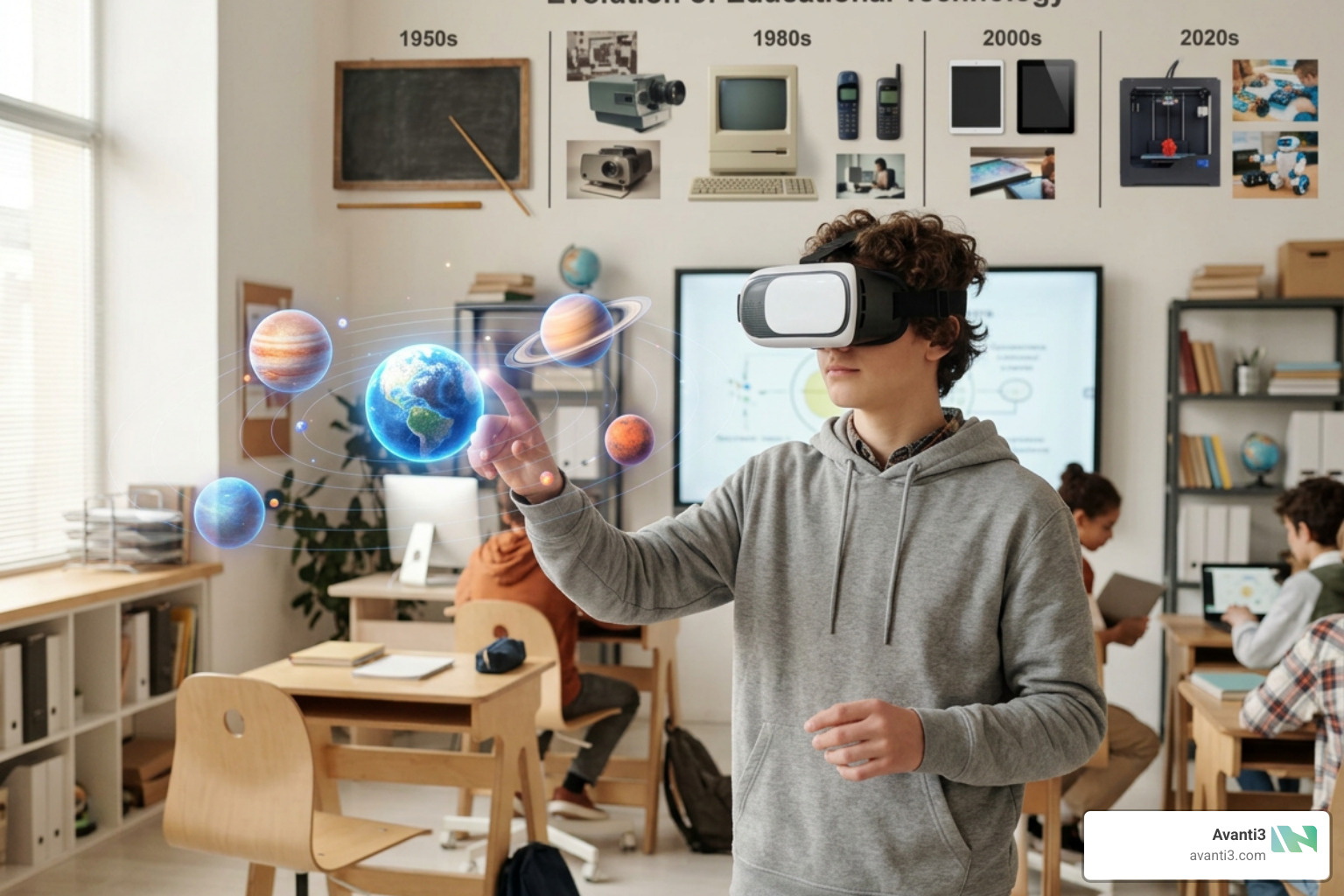
Over the past decade, educational technology has undergone a massive paradigm shift. In the early 2010s, virtual reality was largely a science-fiction dream or an expensive novelty confined to high-tech research labs. Fast forward to July 2026, and immersive tech is actively reshaping classrooms worldwide.
Historically, traditional teaching has relied heavily on rote learning and two-dimensional media. However, cognitive research shows that under traditional lecture-and-textbook methods, students forget an estimated 50% to 70% of what they learn within just 24 hours. Immersive technology solves this by shifting the teacher’s role from a simple content deliverer to a facilitator of active exploration.
The COVID-19 pandemic acted as a massive catalyst for this shift. When schools closed their physical doors, educators had to find ways to deliver remote, experiential learning. This accelerated the development of virtual science labs, digital field trips, and 360-degree recorded classroom sessions. Today, we know that VR for Learning is the Ultimate Classroom Upgrade because it transforms abstract concepts into tangible experiences.
Understanding the Core Differences: AR vs. VR
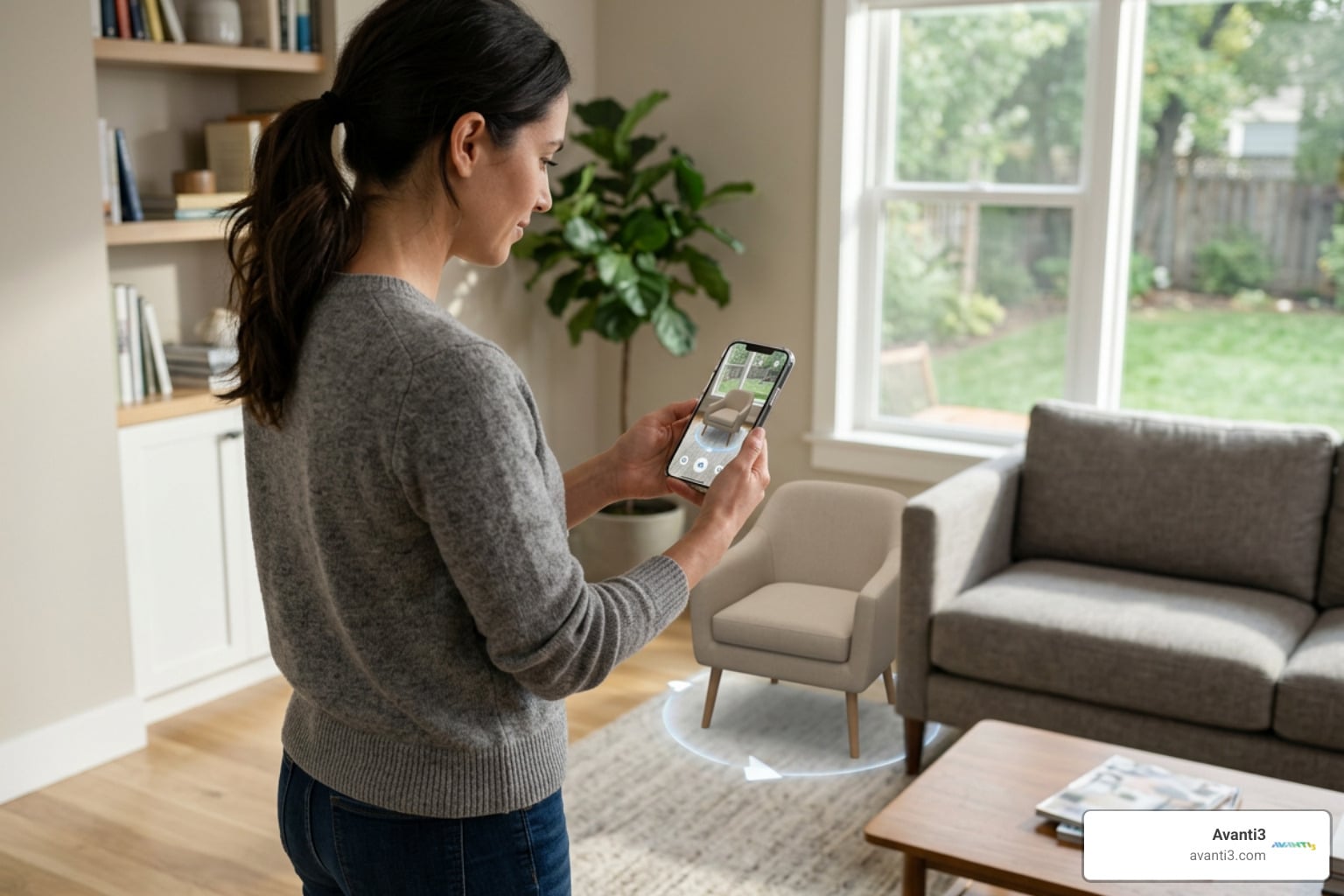
To build an effective immersive strategy, we must first understand the fundamental differences between Augmented Reality (AR) and Virtual Reality (VR).
| Feature | Augmented Reality (AR) | Virtual Reality (VR) |
|---|---|---|
| Experience | Overlays digital elements onto the real world | Completely replaces the physical environment |
| Hardware | Smartphones, tablets, or smart glasses | Dedicated VR headsets (standalone or PC-powered) |
| Context | Enhances real-world surroundings | Transports user to a fully simulated world |
| Typical Use | Interactive textbooks, 3D anatomy overlays | Virtual chemistry labs, historical walk-throughs |
As highlighted by research on Virtual and augmented reality in education, AR modifies real-world scenes by adding digital layers without disconnecting the student from their physical surroundings. VR, on the other hand, creates an entirely digital environment from scratch, completely isolating the user’s senses to maximize spatial presence.
Key Benefits of AR VR for Education in Modern Classrooms
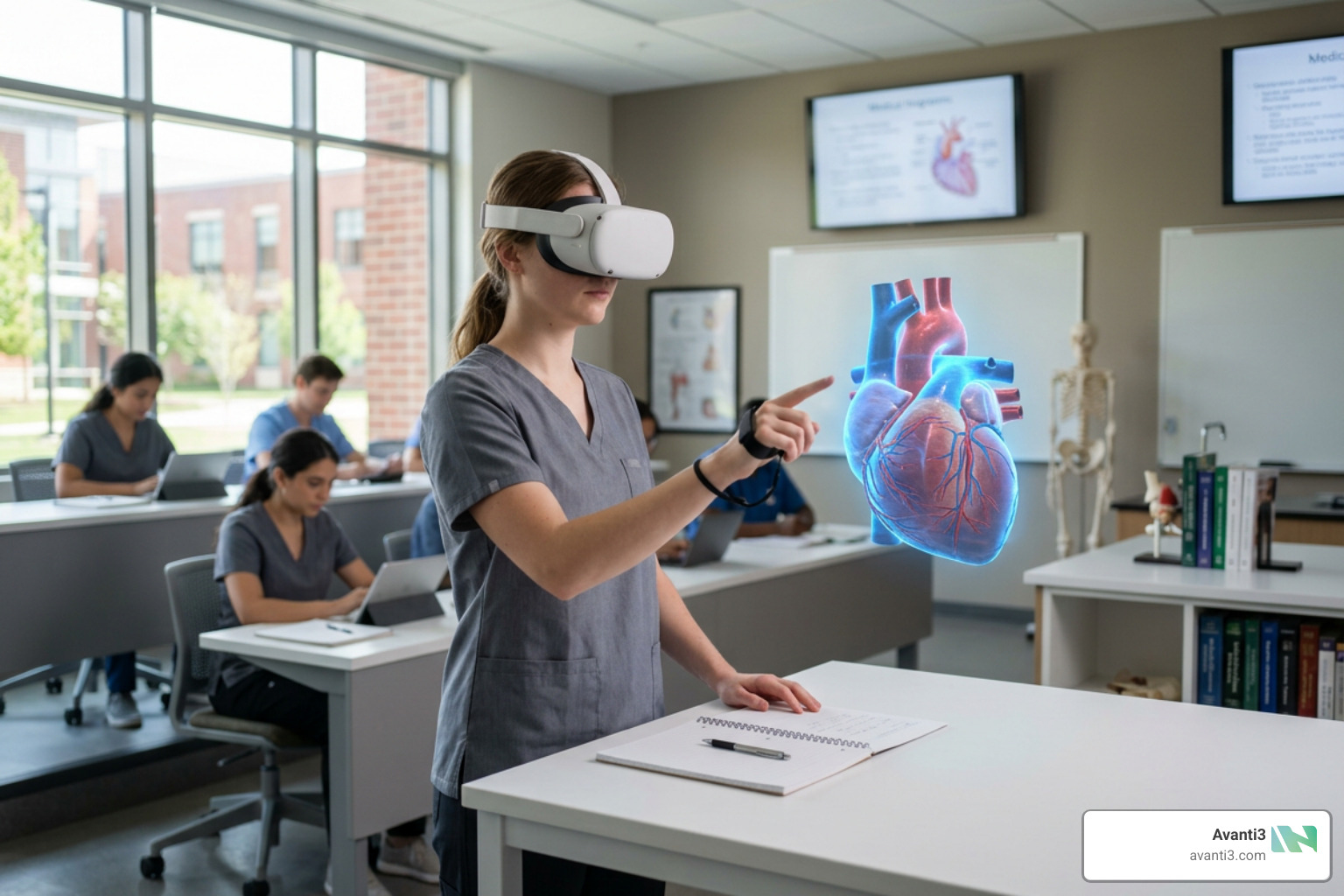
When we introduce AR VR for Education into the curriculum, we unlock several core psychological and cognitive benefits:
- Enhanced Knowledge Retention: By engaging multiple senses, immersive learning creates strong emotional connections and allows for safe repetition. This hands-on practice helps students retain complex information far longer than static reading.
- Autonomous Learning and Motivation: Students can explore environments at their own pace, receiving real-time feedback without the fear of making mistakes in front of peers.
- Spatial Reasoning Development: Immersive 3D environments allow students to manipulate objects along the X, Y, and Z axes. This is critical for mastering subjects like molecular chemistry, geometry, and engineering.
According to research on How Virtual Reality Can Improve Learning, students who learn via spatial, first-person experiences can successfully transfer this understanding to paper-and-pencil fluency. By starting with a 3D sensory experience, moving to 2D representations (graphs and tables), and finally introducing 1D formal equations, we create a highly effective “abstraction arc.”
Practical Applications Across Educational Levels
Immersive technology is highly adaptable, offering age-appropriate benefits across all educational tiers:
- Elementary Education: At this level, AR excels when combined with storytelling. For example, the study Scientific and Fantastical: Creating Immersive, Culturally-Relevant Learning Experiences with Augmented Reality and Large Language Models demonstrates how combining AR with cultural narratives and AI-driven characters significantly boosts elementary science learning and engagement.
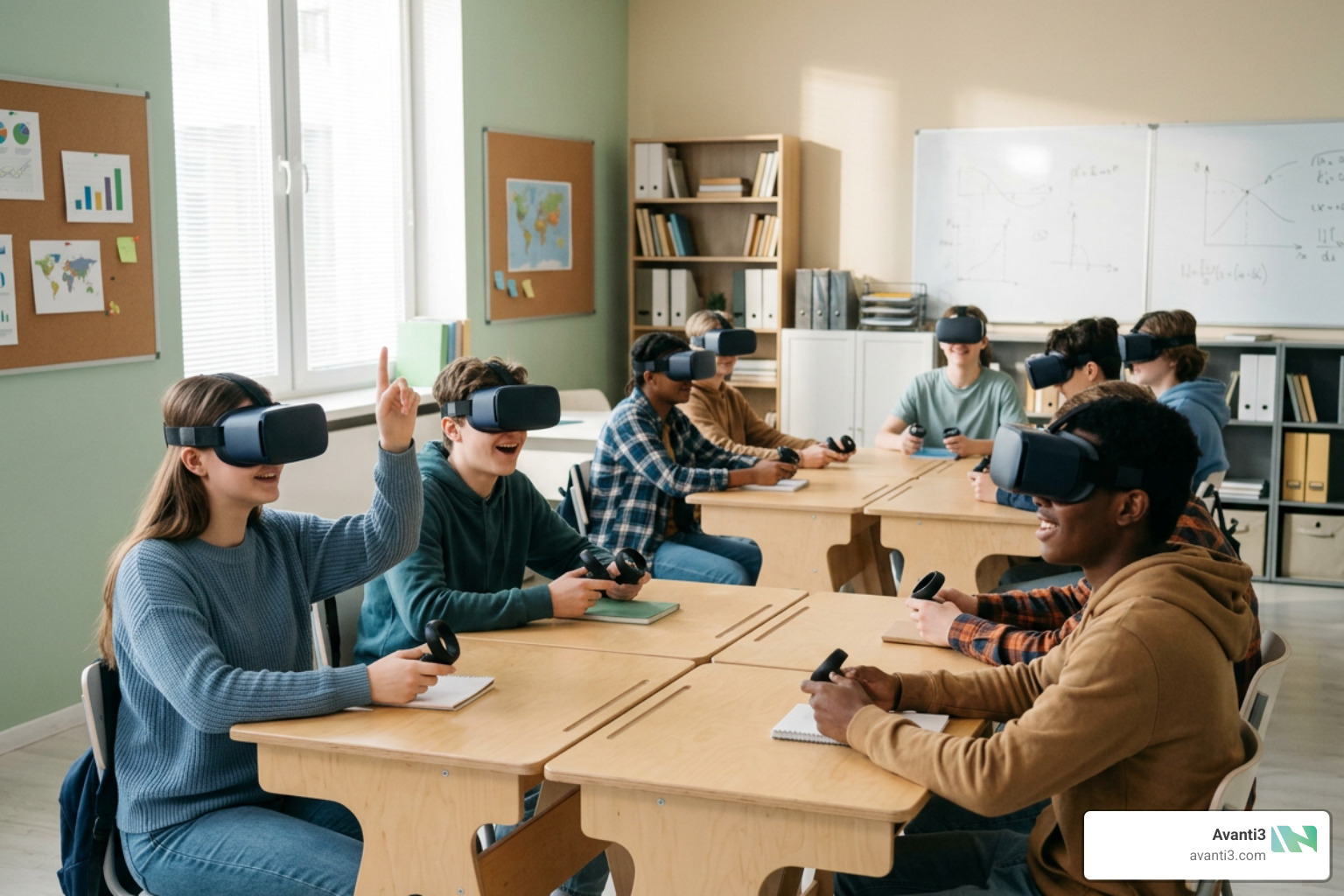
- Secondary (K-12) Education: Middle and high schools utilize immersive tools for virtual field trips and safe STEM labs. Platforms like Virtual Reality for Education and Eduverse | Virtual Reality Content for Education | ClassVR allow classrooms to explore the Amazon rainforest, Mars, or the inside of a cell in under two minutes without travel costs. Furthermore, systems like the VR Learning Management System for K-12 Schools | STiXR integrate curriculum-aligned science labs directly with teacher dashboards.
- Higher Education & Vocational Training: Universities and trade schools use VR to simulate high-stakes environments. Medical students practice surgery, architecture students run structural energy analyses on virtual buildings, and trade students practice technical engineering tasks safely.
Implementing Immersive Technology: Challenges, Best Practices, and the Future
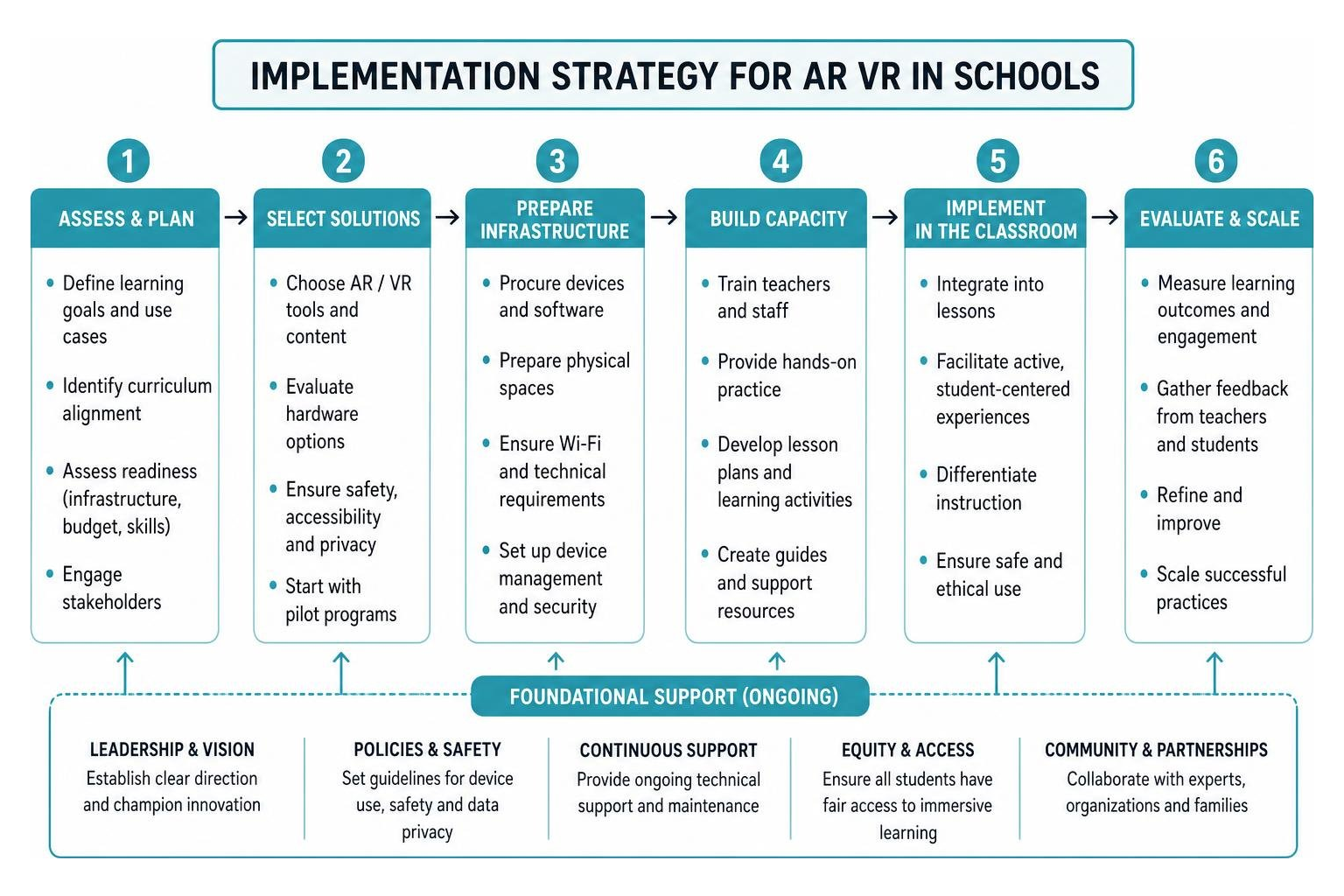
While the benefits are clear, successfully bringing AR and VR into school systems requires careful planning, robust infrastructure, and a clear pedagogical strategy.
Overcoming Implementation Challenges in Schools
The road to widespread adoption is not without its hurdles. The most common challenges include:
- Hardware and Software Costs: Outfitting a school with dedicated VR headsets can be expensive.
- The Digital Divide: Underfunded or rural schools often lack the high-speed internet and technical support required to run complex systems.
- Teacher Training and Scalability: Many educators feel overwhelmed by the technical setup. Without proper training, expensive headsets end up sitting in storage.
- Physical Side Effects: Some students may experience motion sickness, eye strain, or ergonomic discomfort.
To address these obstacles, schools should follow the guidelines outlined in How K–12 Schools Can Successfully Implement AR and VR in the Classroom. Best practices include starting with small pilot programs, ensuring all digital content aligns directly with national curriculum standards, and utilizing centralized classroom management portals to give teachers full control over student devices. For a deeper look at deployment strategies, the International Society for Technology in Education offers excellent blueprints on Deploying VR in Schools.
The Role of Mobile Platforms and WebXR
One of the most exciting trends in 2026 is the democratization of AR/VR through mobile learning (M-learning) and WebXR. We don’t always need high-end, expensive hardware to provide immersive experiences.
By using frameworks like the WebXR Device API, educational VR can run directly inside standard web browsers. This means students can access interactive 3D content on low-cost smartphones paired with simple Google Cardboard viewers.
Open-source projects showcase what is possible when we lower hardware barriers. For instance, the developer repository aryancta/vidya-verse demonstrates how to generate on-demand, bilingual VR science lessons using WebXR. Similarly, the revkae/xr-education-playground provides a Unity-based playground where children can learn to code using visual block programming directly inside a mobile VR environment. If you want to build your own lightweight assets, check out our guide on How to Create Augmented Reality Online Free Without Losing Your Mind.
Future Trends: AI, Web3, and AR VR for Education
Looking ahead, the future of education lies at the intersection of immersive reality, artificial intelligence, and Web3 technologies.
Generative AI is already making it possible to create highly personalized, real-time learning environments. Instead of static pre-programmed lessons, AI tutors embedded within AR/VR spaces can converse with students, answer spontaneous questions, and adjust the lesson difficulty on the fly.
Simultaneously, Web3 is introducing decentralized reward systems and digital credentials. At Avanti3, we specialize in integrating Web3 technologies like NFTs, blockchain, AR/VR, and AI to empower creators, brands, and educational institutions. By implementing a secure Digital Reward System for Students, schools can incentivize progress with digital badges, verifiable credentials, and tokenized achievements.
We believe that learning should be an active adventure. By combining gamified challenges with immersive tech, we can Level Up Learning: Innovative Digital Incentives for Today’s Classrooms to keep students motivated and excited.
Ready to Transform Your Educational Experiences?
Immersive technology is no longer a futuristic concept—it is a powerful tool available today. Whether you are an educator designing a modern curriculum, a brand building interactive training, or a creator looking to develop next-generation content, we are here to help you bridge the gap between physical and digital worlds.
Explore our custom solutions for AR/VR Immersive Experiences and discover how we can help you build highly engaging, future-proof learning environments.