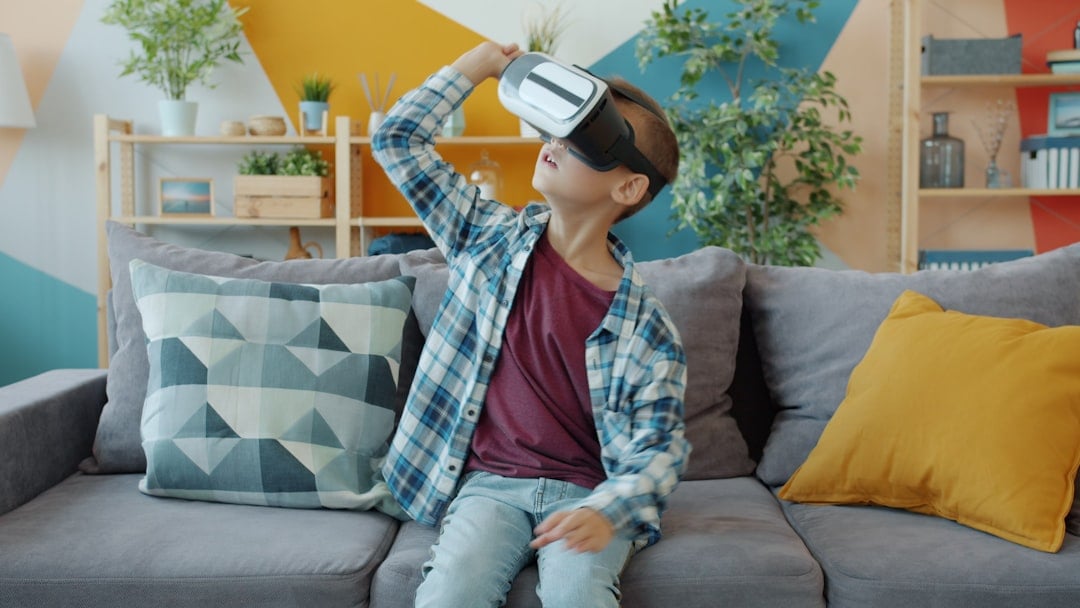


VR for learning is the ultimate classroom upgrade
Why VR for Learning Is Transforming Education in 2026
VR for learning is one of the most powerful shifts happening in education right now. Here’s a quick summary of what the research shows:
- Retention: VR can improve knowledge retention up to 4x compared to traditional methods
- Recall: Studies show over 8% improvement in knowledge recall
- Exam results: Some programs saw 10-15% higher scores after switching to VR
- Teacher demand: 67% of high school teachers want VR used regularly in classrooms
- Engagement: Immersive environments turn passive students into active learners
Think about the last time a lesson truly stuck with you. Chances are, you were doing something — not just listening.
That’s exactly what VR does. It replaces flat, passive content with hands-on, immersive experiences. Students don’t just read about the human body or the rainforest — they explore them.
And the data backs this up. Research from the Universitat Oberta de Catalunya found that VR can improve knowledge retention fourfold. A University of Maryland study showed VR boosts recall by over 8%. These aren’t small gains. For educators and institutions trying to close learning gaps, results like these are hard to ignore.
VR also meets students where they already are. With 85% of U.S. teens playing video games, gamified and immersive learning feels natural — not forced.
I’m Samir ElKamouny, a marketing expert and entrepreneur who has spent years studying how emerging technologies like VR for learning can transform the way people engage with information and build skills. In this guide, I’ll walk you through everything you need to know — from the science behind immersive learning to practical steps for bringing VR into any educational environment.
The Science and Strategy Behind vr for learning
As we move deeper into April 2026, the conversation around educational technology has shifted from “if” we should use immersive tools to “how” we can deploy them most effectively. The science supporting vr for learning is robust. Unlike traditional media—which often places the student in a passive, “flat” role—Virtual Reality demands active participation.
According to a systematic review of immersive VR in education, the technology is most effective when it promotes active manipulation and constructive creation. When students are physically (or virtually) moving objects, building structures, or navigating 3D spaces, their brains process the information as a lived experience rather than a memorized fact.

The scientific research on learning effectiveness suggests that this “action-oriented” approach is why we see such dramatic statistical improvements. For instance, Purdue University reported a 10-15% increase in national nursing exam results after integrating VR and Mixed Reality (MR) into their curriculum. Similarly, the NYU College of Dentistry successfully trained over 1,200 students using VR simulations, proving that high-stakes practical skills can be mastered in a digital environment before a student ever touches a physical tool.
Traditional vs. VR Learning: A Comparison
| Feature | Traditional Learning | VR for Learning |
|---|---|---|
| Engagement Type | Passive (Reading/Listening) | Active (Doing/Exploring) |
| Knowledge Retention | Baseline | Up to 4x Higher |
| Knowledge Recall | Standard | 8% Improvement |
| Safety | Real-world risks in labs | 100% Safe Simulation |
| Cost of Materials | Recurring (Chemicals, etc.) | One-time Software/Hardware |
| Lesson Time | Standard (e.g., 3 hours) | Compressed (e.g., <30 mins) |
Understanding the Spectrum of vr for learning
Not all vr for learning experiences are created equal. To implement this technology successfully, we must understand the “reality-virtuality continuum.”
- Non-Immersive VR: These are often 3D environments accessed via a standard computer screen. Think of a gamified history lesson where you move a character through a 3D world.
- Semi-Immersive VR: This often involves large projection screens or high-resolution monitors that provide a sense of depth and 3D space, frequently used in flight or driving simulators.
- Fully Immersive VR: This is the “gold standard” for virtual reality experiences. Using a Head-Mounted Display (HMD) like the Meta Quest or ClassVR, students are visually and auditorily isolated from the physical room. With haptic feedback (vibrating controllers) and spatial awareness, they feel truly present in a different world.
By leveraging 360-degree environments, we can transport a student from a classroom in Ohio to the surface of Mars or the depths of the Great Barrier Reef in seconds.
How AI and vr for learning Personalize Education
In 2026, the most exciting development is the marriage of VR and Artificial Intelligence. We are moving away from scripted, “one-size-fits-all” lessons toward highly personalized journeys.
Scientific research on AI role-play shows that AI-driven “Virtual Humans” can now engage students in realistic, adaptive conversations. Imagine a medical student practicing bedside manner with an AI patient that responds differently based on the student’s tone and word choice. This isn’t just a recording; it’s a generative scenario that provides real-time feedback.
Furthermore, platforms utilizing scientific research on 3D AI models allow students to interact with over a million 3D objects using natural voice commands. A student can point at a virtual engine and ask, “How does the fuel injection system work?” and an AI tutor will provide a contextual, 3D demonstration. This level of personalized guidance ensures that no student is left behind because they were afraid to ask a question in front of the class.
Breaking Barriers with Immersive Accessibility
One of our core missions at Avanti3 is using technology to foster equity. VR for learning is a game-changer for Special Educational Needs and Disabilities (SEND) support. For neurodivergent learners, the traditional classroom can be overwhelming or distracting. VR provides a controlled, multi-sensory environment where they can focus.
More info about AR/VR immersive experiences highlights how VR creates a “safe space” for risk-taking. Students with social anxiety can practice social interactions in a virtual setting before applying those skills in the real world. For students with physical disabilities, VR offers the chance to participate in “virtual field trips” or lab experiments that might otherwise be inaccessible. It levels the playing field, ensuring every student has the same opportunity to explore and succeed.
Implementing VR in Modern Educational Environments
Bringing vr for learning into a school isn’t just about buying a box of headsets; it requires a strategic approach. Whether it’s K-12, higher education, or vocational training, the goal is to move from “novelty” to “necessity.”
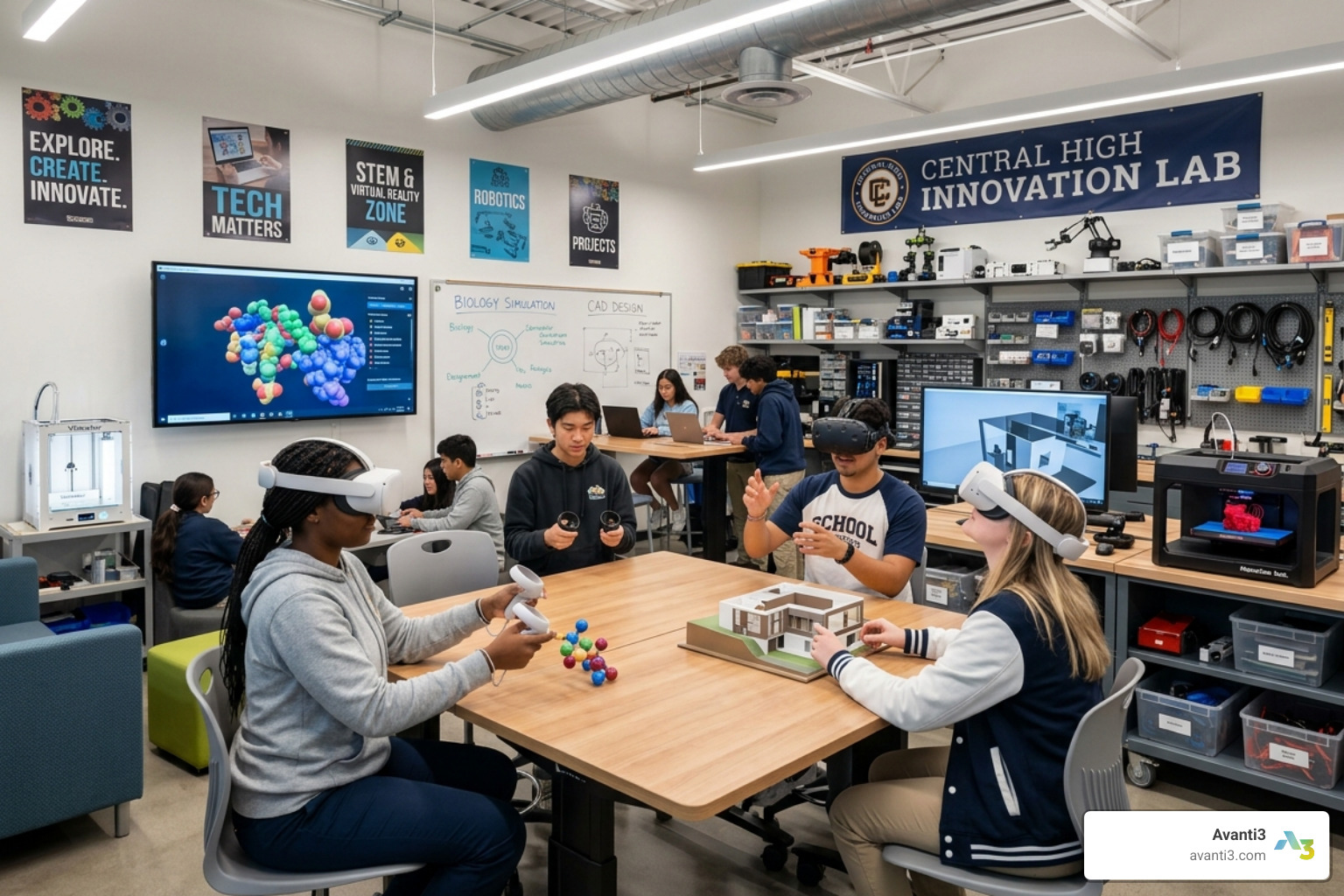
Scientific research on VR in schools emphasizes that successful implementation starts with teacher buy-in. Currently, 82% of high school teachers believe XR (Extended Reality) experiences are well-designed and deliver high-quality academic content. However, they need support. Schools like the University of Maryland have set a great example by allowing faculty to “check out” VR headsets for experimental teaching, backed by dedicated training sessions.
Steps for a Successful VR Rollout:
- Define the Vision: Identify specific subjects where traditional methods are failing or where “real-world” experience is too expensive or dangerous.
- Curriculum Alignment: Don’t just “play” in VR. Use tools that offer standards-aligned templates to ensure the time spent in the headset contributes to graduation requirements.
- Professional Development: Provide educators with hands-on training so they feel confident managing the technology.
- Start Small: Begin with a dedicated “Innovation Lab” before scaling to every classroom.
From Virtual Field Trips to Advanced STEM Labs
The applications for vr for learning are limited only by our imagination. In K-12, virtual field trips are the most popular entry point. Instead of watching a video about ancient Rome, students can walk through the Forum.
In higher education and vocational training, the focus shifts to high-fidelity simulations. Scientific research on mixed reality labs shows that for 99% of high school and freshman students, mixed reality is a superior way to learn compared to physical labs. Why? Because it’s safer and more sustainable. Students can dissect digital creatures or experiment with volatile chemicals without the risk of injury or the cost of recurring supplies.
We are also seeing a massive surge in virtual art experiences. Students can “step inside” a painting to understand perspective or use 3D brush tools to create sculptures in mid-air. This type of Career and Technical Education (CTE) simulation prepares students for modern industries like computer-aided design, architecture, and digital media.
Managing Hardware, Costs, and Curriculum Alignment
The logistics of vr for learning are often the biggest hurdle for administrators. How do you store 30 headsets? How do you keep them charged? How do you ensure students are actually looking at the lesson and not playing a game?
Scientific research on Meta for education and other dedicated platforms like ClassVR have solved many of these issues. Modern solutions now include:
- Mobile Device Management (MDM): Allows teachers to control what every student sees from a central tablet.
- Charging Carts: Secure, wheeled cabinets that charge and sanitize headsets overnight.
- Flexible Payment Plans: Many providers now offer subscription models starting around $219/month, making the tech accessible to schools with tighter budgets.
Best Practices for Device Management:
- Use Dedicated Storage: Keep headsets in a cool, dry place, ideally in a locking charging cart.
- Set Clear Policies: Treat VR headsets like any other school-issued device (laptops or tablets).
- Prioritize Security: Use MDM systems to set age-appropriate filters and prevent unauthorized app downloads.
- Seek Funding: Look for state grants and federal educational technology funding specifically earmarked for immersive learning.
At Avanti3, we believe that the future of engagement lies in these immersive worlds. By integrating AR/VR with our customizable engagement tools, we help institutions create digital ecosystems where learning is a reward in itself. If you’re ready to see how these technologies can be tailored to your specific needs, we invite you to explore Avanti3 AR/VR Immersive Experiences.
The Future is Immersive
By April 2026, the “ultimate classroom upgrade” is no longer a faster laptop or a bigger smartboard—it’s a portal to other worlds. VR for learning has proven its worth in the lab and the classroom. It saves time (like the HoloLens reducing a three-hour lesson to 30 minutes), it saves money (by reducing physical lab waste), and most importantly, it saves the spark of curiosity in students.
When we give a student a headset, we aren’t just giving them a gadget. We are giving them the ability to be fearless in their exploration. Whether they are navigating a nanoscale semiconductor facility or practicing a sales pitch with an AI avatar, they are building the skills required for the 2026 workforce.
The transition to immersive education is a journey, not a sprint. By starting with clear goals, choosing the right hardware, and focusing on curriculum-aligned content, schools can provide an education that is not just heard or seen—but truly experienced.