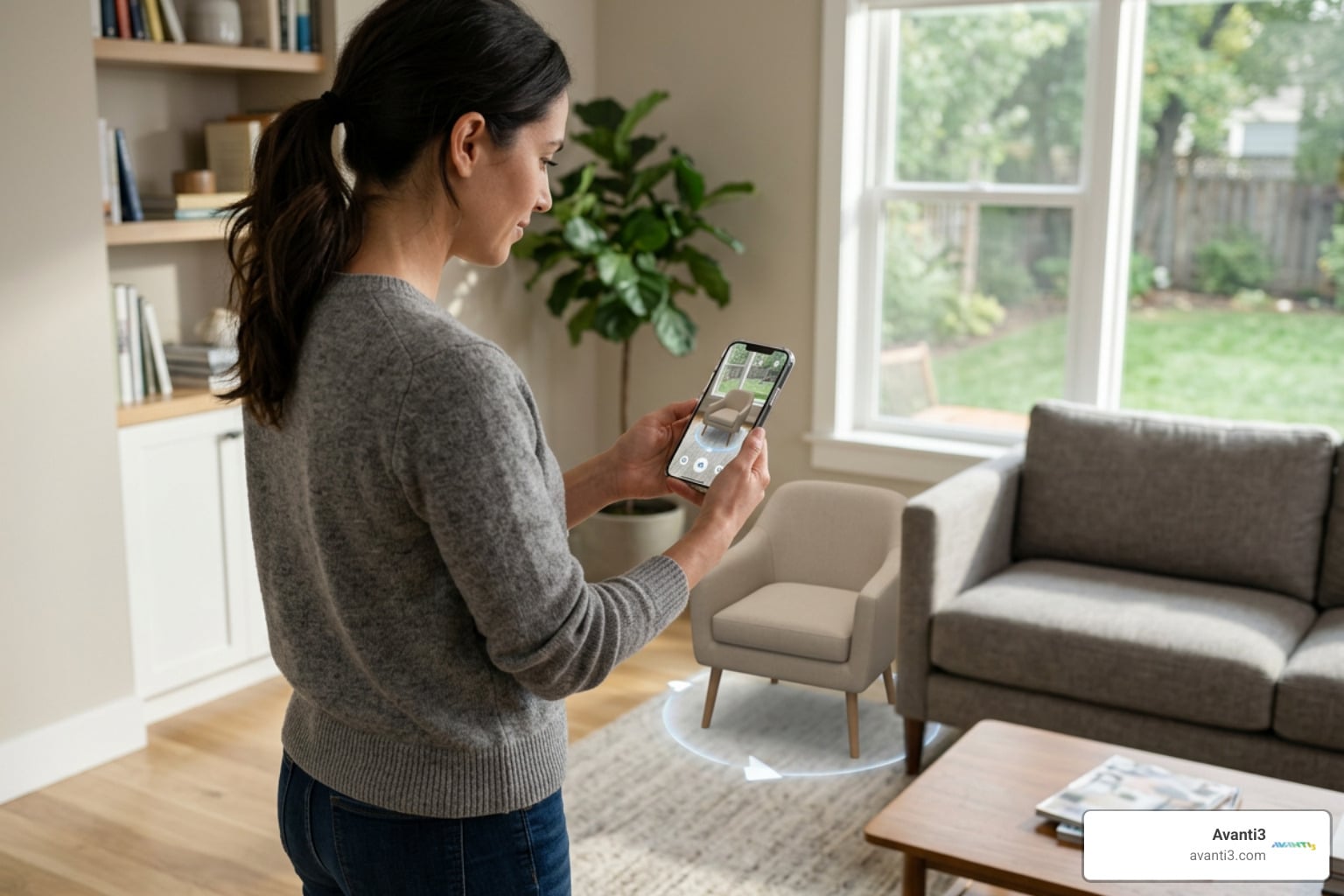


Discover How AR E-Commerce Integration Tools Are Reshaping Online Retail
Why AR E-Commerce Integration Tools Matter for Online Retail
AR e-commerce integration tools add interactive 3D views, virtual try-ons, and “view in your space” features to product pages. For most stores, the best starting point is a browser-based tool that works with the existing storefront, supports optimized GLB and USDZ product models, and connects each experience to the correct SKU, cart, and analytics data.
This matters because photos can show what a product looks like, but they cannot answer a buyer’s most important questions: Will it fit? Will it match? What will it look like in my space? AR closes that gap by letting shoppers place a true-scale digital version of an item in their room or try it on before checkout.
For brands selling furniture, decor, eyewear, beauty products, footwear, or customizable goods, that added confidence can mean more time on product pages, stronger add-to-cart rates, and fewer fit- or scale-related returns. The most useful tools also fit into the wider commerce stack, keeping product data, inventory, customer records, payments, and fulfillment workflows aligned.
I am Samir ElKamouny, an entrepreneur and marketing strategist focused on helping businesses turn emerging technology into practical growth. In this guide, I will break down AR e-commerce integration tools in clear terms so brands can choose options that support engagement, revenue, and scalable customer experiences.
AR e-commerce integration tools vocab to learn:
Key Capabilities and Types of AR E-Commerce Integration Tools
Online retail has grown into a $6.3 trillion global market, yet flat photography continues to leave shoppers guessing. When buyers cannot physically interact with products, hesitation sets in. By now, seeing is believing why AR product visualization is the new normal across digital storefronts, turning static listings into interactive experiences.
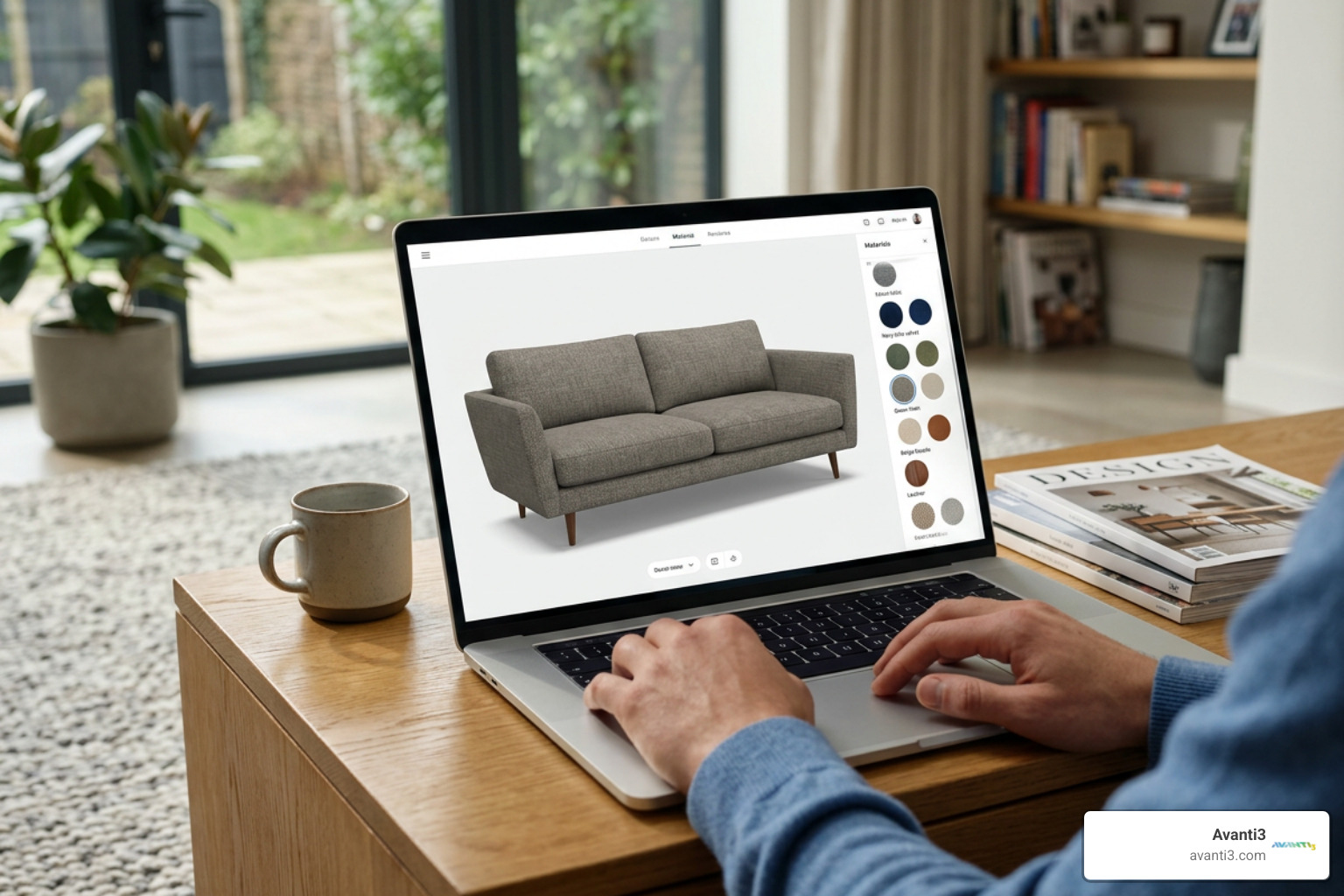
Modern solutions fall into three main integration approaches:
| Integration Method | Best For | Technical Complexity | Core Strengths |
|---|---|---|---|
| Web-based AR (WebAR) | Fast storefront rollouts on standard CMS platforms | Low to Moderate | No app downloads; instant browser compatibility |
| Native Mobile SDKs | Dedicated apps needing advanced camera tracking | High | Complex face tracking, lidar spatial mapping |
| Headless AR Connectors | Custom enterprise headless storefronts | Moderate to High | Complete UI flexibility; decoupled asset delivery |
Web-Based AR E-Commerce Integration Tools and 3D Viewers
Nobody wants to download a separate mobile app just to preview a desk or a pair of sunglasses. That is why web-based AR solutions have become the gold standard for browser-native shopping. Using open web standards alongside Apple Quick Look on iOS and Google Scene Viewer on Android, shoppers can tap a single button on a product page and view items in their room instantly.
These tools also power virtual fitting rooms and shopping platforms for apparel, cosmetics, and footwear. Modern browser-based spatial engines provide surface-detection accuracy down to ±5mm, letting customers assemble modular furniture, test layout configurations, or verify exact physical dimensions before buying.
Technical Architectures for AR E-Commerce Integration Tools
Connecting spatial computing to a live catalog requires a clean asset pipeline. Frontends typically request lightweight 3D models delivered via Content Delivery Networks (CDNs) to maintain fast page speeds and high frame rates.
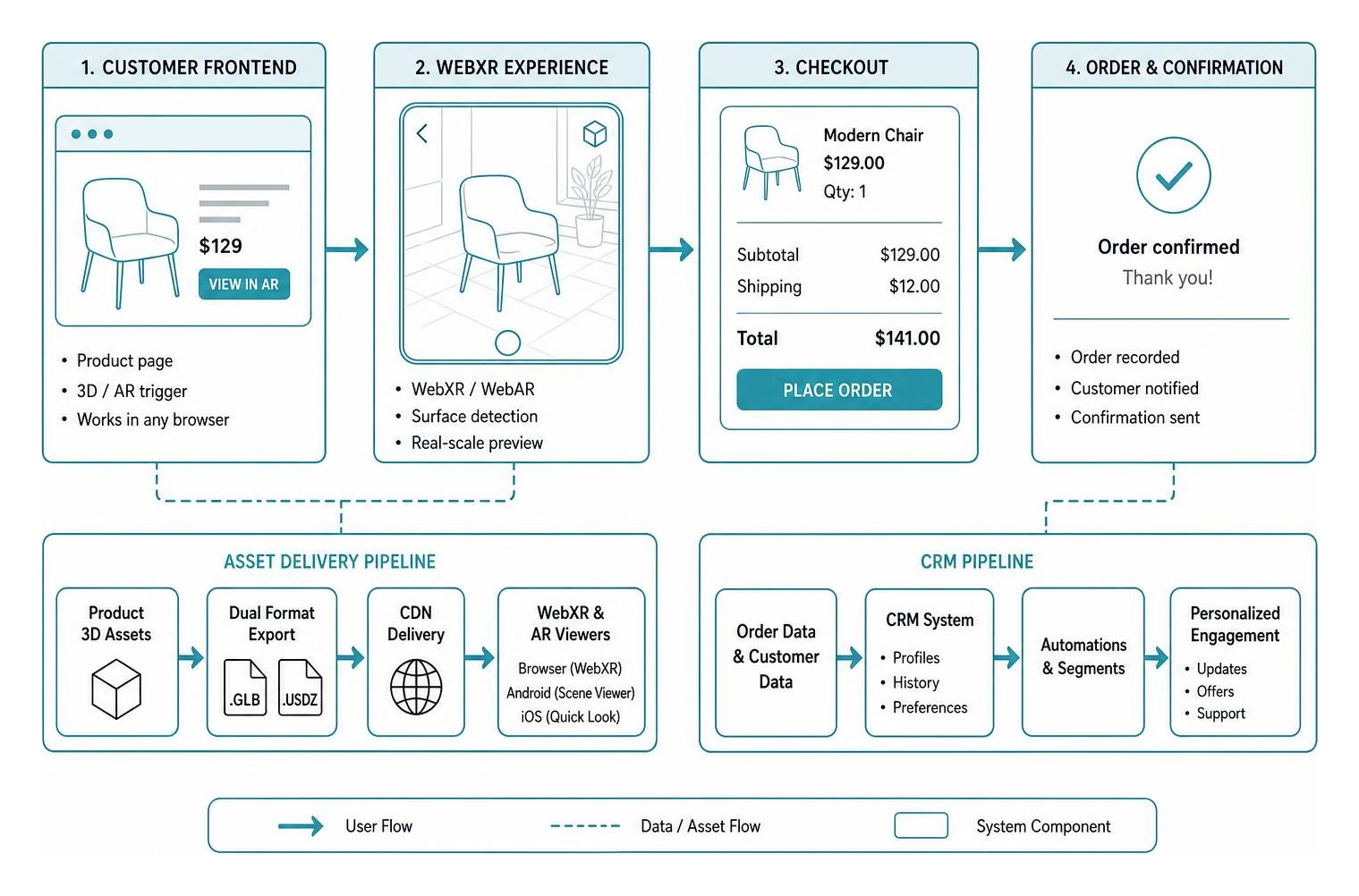
For standard platforms like Shopify, WooCommerce, and BigCommerce, merchants can use dedicated store integrations or developer utilities like the ecommerce-3d-mcp package to bind 3D assets to product metafields. Dual-format support ensures smooth operation across all mobile ecosystems:
- .GLB files serve WebXR protocols and Android Scene Viewer sessions with efficient geometry and compressed PBR textures.
- .USDZ files render native AR Quick Look on iOS and iPadOS devices without third-party plugins.
Automated 3D reconstruction pipelines and AI-assisted scanning workflows can convert standard multi-angle product photography into interactive spatial assets in minutes, drastically reducing 3D authoring overhead and accelerating catalog rollouts.
Operational Impact on Inventory, Conversions, and Returns
Adopting AR & VR shopping creates measurable operational improvements across retail workflows:
- Conversion Rate Lift: Interactive 3D visualization drives up to a 94% increase in conversions as spatial uncertainty disappears and product comprehension rises.
- Reduced Returns: Up to 40% of retail returns stem from incorrect scale or color expectations; AR lets shoppers validate fit in their real environment before ordering.
- Dwell Time: Customers spend up to 3x more time interacting with configurable 3D models compared to static image galleries, signaling deeper intent.
- Streamlined Catalog Management: A single 3D master asset handles dozens of color and material variations, avoiding variant bloat and manual photography costs.
- Optimized Reverse Logistics: By eliminating mismatched expectations early, brands reduce shipping waste, repackaging costs, and customer support friction.
Best Practices for Selecting and Integrating AR Software
When evaluating augmented reality platforms, ensure your chosen solution connects smoothly with your broader tech stack:
- Audit Your Catalog: Prioritize high-ticket items, complex configurable products, and return-heavy SKUs for your initial 3D rollout to maximize immediate ROI.
- Prioritize Page Speed: Use asynchronous CDN script loading and Dracone-compressed 3D assets so viewers never slow down primary page content or hurt Core Web Vitals.
- Synchronize CRM and Support: Connect viewing and configuration data to tools like HubSpot or Zendesk so support agents can see which 3D variations a shopper inspected.
- Unify Checkout Workflows: Ensure the configurator passes the selected options directly to payment gateways like Stripe without generating duplicate backend SKUs.
- Track Spatial Interaction Analytics: Measure session duration, rotation angles, and placement hotspots to uncover how users evaluate specific design features.
Future Trends and Scaling Immersive Retail with Avanti3
As retail evolves, spatial computing is merging with Web3, digital ownership, and AI-driven personalization. Next-generation storefronts are shifting from isolated product viewers to comprehensive, shared interactive environments where physical products, digital twins, and customer loyalty converge.
We at Avanti3 help brands bridge physical commerce with next-generation digital experiences by combining AR/VR, smart contracts, tokenized loyalty rewards, and interactive 3D spaces. Our infrastructure connects spatial product exploration directly with blockchain-verified ownership, allowing customers to unlock exclusive digital perks or access physical releases through immersive brand touchpoints.
Whether you want to build interactive virtual showrooms, implement scalable browser-based 3D configurators, or launch token-gated digital twins, explore our AR/VR immersive experiences to see how we help businesses drive engagement, reduce operational friction, and establish long-term customer loyalty.