

The Ultimate Guide to Augmented Reality Fan Interactions
Why Augmented Reality Fan Interactions Are Changing Sports Forever
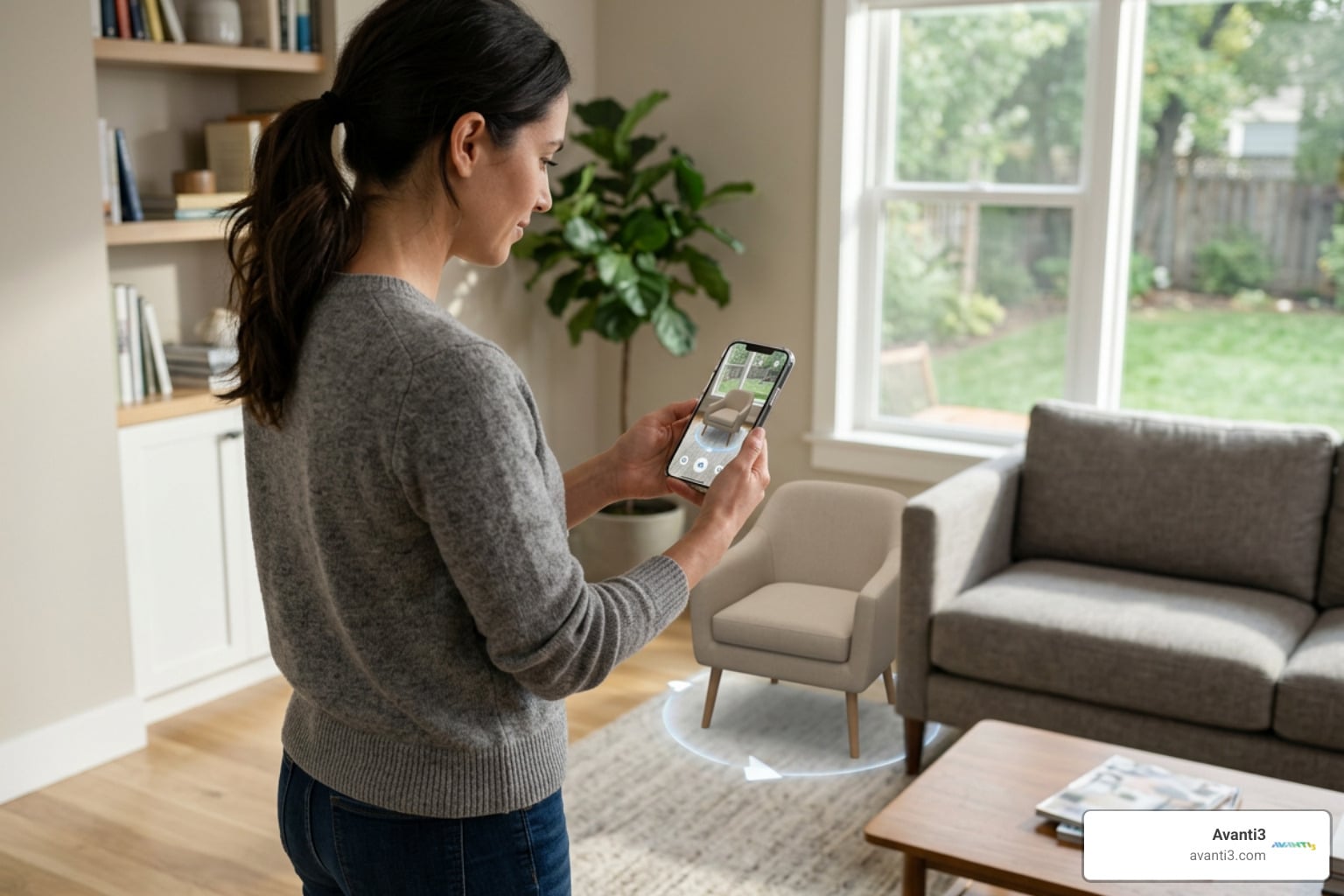
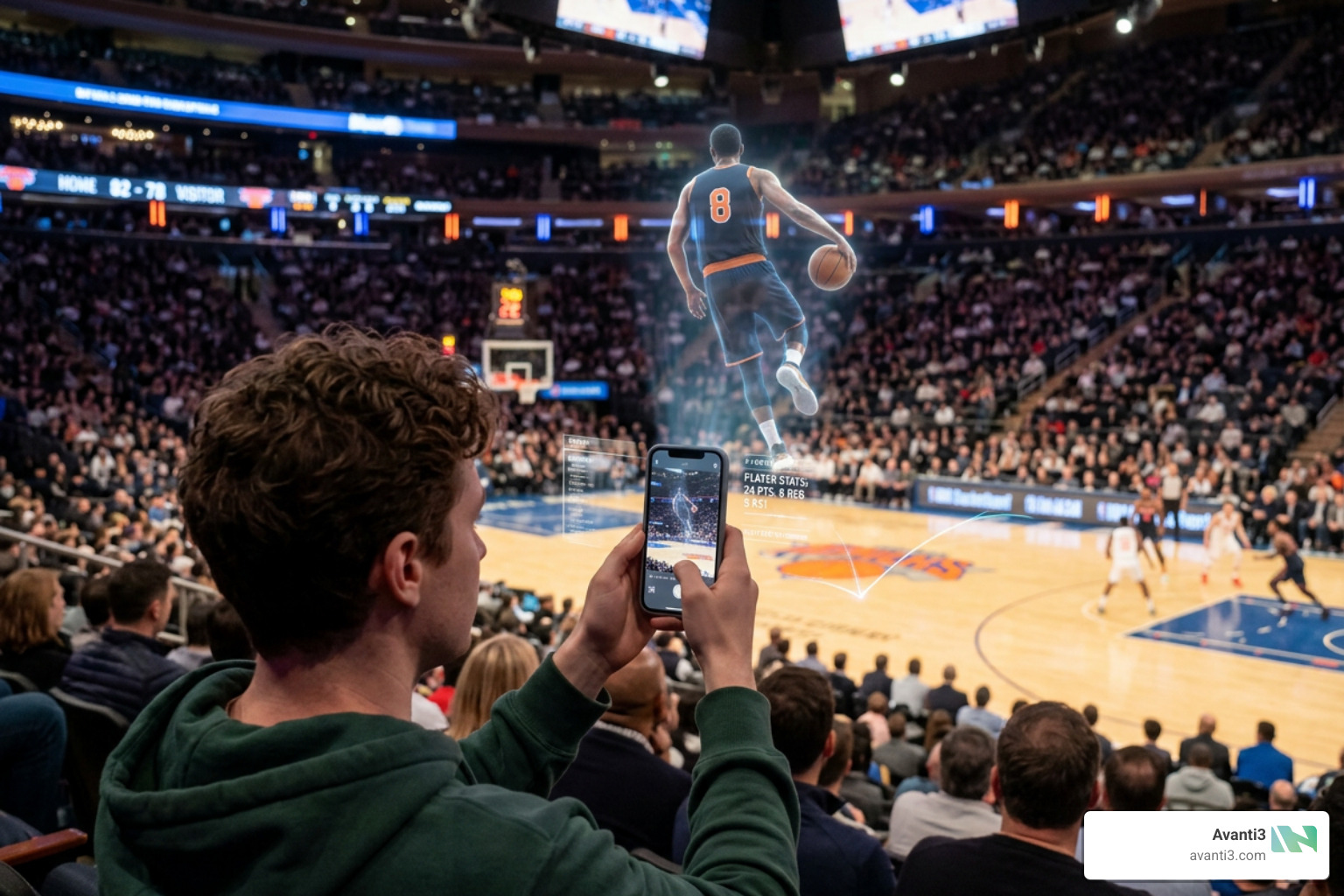
Augmented reality fan interactions are the use of digital overlays — 3D graphics, virtual players, live stats, and gamified experiences — layered onto the real world through a smartphone, tablet, or screen to make fans active participants instead of passive viewers.
Here’s a quick breakdown of what that looks like in practice:
- In-stadium AR games — fans play multiplayer games on their phones during halftime
- AR social filters — fans try on virtual jerseys or pose with digital mascots on social media
- Live stat overlays — real-time player data appears on screen during a broadcast
- Virtual meet-and-greets — fans interact with 3D versions of their favorite athletes
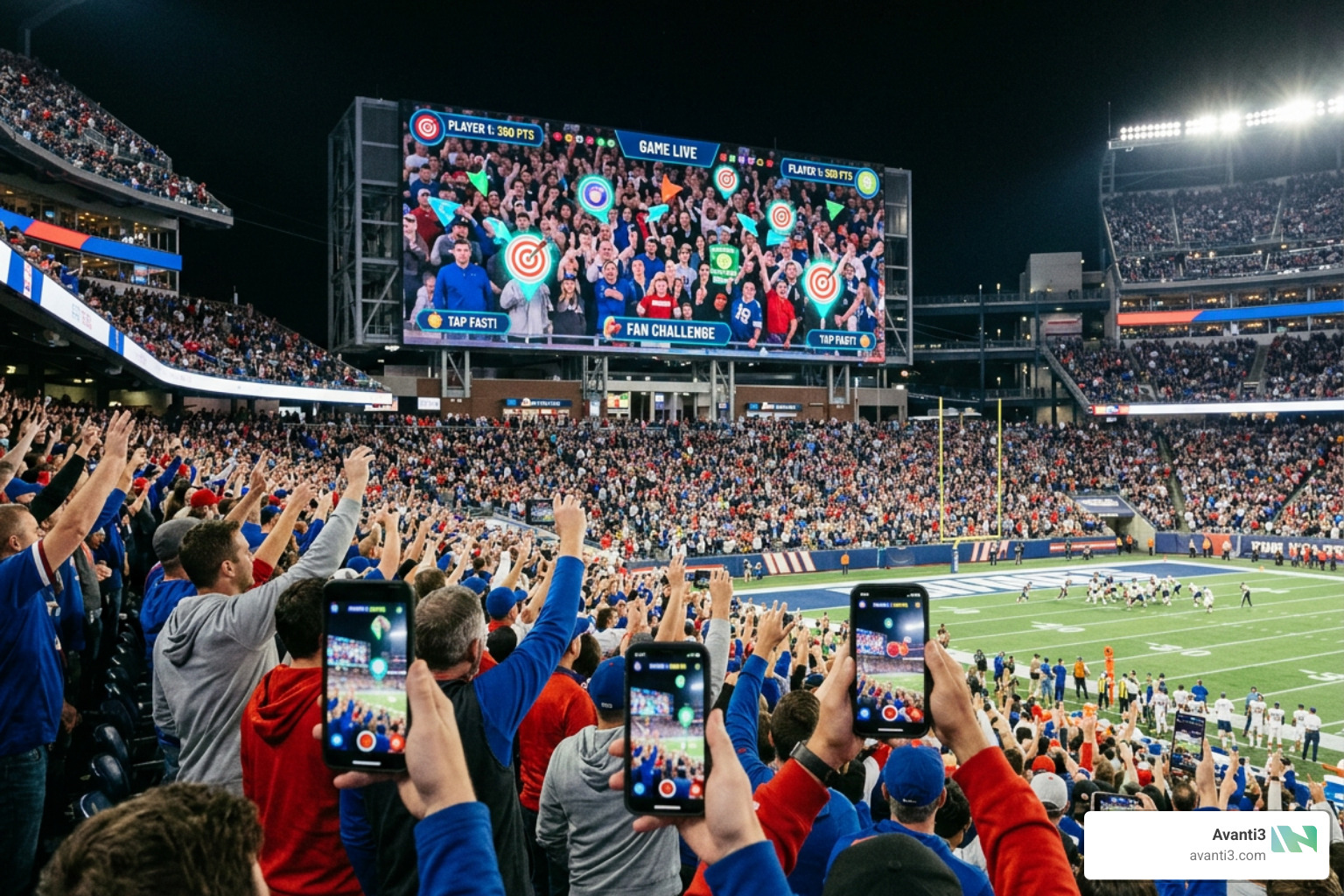
- AR fan cams — stadium screens show fans with animated digital effects layered over them
The numbers back up why this matters. Around 79% of sports fans say they’re more interested in sports content when AR or virtual graphics are present. AR applications have driven a 40% rise in fan interactions during football matches. And one sports club saw a 3,000% increase in daily app registrations within 24 hours of launching an AR campaign.
The fan engagement market was valued at $6.68 billion in 2024 and is projected to reach $44.71 billion by 2034. The shift from passive spectator to active participant isn’t a trend — it’s the new standard.
I’m Samir ElKamouny, a marketing expert and entrepreneur who has spent years helping brands scale through cutting-edge digital strategies, including augmented reality fan interactions that turn audiences into loyal, high-value communities. In this guide, I’ll walk you through exactly how to implement AR fan engagement — from the technology stack to revenue generation and beyond.
How to Implement Augmented Reality Fan Interactions to Drive Revenue and Engagement
Implementing immersive technology isn’t just about showing off cool digital tricks; it is a fundamental shift in sports marketing and fan psychology. Today, we are witnessing a massive digital transformation. The traditional playbook of plastering static logos on billboards or sending generic email newsletters is losing its grip. Modern audiences expect to be part of the action.
To build a successful campaign, we must focus on creating meaningful experiences that tap into a fan’s desire for connection, play, and recognition. When we design these touchpoints, we bridge the physical and digital worlds, converting casual observers into passionate brand advocates. This is the core of Augmented reality engagement, where technology serves as the ultimate bridge between the team on the field and the community in the stands.
Understanding Augmented Reality Fan Interactions vs. Traditional Engagement
To understand why augmented reality fan interactions are so disruptive, we have to look at how they stack up against traditional engagement methods. Historically, sports clubs relied on one-way communication: fans bought a ticket, sat in a seat, watched a game, bought a hot dog, and went home.
By contrast, AR introduces a two-way dialogue. It turns the stadium into a giant, programmable playground.
| Feature | Traditional Fan Engagement | AR-Powered Fan Engagement |
|---|---|---|
| Viewer Role | Passive spectator | Active, gamified participant |
| Interactivity | Low (watching, cheering) | High (playing games, trying on gear) |
| Reach | Limited to physical location | Global and highly shareable |
| Data Collection | Limited (ticket sales only) | Rich first-party data (preferences, email) |
| Sponsorship Value | Static logos and banners | Immersive, trackable branded games |
This shift directly impacts fan behavior. Our research shows that approximately 79% of sports fans are far more interested in sports content if virtual and graphic elements like AR are present. Furthermore, AR applications lead to a 40% rise in fan interactions during football matches. By giving fans the tools to play, customize, and share, we aren’t just entertaining them; we are completely redefining the modern fan experience. For a deeper dive into why these shifts are occurring, check out Your guide to immersive experiences what they are and why they matter.
Real-World Case Studies of Augmented Reality Fan Interactions in Action
The sports world is already full of incredible examples of AR redefining the game day. These aren’t speculative concepts; they are highly successful campaigns that have driven massive real-world results.

One incredible example comes from European football, where a major club implemented an AR Fan Cam. By integrating the stadium’s giant screens with AR filters, they projected 3D effects, virtual jerseys, and digital mascot overlays directly onto the crowd during pre-match and halftime breaks. This transformed a passive “Jumbotron” moment into a collective, interactive game that united tens of thousands of cheering fans.
Meanwhile, in South America, Clube Atlético Mineiro achieved mind-blowing results by integrating an AR Software Development Kit (SDK) into its official mobile app. Fans could project realistic, green-screened virtual players right into their own living rooms. The campaign led to a staggering 3,000% increase in daily app registrations and racked up over 12,000 unique interactions in its first 24 hours alone.
Other clubs have taken a physical-first approach. For instance, you can read Inside Real Madrid CF’s Fan Activation at Bernabéu Stadium to see how permanent, interactive corridors can use projection-based drills and real-time tracking to turn idle stadium space into ticketed, year-round attractions.
To see how these concepts translate across different platforms, you can also explore:
- The technical execution of the Inter Miami Fans AR Lens | UNIT9, which brought the stadium atmosphere straight to fans’ living rooms.
- The wide range of activations discussed in 4 AR Fan Experience Examples Disrupting the Sports Industry, which showcases how brands are using large-screen installations to let fans test their skills against virtual athletes.
- Our own insights on AR-powered brand engagement to understand how to design these experiences for maximum impact.
The Technology Stack: WebAR, Mobile SDKs, and Immersive Platforms
To bring these experiences to life, we need to choose the right technology delivery method. There are three primary routes to deploy AR to your audience:
- WebAR (Web-based Augmented Reality): This is the absolute king of frictionless deployment. Fans simply scan a QR code on a stadium screen or ticket, and the AR experience opens instantly in their mobile browser. No app download required. Platforms like ARound AR use this method to deliver massive, synchronized multiplayer games to thousands of fans simultaneously.
- Mobile App SDKs: If you already have a dedicated team app, you can integrate an AR SDK (Software Development Kit). This allows you to build highly complex, high-performance AR experiences (like the Clube Atlético Mineiro campaign) directly into your existing ecosystem, driving up app retention and registrations.
- Social Media AR Platforms: Tools like Spark AR (for Meta) and Snap Camera Kit allow you to build custom face filters, virtual try-ons, and interactive lenses that live on Instagram, TikTok, or Snapchat. This is perfect for driving viral, user-generated content (UGC).
If you are wondering how to build these out, our guide on How to develop augmented reality application breaks down the technical steps and development pipelines you need to know.
Monetizing the Experience: Sponsorships, Virtual Try-Ons, and Merchandising
How do we turn these interactive moments into cold, hard cash? In the 1980s, ticket sales made up nearly 90% of a sports club’s revenue. Today, that number has plummeted to just 15-20%, making alternative digital revenue streams absolutely vital.
AR fan interactions monetize beautifully across three main categories:
- Immersive Merchandising & Virtual Try-Ons: Instead of looking at a flat 2D grid of t-shirts, fans can use virtual try-ons to see exactly how a jersey looks on them. According to data from Snap and Deloitte, virtual try-ons lead to a 94% higher conversion rate and up to 66% lower returns. Additionally, 88% of retail decision-makers who invested in virtual stores reported an immediate uplift in sales.
- Premium Sponsorship Activations: Brands are willing to pay a premium to be part of a memorable experience. Instead of a static banner, sponsors can power interactive halftime games, branded scavenger hunts, or AR quizzes where fans win digital coupons.
- At-Home Interactive Commerce: By bringing the stadium experience into the living room, teams can sell digital merchandise, ticket add-ons, and exclusive sponsor products long after the final whistle blows.
To explore this further, check out how Virtual fitting rooms and shopping platforms that actually work are changing e-commerce, and learn Why your brand needs advertising in augmented reality right now. You can also read more about how immersive technology is reshaping the sports landscape in this analysis on How immersive experiences are revolutionizing fan engagement.
Overcoming Implementation Challenges and Measuring ROI
Of course, deploying new technology comes with its own set of hurdles. The three main challenges are:
- Accessibility & Friction: If fans have to download a massive 500MB app over weak stadium Wi-Fi, they won’t do it. The Solution: Use WebAR or lightweight SDK integrations to keep the entry barrier as low as possible.
- Operational Complexity: Managing physical installations can be tough. The Solution: Design modular systems. For example, use ceiling-mounted projectors and retractable screens that can be easily tucked away during high-traffic match days to keep crowd flows safe.
- Cost vs. Return: AR can feel like a major upfront investment.
However, the ROI metrics for AR are incredibly strong and highly measurable. When we look at the data, AR fan engagement tools achieve:
- Up to an 82% conversion rate on targeted calls-to-action.
- A 78% subscription rate for newsletters and marketing updates.
- Massive organic reach, with up to 61% of uploaded AR photos being shared directly to social media, turning your fans into active, organic promoters.
By tracking these metrics—such as social shares, newsletter sign-ups, and direct merchandise conversions—you can easily calculate the direct financial impact of your AR campaigns. To build a solid strategy around these metrics, consult The ultimate guide to augmented reality advertising campaigns.
The Future of Immersive Sports: AI, Web3, and Shared Stadium Moments
As we look toward the future, the integration of AR with other emerging technologies will unlock entirely new frontiers for fan engagement.
First, AI integration will allow AR platforms to analyze fan behavior and preferences in real time. Imagine pointing your phone at the field and receiving highly personalized stat overlays based on your favorite fantasy players.
Second, we will see more shared stadium-wide moments. Instead of isolated individual screens, thousands of fans will participate in synchronized AR light shows, collaborative multiplayer games, and massive digital tifo displays that react dynamically to the game’s biggest moments.
Finally, the convergence of Web3 and AR is opening up incredible monetization models. By completing AR challenges in the stadium, fans can unlock exclusive digital collectibles, NFTs, and blockchain-based loyalty rewards. These digital assets can grant access to VIP virtual lounges, future ticket discounts, or unique physical merchandise. If you want to see how these digital assets can cross over into the physical world, read our guide on How to bring your bored ape to life using AR integration.
Conclusion: Elevating the Fan Experience with Next-Gen Technology
The era of passive sports consumption is officially over. Today’s fans want to play, customize, share, and connect. By implementing augmented reality fan interactions, sports organizations can capture first-party data, unlock massive new sponsorship opportunities, and build a fiercely loyal global community.
At Avanti3, we specialize in helping brands navigate this digital transformation. We integrate cutting-edge Web3 technologies—including NFTs, blockchain, AR/VR, and artificial intelligence—to provide customizable engagement tools and fintech solutions that drive real business growth. Whether you want to launch an interactive stadium campaign or build a next-gen digital loyalty program, we are here to help you set a new standard in fan monetization.
Ready to lead the future of sports entertainment? Transform your brand’s fan engagement strategy with Avanti3 and let’s build something unforgettable together.