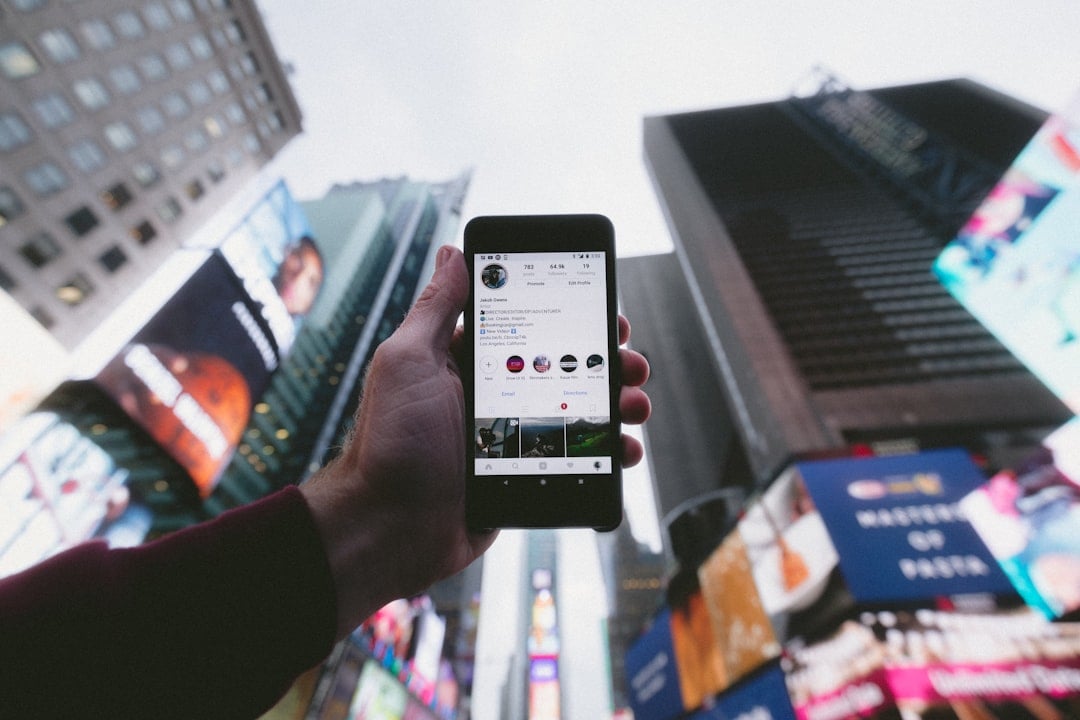


Why Your Brand Needs Advertising in Augmented Reality Right Now
Why Advertising in Augmented Reality Is the Smartest Move for Brands in 2026
Advertising in augmented reality is one of the fastest-growing channels available to marketers today — and the numbers back it up.
Quick answer: What is AR advertising?
AR advertising overlays digital content (3D objects, video, filters, animations) onto the real world through a smartphone or wearable device. Here’s how it compares to traditional advertising at a glance:
| Factor | Traditional Advertising | AR Advertising |
|---|---|---|
| Engagement | Passive viewing | Active, interactive |
| Brand recall | Baseline | Up to 70% higher memory encoding |
| Conversion rate | Standard | Up to 94% higher than static 2D ads |
| Cost vs. lift | Higher cost per result | ~59% lower cost, ~3x brand lift |
| Consumer preference | Familiar | 74% say AR ads capture attention better |
Mobile AR advertising revenues are expected to reach $39.81 billion by 2027. Meanwhile, 61% of shoppers already prefer retailers that offer AR experiences. The consumer expectation has shifted — immersive, interactive brand moments are no longer a novelty. They’re becoming the standard.
Brands that wait are already falling behind.
I’m Samir ElKamouny, an entrepreneur and marketing strategist who has helped scale businesses across industries — including helping brands harness advertising in augmented reality to drive real revenue and deeper audience connection. In the sections below, I’ll break down exactly which AR advertising solutions are worth your attention right now.
Learn more about advertising in augmented reality:
- augmented reality in social media marketing
- augmented reality product visualization
- use of ar in marketing
The Evolution of Advertising in Augmented Reality

Not long ago, augmented reality was treated as a futuristic gimmick—something reserved for sci-fi movies or novel mobile games. Today, in 2026, it is a dominant pillar of modern digital marketing. With US mobile advertising spending having surpassed the $235 billion mark, brands are looking for smarter, more interactive ways to capture attention.
The shift toward spatial computing, accelerated by consumer hardware like the Apple Vision Pro and advanced mobile chipsets, has permanently changed how we interact with media. According to the Augmented reality in advertising explained—Ad Age Encyclopedia, AR advertising succeeds because it bridges the gap between the physical and digital worlds, transforming passive viewers into active participants.
This transition from static displays to spatial interactive environments has a profound psychological impact. Research shows that AR experiences trigger 70% more memory encoding compared to traditional static ads. When consumers interact with a 3D model of a product in their own living room, their brains process the interaction as a real-world experience, leading to stronger brand lift and higher purchase intent.
Core Types of Advertising in Augmented Reality
To build an effective campaign, we must first understand the primary technological frameworks that power AR experiences.
| AR Type | How It Works | Best Use Case |
|---|---|---|
| Marker-based | Triggered by a physical visual cue (QR code, logo, packaging) | Print media, interactive product packaging |
| Markerless | Detects flat surfaces (floors, tables) to place 3D objects | E-commerce, furniture placement, virtual try-ons |
| Projection-based | Projects light directly onto physical surfaces | Live events, interactive installations, retail displays |
| Location-based | Uses GPS and compass data to overlay graphics in specific areas | Out-of-home (OOH) campaigns, city treasure hunts |
| Superimposition-based | Replaces or enhances an existing physical object | Virtual makeup, fashion try-ons, competitor ad takeovers |
Marker-Based AR
Marker-based AR relies on a physical trigger—like a QR code on a billboard or a specific pattern on product packaging—to launch the digital overlay. This type is highly effective for converting offline media into measurable digital touchpoints.
Markerless AR
Markerless AR is the gold standard for e-commerce. By scanning flat surfaces in a room, consumers can place life-sized, interactive 3D models of furniture, appliances, or vehicles directly in their environment, boosting purchase confidence.
Projection-Based and Location-Based AR
Projection-based AR transforms physical spaces without requiring personal devices, while location-based AR uses geographic coordinates to display immersive content. Location-based campaigns are highly popular for regional out-of-home (OOH) advertising and gamified city tours.
Superimposition-Based AR
This style detects a physical object and overlays a new visual design over it. It is widely used in the beauty and fashion industries to let customers virtually “wear” products before buying.
By leveraging WebAR technology, brands can launch these experiences directly within a mobile browser, removing the friction of downloading a dedicated application. For a deeper look at how these formats drive growth, check out our guide on Augmented Reality Marketing and explore how top agencies analyze these trends in Looking at augmented reality (AR) in advertising | illumin.
Key Platforms and Technologies for Interactive Campaigns
To execute advertising in augmented reality successfully, we must target the platforms where our audiences already spend their time.
- Snapchat Lenses: The pioneer of consumer AR, Snapchat remains a powerhouse for sponsored face and world filters, offering highly engaging gamified experiences.
- TikTok Branded Effects: Powered by Effect House, TikTok’s AR tools allow brands to create viral interactive challenges that seamlessly integrate into user-generated content.
- Instagram & Facebook (Meta Spark): Meta’s robust ecosystem allows advertisers to run highly targeted AR ads directly in the feed and Stories, prompting instant consumer action.
- WebAR & 8th Wall: For campaigns outside of social media, WebAR allows users to access rich 3D experiences simply by scanning a QR code on a web browser.
- Apple Vision Pro & Spatial Hardware: The rise of dedicated spatial computing headsets allows brands to design hyper-realistic, fully immersive 3D environments that redefine storytelling.
Integrating generative AI with these platforms enables real-time personalization, creating unique AR ad experiences tailored to individual user behaviors. To learn how to make these social filters work for you, read about Augmented Reality in Social Media Making Your Marketing Pop Off the Screen. For developers building bespoke gaming integrations, Unity offers comprehensive resources such as the AR ads for Unity developers | Package Manager UI website.
Overcoming Challenges in Advertising in Augmented Reality

While the benefits are clear, implementing an AR campaign requires navigating technical, legal, and privacy hurdles.
Technical Fragmentation and User Friction
Developing across different operating systems can be challenging. Developers must configure camera permissions and implement fallback logic to ensure a smooth user experience. For technical implementation, resources like AR ads for Android developers | Advertisement | 3.5.2 and AR ads for iOS developers | Package Manager UI website outline how to handle camera access and surface tracking configurations safely.
Legal and Trademark Risks
AR ads that overlay digital content onto physical competitor locations or products raise complex trademark questions. Under the Lanham Act, unauthorized digital overlays can trigger claims of “initial interest confusion.” The Supreme Court’s Abitron decision highlighted the territorial limitations of trademark enforcement, which becomes highly complex in borderless AR environments. Brands must ensure they have the proper rights before displaying third-party trademarks in spatial contexts.
Consumer Privacy and Compliance
Because AR relies heavily on camera feeds and spatial data, privacy is paramount. Campaigns must be built with a privacy-first mindset, ensuring strict GDPR and CCPA compliance. Biometric and spatial data should ideally be processed locally on the user’s device rather than stored on external servers.
Strategic Benefits and Real-World Brand Success
When executed correctly, advertising in augmented reality delivers unmatched performance metrics. 3D AR ads generate 94% higher conversion rates than static 2D ads, while campaigns combining traditional marketing with AR see nearly three times the brand lift at a fraction of the cost.
Major global brands have already proven this model:
- Coca-Cola: Launched the “#TakeATasteNow” campaign, allowing users to scan interactive OOH billboards to grab digital bottles and claim physical product rewards.
- Toyota: Developed a virtual test drive experience for its “Crown” line, allowing users to explore the car’s interior and features directly from their driveway.
- Pepsi: Transformed a London bus shelter into an AR window, surprising commuters with flying saucers and giant robots overlaying the real-world street view.
- Burger King: Created the “Burn That Ad” campaign in Brazil, allowing users to point their smartphones at competitor billboards, watch them virtually “burn” in AR, and receive a coupon for a free Whopper.
- IKEA: Revolutionized retail with its Place App, helping millions of shoppers visualize exactly how furniture fits in their homes, building shopping confidence.
These immersive campaigns prove that AR is not just about showing a product; it’s about creating an emotional connection. Discover how your business can leverage these strategies with our insights on AR Powered Brand Engagement and explore more creative ideas in Augmented Reality Advertising: 10 Powerful Examples of Branded AR Campaigns.
How to Plan, Create, and Measure AR Campaigns
Ready to launch your own AR campaign? Follow these steps to ensure success:
- Define Your Goals: Decide where AR fits in your marketing funnel—whether it’s driving top-of-funnel brand awareness or bottom-of-funnel conversions.
- Map the Customer Journey: Make the entry point seamless. Use QR codes on physical packaging, OOH displays, or direct social media links to launch the experience instantly.
- Develop a Strong Creative Concept: The experience must be intuitive, entertaining, or highly functional. Gamification and reward systems are excellent ways to boost engagement.
- Establish Measurement Frameworks: To measure ROI, align your campaign with the IAB-MRC Augmented Reality AR Measurement Guidelines. Track key metrics such as:
- AR Sessions: The start-to-finish duration of the camera-enabled experience.
- Viewable Impressions: Ensuring at least 50% of the ad pixels are visible on-screen for at least one continuous second for display or two seconds for video.
- Interaction Rates: Clicks, gestures, and average engagement times.
- Invalid Traffic Filtering: Excluding non-rendering bots and accidental triggers.
For a comprehensive walkthrough on launching your first campaign, check out our guide on AR Experience Design What It’s Like and How to Get Started.
Conclusion: Elevate Your Brand with Immersive Experiences
As we navigate 2026, the brands that dominate the market are those willing to step beyond the screen. Advertising in augmented reality is no longer a luxury; it is a vital tool for capturing attention, building trust, and driving measurable sales. By blending the physical and digital worlds, you can give your audience experiences they will remember, share, and act upon.
At Avanti3, we integrate Web3 technologies like NFTs, blockchain, AR/VR, and AI to empower creators and brands with customizable engagement tools and fintech solutions. We set a new standard in digital engagement and fan monetization, helping your brand build authentic, rewarding communities.
Let’s build something unforgettable together.
Elevate your brand with Avanti3’s Augmented Reality Marketing solutions