

How to Use Digital Learning Incentives to Gamify Your Classroom
Why Every Teacher Is Talking About Digital Classroom Incentives Right Now
Digital classroom incentives are rewards — points, badges, digital currency, or privileges — that teachers give students for positive behavior, academic progress, or meeting classroom goals, all tracked and delivered through a digital platform instead of paper charts or physical tokens.
Here’s a quick breakdown of what they are and how they work:
| Type | Examples | Best For |
|---|---|---|
| Recognition | Digital badges, leaderboard points, certificates | All grade levels |
| Privileges | Song requests, seating choice, homework passes | Middle and high school |
| Tangible | Digital currency redeemable in a class store | Elementary and middle school |
| Group rewards | Class-wide point goals, shared milestones | Building teamwork |
Keeping students motivated is one of the hardest parts of teaching. Traditional sticker charts get lost. Paper tokens run out. And tracking who earned what becomes a full-time job on top of an already full-time job.
That’s where digital tools are changing everything.
Schools using digital reward systems have seen real results — one middle school cut behavior infractions by 23% after switching to a digital classroom economy. Another district reported that even their most chronically absent students started showing up consistently, not for grades, but because the digital incentive system gave them a reason to engage.
The shift isn’t just about convenience. It’s about giving teachers actionable data, giving students immediate feedback, and building a classroom culture where positive behavior gets the spotlight.
I’m Samir ElKamouny, a marketing and business growth expert who has spent years studying what drives human engagement and motivation — the same psychology that powers effective digital classroom incentives. In this guide, I’ll walk you through everything you need to gamify your classroom and keep students genuinely excited to show up.
Digital classroom incentives word guide:
Why Digital Classroom Incentives Outperform Traditional Token Economies
For decades, teachers relied on physical token economies. If you have ever taught, you know the routine: cutting out paper “bucks,” managing plastic bins of cheap plastic toys, and dealing with the inevitable drama of lost, stolen, or counterfeited rewards.
By upgrading to a digital reward system, we eliminate the administrative headache and completely transform how students engage.
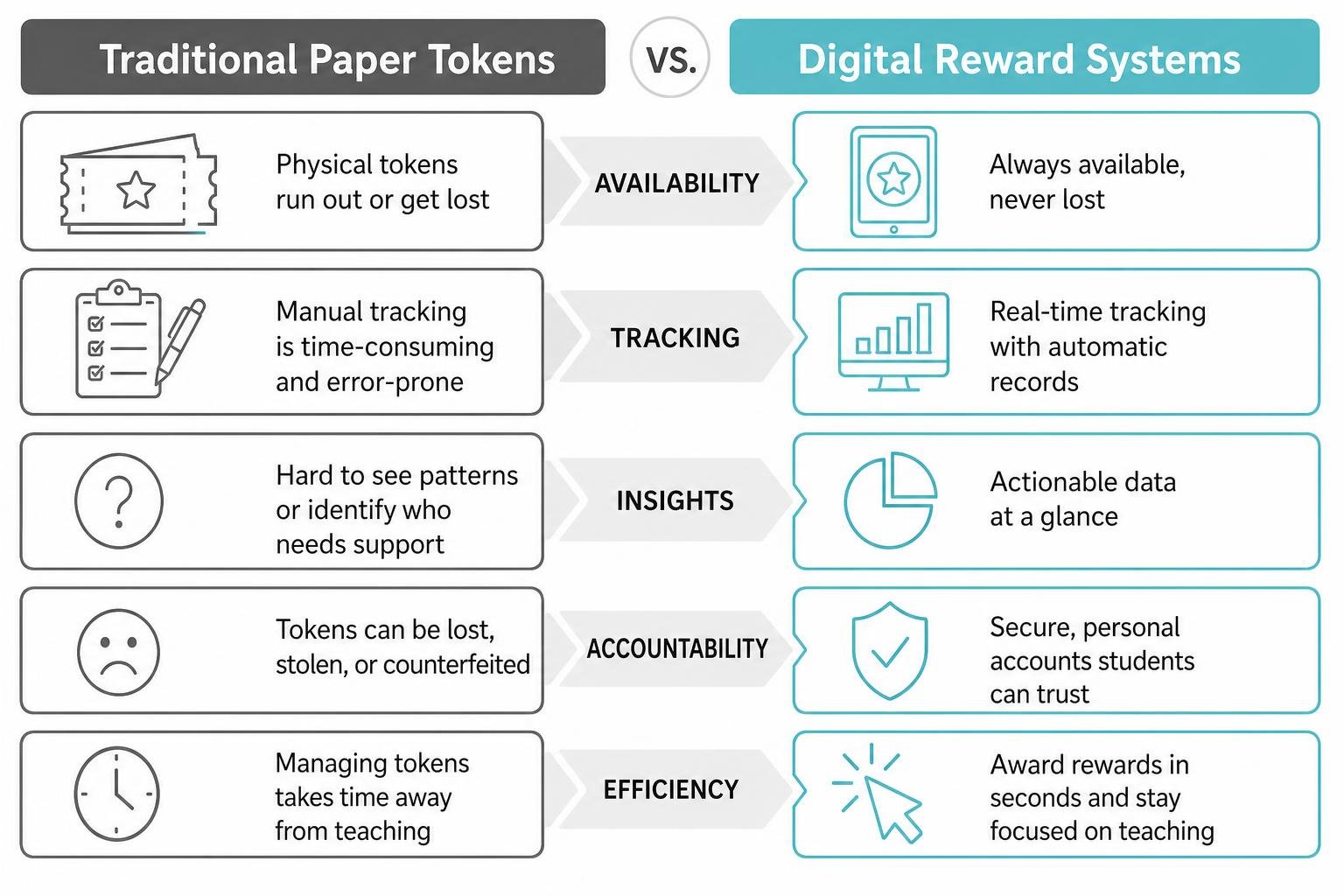
When we digitize classroom rewards, we solve three major pain points:
- Zero Administrative Burden: Instead of pausing a lesson to hand out physical tickets, teachers can award points or digital currency with a single click on a tablet, phone, or laptop. Some advanced platforms even allow us to import grades directly from Learning Management Systems (LMS) to automatically convert academic milestones into points.
- Real-Time Data Tracking: Digital systems keep an automatic ledger of every point earned and spent. We instantly know which students are thriving and who might need extra support, without flipping through paper logbooks.
- Student Accountability: When rewards are digital, they cannot be lost in a messy backpack or washed in a pair of jeans. Students can log into their own student profiles to see their balance, track their progress, and take ownership of their behaviors.
Supporting PBIS and MTSS Frameworks with Digital Classroom Incentives
Positive Behavioral Interventions and Supports (PBIS) and Multi-Tiered System of Supports (MTSS) are crucial frameworks in modern education. They rely heavily on consistent, positive reinforcement to support student behavior at Tier 1 (school-wide) and beyond.
Using a digital reward system for students makes implementing PBIS incredibly easy. Instead of waiting until the end of the week to reward a student, we can provide immediate visual feedback. For instance, when a student demonstrates a core value like respect or responsibility, we can instantly award them a themed digital badge.
By tracking these digital transactions, administrators can monitor school-wide behavioral trends. If the data shows behavior infractions dropping or attendance rising, we have concrete proof that our positive reinforcement is working. For inspiration on what behaviors to reward, you can explore PBIS Incentive Ideas – Over 350 Incentives for Students of All Ages to build a robust framework.
Teaching Financial Literacy Through Digital Classroom Economies
One of our favorite ways to use digital incentives is by running a simulated classroom economy. Instead of just handing out arbitrary points, we can assign students daily classroom jobs (like Banker, Tech Support, or Librarian) that earn them a recurring digital salary.
To teach real-world budgeting and financial literacy, we can introduce simulated expenses:
- Rent and Utilities: Students pay a small monthly “rent” for their desks.
- Delayed Gratification: Students must decide whether to spend their weekly earnings on small, immediate rewards (like custom digital stickers) or save up for premium, long-term privileges.
- Simulated Investments: Some systems even allow older students to invest their earned points into simulated stock markets tracking real-world tickers, giving them a risk-free taste of how investing works.
This experiential approach turns abstract math and social studies concepts into a daily, hands-on routine that students look forward to.
Designing Tiered Digital Classroom Incentives for K-12 Students
To keep students engaged, our rewards must match their developmental stages. What motivates a kindergartener will likely cause a high school senior to roll their eyes.

Here is a breakdown of how we design tiered, age-appropriate rewards using Digital Classroom Rewards and resources from our guide on level up learning innovative digital incentives for todays classrooms:
Elementary School (Grades K-5)
Younger students thrive on immediate visual reinforcement and tangible elements.
- Visual Progress Trackers: Digital jars that fill up with virtual cookies or marbles.
- Character Customization: Letting students earn digital coins to unlock cute avatar accessories or characters.
- Tactile Privileges: “Stuffed Animal Day” (bringing a toy to sit on their desk) or being the “Teacher’s Pet” helper.
Middle School (Grades 6-8)
Middle schoolers are driven by social status, peer connection, and autonomy.
- Digital Privileges: Buying a “Prime Membership” to get front-of-the-line privileges or choosing the classroom music playlist.
- Creative Expression: Unlocking custom digital badges or using custom student nicknames on a classroom leaderboard.
- Themed Events: Earning entry to a classroom “Glow-in-the-Dark Art Party” or a themed lunch with friends.
High School (Grades 9-12)
High school students value real-world utility, flexibility, and time.
- High-Value Privileges: Digital hall passes, homework exemptions, or the ability to drop their lowest quiz grade.
- Financial Rewards: Digital gift cards or real-world micro-rewards.
- LMS Recognition: Being featured on the school’s digital leaderboard or receiving verified digital credentials.
Implementing Digital Rewards: Best Practices and Future Trends
Starting a digital rewards program requires more than just launching an app; it requires a thoughtful strategy to keep students from losing interest.

When setting up your system, always keep these best practices in mind:
- Maintain Consistency: If we forget to award points for a week, students will quickly realize the system doesn’t matter. Automation is our best friend here.
- Involve Student Input: Let students vote on the rewards they actually want. If they help choose the inventory for the digital class store, they will work twice as hard to earn those points.
- Ensure Data Privacy: Always choose platforms that comply with student privacy laws (like COPPA and FERPA) and protect student data. For tips on setting up safe virtual rewards, read about Creating Reward Systems for Virtual School | National University .
Balancing Individual Accountability and Teamwork
A great reward system balances personal goals with community milestones. If we only reward individual achievements, we run the risk of creating an overly competitive environment.
To foster teamwork, we can implement collaborative “campaigns” where the entire class pools their earned points toward a shared goal, such as a class movie day or a virtual field trip.
We can also use a virtual reward card system where small groups earn collective points for working quietly. This peer-to-peer accountability encourages students to support and lift each other up, rather than focusing solely on their own progress.
Low-Cost and Distance Learning Strategies
You do not need an expensive school-wide platform to start rewarding students digitally today. There are plenty of low-cost and free strategies that work beautifully in hybrid or distance learning classrooms:
- Custom Video Backgrounds: Let high-performing students choose your virtual background for the next Zoom or Teams session.
- Interactive Drag-and-Drop Slides: Use free templates where students can drag virtual toppings onto a digital pizza or add virtual stickers to their “digital backpacks.”
- LMS Header Features: Highlight the “Student of the Week” on your Google Classroom or Canvas banner.
For pre-made, budget-friendly resources, teachers can use tools like the Digital Rewards for Distance Learning Student Incentives BUNDLE to find dozens of ready-to-use digital coupons and stickers.
Next-Gen Gamification: Web3 and Avanti3
As we look toward the future of education in July 2026, the way we think about digital rewards is undergoing a massive shift. Traditional digital stickers and point tallies are excellent, but they lack true ownership. Once the school year ends, those achievements often disappear.
This is where next-generation technologies are stepping in. At Avanti3, we are pioneering the integration of Web3 technologies — including blockchain, NFTs, and AR/VR — to redefine digital engagement.
Imagine a classroom where student achievements are minted as secure, verifiable digital badges or NFTs on a blockchain. Instead of a temporary point on a screen, a student’s “Growth Mindset” or “Math Master” badge becomes a permanent part of their digital portfolio. They own it, they can showcase it in virtual spaces, and it can even carry over into future grade levels or extracurricular programs.
By combining AI-driven personalization with secure digital ownership, we can create incentive systems that are highly secure, deeply engaging, and prepare students for the digital economy of tomorrow. To learn more about how we are building these innovative tools, check out our technology category.