

The Ultimate Guide to Augmented Reality Advertising Campaigns
Why Augmented Reality Advertising Campaigns Are Changing the Game
Augmented reality advertising campaigns are one of the fastest-growing formats in digital marketing — and for good reason. They blend digital content with the real world to create experiences that are more memorable, more engaging, and more likely to convert than traditional ads.
Quick answer: AR advertising works by overlaying digital elements (3D visuals, animations, interactive filters) onto a user’s real-world view through their smartphone or device. Brands use it to let consumers virtually try on products, explore interactive packaging, play gamified experiences, or engage with out-of-home (OOH) screens in real time.
Here’s why it matters right now:
- 70% more memorable than non-AR experiences
- 94% higher conversion rates for products with AR or 3D content
- 45% higher attention levels than TV or standard online browsing
- 3x higher brand lift at 59% lower cost compared to traditional digital advertising
- $8 billion projected global AR advertising market by 2029
By July 2026, the technology has moved well past the novelty stage. Brands that once used AR as a one-off stunt are now building it into their core campaign strategy — and the results back that up.
I’m Samir ElKamouny, an entrepreneur and marketing expert who has spent years helping brands scale through innovative strategies, including augmented reality advertising campaigns that drive measurable growth. In this guide, I’ll walk you through everything you need to know — from how AR works to real-world examples and how to measure ROI.
Augmented reality advertising campaigns basics:
- augmented reality product visualization
- augmented reality in social media marketing
- use of ar in marketing
The Power of Augmented Reality Advertising Campaigns
We live in an era of severe “banner blindness.” Consumers have developed a natural filter for standard display ads, skipped video spots, and static billboards. To truly capture consumer attention, brands must move away from passive media and embrace interactive media.
This is where augmented reality advertising campaigns shine. By shifting the consumer from a passive viewer to an active participant, AR creates an emotional and cognitive connection that traditional formats simply cannot replicate.
What is AR and How Do Augmented Reality Advertising Campaigns Work?
At its core, augmented reality (AR) superimposes digital assets—such as 3D models, animations, or video—onto a user’s physical environment via a device’s camera. In the marketing world, we deploy these experiences across three primary formats: marker-based AR, markerless AR, and WebAR.
- Marker-based AR: This requires a physical “trigger” (like a QR code, product packaging, or a print ad) to launch the digital experience.
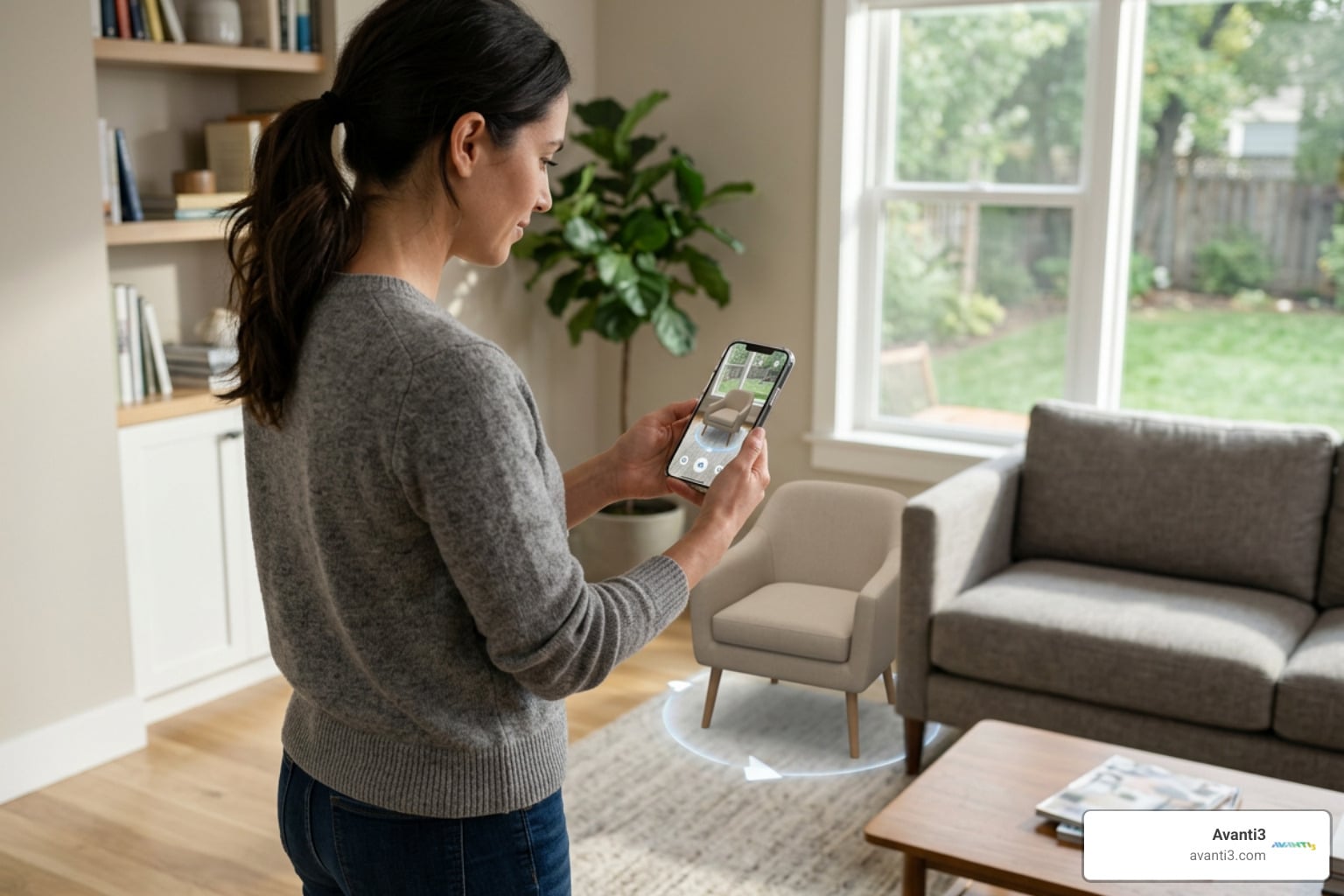
- Markerless AR: This uses the device’s camera and sensors (using SLAM, or Simultaneous Localization and Mapping) to place 3D objects directly onto flat surfaces in the real world, like placing virtual furniture in a living room.
- WebAR: This allows users to access AR experiences directly through their mobile web browser without downloading a dedicated app, drastically reducing user friction.
To help you understand the technical avenues, we’ve broken down the main AR delivery methods below:
| AR Type | How It Works | Best Marketing Use Case | Friction Level |
|---|---|---|---|
| Marker-Based | Scans a physical image/QR code to trigger 3D overlays | Interactive print ads, smart packaging, in-store activations | Low (requires a quick scan) |
| Markerless | Uses SLAM to detect flat surfaces and place objects | Virtual furniture placement, virtual test drives | Low to Medium |
| WebAR | Runs directly in-browser using standard web tech | Quick viral campaigns, instant product demonstrations | Extremely Low (no app download) |
| Social AR | Built-in filters on platforms like Snapchat, TikTok, Meta Spark | Virtual beauty try-ons, shareable gamified face filters | Low (uses existing apps) |
Social media platforms have democratized these technologies, making it incredibly easy for brands to run highly targeted campaigns. By utilizing tools like Meta Spark, Snapchat’s Lens Studio, and TikTok’s Effect House, we can deploy engaging experiences directly to billions of active users. For a deeper dive into this, check out our guide on augmented reality in social media marketing.
Key Benefits: Why Brands Need Augmented Reality Advertising Campaigns Now
If your brand is still on the fence about AR, the data speaks for itself. This is no longer a gimmick; it is a highly functional tool that impacts the entire marketing funnel.
- Unrivaled Memory Recall: Neurological studies show that AR experiences lead to 70% more memory encoding compared to traditional static ads. Because the brain is actively interacting with the content, the brand message sticks.
- Skyrocketing Conversion Rates: According to industry data, products featuring interactive AR experiences witness a 94% higher conversion rate compared to those without. Whether it’s a virtual try-on for cosmetics or a 3D visualization of home goods, letting customers “try before they buy” removes purchase hesitation.
- Deep Engagement & Attention: AR produces 45% higher attention levels than the average for TV viewing or general online browsing. Dwell times are significantly longer, with users often spending minutes interacting with an AR ad compared to the mere seconds they give to standard video ads.
- Massive Cost Efficiencies: When combined with traditional media, AR campaigns generate 3x higher brand lift at a 59% reduced cost on average compared to running paid media alone.
The immediate value of these immersive experiences is clear. If you want to understand how this shifts the competitive landscape, read our analysis on why your brand needs advertising in augmented reality right now.
5 Inspiring Examples of Successful AR Activations
To understand the true potential of augmented reality advertising campaigns, let’s look at how global brands have pushed the boundaries of immersive marketing.

1. Snapchat & OUTFRONT Media: House of the Dragon Times Square Takeover
To promote the premiere of House of the Dragon Season 3, HBO Max partnered with Snapchat and OUTFRONT Media to turn Times Square into a live AR spectacle. Using Snapchat’s first-ever four-sided AR Mirror, pedestrian traffic in Times Square could step in front of the activation, see themselves wearing Queen Rhaenyra Targaryen’s crown, and watch as their live, AR-enhanced selves were projected onto iconic digital billboards overhead. This campaign beautifully married out-of-home (OOH) advertising with participatory fandom, turning passive walk-bys into a massive shared cultural moment. You can read more about this groundbreaking activation on the Snapchat Newsroom.
2. Gap x Mattel: Barbie’s Times Square Takeover
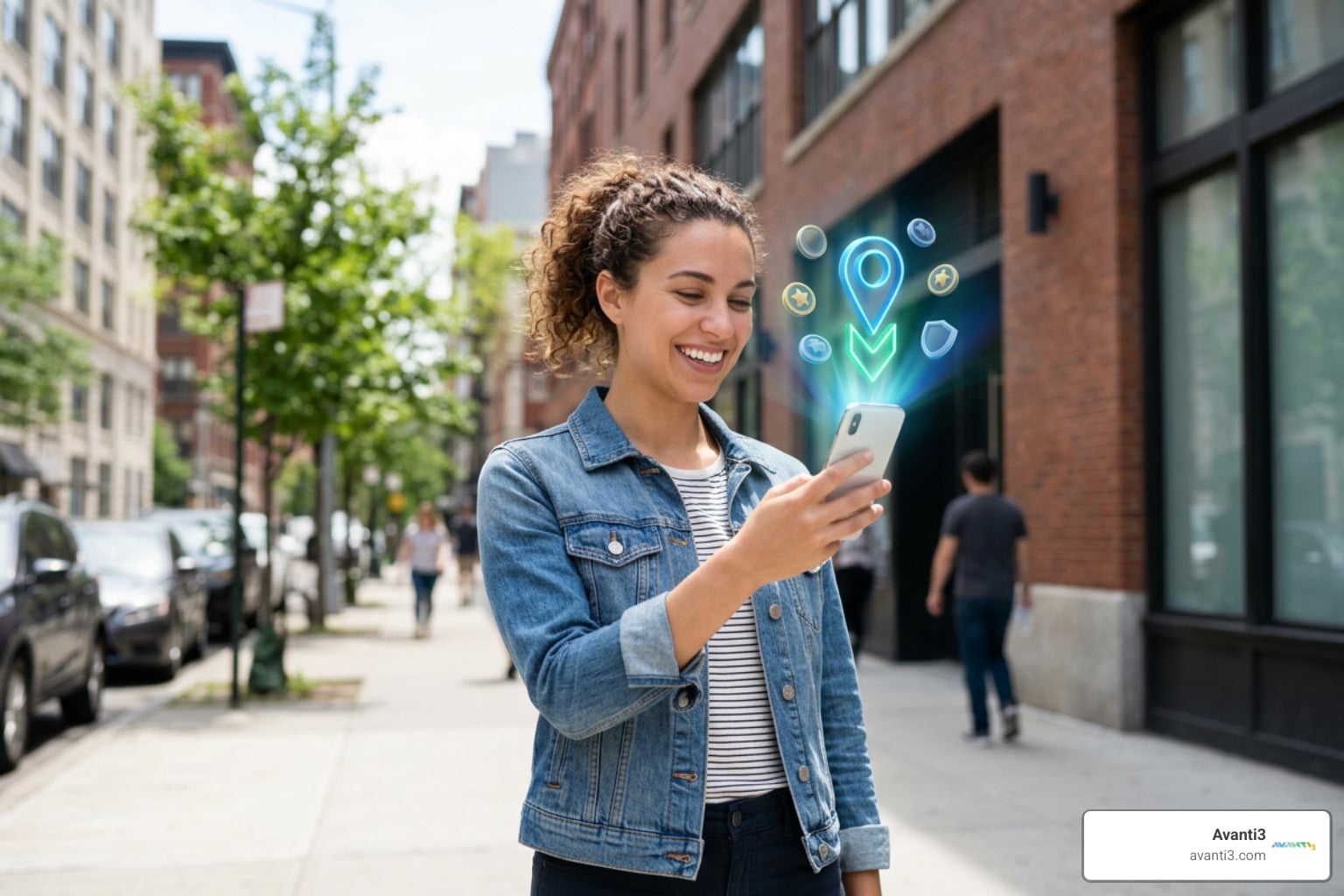
Leveraging Google’s Geospatial Creator, Gap and Mattel transformed a physical Times Square storefront into a vibrant, interactive 3D playground. By scanning a QR code on the store windows, shoppers could view lifelike 3D Barbie dolls wearing a limited-edition Gap collection, exploring outfits in a highly immersive spatial environment. This location-based campaign bridged the gap between physical retail and digital commerce seamlessly. Explore the creative execution in detail at UNIT9’s Project Page.
3. McDonald’s Singapore: Grimace Interactive DOOH
McDonald’s Singapore took digital out-of-home (DOOH) to the next level by launching an interactive Grimace campaign. Passersby could interact with digital screens in real time using their smartphones, unlocking playful AR filters and localized digital rewards. This campaign proved that even classic fast-food brands can use AR to drive instant, on-the-spot consumer engagement. Learn more about this regional execution via Branding in Asia.
4. Burger King: ‘Burn That Ad’
In a brilliant display of competitive gamification, Burger King launched an AR feature in its app that allowed users to point their smartphone cameras at competitor advertisements. The app then virtually “burned” the competitor’s ad to reveal a coupon for a free Whopper. It was a viral sensation that weaponized the physical ad spend of competitors to drive BK app downloads and foot traffic.
5. Coca-Cola Zero Sugar: #TakeATasteNow
Coca-Cola ran an interactive OOH campaign where users scanned QR codes on digital billboards to virtually “grab” a digital bottle of Coke Zero on their phones. This action unlocked a digital voucher that could be redeemed for a physical bottle at nearby retail locations. The campaign drove massive engagement by directly linking digital curiosity with physical product trials.
These campaigns show how brands are using AR to cut through the noise. For more inspiration, check out our guide on how brands use augmented reality in marketing to steal your attention.
Implementing and Measuring AR Campaigns for Maximum ROI
Launching a successful AR campaign requires moving past the “cool factor” and aligning the technology with specific business objectives. You need a clear strategy to guide the customer journey from the initial point of interaction to the final conversion.
Overcoming Challenges and Technical Barriers in AR
While AR offers incredible rewards, we must acknowledge the hurdles brands face during implementation:
- User Friction: Historically, requiring users to download a dedicated app killed campaign momentum. Today, we bypass this by designing WebAR experiences or leveraging pre-existing social platforms like Instagram, Snapchat, and TikTok.
- Development Costs & Expertise: Creating high-quality 3D assets and interactive environments can be resource-intensive. However, the rise of no-code AR creation platforms and specialized agencies has made the technology more accessible than ever.
- Hardware Limitations: Not all smartphones have the same processing power or camera depth sensors. Designing scalable experiences that work smoothly on both budget devices and flagship models is crucial.
At Avanti3, we help brands navigate these technical challenges by engineering lightweight, high-impact AR marketing solutions that maximize reach without sacrificing visual quality.
Best Practices for Planning and Measuring ROI
To ensure your AR campaign delivers a strong return on investment, we recommend following these core best practices:

- Define Clear, Funnel-Specific Goals: Are you looking for top-of-funnel brand awareness, mid-funnel product education, or bottom-of-funnel conversions? Your creative concept must match your objective.
- Prioritize the User Journey: Make the entry point as frictionless as possible. Use highly visible QR codes on physical assets and provide simple, intuitive instructions (e.g., “Scan to try on”).
- Track Immersive Metrics: Traditional digital ads measure impressions and clicks. AR allows you to track deeper engagement metrics, such as:
- Dwell Time / Interaction Time: How long did the user play with the AR asset?
- Share Rate: How many users sent the experience to friends or posted it to social media?
- Scan-Through / Activation Rate: The percentage of users who successfully triggered the AR experience.
- Conversion Rate: Direct sales or sign-ups driven by the AR call-to-action (CTA).
By monitoring these metrics, we can easily run brand lift studies and prove the tangible value of your campaign. Discover how to elevate your brand’s interactive performance with our insights on AR-powered brand engagement.
Future Trends: The Evolution of Immersive Marketing
As we look toward the future of digital marketing, the convergence of AR with other emerging technologies will unlock entirely new avenues for brand monetization and customer loyalty.
At Avanti3, we are pioneering this shift by integrating Web3 technologies—such as NFTs, blockchain, and AI personalization—with AR/VR experiences. Imagine scanning a product’s packaging, unlocking an interactive AR game, and earning a unique digital collectible (NFT) stored securely on the blockchain that grants you real-world VIP rewards.
Here are the key trends we are watching closely:
- AI-Powered Personalization: AI will dynamically alter AR environments in real time based on user preferences, creating highly customized shopping experiences.
- The Rise of Smart Glasses: As lightweight AR smart glasses gain mainstream adoption, advertising will transition from handheld screens to hands-free, persistent spatial overlays in our daily environments.
- Web3 Loyalty Ecosystems: Combining AR with decentralized rewards programs to build deep, community-driven brand loyalty.
The era of passive, static marketing is over. Immersive, interactive, and spatial experiences are the new standard for modern brands.
Ready to bring your brand to life and dominate the spatial web? Explore our comprehensive augmented reality marketing services and let us help you design your next high-converting campaign.