


Why NFT Marketplace Analytics Is the Key to Smarter Digital Asset Decisions
NFT marketplace analytics refers to the tools and data used to track, measure, and interpret trading activity across NFT platforms — covering metrics like trading volume, floor price, buyer/seller ratios, and unique holder counts.
Here’s a quick snapshot of what NFT marketplace analytics covers:
| Metric | What It Tells You |
|---|---|
| Trading Volume | How much money is moving through a marketplace |
| Floor Price | The lowest price to buy into a collection |
| Mint Price vs. Floor Price | The ROI potential from early entry |
| Buyer/Seller Ratio | Whether demand or supply is dominating |
| Unique Holders | How widely distributed a collection is |
| Wash Trading Ratio | Signs of market manipulation |
The NFT market moves fast. Prices can drop 50% or spike 6x within weeks. Without data, you’re guessing.
The good news? There are now 47+ dedicated NFT analytics tools available across chains like Ethereum, Solana, and Bitcoin — giving traders, collectors, and brands real-time intelligence to act on.
I’m Samir ElKamouny, a marketing strategist and entrepreneur who has helped scale businesses across digital and Web3 ecosystems, including leveraging NFT marketplace analytics to drive smarter audience engagement and monetization strategies. In this guide, we’ll break down exactly which tools matter and how to use them.
Know your NFT marketplace analytics terms:
Mastering the Market: A Deep Dive into NFT Marketplace Analytics and Tools
Navigating digital assets without NFT marketplace analytics is a bit like trying to sail across the Atlantic with a paper map and a leaky boat. You might get somewhere, but it probably won’t be where you intended, and you’ll likely get very wet in the process. We’ve seen the market swing from “everything is going to the moon” to “why did I buy a pixelated rock for the price of a Honda Civic?” in record time.
To survive and thrive, we need to move beyond hype and start looking at the cold, hard numbers. Whether you are a solo collector looking for the next big mint or a brand trying to understand your community, data is your best friend.
Key Metrics for Analyzing NFT Performance
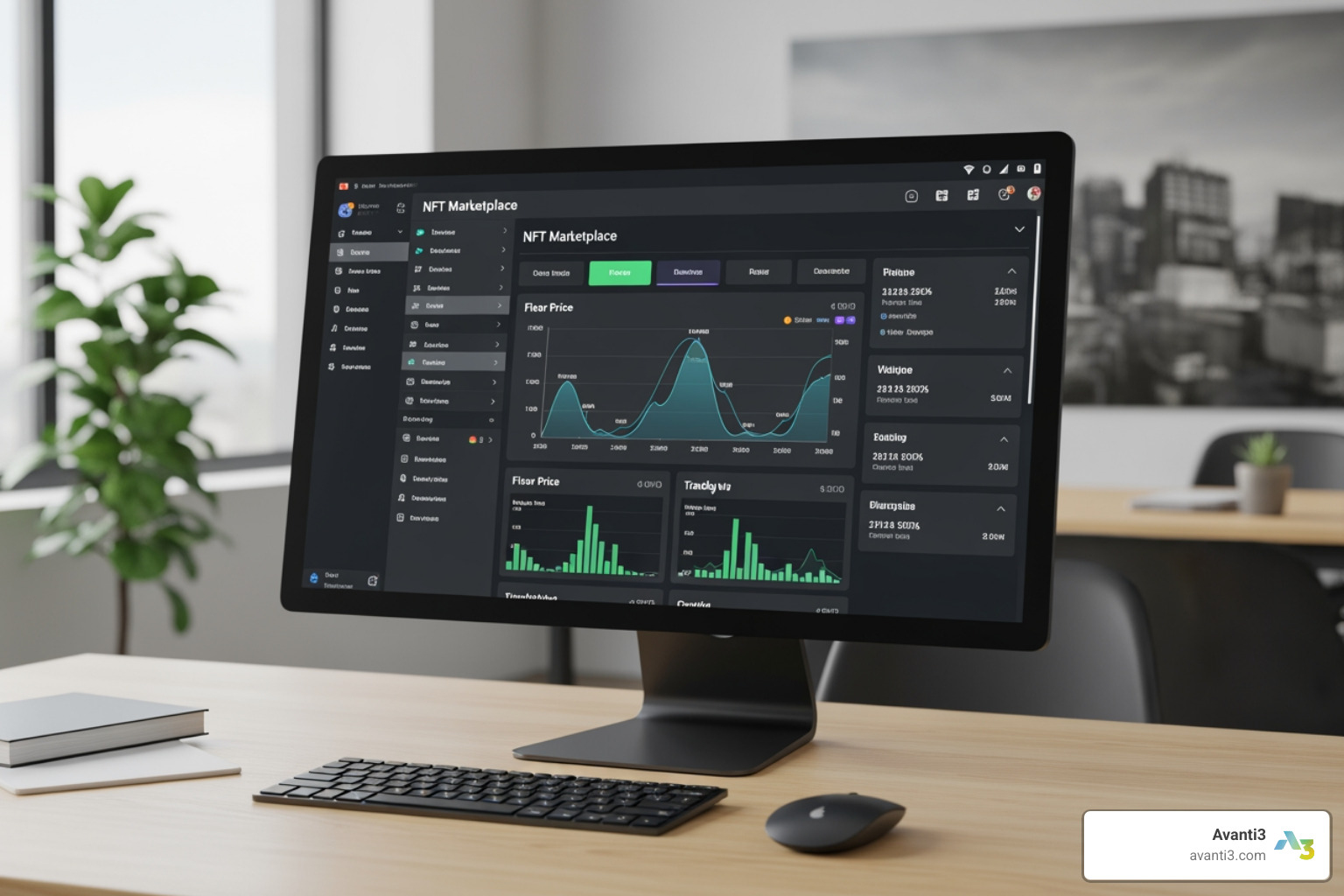
When we talk about NFT marketplace analytics, we aren’t just looking at one number. It’s a symphony of data points that tell a story about a collection’s health. If you’re tracking NFT Digital Art Sales, these are the metrics that should be on your radar:
- Trading Volume: This is the total value of NFTs traded within a specific timeframe. High volume usually means high liquidity-it’s easy to buy or sell. For instance, a leading marketplace recently saw a volume of $13.81M (an 18.53% increase), while other top platforms sat at $4.06M.
- Floor Price: The “entry-level” price for a collection. It’s the lowest price at which you can buy an NFT in a specific set. Keep an eye on this; a rising floor price often signals growing demand, but a “thin” floor (very few items listed near the floor) can lead to massive price swings.
- Mint Price: The original price paid to create the NFT on the blockchain. Comparing this to the current floor price gives us the ROI. Some projects, like CryptoPunks, had a mint price of $0 (free), while others like Azuki started at $558.79.
- Unique Holders: This tells us how many individual wallets own at least one NFT from the collection. We generally want to see a high number of unique holders relative to the total supply. If 10 people own 5,000 NFTs, that’s a red flag for market manipulation.
- Buyer vs. Seller Dynamics: Are more people trying to get in or get out? For example, in August 2025, Bored Ape Yacht Club (BAYC) showed seller dominance with 238 sellers versus 191 buyers. Conversely, Mad Lads often shows buyer dominance, which is a bullish signal.
- Sales History: Looking at past transactions helps identify if a price spike was organic or the result of a single “whale” buying up the floor.
The Top NFT Analytics Tools and Their Features
The ecosystem has exploded, and we now have access to a massive variety of tools. There are currently at least 47 major NFT analytics tools available to traders and brands. We can generally break these down into four main categories:
- Market Overview Platforms: These are your “big picture” dashboards. Market overview platforms aggregate data across multiple blockchains, showing you which collections are trending globally. You can see sales volume, transaction counts, and even fan token performance.
- Portfolio Trackers: If you own more than three NFTs, you know how hard it is to keep track of what they are actually worth. Specialized portfolio trackers allow us to see our entire “net worth” in digital assets across different wallets and chains.
- Rarity Tools: Not all NFTs in a collection are created equal. Rarity tools assign a “rarity score” to individual assets based on their traits. This is crucial because a “rare” NFT might be worth 10x the floor price.
- Smart Money Trackers: This is where things get interesting. Advanced analytics platforms provide insights into “Smart Money” movements. We can see what wallets belonging to high-volume traders or institutional investors are minting. If the smart money is moving into a new project, it might be time to pay attention.
You can explore various NFT analytics tools to find the one that fits your specific needs, whether you’re looking for a free dashboard or an enterprise-grade API. For a broader industry reference point on NFTs themselves, the Wikipedia overview of non-fungible tokens is also a useful starting resource.
How to Use NFT Marketplace Analytics to Make Informed Decisions
Data is only useful if you know how to use it. Here is how we recommend approaching NFT marketplace analytics to stay ahead:
- Spotting Trends Early: By monitoring “mint presence,” we can see which new projects are attracting the most unique wallets in real-time. This is often a better indicator of success than Twitter (X) followers, which can be easily faked with bots.
- Wash Trading Detection: This is a big one. Wash trading is when a person buys and sells their own NFT to create a fake appearance of high volume. Advanced analytics platforms provide a “wash trading ratio.” If a marketplace has $100M in volume but a 90% wash trading ratio, the real demand is actually quite low.
- Risk Assessment: Before “aping” into a project, we look at the holder distribution. If the top 10 holders own 30% of the supply, they can “dump” on the market and crash the price in seconds.
- Business Optimization: For brands, data helps us understand who our fans are. By using NFT Engagement Tools, we can see how long people hold our assets and what other projects they are interested in. This allows us to create more targeted rewards and experiences.
Analyzing Collection Performance: From CryptoPunks to Mad Lads
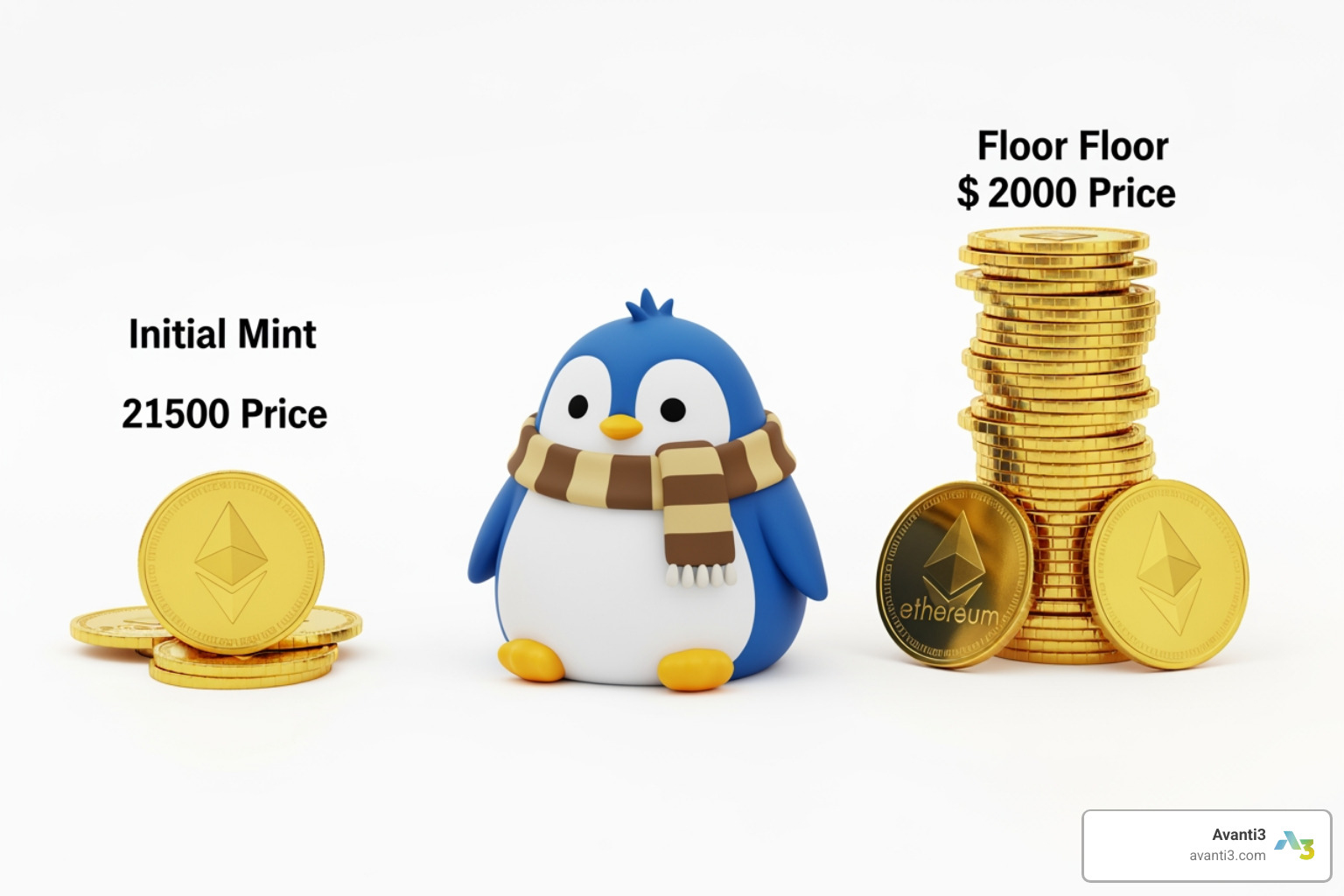
To really understand the power of NFT marketplace analytics, let’s look at some real-world examples of how collections have evolved. The journey from mint to floor price is often staggering.
- CryptoPunks: The ultimate success story. These were a free mint (0 ETH). Today, they hold a floor price of approximately $182,920. That is an infinite ROI, provided you had the foresight to claim one back in 2017.
- Pudgy Penguins: These minted for a mere $1.18. Through clever branding and community building, their floor price has soared to $42,740. Even in “down” months, like June 2025 where volume dipped to $7M, the core community remained strong.
- Bored Ape Yacht Club (BAYC): Minted at $26.42, the floor is now around $39,320. However, analytics showed a peak volume of $34.2M in August 2025, followed by periods of seller dominance. This tells us the market is currently in a “profit-taking” or “consolidation” phase.
- Azuki: This collection provides a cautionary tale. While the floor price of $5,940 is still 10x the mint price ($558.79), the trading volume plummeted by 98% between January and September 2025. This shows how quickly “hype” can evaporate even for top-tier projects.
- Mad Lads: A standout on the Solana blockchain. Minted at $152, its floor is now $6,300. Interestingly, Mad Lads consistently shows more buyers than sellers (469 buyers vs 198 sellers in peak months), indicating a very “sticky” holder base.
Understanding these cycles is vital. It’s not just about the art; it’s about the Blockchain Art Authentication and the verifiable data that proves ownership and scarcity.
Blockchain Showdown: Comparing NFT Activity Across Chains
While Ethereum used to be the only game in town, the landscape has shifted. Different blockchains now cater to different types of traders.
| Metric | Ethereum (Major Marketplaces) | Solana (Leading Platforms) | Bitcoin (Ordinals Marketplaces) |
|---|---|---|---|
| Average Price | High ($80 – $3,500+) | Low to Mid ($100 – $500) | Mid ($300 – $400) |
| Transaction Speed | Slower (L1) / Fast (L2) | Extremely Fast | Slow |
| Typical Use Case | High-value Art/Collectibles | Gaming/High-frequency Trading | “Digital Gold” / Inscriptions |
| Marketplace Leader | Volume Leaders | Leading Platforms | Major Marketplaces |
Ethereum remains the king of high-value sales. A leading Ethereum marketplace, for example, has an average price of $3.51k per NFT. However, Solana has seen explosive growth due to lower fees and faster speeds. Leading platforms have become hubs for gaming NFTs.
Then we have Bitcoin Ordinals. This was a surprise to many in the industry. A major Ordinals marketplace recently showed an average price of $380.69. While the volume on Bitcoin can be volatile, the “permanence” of Bitcoin attracts a different type of collector.
You can track multi-chain NFT data to see which chain is currently leading in 24-hour volume. Understanding these differences is key to Blockchain Content Distribution, as the chain you choose affects your reach and costs.
Challenges and Future Trends in NFT Marketplace Analytics
As much as we love data, it isn’t perfect. Current NFT marketplace analytics face several hurdles:
- Data Fragmentation: With NFTs spread across Ethereum, Polygon, Solana, Bitcoin, and Immutable X, getting a single “source of truth” is difficult.
- Market Manipulation: As mentioned, wash trading still inflates numbers on certain platforms, making it hard for beginners to know what is real.
- The “L2” Gap: As more trading moves to Scaling Solutions (like Arbitrum or Optimism), some analytics tools struggle to keep up with the data flow from these secondary layers.
The Future is Bright (and AI-powered): We are moving toward predictive analytics. Imagine a tool that doesn’t just tell you what happened yesterday, but uses AI to predict which collections are likely to trend based on social sentiment and smart money movement.
We’re also seeing a rise in Augmented Reality NFTs. Analytics will soon need to track not just “sales,” but “usage”-how many times an AR filter was used or how many people interacted with a 3D asset in a virtual space.
Conclusion: Using Data for Your NFT Strategy
In the fast-moving world of Web3, “gut feeling” will only get you so far. NFT marketplace analytics is the bridge between speculation and strategy. By monitoring key metrics like floor price, unique holders, and buyer/seller dynamics, we can make decisions that protect our capital and grow our communities.
Whether you are a collector tracking the next Pudgy Penguins or a business looking to monetize your fan base, the data is there for the taking. At Avanti3, we believe in the power of these digital ecosystems. We integrate Web3 technologies like NFTs, blockchain, and AI to empower creators and brands with customizable engagement tools. We aren’t just watching the market; we are helping build the infrastructure that makes it more transparent and rewarding for everyone.
Ready to take your project to the next level? Build your own platform with our NFT Marketplace Development services and start leveraging data to drive your digital future. Don’t just join the trend—own the data behind it.