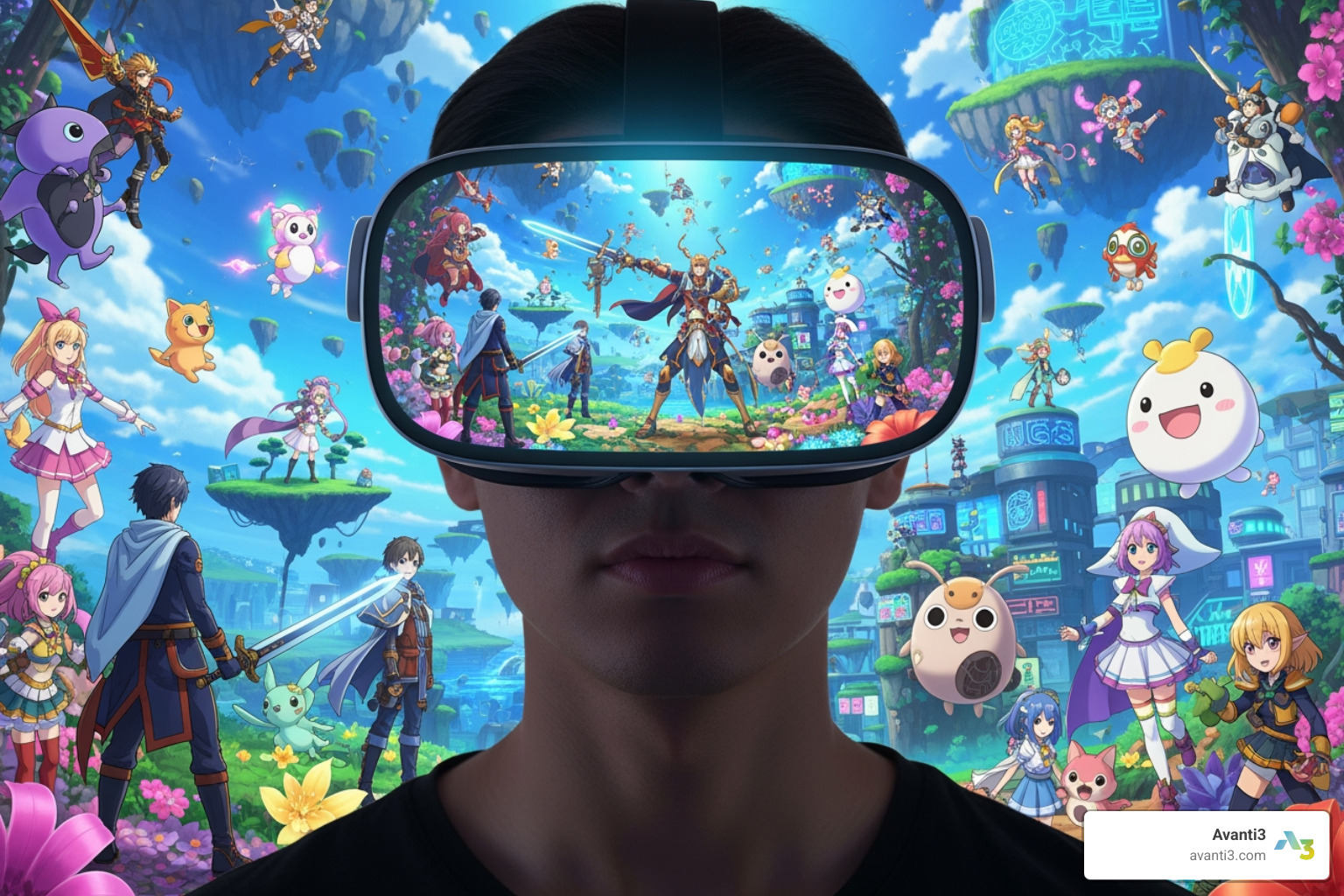


Why Anime VR Experience Is Revolutionizing Fan Engagement
Anime VR experience is transforming how fans interact with their favorite characters and stories. Here’s what you need to know:
What is Anime VR Experience?
- Immersive Platforms: Step directly into anime worlds using Meta Quest 2, 3, 3S, and Pro
- Interactive Features: Customize virtual dioramas, interact with fully-voiced characters, and explore 360-degree environments
- Diverse Formats: Experience animated manga, feature-length VR films, themed attractions, and interactive visual novels
- Popular Titles: Demon Slayer XR Ride, Gundam: Silver Phantom, Altdeus: Beyond Chronos, and Hatch-Pot VR
Where to Find Anime VR:
- Digital Platforms: Meta Horizon Store, standalone VR applications
- Physical Locations: Universal Studios Japan, RED Tokyo Tower, Kabukicho Tower
- Pricing: Ranges from 600 yen for VR Theater experiences to full game purchases
The difference between watching anime on a screen and experiencing it in VR is profound. Instead of passive viewing, you’re inside the story—standing next to your favorite characters, exploring their worlds in full 360 degrees, and making choices that shape the narrative.
Traditional viewing has its place, but VR offers something fundamentally different: immersion that eliminates distractions and creates a personal IMAX-style experience. The technology supports both Japanese and English languages, making it accessible to global audiences while maintaining authentic Japanese voice acting.
I’m Samir ElKamouny, and I’ve spent years helping creators and brands leverage cutting-edge technology to build deeper connections with their audiences. Throughout my work with immersive experiences, I’ve seen how anime VR experience platforms can transform fan engagement and open new monetization opportunities for content creators.
Easy anime vr experience glossary:
Exploring the Ultimate Anime VR Experience
The shift from 2D screens to 3D virtual spaces represents the biggest leap in fandom history since the transition from black-and-white manga to televised color animation. When we talk about an anime vr experience, we aren’t just talking about watching a video; we’re talking about spatial presence.
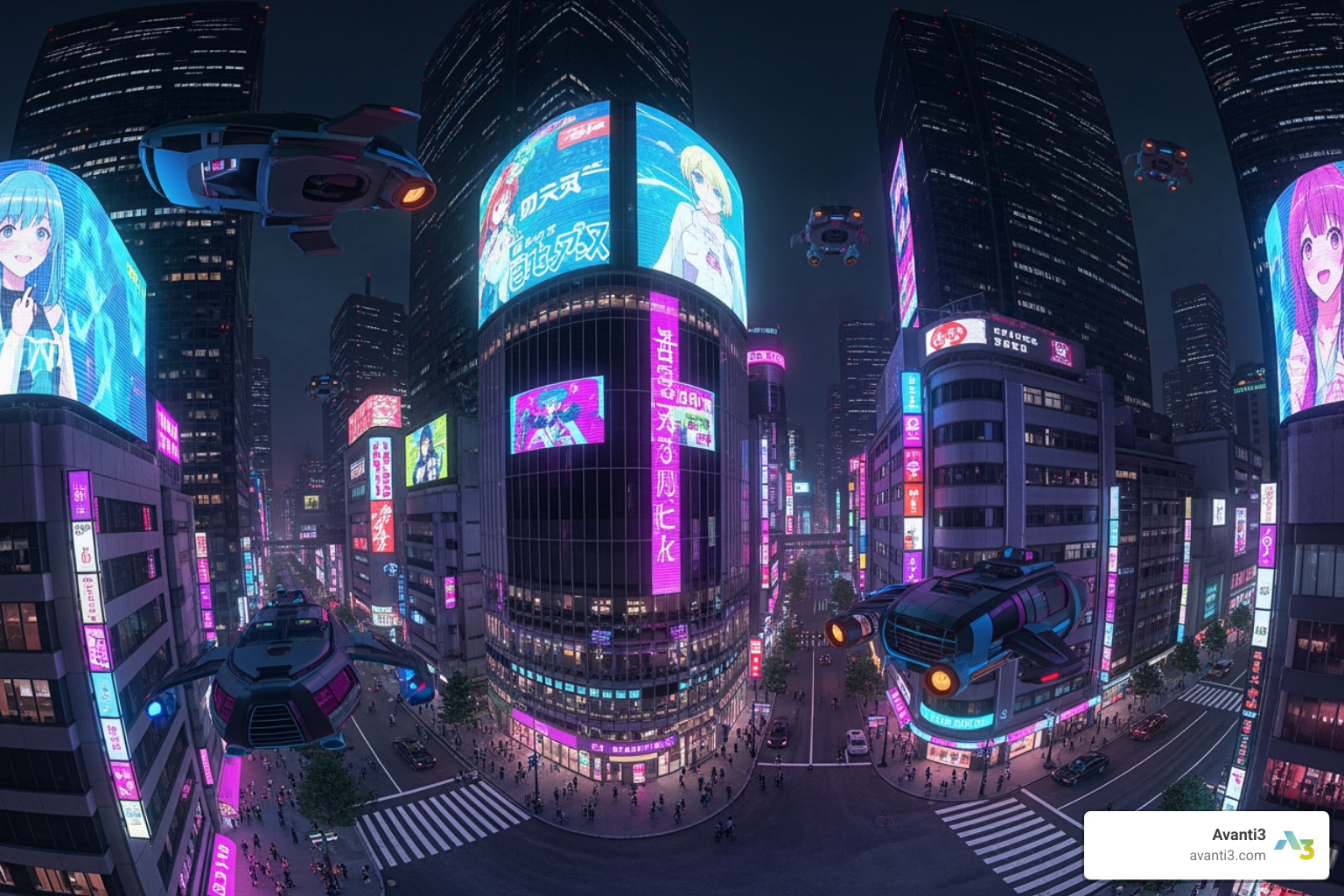
In a traditional setting, you are an observer. In VR, you are a participant. This sense of “presence”—the psychological feeling of actually being in a location—is what makes VR so potent for anime fans. Imagine standing on the deck of a space battleship or walking through the neon-lit streets of a futuristic Tokyo. The scale of the world is no longer limited by the size of your TV; it is limited only by the creator’s imagination.
Top Interactive Anime VR Experience Features and Platforms
To truly appreciate what an anime vr experience can offer, we need to look at the platforms leading the charge. One of the most groundbreaking platforms currently making waves is Hatch-Pot VR. This isn’t just a video player; it’s an entertainment hub where you can “experience” anime worlds.
Some of the unique features that define modern virtual-reality-experiences include:
- Customizable Dioramas: Platforms like Hatch-Pot VR allow users to recreate their favorite scenes. You can place characters freely in a 3D space, adjust their poses, and build your own virtual “shelf” of interactive figures.
- Fully Voiced Interactions: Immersion is broken if the world is silent. Top-tier experiences feature full Japanese voice acting, allowing you to engage in dialogue with characters as if they were standing right in front of you.
- 360-Degree Exploration: Unlike a fixed camera angle in a show, you can look behind you, look up at the sky, or walk around a character to see the detail on their outfit.
- Mecha Piloting: For fans of the giant robot genre, VR offers the chance to sit inside a cockpit. The tactile feeling of pulling levers and seeing the world through a HUD is something a flat screen simply cannot replicate.
At Avanti3, we believe these virtual-reality-experiences are just the beginning. By integrating these immersive worlds with customizable engagement tools, we help bridge the gap between creators and their global fanbases.
From Manga to Movies: Diverse Formats of Anime VR Experience
The anime vr experience isn’t restricted to just one type of media. We are seeing a fascinating evolution of formats that cater to different types of fans.
- Animated Manga (Project Hikari): Square Enix’s “Project Hikari” (featuring Tales of Wedding Rings) is a perfect example. It’s a “moving comic” where 2D panels exist in a 3D space. As you read, the characters might jump out of the panel and become full 3D models, performing a scene with voice acting before returning to the sequential art format. It’s a beautiful blend of traditional reading and modern animation.
- Feature-Length VR Films: We are now seeing the arrival of full-length cinematic stories. Mobile Suit Gundam: Silver Phantom is touted as the first-ever feature-length anime in VR. Instead of a 20-minute “experience,” fans get a deep, interactive cinematic story that lasts as long as a standard movie.
- Visual Novels in VR: Titles like Altdeus: Beyond Chronos have received critical acclaim (often scoring 9/10) for their ability to tell a rich, branching narrative. These aren’t just games; they are interactive stories where your choices determine the fate of humanity.
For more on how these formats are changing the landscape, check out our insights on ar-vr-immersive-experiences.
Japan-Inspired Attractions and Themed VR Rides
If you ever find yourself in Japan, the anime vr experience moves from your living room to massive, high-tech entertainment hubs. Japan has pioneered “Location-Based Entertainment” (LBE) that uses VR to create attractions that would be impossible to build physically.
- Universal Studios Japan (USJ): USJ is famous for its “XR Rides.” These are physical roller coasters where you wear a VR headset. The Demon Slayer: Kimetsu no Yaiba XR Ride and the Attack on Titan experiences use the G-force of a real coaster to simulate high-speed battles.
- RED Tokyo Tower: Located inside the iconic Tokyo Tower, this hub features eSports, VR boat races, and even fighting robot suits. It’s a playground for anyone looking for the cutting edge of Japanese tech.
- The Hexa VR Ride: This specific attraction offers scenarios like “The Final Operation to Retake Wall Maria” from Attack on Titan. It combines high-quality visuals with motion seats to make you feel every swing of the Omni-directional mobility gear.
- VR Theater: Launched in dozens of locations across the Kanto region, these services allow people to visit an internet cafe, pay a small fee (around 600 yen), and watch 360-degree content like Ghost in the Shell: Virtual Reality Diver.
These locations often use “body sonic” feedback—haptic technology that vibrates your seat or suit in sync with the action. You can learn more about immersive VR attractions and how they are setting the standard for the future of theme parks.
The Future of Immersive Fandom and Hardware Requirements
As the technology becomes more affordable, the anime vr experience is moving into the mainstream. However, to get the most out of these worlds, you need the right gear. The hardware you choose will significantly impact your comfort and the visual fidelity of the anime world.

Comparing VR Viewing to Traditional Screens
Many fans wonder: “Is it actually better than my 4K TV?” The answer depends on what you value. While a TV is more comfortable for long-term “chilling,” VR provides a level of focus that is impossible elsewhere.
| Feature | Laptop/Tablet/TV | VR Headset (Anime Experience) |
|---|---|---|
| Screen Size | Fixed (13″ – 65″) | Virtual IMAX (100″+) |
| Immersion | Low (Distractions around you) | Total (360-degree environment) |
| Social | Physical presence only | Shared virtual theaters (Bigscreen VR) |
| Comfort | High (Can lie down easily) | Medium (Weight and heat factors) |
| Eye Strain | Standard | Higher (Requires breaks every 30-60 mins) |
| Portability | High | High (Standalone units like Quest 3S) |
Users often report that watching anime in VR is “10x better” than a tablet because it eliminates the urge to check your phone. You are locked into the world. However, comfort is a real factor. Headset weight and battery life (usually 2-3 hours) mean that VR is currently better for “event viewing” rather than a 12-episode binge session.
Hardware and Accessibility for Global Fans
To dive into a high-quality anime vr experience, we recommend the Meta Quest lineup. Specifically:
- Meta Quest 3 / 3S: These are the current gold standards, featuring “Pancake Lenses” which are much clearer and less bulky than the older “Fresnel Lenses.”
- Meta Quest Pro: Best for those who want the highest color accuracy and eye-tracking features.
- Meta Quest 2: A great budget entry point that still supports most modern anime apps like Hatch-Pot VR.
Accessibility has also improved. Most major VR anime titles now support both Japanese and English text, though many purists prefer to keep the Japanese voices for that authentic “subbed” feel. For a deeper dive into the tech, explore our ar-vr-immersive-experiences guide.
Next-Gen Trends: Web3 and Community Monetization
At Avanti3, we are looking toward the future of the anime vr experience. We see a world where fandom isn’t just about consuming—it’s about owning and participating. This is where Web3, blockchain, and NFTs come into play.
Imagine owning a limited-edition digital outfit for your VR avatar that was designed by the original anime studio, or receiving exclusive digital rewards for attending a virtual world premiere. By integrating these technologies, we can create:
- Customizable Engagement: Creators can offer “Indie” tiers for their content, allowing smaller animators to reach fans directly without needing a massive studio.
- Fan Monetization: Fans can be rewarded with tokens or NFTs for participating in community events or helping build virtual dioramas.
- Cross-Platform Digital Identity: Your rewards and collectibles can follow you across different VR experiences and platforms.
The integration of augmented-reality-concerts and VR meet-and-greets is just the tip of the iceberg. Whether it’s through a VRMMO platform or a 3D stage directed by AI, the goal is to connect fans with their favorite characters in ways that were once purely science fiction.
The anime vr experience is no longer a niche hobby; it is a burgeoning industry that offers a new way to live out our favorite stories. Whether you are piloting a Gundam or just reading a manga in a virtual park, the wall between the “real” world and the “anime” world is thinner than ever.
Start your immersive adventure today and see where the next generation of fandom can take you!