

Rock, Pop, and Pixels: How Augmented Reality Concerts Are Redefining Live Music
How Augmented Reality Concerts Are Changing Live Music Forever
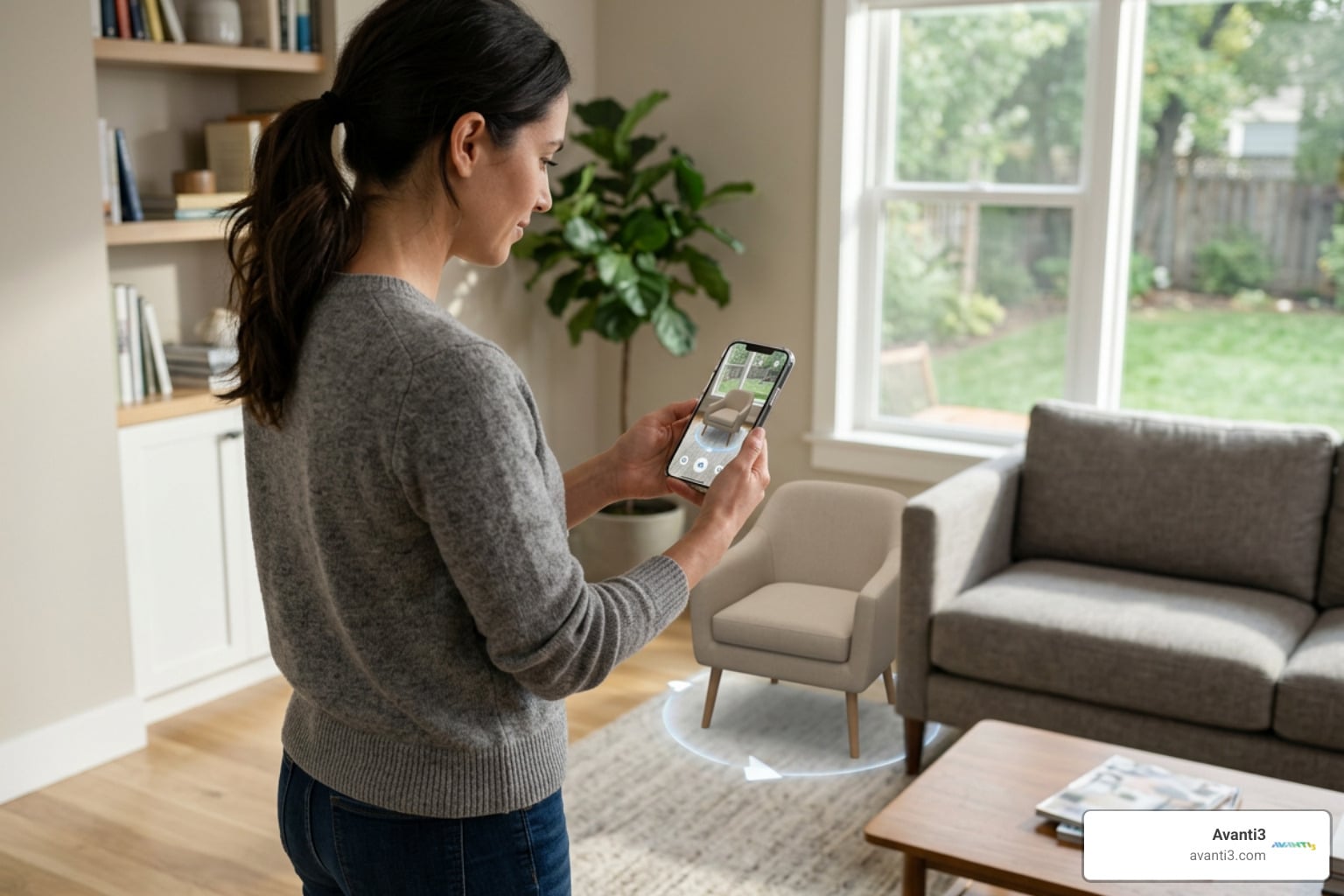
An augmented reality concert is a live or virtual music performance where digital visuals — holograms, animations, and interactive effects — are layered directly onto the real world through smartphones, AR glasses, or mixed-reality headsets.
Here’s what you need to know at a glance:
- What it is: A concert where digital elements are overlaid onto a physical or home environment in real time
- How it differs from VR: VR replaces your surroundings entirely; AR keeps the real world visible and adds to it
- How you access it: Via a smartphone app, AR headset (like Meta Quest or Apple Vision Pro), or a festival’s live broadcast
- Who’s doing it: Artists like The Weeknd, Gorillaz, and Powerwolf, plus platforms like Snapchat, TikTok, and Apple
- Why it matters: It makes live music more immersive, more accessible, and far more interactive than a standard concert or livestream
The music industry is going through a massive shift. The extended reality (XR) concert market was valued at $105.58 billion in 2023 and is projected to reach $472.39 billion by 2028. That’s not a niche trend — that’s a fundamental change in how artists connect with fans.
Think about what that means in practice. A fan in Tokyo can watch a holographic performer appear in their living room. A festival crowd of 100,000 people can point their phones at the sky and see giant digital wolves climb above the stage. A historic venue can host a recreation of a concert that happened 150 years ago.
This is not science fiction. It’s happening right now.
I’m Samir ElKamouny, a marketing strategist and entrepreneur who has spent years helping artists, brands, and creators leverage cutting-edge technology — including the augmented reality concert space — to build deeper fan connections and unlock new revenue streams. In this guide, I’ll walk you through exactly how AR concert technology works, who’s leading the way, and what it means for your brand or creative project.
The Technology Powering the Augmented Reality Concert
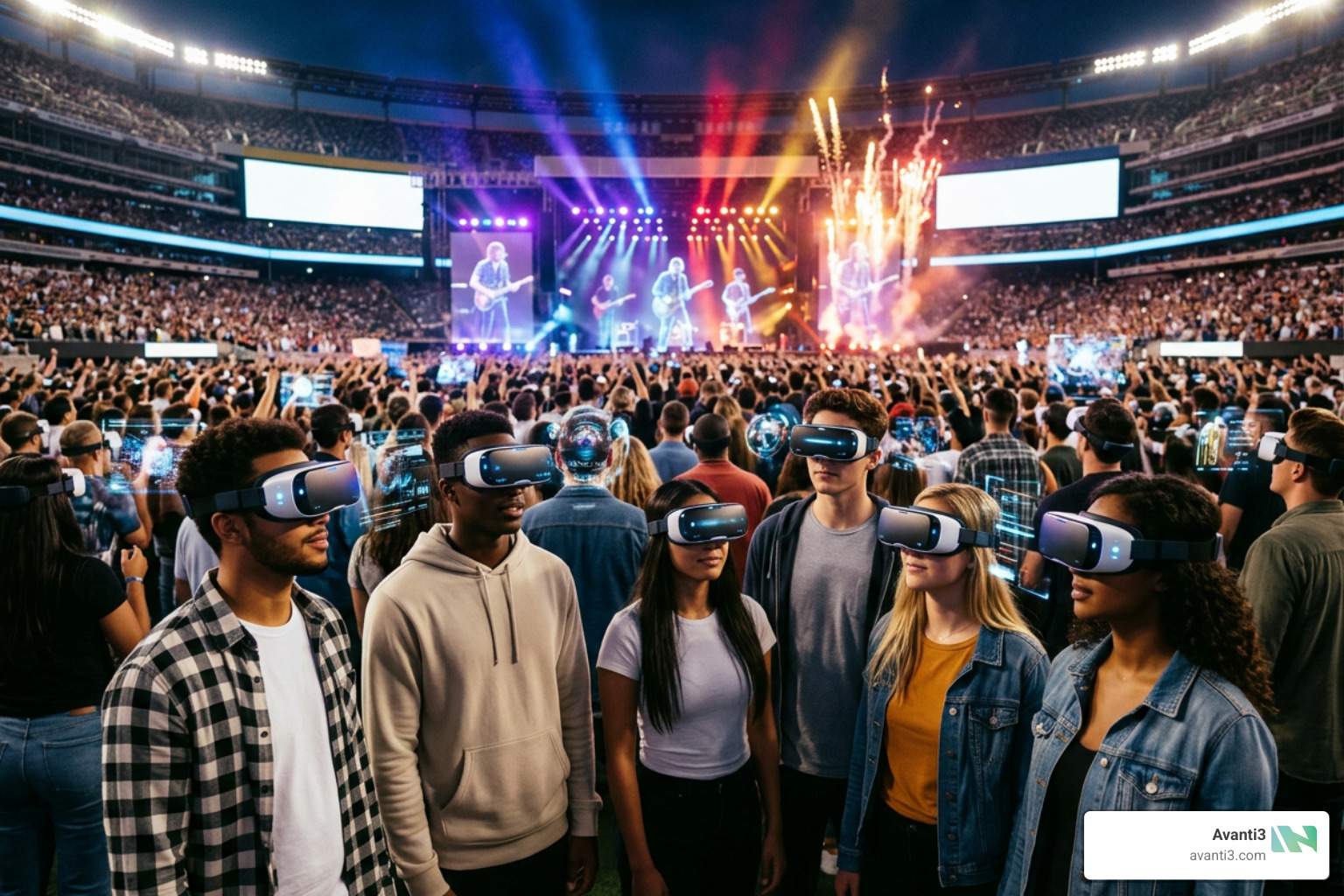
To understand why the augmented reality concert is taking over the entertainment world, we have to look under the hood. It’s not just about projecting a cool 3D image; it’s about merging the physical and digital worlds so seamlessly that your brain completely accepts the illusion.
What is an Augmented Reality Concert and How Does It Differ From VR?
The easiest way to understand the difference between an AR concert and a virtual reality (VR) concert is to look at where your feet are planted.
In a VR concert, you wear a fully enclosed headset that completely replaces your physical environment. You are transported to a digital arena, isolated from the people actually sitting next to you on your couch. While VR offers incredible isolation and fantasy environments, it sacrifices the shared social connection that makes live music so special.
An augmented reality concert, on the other hand, keeps you anchored in the real world. Whether you are standing in a historic concert hall, a massive outdoor festival, or your own living room, AR overlays digital elements onto your actual surroundings. You can still see your friends, hold your drink, and feel the energy of the room — but now, there are 3D holograms performing on stage or digital gold glitter raining down from your ceiling.
| Feature | Augmented Reality (AR) Concerts | Virtual Reality (VR) Concerts |
|---|---|---|
| Physical Presence | You remain fully aware of and connected to your physical surroundings. | You are completely immersed in a simulated, 100% digital environment. |
| Hardware Required | Smartphones, tablet screens, or lightweight AR/mixed-reality glasses. | Dedicated, fully enclosed VR headsets (like Meta Quest or HTC Vive). |
| Social Connection | Highly social; you can see and interact with other physical audience members. | Solitary or limited to interacting with digital player avatars. |
| Best Use Case | Enhancing live, in-person festivals, historic venues, and interactive home shows. | Creating entirely fictional, gravity-defying digital worlds from scratch. |
By utilizing augmented reality concerts, artists can elevate the physical space rather than replace it. This hybrid approach keeps the community aspect of music alive. To explore how these platforms are built, check out our guide on virtual concerts technology.
Key Technologies Enabling the Modern Augmented Reality Concert
Bringing a high-fidelity augmented reality concert to life in real time requires a powerful symphony of hardware and software working in perfect unison. Here are the core technologies making it possible:
- 5G Open RAN (Radio Access Network): High Demand Density (HDD) locations like festivals and stadiums are notorious for killing cell service. 5G Open RAN provides the massive bandwidth and ultra-low latency needed to stream heavy 8K 3D volumetric assets to thousands of synchronized devices simultaneously.
- LiDAR 3D Mapping: Light Detection and Ranging (LiDAR) uses lasers to map physical environments in real time. This allows the AR software to recognize where the physical stage, walls, and floor are, ensuring that digital holograms stand firmly on the ground rather than floating awkwardly in mid-air.
- Haptic Feedback & Sensors: During the NTT Pavilion’s AR performances at Expo 2025 (which drew over 100,000 visitors), performers wore acceleration sensors that tracked their steps. These sensors triggered 128 vibration actuators embedded under the audience’s floor, allowing spectators to literally feel the impact of the performance. Read more about this incredible spatial feat in The NTT Pavilion Delivering a 3D Performance from the Future… and the Past? | NTT STORY | NTT .
- Volumetric Capture & Real-Time Rendering: Performers are recorded using multi-camera arrays to create dynamic 3D “point clouds.” These are processed by real-time rendering engines to stream lifelike 3D representations of the artists directly to user devices.
By blending these tools, we can create ar vr immersive experiences that feel astonishingly real, bridging the gap between physical touch and digital magic.
From Stadiums to Living Rooms: Real-World Case Studies and the Future of Live Music
The transition of AR from a novel tech demo to a mainstream performance medium is already well underway. Artists across all genres are proving that digital overlays can turn a standard gig into an unforgettable spectacle.
Pioneering Performances: How Artists are Redefining the Stage
We have seen incredible creativity from artists pushing the boundaries of what a “stage” can be:
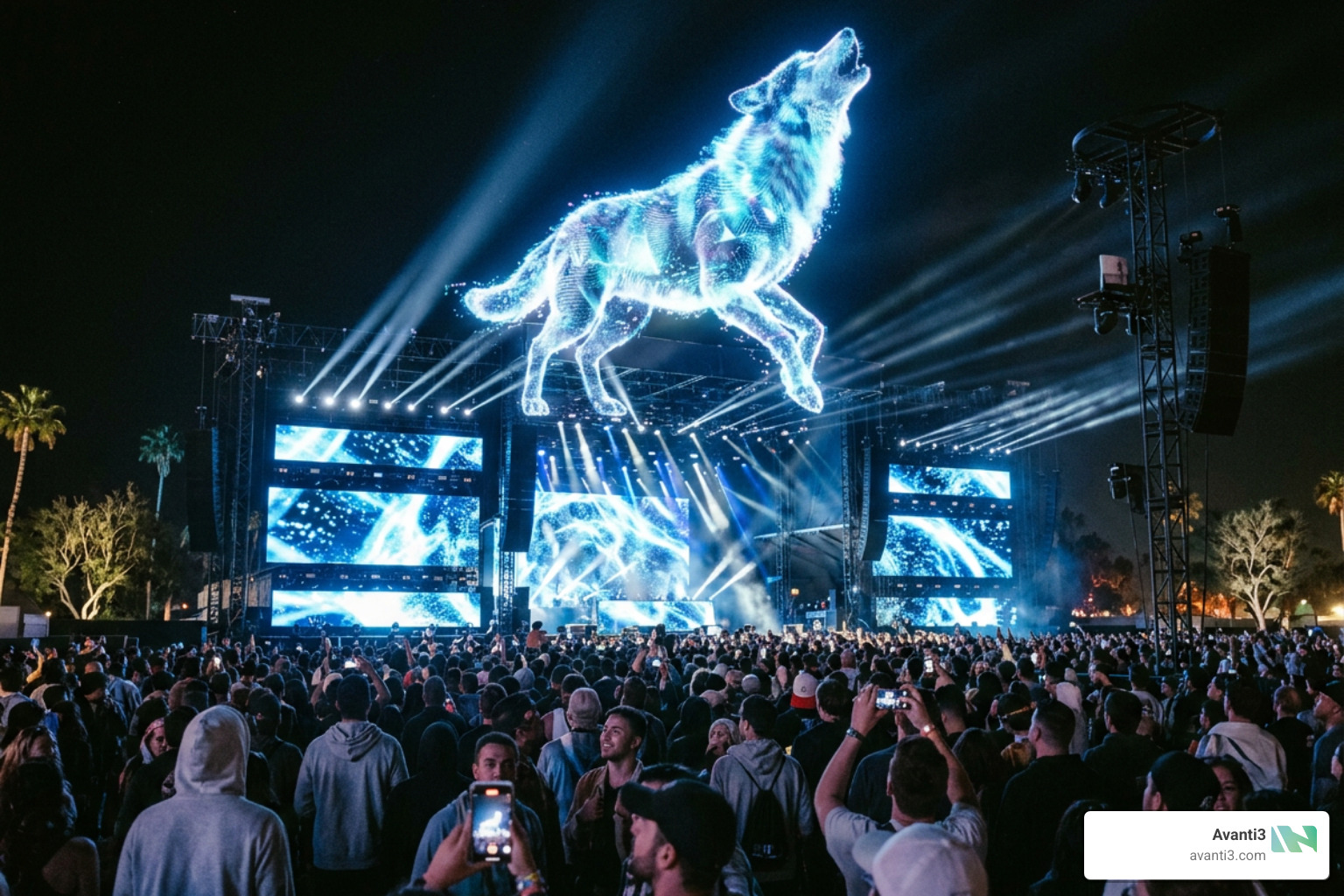
- Powerwolf’s Metal Spectacle: In August 2023, the German power metal band made history by deploying real-time AR during their live festival set. Partnering with ARTE Concert and 0221 Mediaagentur, they used video game technology to render a monstrous, giant digital wolf climbing above the physical stage, perfectly synced with their massive pyrotechnics. You can Watch Powerwolf make history for their first-ever augmented reality metal festival performance to see how heavy metal theatricality meets real-time digital rendering.
- Snapchat’s Festival Utility: Snapchat has shown that AR isn’t just about visual flair; it’s also about utility. With 85% of Snapchat users leveraging the app to enhance their live music experiences, the platform has integrated AR compasses, lineup schedules, and “friend-finder” lenses directly into massive music festivals like EDC.
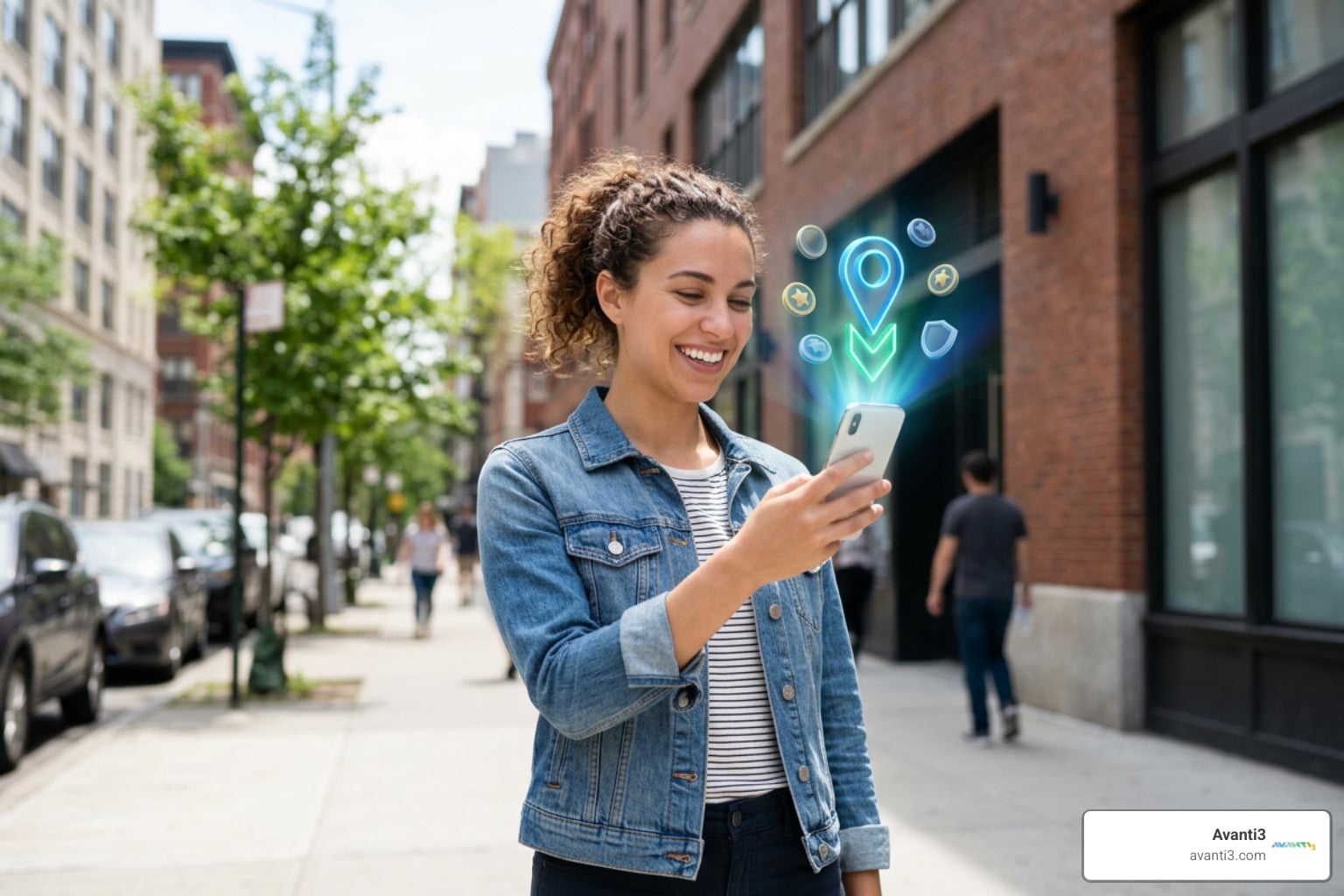
- Gorillaz’s Location-Based AR: The virtual band used Google’s ARCore Geospatial API to turn entire city skylines into live canvases, allowing fans to point their phones at major metropolitan landmarks and watch giant animated band members perform in the sky.
- The Weeknd’s TikTok Experience: The Weeknd hosted an interactive AR broadcast on TikTok, utilizing a viral trend for his hit “Blinding Lights” (which has featured in over 1.5 million videos) to raise funds for charity via direct, in-app donation matching.
- Metallica & Apple Vision Pro: For fans who want the ultimate premium experience, Apple launched an immersive, 180-degree spatial computing concert with Metallica. Captured using 14 specialized cameras (including cable-suspended and remote-controlled dollies), it places you directly on stage with the band. Read the official announcement at Apple unveils immersive concert experience with Metallica for Apple Vision Pro – Apple .
Overcoming Technical Constraints and Audience Adoption Challenges
While the potential is massive, implementing an augmented reality concert comes with its fair share of real-world hurdles.
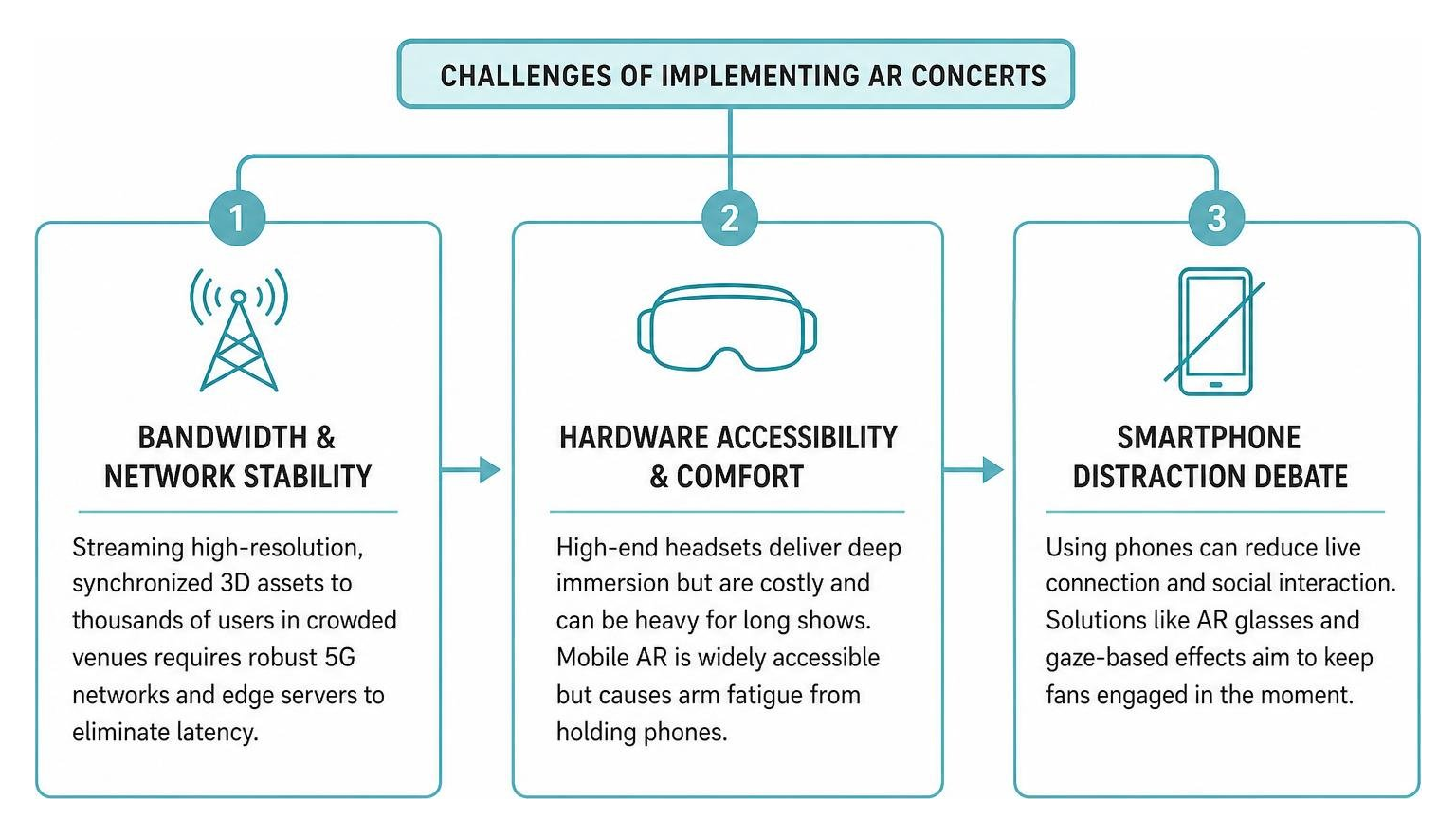
To successfully deploy these experiences, production teams must navigate several key constraints:
- Bandwidth & Network Stability: Streaming high-resolution, synchronized 3D assets to thousands of concurrent users in a crowded stadium requires robust, private 5G networks and local edge servers to eliminate latency.
- Hardware Accessibility & Comfort: While high-end spatial headsets offer mind-blowing immersion, they are still expensive and can feel heavy during a full-length show. Mobile AR is highly accessible but requires users to hold their phones up, which can lead to arm fatigue.
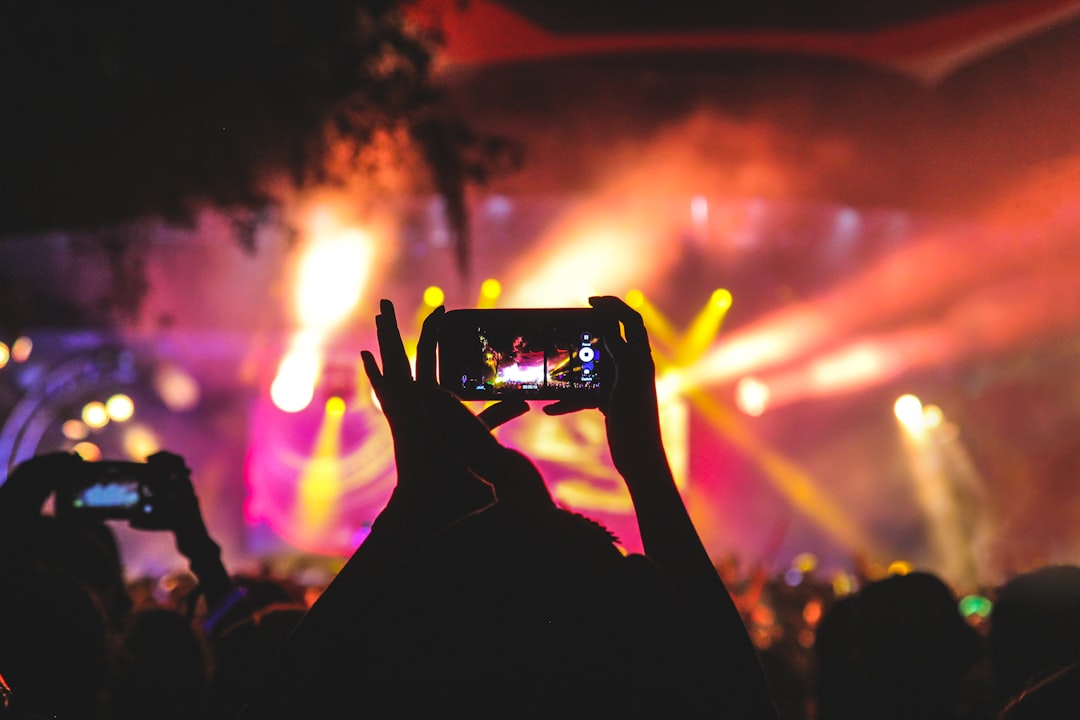
- The Smartphone Distraction Debate: Many artists and fans worry that looking at a performance through a screen ruins the live connection. In an academic case study presented at SIGGRAPH 2024, researchers explored using synchronized AR glasses to trigger gaze-based visual effects, aiming to restore physical sociability rather than isolating fans behind phone screens. You can read the technical breakdown in Phases: Augmenting a Live Audio-Visual Performance with AR .
- Stage Integration & Rehearsal Times: Syncing physical stage mechanics with digital assets under tight festival schedules is incredibly difficult. For example, during a special televised pop music event in Munich, the production crew had to use on-screen digital markers on their massive LED stage to help the crew position physical platforms precisely in real time. Learn more about these backend workflows at AR Effects and Huge LED Stage Deliver an Immersive Experience at Pop Music Event | AVNetwork .
For creators planning their own digital events, choosing the right foundation is half the battle. We have put together a comprehensive guide on how to choose virtual concert software to help you navigate these technical decisions.
Beyond the Stage: AR in Marketing, Education, and Fan Engagement
The magic of augmented reality doesn’t stop when the band walks off the stage. We are seeing brands and creators use AR to redefine the entire fan journey:
- Interactive Marketing: From scannable AR posters that bring album art to life to interactive streaming platform covers, AR is a powerful tool for capturing attention. Check out our insights on ar marketing solutions and see how you can make your brand stand out with augmented reality in social media making your marketing pop off the screen.
- Gamified Music Education: AR apps can now overlay virtual visual guides (similar to a real-life version of Piano Tiles) directly onto physical instruments like pianos, helping beginners learn to play without needing an in-person tutor.
- Brand Sponsorships & Virtual Real Estate: Platforms like Live Nation have experimented with AR live streams where remote viewers can place a virtual jumbotron on their coffee tables. During intermissions, empty physical stages can be transformed into interactive 3D brand showcases, opening up entirely new streams of advertising revenue.
At Avanti3, we specialize in bridging the gap between cutting-edge technology and real-world fan engagement. By integrating Web3 technologies like NFTs, blockchain, AR/VR, and AI, we empower creators and brands with customizable engagement tools and fintech solutions that turn passive viewers into active, loyal communities.
Whether you want to launch an interactive augmented reality concert, build a custom digital rewards system, or design a next-generation marketing campaign, we are here to help you set a new standard in digital engagement. Let’s build the future of entertainment together.