


Beyond the Bleachers: Fan Engagement Strategies for the Digital Age
Why Fan Engagement Strategies Are the New Revenue Engine for Sports and Brands
Fan engagement strategies are the systems, tactics, and technologies that turn passive spectators into loyal, revenue-generating communities. If you’re looking for a quick overview, here are the most effective approaches in use today:
- Personalization at scale – Use AI and first-party data to deliver tailored content, offers, and highlights to individual fans
- Owned platforms over rented ones – Build branded apps and direct channels instead of relying on social media algorithms
- Gamification and interactivity – Live polls, prediction games, leaderboards, and rewards keep fans actively participating
- Phygital experiences – Blend physical activations with digital hooks (AR, QR codes, in-stadium light shows) for deeper impact
- Year-round touchpoints – Maintain monthly engagement during the off-season through exclusive content, contests, and community events
- Web3 and digital ownership – NFTs, fan tokens, and blockchain rewards create new layers of loyalty and monetization
- Key metrics – Track attention, interaction, commercial conversion, and loyalty (NPS, lifetime value) to measure what’s working
Fans are the lifeblood of any sports organization or creator brand. And the stakes have never been higher. Highly engaged fans attend games at a 67% higher rate and spend 175% more per game than casual viewers. Meanwhile, 77% of Gen Z fans prefer to watch sports outside of live venues — meaning the battle for attention is no longer just fought in the stadium.
The global media and entertainment industry is on track to reach $3.5 trillion by 2029. Yet many organizations are still leaving enormous value on the table by treating fan engagement as a communications afterthought rather than a core revenue strategy.
The good news? The technology to change that is already here — and it’s more accessible than ever.
I’m Samir ElKamouny, an entrepreneur and marketing expert who has spent his career helping businesses scale through smarter audience engagement, and fan engagement strategies sit at the heart of the most exciting growth opportunities I see for brands and creators today. In the sections ahead, we’ll break down exactly how to build a system that drives real loyalty, real data, and real revenue — whether you’re running a global sports franchise or a high school athletic program.
Fan engagement strategies terms at a glance:
The Evolution of Fan Engagement Strategies
Fan engagement has traveled a long road since the days of passive radio broadcasts in the 1920s. Historically, “home field advantage” meant having a loud, physically packed stadium. Today, in July 2026, home field advantage is a 365-day digital and physical relationship that exists wherever your fans are. Fandom is no longer just about sitting in a seat and watching; it is an active, participatory experience.
Modern fan engagement in sports: Definition, examples, strategy centers on creating immersive, two-way connections. It is a shift from treating fans as anonymous ticket buyers to recognizing them as active co-creators of the brand. When fans feel emotionally connected to a team, their lifetime value increases dramatically. As we outline in our guide on Beyond the Cheers: Mastering Fan Engagement in the Modern Era, shifting from passive consumption to interactive participation is the single most important step in modern sports marketing.

Understanding the Modern Fan: Data, Personalization, and AI
To truly engage fans, you must first understand who they are. Historically, this was difficult because fan data was fragmented across ticketing platforms, merchandise stores, and social media. Today, sports organizations are unifying this data into a Single Fan Profile.
Artificial Intelligence (AI) has completely rewritten the economics of personalization. Between 2023 and 2025, the marginal cost of generating a personalized message collapsed from roughly $0.40 to just $0.0003, making hyper-personalized fan outreach incredibly profitable. Here is how leading organizations are using AI to personalize the fan experience:
- Conversational Chatbots & Video Agents: Conversational interfaces handle thousands of fan inquiries in real-time. For example, Wembley Stadium deployed an interactive chatbot that generated $1.5 million in incremental revenue, yielding an astronomical ROI of 2,335% in its first eight months. Furthermore, AI video agents featuring familiar club figures carry an emotional weight that converts 3.4x better than text-based alternatives.
- Dynamic Ticket Pricing: Real Madrid implemented an AI-driven dynamic pricing system running up to 3,000 price changes per match. This lifted match-day revenue by 29% and ancillary merchandise revenue by 18%. Interestingly, 79% of dynamic pricing adjustments are actually downward discounts aimed at filling empty seats.
- Personalized Content Delivery: An NBA franchise used AI to automatically generate personalized, 60-second highlight reels for fans based on their favorite players. This initiative resulted in a 700% lift in video views, tripled total app engagement, and boosted 30-day retention by 62%.
- Real-Time Contextual Alerts: Formula 1 sends up to 5 million personalized push notifications during a tight 90-second race window. These notifications achieve open rates three to four times higher than the industry baseline because they are highly contextual to what is happening on the track.
Deploying these technologies is no longer reserved for tech giants. As we discuss in Beyond the Stands: Your Guide to Fan Engagement Tech, modern API integrations allow teams of all sizes to build a cohesive tech stack that connects directly with their audience.
Digital vs. In-Person Fan Engagement Strategies
The ultimate fan experience bridges the gap between the physical stadium and the digital screen—a concept often referred to as “phygital” engagement. With 77% of Gen Z and 75% of Millennials preferring to watch sports outside of live venues, virtual watch parties and interactive digital elements are vital.
For fans inside the stadium, augmented reality (AR) and real-time gamification keep them glued to the experience. We can use AR scavenger hunts around the concourse to reward fans with digital prizes, or synchronize fans’ smartphone lights during team anthems to create an immersive, stadium-wide light show. Microbetting—betting on specific, split-second moments within a game rather than just the final score—is also emerging as a powerful real-time attention driver.
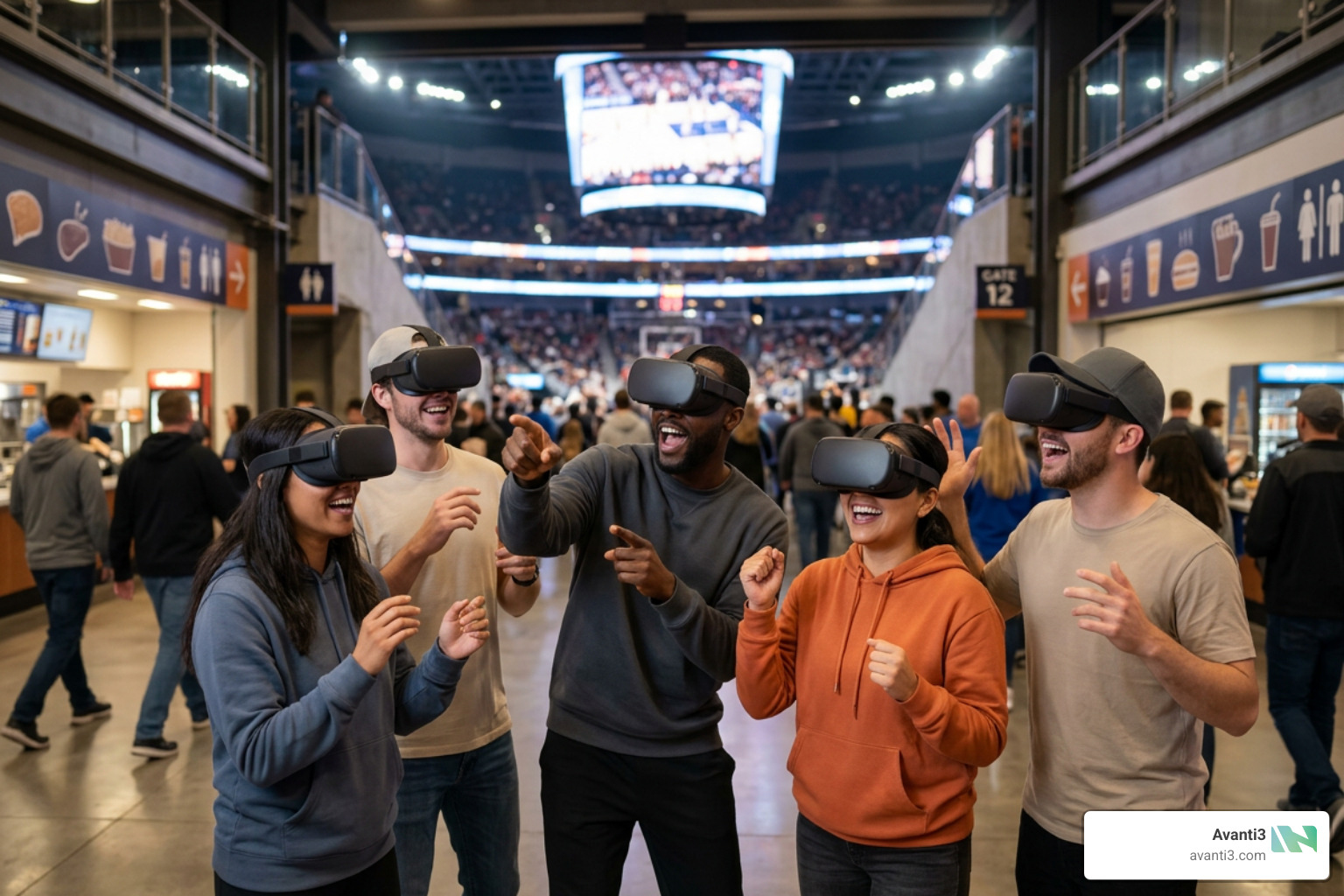
Sponsorships can also be seamlessly woven into these experiences. Take the Manchester City and PUMA AI Creator campaign, which allowed fans to design custom jerseys. It generated 54,000 registrations, 180,000 unique designs, and 1.7 million community votes, showing how interactive co-creation drives massive sponsor value.
To explore how these digital and physical worlds collide to build unforgettable moments, check out our insights on The Ultimate Guide to Fan Engagement: Everything You Need to Succeed in 2026 and Beyond the Game: Crafting Unforgettable Digital Fan Experiences.
The Power of Owned Channels and Web3 Technology
Many sports organizations make the critical mistake of building their fan relationships on rented land—namely, social media platforms. While social networks are fantastic top-of-funnel traffic drivers, relying on them for direct engagement exposes your brand to volatile algorithm changes.
Owned channels, such as a custom-branded mobile app, give you complete control over your fan data and direct monetization streams.
| Feature / Metric | Rented Social Media Platforms | Owned Branded Mobile Apps |
|---|---|---|
| Data Ownership | Third-party controlled (limited data) | First-party data (Single Fan Profile) |
| Reach Reliability | Volatile (subject to algorithm changes) | Direct (push notifications, in-app alerts) |
| Monetization Margins | Lower (platform fees, ad revenue splits) | Higher (direct ticket, merch, and sub sales) |
| Engagement Type | Passive scrolling, high competition | Interactive gamification, focused attention |
By centering your fan engagement strategies on an owned app, you can seamlessly integrate Web3 technologies. Blockchain-backed digital collectibles (NFTs) and utility tokens are transforming traditional loyalty programs. Instead of earning paper points that expire, fans can earn secure, verifiable digital assets that grant them real-world utility, such as exclusive meet-and-greets, voting rights on minor club decisions, or access to VIP stadium lounges.
These tools turn loyalty from a boring transaction into a game. To understand how to set up these systems, read more about Digital Fan Engagement and explore the latest Fan Engagement Tools.
The Future of Fandom: Scaling Loyalty and Monetization
The future of fandom belongs to organizations that treat their supporters as active community members rather than passive consumers. When fans are given the tools to co-create, share, and own a piece of the experience, their loyalty becomes self-sustaining.
At Avanti3, we integrate Web3 technologies like NFTs, blockchain, AR/VR, and AI to empower creators and brands with customizable engagement tools and fintech solutions. By bridging the gap between cutting-edge tech and real-world passion, we help organizations build deeper relationships and unlock entirely new high-margin revenue streams.
Year-Round Connection: Engaging Fans Beyond Match Day
A common mistake is letting fan relationships go cold during the off-season. True fandom is a year-round relationship. To maintain brand loyalty, organizations should provide interactive touchpoints at least monthly.
Off-season campaigns can include digital advent calendars with daily prizes, exclusive behind-the-scenes documentary content, and monthly fan-voted awards. Interactive polls, such as letting fans vote on the team’s pre-game playlist or jersey design for next season, keep the community active and invested even when there are no games being played.
Measuring Success: Key Metrics for Fan Engagement Strategies
Without clear measurement, engagement initiatives are just expensive experiments. To know what is truly working, we utilize a tiered measurement framework:
- Attention Metrics: Tracking daily active users (DAU), monthly active users (MAU), and average session time on your owned app.
- Interaction Metrics: Measuring participation rates in live polls, quizzes, prediction games, and AR scavenger hunts.
- Commercial Conversion: Tracking season ticket renewal rates, merchandise purchase frequency, and direct digital revenue per engaged fan.
- Loyalty Metrics: Monitoring Net Promoter Score (NPS), churn rates, and Customer Lifetime Value (CLV). Emotionally connected fans have a significantly higher lifetime value, and tracking these metrics helps ensure long-term, predictable growth.
Budget-Friendly Tactics for Smaller and High School Programs
You do not need a professional sports franchise budget to execute world-class fan engagement strategies. High school athletic directors and smaller local clubs can scale down these professional tactics on a budget:
- Consistent Visual Identity: Establish a recognizable brand by keeping logos, team colors, and graphic styles consistent across all uniforms, social media, and digital ticketing platforms.
- Digital Ticketing & Live Streaming: Use low-cost digital ticketing platforms to share match-up graphics before games, and leverage free or budget-friendly streaming networks to broadcast games to remote family members and fans.
- Student-Led Spirit Sections: Encourage highly active, student-led spirit sections with themed dress-up days and simple, synchronized crowd chants to boost game-day energy.
- Post-Game Highlights: Use simple, pre-designed graphic templates to post final scores, player interviews, and short highlight clips immediately after the game.
By focusing on community connection and consistent execution, smaller programs can build an incredibly passionate and loyal local fanbase. For a deeper dive into managing these solutions at any scale, check out our guide on Beyond the Bleachers: How to Master Fan Engagement Solutions.
Ready to Elevate Your Fan Experience?
The landscape of fandom is shifting rapidly. The organizations that build direct, owned, and highly interactive relationships with their fans today are the ones that will thrive tomorrow.
If you want to explore how Web3, AI, and immersive technologies can transform your brand, check out our AR/VR Immersive Experiences solutions. Let’s work together to build the future of your brand and Connect with Fans in ways they will never forget.