

How Blockchain is Rewriting the Rules of Fantasy Sports
Why Blockchain-Based Fantasy Sports Are Changing the Game
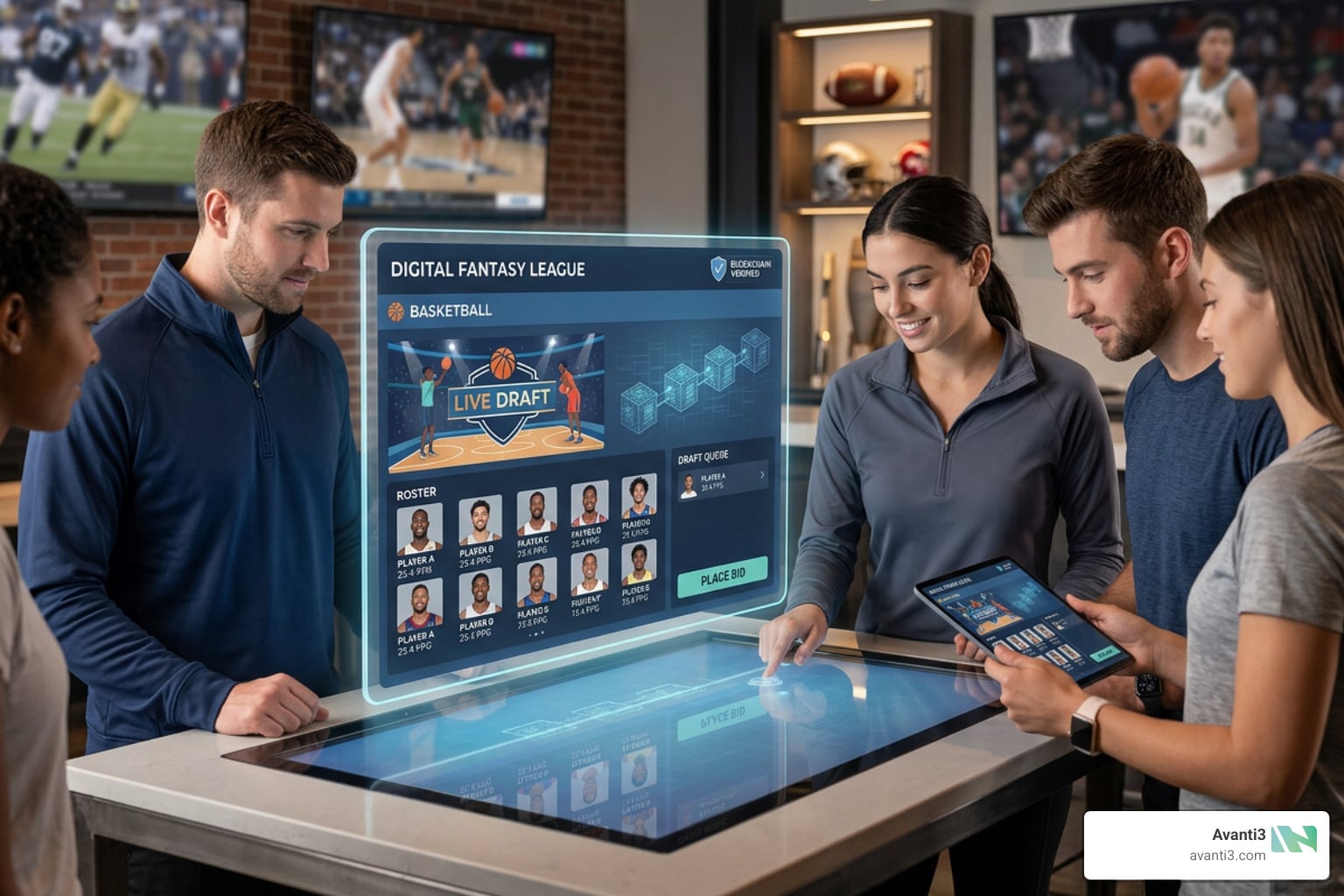
Blockchain-based fantasy sports are online competitive games where players draft real-world athletes, earn points based on live performance, and receive payouts — all managed by transparent, automated smart contracts instead of a centralized company.
Here’s a quick look at how they compare to traditional platforms:
| Feature | Traditional Platforms (e.g., DraftKings, FanDuel) | Blockchain Platforms |
|---|---|---|
| Rake fee | ~10% | As low as 2.5–5% |
| Payouts | Manual, delayed | Instant via smart contract |
| Transparency | Centralized, opaque | Fully on-chain and verifiable |
| Entry limits | Up to 500 per user | Often capped (e.g., 10) to prevent bots |
| Access | Region-restricted | Global and permissionless |
| Asset ownership | None | NFT player cards you truly own |
Two platforms — DraftKings and FanDuel — currently control nearly 90% of the US fantasy sports market. That dominance lets them charge high fees, limit competition, and set rules that favor the house. Blockchain changes that equation entirely by removing the middleman, cutting costs, and putting control back in the hands of players.
I’m Samir ElKamouny, an entrepreneur and marketing expert who has spent years helping businesses harness emerging technologies — including blockchain-based fantasy sports — to build engaged communities and unlock new revenue streams. In this guide, I’ll break down the top platforms, the technology behind them, and what it all means for creators and brands looking to lead in this space.
Why Blockchain-Based Fantasy Sports Outperform Traditional Platforms
Traditional fantasy sports platforms are facing a growing crisis of trust. For years, casual players have complained about “whale” users who use automated scripts and complex algorithms to submit up to 500 lineups in a single contest. This bot dominance leaves casual fans with almost no chance of winning, turning what should be a fun test of sports knowledge into an unequal battle against software.
By contrast, blockchain-based fantasy sports platforms use smart contracts to level the playing field. Many Web3 platforms enforce strict entry limits—often capping squad submissions at a maximum of 10 per user. This prevents automated bot abuse, restoring the organic emotional attachment that makes sports fandom so exciting. If you draft an underrated Premier League striker on a budget and they score a weekly hat-trick, you deserve to win because of your sports knowledge, not because you flooded the contest with hundreds of entries.
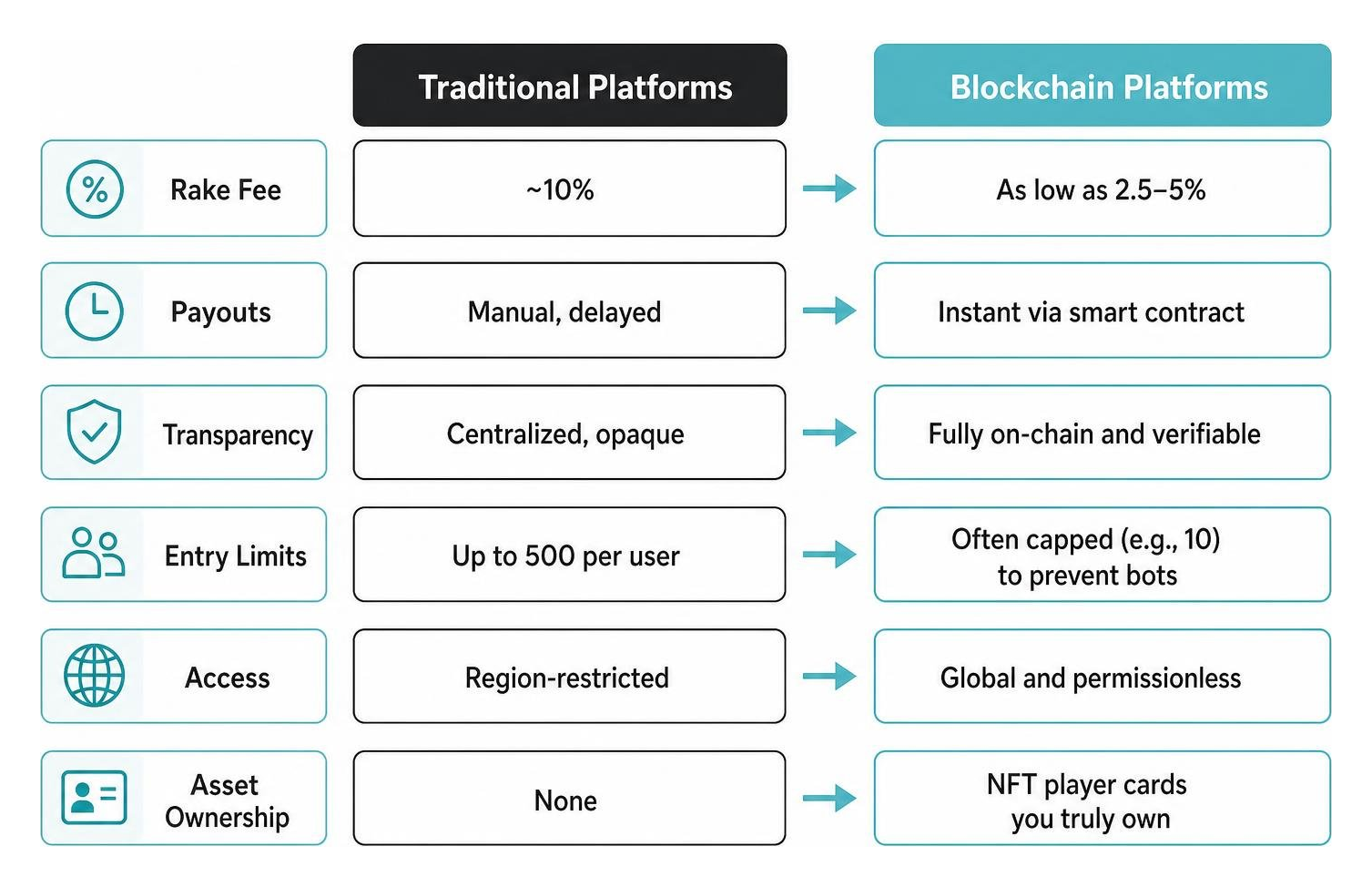
Another massive advantage is the cost of play. Centralized giants typically charge a steep 10% rake fee on entry pools. Emerging Web3 options cut this fee in half. For example, No Limit Fantasy Sports charges a mere 5% rake fee, which drops to 2.5% for head-to-head matches.
By eliminating the middleman, these platforms transition the entire ecosystem toward peer-to-peer wagering. This architecture supports Digital Fan Engagement by ensuring that more prize money stays in the hands of the community rather than lining corporate pockets.
Key Features of Blockchain-Based Fantasy Sports Ecosystems
What makes a Web3 fantasy sports platform tick? It is a combination of advanced cryptography, decentralized finance (DeFi), and digital ownership.
- Dynamic NFTs (dNFTs): Unlike traditional digital cards that remain static, dynamic NFTs represent player cards whose attributes update post-game to reflect real-world performance. If a player has a breakout season, their on-chain card reflects those updated stats and value automatically.
- Staking Rewards: Web3 platforms allow users to earn passive income. NoLimitCoin (NLC) pays out 4% per year in extra coins for staking in a desktop wallet. Similarly, the startup-themed platform FantasyYC offers 19 Y Combinator startup NFT cards across 5 rarity tiers (Common to Legendary) and a 4% yearly staking reward, creating a deflationary card-burning ecosystem through strategic merge mechanics.
- High-Performance Infrastructure: To make real-time fantasy updates viable, platforms are leveraging cutting-edge scaling solutions. The Strike platform, which boasts over 15 million active players and a 10 million USDC prize pool, achieves 95% data compression and 91% lower transaction costs using ZK Compression technology on Solana. Through its MagicBlock integration, it delivers an astonishing 10ms transaction finality while handling over 50 million transactions per second (TPS).
By incorporating Blockchain-Based Rewards, these ecosystems incentivize continuous participation. Players do not just play; they become active stakeholders in the platform’s financial success.
Comparing Web3 Architectures and Technologies in Fantasy Sports
The choice of the underlying blockchain dictates how a fantasy platform performs, how much it costs to play, and how secure the assets are. Let’s look at how different networks stack up in the current 2026 landscape.
| Blockchain | Key Platforms | Primary Advantage | Scaling Tech Used | Data Verification |
|---|---|---|---|---|
| Solana | Fantasy Football Blockchain, Strike | Near-zero fees, sub-second speed | ZK Compression, MagicBlock | High-speed on-chain state channels |
| Flow | aiSports CryptoDFS | Built for consumer dApps and NFTs | Flow multi-node architecture | Fast Break Vaults ($FLOW staking) |
| Ethereum | regulolanz/hodler-fantasy-dapp | Maximum decentralization, security | Layer-2 rollups, IPFS integration | Chainlink Oracles, AWS S3 hybrid |
On Solana, platforms like Fantasy Football Blockchain enable instant payouts via smart contracts with absolutely no house edge. This structure allows global players to form private mini-leagues, set custom stakes, and receive winnings the second a matchweek ends.
Meanwhile, platforms built on Flow, such as aiSports CryptoDFS, focus on accessible daily fantasy sports for leagues like the NBA. Players draft lineups within a salary cap to win $JUICE rewards, which can be redeemed for rare NFTs or entry into exclusive tournaments.
Core Tech Stacks Powering Web3 Fantasy Applications
Building a successful blockchain-based fantasy sports application requires a secure, hybrid tech stack that bridges Web2 usability with Web3 security.
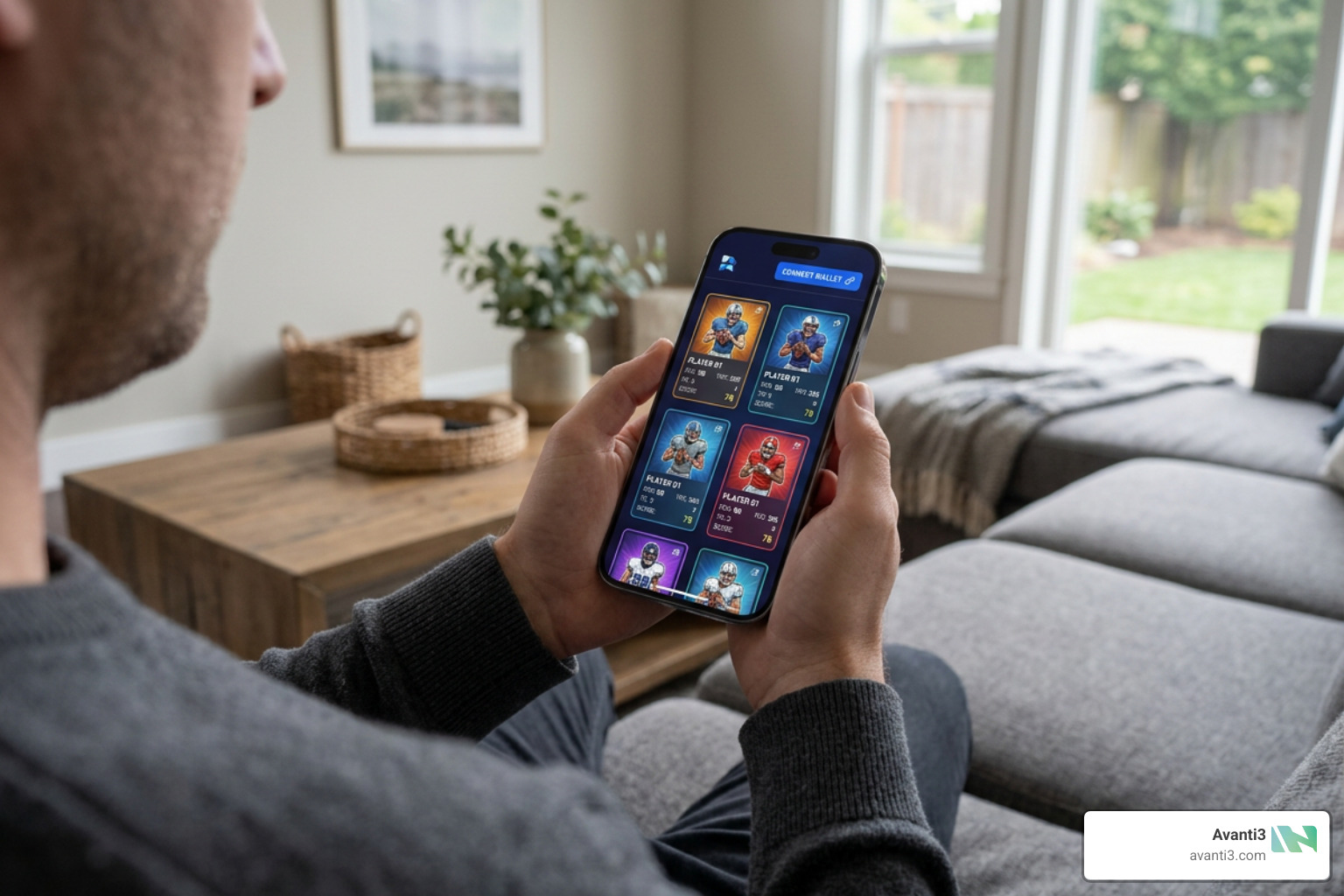
A prime example of this technical balance is cbonoz/chaindraft, a decentralized NFL draft application. To ensure game integrity, Chaindraft uses the Sign Protocol to create on-chain cryptographic attestations for each player draft. This serves as immutable proof that a roster was produced fairly and has not been tampered with between the draft submission and the final game evaluation. To simplify user onboarding, it integrates Web3Auth, allowing non-crypto native players to log in using familiar social media credentials while maintaining a secure, non-custodial wallet in the background.
Another major player in the space is Polysports | Play Fantasy Sports | Win BTC & NFT. Boasting over 100,000 downloads and 100,000 coins mined, Polysports bridges Web2 and Web3 by offering a 500% cash bonus on first deposits alongside a daily “free mining” mechanism for its in-game coin. This dual-currency model separates volatile speculative assets from stable gameplay, making it incredibly easy for mainstream sports fans to learn how to buy, stake, and swap utility tokens using tools like MetaMask and QuickSwap.
For creators looking to deploy these setups, using the right Fan Engagement Tools is vital to abstracting away complex blockchain terminology while keeping the competitive thrill front and center.
Overcoming Technical and Regulatory Challenges
While the benefits of decentralized fantasy sports are clear, the industry still faces hurdles:
- Scalability: High gas fees on networks like Ethereum mainnet can make micro-wagers impractical. This is why platforms are rapidly migrating to high-throughput Layer-2s or utilizing Solana’s ZK Compression to cut transaction fees by 91%.
- User Onboarding: Forcing casual sports fans to write down 12-word seed phrases or purchase gas tokens before drafting a team is a conversion killer. Modern dApps solve this via embedded wallets, gasless transactions, and free-to-play tiers.
- Regulatory Compliance: Real-money gaming, sports wagering, and tokenized rewards fall under strict, varying global jurisdictions. Navigating these laws requires robust compliance frameworks. Platforms must implement localized geofencing and KYC measures when dealing with fiat-to-crypto gateways.
By leveraging The Ultimate Guide to Fan Tokens and AR Reward Distribution, brands can design compliant, highly engaging token economies that reward loyalty without crossing regulatory boundaries.
The Future of Decentralized Fan Engagement
As we look ahead, the integration of real-world sports data with decentralized infrastructure will only deepen. The next frontier of blockchain-based fantasy sports lies in the seamless connection of decentralized oracles (like Chainlink) with live stadium data, wearable player trackers, and augmented reality.

Imagine sitting in the bleachers, wearing AR glasses, and watching your drafted player score a goal. Instantly, a smart contract executes in the background, updating your dynamic NFT card’s stats on the blockchain and depositing stablecoins directly into your wallet. This is not science fiction; it is the natural evolution of gamified fandom.
At Avanti3, we specialize in making this future a reality. We integrate Web3 technologies like NFTs, blockchain, AR/VR, and AI to empower creators and brands with customizable engagement tools and fintech solutions. Whether you want to build next-generation Gamified Fandom Platforms or launch immersive digital rewards systems, we help you set a new standard in fan monetization.
Ready to transform how your audience connects with their favorite sports? Discover how to design next-level experiences by exploring our guide on Beyond the Bleachers: How to Master Fan Engagement Solutions, and partner with Avanti3 to bring your vision to life today.