

Step Inside the Screen with These Immersive 360 VR Experiences
What You Can See and Do in a 360 VR Experience Right Now
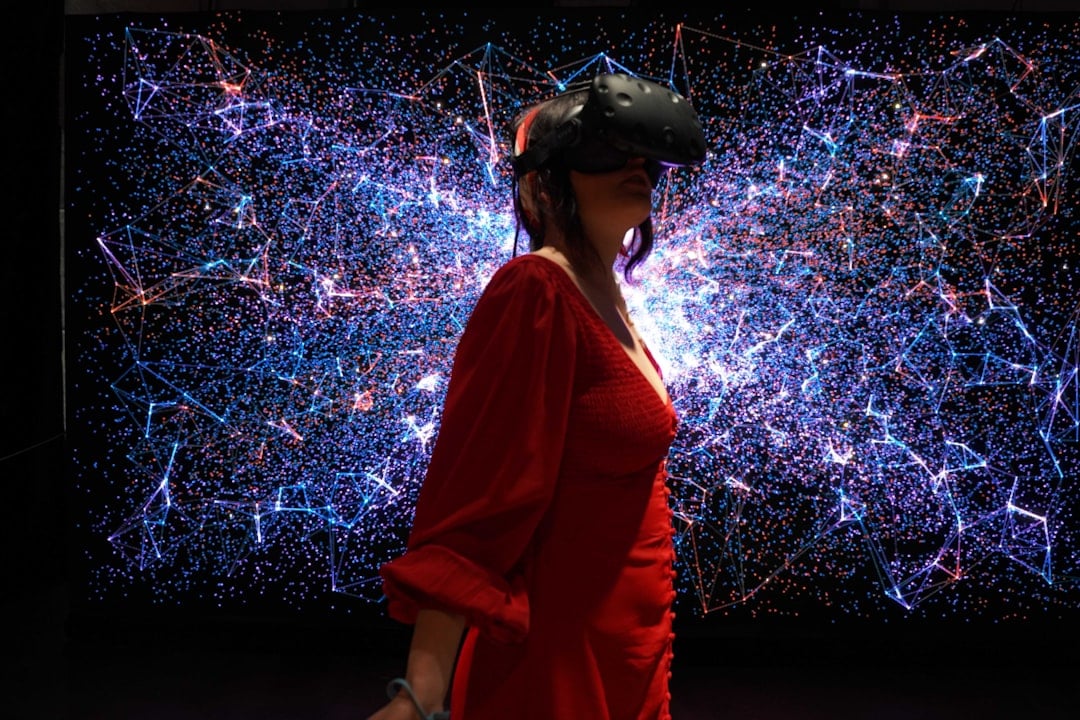
A 360 VR experience lets you step inside a video and look in any direction — up, down, left, right — as if you’re actually there. Here’s a quick look at what that means in practice:
What is a 360 VR experience?
- A spherical video or environment that surrounds you on all sides
- You control where you look, unlike a standard flat video
- Viewable on a VR headset, smartphone, or even a regular web browser
- Content ranges from travel and nature to roller coasters, concerts, and space
Most popular types of content right now:
| Category | Example |
|---|---|
| Nature & travel | Antarctica, Grand Canyon, Iceland polar lights |
| City exploration | Tokyo at night, Times Square, Manhattan |
| Extreme adventures | Volcano eruptions, roller coaster POV rides |
| Underwater & wildlife | Aquarium tours, marine life encounters |
| Culture & education | Museum exhibits, opera houses, space shuttles |
Antarctica, Part I — one of the most-watched pieces of 360 VR content available — has racked up nearly 7 million views, showing just how hungry people are for this kind of immersive travel from their living room.
The format is growing fast. Resolutions have jumped to 8K and beyond. New AI-powered passthrough features are blurring the line between VR and AR. And content is available across free platforms like YouTube as well as dedicated apps like DeoVR.
I’m Samir ElKamouny, a marketing expert and entrepreneur who has explored how immersive technology — including the 360 VR experience — can help brands and creators build deeper audience engagement and unlock new revenue streams. In the sections below, I’ll walk you through everything you need to know to find, watch, and get the most out of today’s best 360 VR content.
Key 360 vr experience vocabulary:
What Defines a True 360 VR Experience?
To appreciate this technology, we have to look beyond standard media. Traditional video locks your eyes to a single rectangular frame chosen by a director. On the other hand, simple 2D virtual tours let you click around flat, stitched photos but lack depth and real-time motion.
A true 360 VR experience offers complete user agency. You are placed at the center of a spherical video projection. As you turn your head, the field of view shifts seamlessly. This type of content can be monoscopic (flat 360-degree projections visible on any screen) or stereoscopic (delivering slightly different angles to each eye to build realistic depth perception). To learn more about how depth changes our perception, explore the nuances of a true 3D VR Experience.
When you utilize platforms like 360 Stories | The World’s Best Travel Experience in 360-Degrees VR , you transition from a passive spectator to an active explorer.
| Feature | Traditional 2D Video | 360 VR Video | Interactive 3D VR |
|---|---|---|---|
| Perspective | Fixed director’s cut | 360-degree spherical view | Free-roaming volumetric space |
| Depth | None (Flat 2D) | Monoscopic or Stereoscopic (3D) | True Real-time Stereoscopic 3D |
| User Agency | None (Watch only) | Look in any direction | Interact with objects & move |
| Best Device | TV, Monitor, Mobile | VR Headset, Phone, Web | Dedicated VR Headset |
Top 360 VR Experience Categories to Explore

The sheer variety of non-gaming content in June 2026 is staggering. Whether you want to relax or chase an adrenaline rush, there is a Non-Game VR Experiences category tailored for you:
- Nature and Wildlife Tours: Get incredibly close to remote environments. You can watch the frozen beauty of Antarctica, Part I (6.9M+ views) and Antarctica, Part II (4.3M+ views), stand near the heat of the Plosky Tolbachik Volcano Eruption in Kamchatka (516K+ views), or stand over the edge of the Grand Canyon (255K+ views).
- Immersive Travel & Walking Tours: Walk the peaceful historic streets of Mallorca with the Valldemossa – Mallorca, Spain 🇪🇸 | 360° Walking Tour | Original Sound video, or go for a relaxing drive surrounded by pink blossoms in the Cherry Blossoms & The Sea | Kawazu Sakura Drive in Seto Inland Sea 🌸【Japan 360° VR】 experience.
- Urban Landscapes & Skyline Views: Explore bustling metropolises. Take in Tokyo at night (203K+ views), look down on the Manhattan skyline (185K+ views), or stand above the clouds with Touring Canton Tower at sunset: Above Guangzhou’s skyline | 4K 360° Insta360 One X4 .
- Adrenaline & Roller Coasters: Strap yourself in for a heart-pounding ride with the 3D Real Life VR: Expedition GeForce – 25 Yrs World’s Best Roller Coaster 🟥 8K Spatial VR180 POV – Apple Vision Pro – Meta Quest 3 , featuring a terrifying 82-degree twisted drop.
- Deep Sea & Aquariums: Plunge into the deep without getting wet. Experience the reef tunnels and sharks in the 🌊 The Grand Aquarium – Ocean Park Hong Kong 2026 | 8K 360VR video, which captures over 5,000 fish across 400 species.
- Space Exploration: Go beyond Earth’s atmosphere. Take an educational journey with 360° VR Experience | Explore the Solar System – YouTube to see planets up close.
- Industrial & Supercar Design: Sit inside luxury engineering with McLaren, Up Close | Carbon Fiber, Speed & Design — 8K VR 180 , focusing on the raw physical presence of carbon-fiber supercars.
Essential Hardware and Platforms for Viewing

To get the most out of a 360 VR experience, your choice of hardware and software matters. While you can click and drag on a desktop browser, nothing compares to the immersion of a headset.
- Premium Headsets: The Apple Vision Pro and Meta Quest 3 lead the market in June 2026, offering crystal-clear resolutions and stereoscopic depth. The Pico 4 and older headsets like the Valve Index or Quest 2 remain highly capable options.
- Dedicated Platforms: The DeoVR app is the premier platform for high-end VR videos, supporting native 8K streaming, spatial audio, and experimental features. YouTube VR remains the largest library for casual creators, though you must manually select the highest quality settings (like 4320p/8K) to avoid blurry compression.
- Mobile and Web: If you do not own a headset, mobile apps use your phone’s built-in gyroscope to let you peer around the virtual world simply by moving your device.
For a complete breakdown of what hardware fits your lifestyle, check out Your Guide to Immersive AR and VR Experiences.
How High-Quality 360 Content is Created
Creating seamless, high-resolution immersive media requires specialized hardware and complex post-production.
Consumer-focused cameras like the Insta360 X4 record in 8K, utilizing dual fish-eye lenses. The raw files must go through “stitching”—a process where the edges of both video feeds are aligned to create a single, continuous sphere. Professional rigs use multiple camera sensors to reduce distortion and capture stereoscopic VR180 or full 360-degree spaces.
Beyond live-action cameras, we are seeing the rise of virtual environments created from Geographical Information Systems (GIS). Creators can convert 3D city models and web scenes directly into interactive 360 VR viewpoints. To see how these digital worlds are built, check out our guide on Spinning Your Wheels or Painting Perfection: A 360 Painting Deep Dive.
Current Challenges and Limitations of the Medium
While the technology is incredibly advanced in June 2026, it is not without hurdles.
The most common issue is motion sickness (vestibular mismatch), which occurs when the camera moves (such as in a roller coaster or driving video) but the viewer’s physical body remains static. High-quality filming techniques—like using stabilized camera rigs and keeping the horizon line flat—help minimize this discomfort.
Additionally, streaming 8K or 16K stereoscopic video requires immense bandwidth. Without a fast internet connection, compression artifacts can ruin the illusion of presence. Finally, hardware fragmentation means a video optimized for the Apple Vision Pro might not render correctly on older mobile-based VR setups. Learn more about overcoming these barriers in our analysis of 3D Experience VR.
Real-World Applications in Education and Tourism
We are seeing 360 VR expand far beyond pure entertainment. It has become a powerful tool for global education and virtual tourism.
In classrooms, students use headsets to take virtual field trips to places they could never otherwise visit. They can tour the Space Shuttle Discovery, walk through the Hubble Control Centre, or stand face-to-face with a prehistoric Titanosaur through Google Arts & Culture.
Museums are using these tools to preserve heritage sites in conflict zones or make physical exhibits accessible to a global audience. To see how institutions utilize these setups, read about Virtual Reality Technology and Museum Exhibit. Brands are also capitalizing on this technology to host virtual conventions and hybrid events; discover how in our breakdown of Virtual Reality Events Examples That Actually Worked.
How to Choose and Access a 360 VR Experience
When you are ready to dive in, start by defining what you want to experience. If you are prone to motion sickness, look for stationary camera setups, such as the ambient-sound walking tours on DeoVR or the high-altitude photography of AirPano. If you want high-octane thrills, POV roller coasters are your best bet.
Always ensure your playback settings are maximized. Even on an 8K-capable headset, platforms often default to lower resolutions to save bandwidth. Manually select the highest quality option and let the video buffer fully before strapping on your headset. For businesses looking to build these custom portals, explore our specialized Virtual Reality Solutions and discover how to design custom AR/VR Immersive Experiences for your audience.
Conclusion: Elevating Engagement with Immersive Technology
The 360 VR experience has evolved from a novel tech demo into a mature medium for storytelling, education, and digital connection. With the integration of AI passthrough features—which allow elements of a 360-degree video to blend seamlessly into your physical room—the boundary between virtual reality and augmented reality is dissolving.
At Avanti3, we integrate Web3 technologies, blockchain, AR/VR, and AI to empower creators and brands with customizable engagement tools. As immersive media continues to redefine how we connect online, we are building the frameworks that help brands turn passive viewers into active community members.
Ready to explore the future of digital interaction? Step into the next generation of Virtual Reality Experiences with us today.