

Augmented Reality Game Highlights and Why Your Living Room is the New Front Row
Why AR Enhanced Game Highlights Are Changing How We Watch Sports
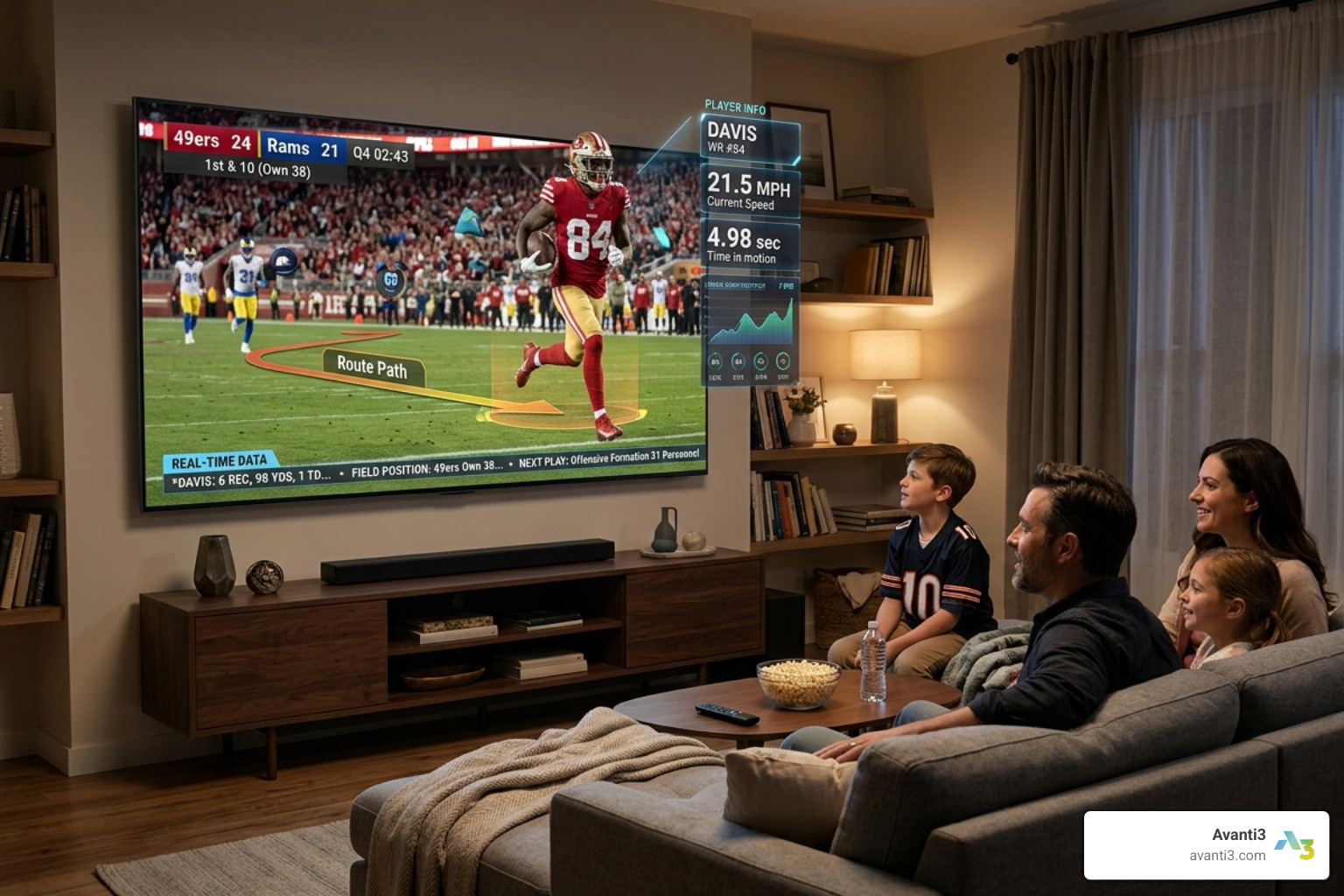
AR enhanced game highlights are transforming sports broadcasts by layering real-time data, 3D visuals, and interactive replays directly onto live game footage — making every play easier to understand and far more exciting to watch.
Here’s a quick snapshot of what AR brings to game highlights:
- Real-time data overlays — player speed, movement paths, and stats appear on screen as the action happens
- 3D and 360-degree replays — fans can see plays from any angle, including the player’s own perspective
- Faster insights — ESPN’s AR system delivers data visualizations in under two seconds, fast enough to use as first replays
- Massive engagement lift — one football club saw a 50% increase in fan engagement after implementing AR experiences
- Broader reach — with 5 billion smartphones capable of running WebAR, these experiences are accessible to almost anyone
Traditional highlights show you what happened. AR enhanced highlights show you how and why it happened — with speed metrics, player tracking, and immersive angles that make complex plays instantly clear.
The sports broadcasting world is shifting fast, and fans who experience AR highlights rarely want to go back to the flat, static version.
I’m Samir ElKamouny, a marketing expert and entrepreneur who has spent years helping brands harness emerging technologies — including ar enhanced game highlights — to build deeper audience connections and unlock new revenue streams. In this guide, I’ll walk you through exactly how AR is reshaping the sports viewing experience and what it means for creators and brands ready to lead that shift.
The Evolution of AR Enhanced Game Highlights in Modern Sports
We’ve come a long way from the days when the only “augmented” part of a sports broadcast was the yellow first-down line on a football field. Today, the evolution of ar enhanced game highlights has turned our living rooms into high-tech command centers. We aren’t just watching a game anymore; we are analyzing it in real-time with the same tools used by professional scouts.
The shift from traditional broadcasts to AR-enhanced replays is driven by a desire for deeper immersion. Fans today don’t just want to see a touchdown; they want to know exactly how fast the wide receiver was running and the precise angle of the quarterback’s throw. This level of detail is made possible through Ar Vr Immersive Experiences that blend the physical and digital worlds seamlessly.
One of the most measurable impacts of this technology is the boost in fan engagement. When a major football club implemented AR-driven fan engagement tools, they saw a staggering 50% increase in fan interaction. This isn’t just about flashy graphics; it’s about providing value through 3D perspectives and advanced performance metrics that help fans appreciate the athleticism on display.
Traditional Broadcast vs. AR-Enhanced Highlights
To understand the leap we’ve taken, let’s look at how these two formats differ:
| Feature | Traditional Highlights | AR-Enhanced Highlights |
|---|---|---|
| Perspective | Fixed camera angles | 360-degree & player-view perspectives |
| Data Integration | Delayed stats shown in text boxes | Real-time overlays (speed, path, separation) |
| Immersion | Passive viewing | Interactive “Be the Player” experiences |
| Context | Relies on commentator explanation | Visualized data (e.g., 3D spray charts, heatmaps) |
| Availability | Post-play or post-game | Available in under 2 seconds (first replays) |
Real-Time Data and AI Integration
The “magic” behind these highlights isn’t magic at all—it’s a sophisticated symphony of AI and real-time data. To make ar enhanced game highlights work, production teams use player tracking and speed metrics powered by deep learning. This involves syncing live data, such as NFL Next Gen Stats, with camera telemetry.
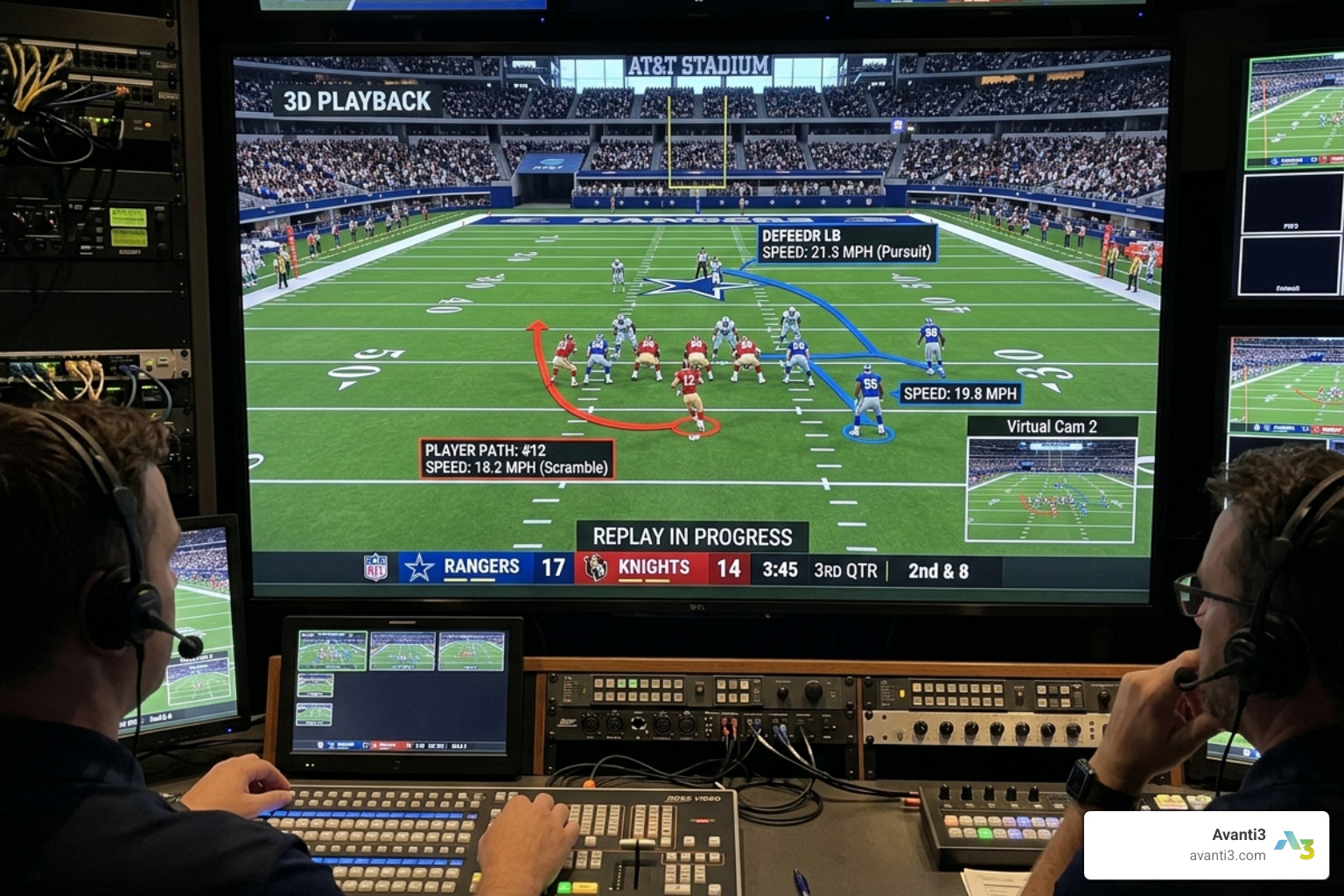
A prime example of this is how ESPN, DMED Break New AR Ground by using a real-time AR telestrator. By integrating tools like Epic Games’ Unreal Engine and Pixotope, they can generate automated AR highlights in two seconds or less. This speed is crucial; it allows broadcasters to use AR visualizations as the very first replay after a big play, keeping the momentum of the live broadcast alive.
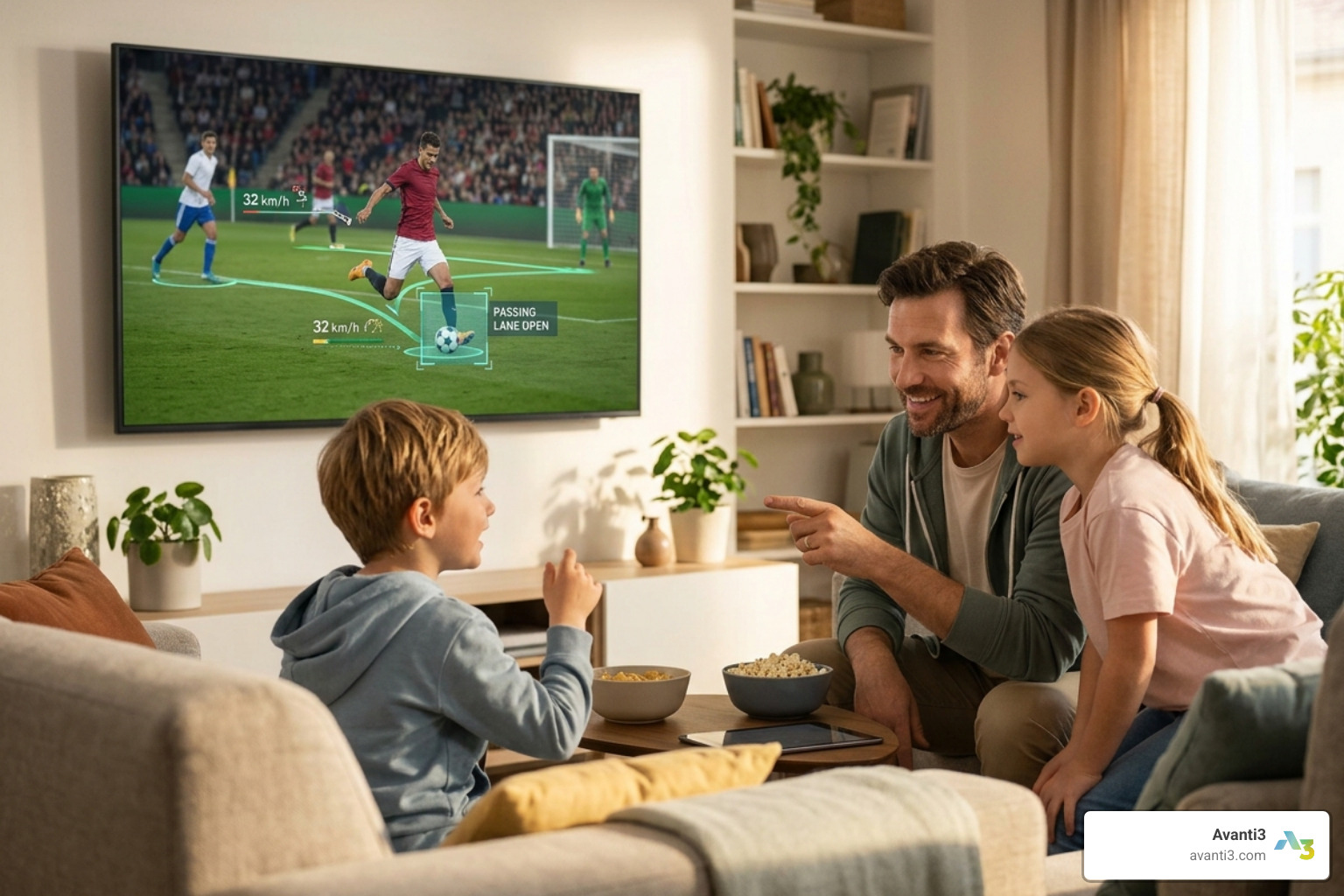
AI also enables predictive analytics. By analyzing player behavior and historical data, AR systems can highlight likely passing lanes or defensive gaps before they even develop. This turns the viewer into an expert, helping them understand the “why” behind every tactical decision.
3D Perspectives and Immersive Replays
Have you ever wondered what a 100-mph fastball looks like from the catcher’s perspective, or how a quarterback sees a blitzing linebacker? AR is making these “Be the Player” moments a reality. Using volumetric video and 360-degree camera arrays, broadcasters can now create virtual camera angles that didn’t exist in the physical world.
The Kansas City Chiefs, for instance, have utilized Intel True View to offer fans incredible Chiefs Video | Kansas City Chiefs highlights. These 360-degree replays allow fans to “fly” around a play, pausing the action to see the spatial awareness of every player on the field. It’s a total game-changer for Ar Marketing Solutions because it creates highly shareable, unique content that traditional video simply cannot match.
How AR Enhanced Game Highlights Revolutionize Fan Engagement
Engagement is the holy grail of sports broadcasting, and AR is the ultimate tool to achieve it. Beyond just watching, fans can now interact with the game. We’ve seen interactive AR portals for events like the Super Bowl Halftime Show receive over 3 billion impressions. Why? Because fans spent 90% of the show’s duration inside the AR experience, exploring different camera views and behind-the-scenes content.
This technology also shines during halftime analysis. Instead of just watching two people talk at a desk, fans can view real-time stats visualizations and 3D field drawings. This is a core part of modern Augmented Reality Marketing, where the goal is to turn a passive viewer into an active participant.
We are also seeing a rise in “gamified” recaps. Some teams have started releasing Video Game Style Recap: Patriots at Buccaneers Highlights that use hyperbolic, action-hero descriptions and AR overlays to make the highlights feel like a high-stakes video game. This appeals to younger demographics who grew up with Madden and FIFA, bridging the gap between digital gaming and real-world sports.
The Future of AR Enhanced Game Highlights and Web3 Integration
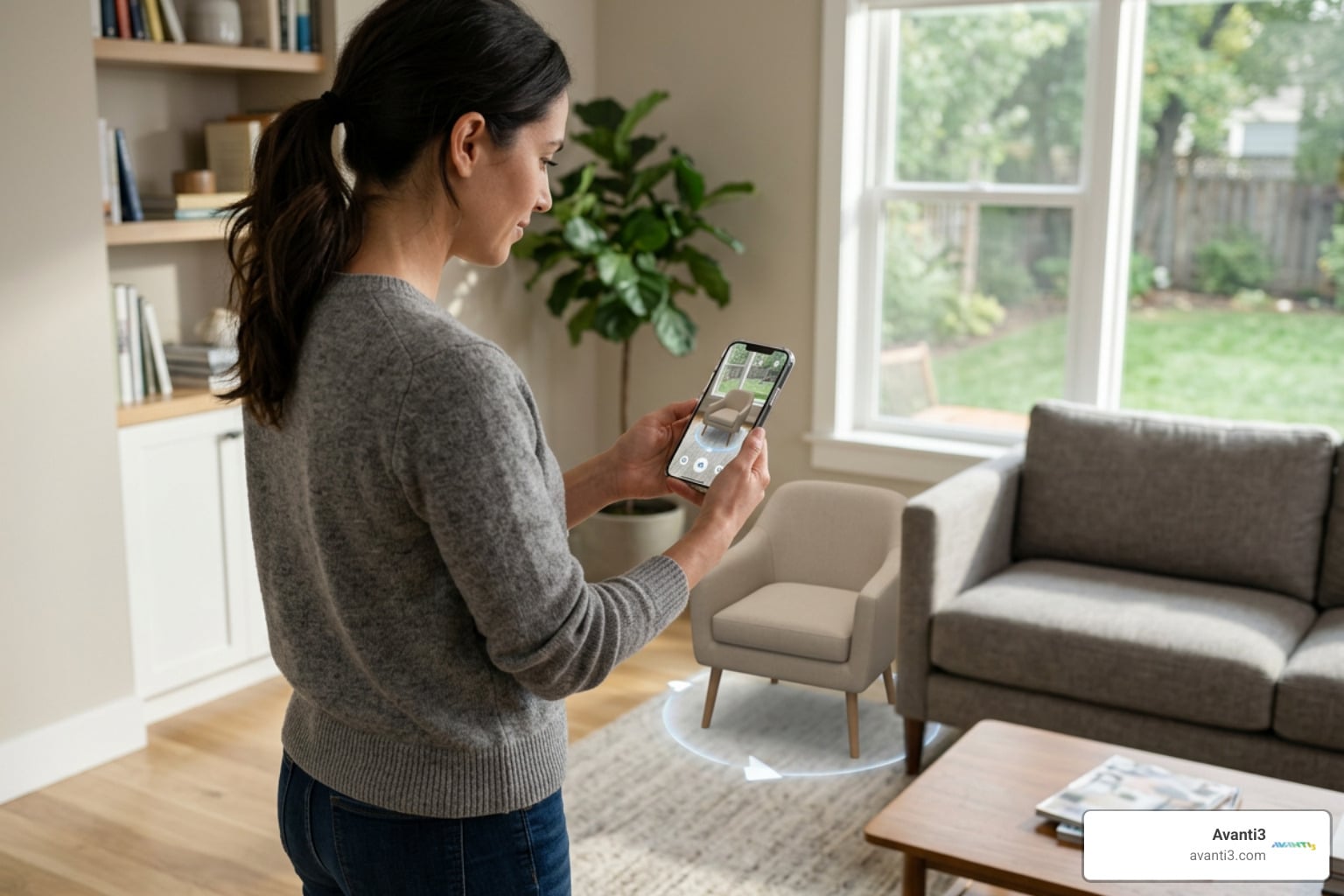
As we look toward 2025 and beyond, the future of ar enhanced game highlights is inextricably linked with Web3 and mobile accessibility. We are moving away from needing expensive headsets to experience AR. With 5 billion smartphones already capable of supporting WebAR, the “barrier to entry” has effectively vanished.
The integration of Augmented Reality Nfts is one of the most exciting developments on the horizon. Imagine owning a limited-edition AR highlight of a game-winning goal—a digital collectible that you can “place” on your coffee table and watch in 3D whenever you want. This isn’t just a video file; it’s a piece of sports history that you truly own on the blockchain.
We are also seeing AR bleed into other forms of entertainment. Much like Augmented Reality Concerts allow fans to interact with performers in a virtual space, sports AR will soon allow for virtual meet-and-greets. Imagine a 3D hologram of your favorite player appearing in your living room to walk you through their best plays of the season.
From Professional Leagues to Mobile Screens
While the big screens in our living rooms get the most attention, the “second screen” (our phones) is where a lot of the AR innovation is happening. Leagues are now pushing 2025 Week 10 Seahawks vs. Cardinals Full Highlights directly to mobile apps with AR features built-in.
- Location-based AR: Fans at the stadium can point their phones at the field to see real-time player names, speeds, and stats hovering over the players.
- Stadium QR Codes: Scanning a code on your seat could trigger a 3D replay of a controversial call, allowing you to be the referee.
- Social Media Integration: AR filters that allow fans to “wear” the team’s championship ring or celebrate with virtual confetti are driving massive social reach.
For example, players like Kenneth Walker III’s Best Plays In 133-Yard Game Highlight – 2025 Week 18 Seahawks at 49ers are often featured in mobile-first AR packages that allow fans to scrub through the data at their own pace.
Overcoming Challenges in Live AR Broadcasting
It’s not all smooth sailing, though. Implementing ar enhanced game highlights in a live environment comes with significant technical hurdles. The biggest enemy is latency. For an AR highlight to be effective, the data must be processed, rendered, and synced with the video almost instantly. If the speed graphic lags behind the player, the illusion is broken.
There are also hardware and production scaling issues. Capturing volumetric video requires dozens of high-resolution cameras positioned around a stadium, which is a massive investment. However, as real-time rendering engines like Unreal Engine become more efficient, we are seeing these costs drop, allowing even smaller leagues to experiment with AR.
Personalized Fan Experiences and Avanti3
At Avanti3, we believe the next step in this journey is personalization. No two fans are the same; some want deep tactical data, while others just want the “wow” factor of a 3D replay. By integrating Web3 technologies like blockchain and AI, we can empower brands to offer customizable engagement tools.
Through Digital Fan Engagement, we help creators and teams build reward systems where fans earn digital assets for interacting with AR highlights. This isn’t just about watching a game; it’s about being part of a community. We use AR to create unique digital experiences that can be monetized through NFTs and exclusive access, setting a new standard for how fans and teams connect.
The hybrid AR-VR future is one where the physical stadium and the digital world are one and the same. Whether you’re in the front row or on your sofa, ar enhanced game highlights ensure you never miss a beat—and that you understand the game better than ever before.
Conclusion: Why the Living Room is Winning
The transformation of sports highlights through AR is more than just a technological flex; it’s a fundamental shift in storytelling. By providing context, speed, and perspective, ar enhanced game highlights have made the home viewing experience arguably superior to being there in person for the data-hungry fan.
As we continue to push the boundaries of what’s possible with Web3 and AI, we invite you to explore how these tools can revolutionize your own brand or community. The front row isn’t a location anymore—it’s an experience you carry in your pocket.
If you’re ready to explore the future of fan engagement, we at Avanti3 are here to help you navigate AR, VR, and blockchain to create unforgettable moments for your audience. The game has changed; it’s time to change how we watch it.