


Why AR Social Media is Reshaping Digital Engagement
AR social media blends digital content with the real world through smartphone cameras, transforming how brands connect with audiences on platforms like Instagram, Snapchat, TikTok, and Facebook. Here’s what you need to know:
Core Applications:
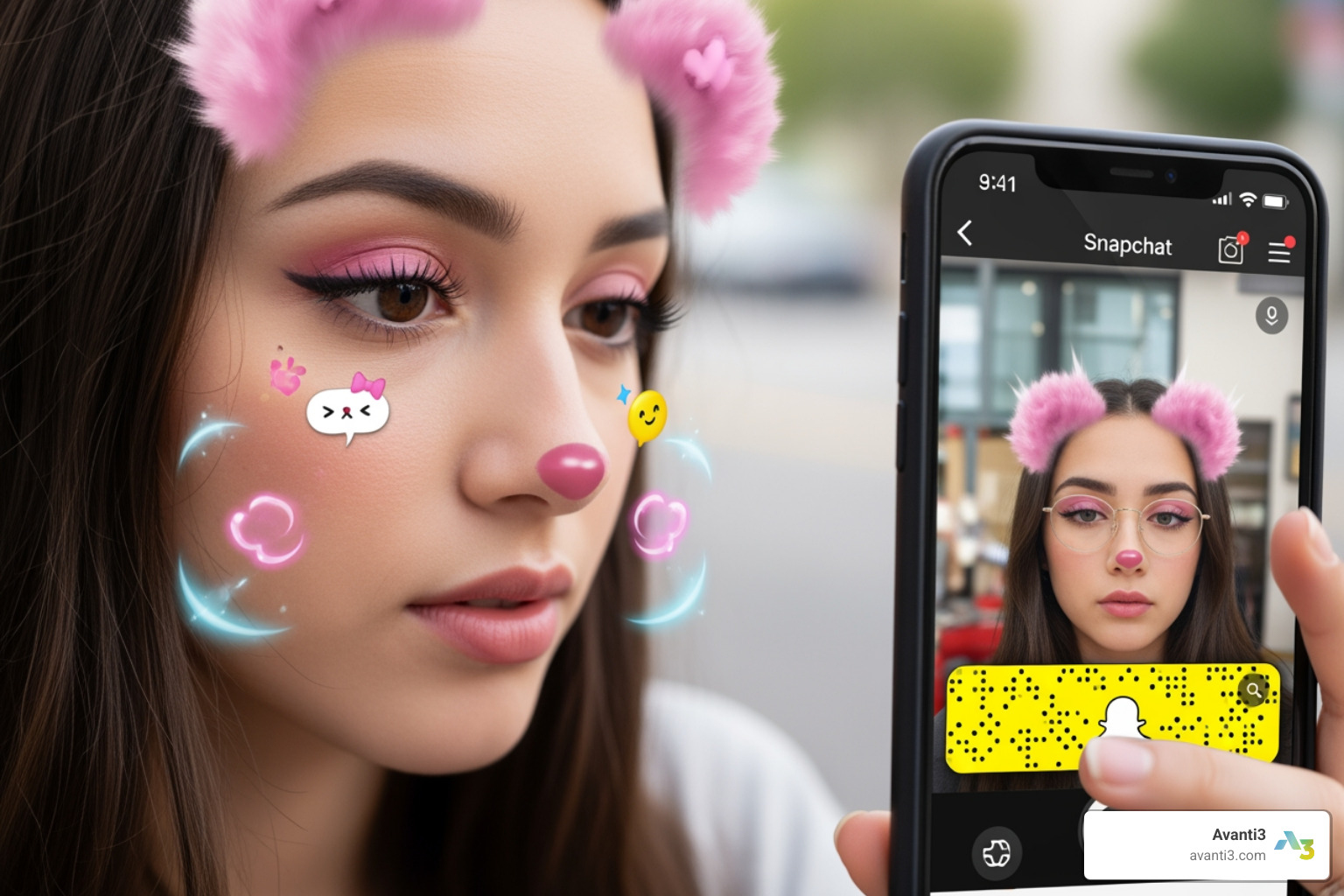
- Face Filters & Lenses – Interactive effects that overlay graphics on users’ faces
- Virtual Try-Ons – Let shoppers preview products like makeup, glasses, or furniture in real-time
- Interactive Ads – Turn static campaigns into engaging, shareable experiences
- Location-Based AR – Activate branded content at specific physical locations
- Live Streaming Enhancement – Add real-time effects to broadcasts and events
Key Benefits:
- AR ads perform 28% better than standard video ads
- AR try-ons result in 2X increased conversion rates
- 72% of shoppers have made impulse purchases from AR experiences
- Over 40% of users are more likely to share AR content than other posts
Major Platforms:
- Snapchat pioneered AR Lenses in 2015
- Instagram and Facebook followed with Spark AR Studio
- TikTok offers extensive AR effects library
- All platforms now support branded AR campaigns
The technology has evolved from simple face filters to sophisticated experiences that drive real business results—from eCommerce sales to brand awareness. By 2024, the global AR user base is expected to reach 1.73 billion, with AR advertising projected to hit $8 billion by 2029.
I’m Samir ElKamouny, and I’ve spent years helping brands unlock new revenue streams through innovative marketing strategies, including leveraging AR social media to create deeper audience connections and drive measurable growth. In this guide, we’ll explore how AR is transforming social platforms into immersive marketplaces and community hubs—and how you can harness this power for your brand.
Simple guide to AR social media terms:
The Evolution and Impact of AR social media in Modern Marketing
The journey of AR social media is a classic “started from the bottom, now we’re here” story. It began in the 1960s with clunky head-mounted displays, but it truly exploded into the mainstream in 2015 when Snapchat introduced Lenses. Suddenly, we weren’t just sending photos; we were puking rainbows and swapping faces with our pets.
Since those early days, the technology has moved far beyond simple novelty. Meta (Instagram and Facebook) jumped in by 2017, and TikTok followed shortly after, turning AR into a staple of the creator economy. Today, it’s not just about looking cute; it’s about scientific research on social AR adoption which shows that millions of users now interact with AR daily. In fact, by the end of 2024, the predicted global AR user base will sit at a staggering 1.73 billion people.
For us at Avanti3, we see this as a fundamental shift in how humans communicate. We are moving from a 2D “scroll and tap” era into a 3D “experience and interact” era. Brands that understand this are moving away from traditional commercials toward AR marketing solutions that allow users to play with their brand rather than just look at it. This viral sharing potential is what makes AR the ultimate tool for organic reach—more than 40% of users are more likely to share a social media AR experience than any other type of brand post.
Driving eCommerce Through AR social media Try-Ons
If you’ve ever bought a pair of sunglasses online only to realize they make you look like a confused insect, you understand the “confidence gap” in eCommerce. AR social media is the bridge over that gap. Virtual try-ons allow customers to see exactly how a product fits their face, body, or home before they hit the “buy” button.
| Metric | Traditional 2D/Video Ads | AR Social Media Ads |
|---|---|---|
| Conversion Rate | Baseline | 2X Increase |
| Average Order Value | Baseline | 61% Increase |
| Purchase Confidence | Low/Moderate | High (79% interested) |
| Sales Conversions | Standard | 94% Increase |
The numbers don’t lie. When shoppers use AR, they aren’t just browsing; they are participating. This immersion leads to a 61% increase in average order value because the “try before you buy” experience removes the fear of a bad purchase. We’ve seen that AR/VR immersive experiences significantly reduce return rates for furniture and fashion brands alike. When 72% of shoppers have made impulse purchases because of an AR experience, the ROI is impossible to ignore.
Key Applications: From Face Filters to Location-Based Experiences
While face filters are the most recognizable form of AR social media, the applications have branched out into fascinating new territories:
- Gamification: Brands are turning pizza boxes and soda cans into game consoles. By scanning a QR code on a package, users can play mini-games that reward them with real-world discounts.
- OOH (Out-of-Home) Enhancement: Imagine a billboard that isn’t just a static image, but a portal. Pedestrians can point their phones at a bus shelter and see a 3D demonstration of a new car or a movie character popping out to say hello.
- Location-Based Experiences: Using scientific research on location-based AR, brands are creating “digital scavenger hunts.” You might only be able to unlock a specific filter or discount if you are physically standing at a landmark or inside a retail store.
- Spatial Storytelling: Museums and historical sites are using AR to overlay “ghosts” of the past onto modern ruins, allowing for a deep, educational connection that a plaque on a wall simply can’t provide.
Measuring Success in AR social media Campaigns
How do we know if an AR campaign is actually working? While likes and comments are nice, we look at deeper metrics to prove the value of AR social media:
- Dwell Time: Traditional video ads are often skipped in seconds. AR experiences, however, often see users engaging for 30 seconds or more.
- Repeat Usage: Are people coming back to use the filter again? High repeat usage is a massive indicator of brand loyalty.
- Share Rate: Because AR is inherently fun, it has a much higher virality coefficient than standard posts.
- Conversion Tracking: By integrating AR with social shopping features, we can track the exact moment a user goes from “trying on” a lipstick shade to “purchasing” it within the app.
Future Trends: NFTs, AI, and the Next Frontier of Digital Engagement
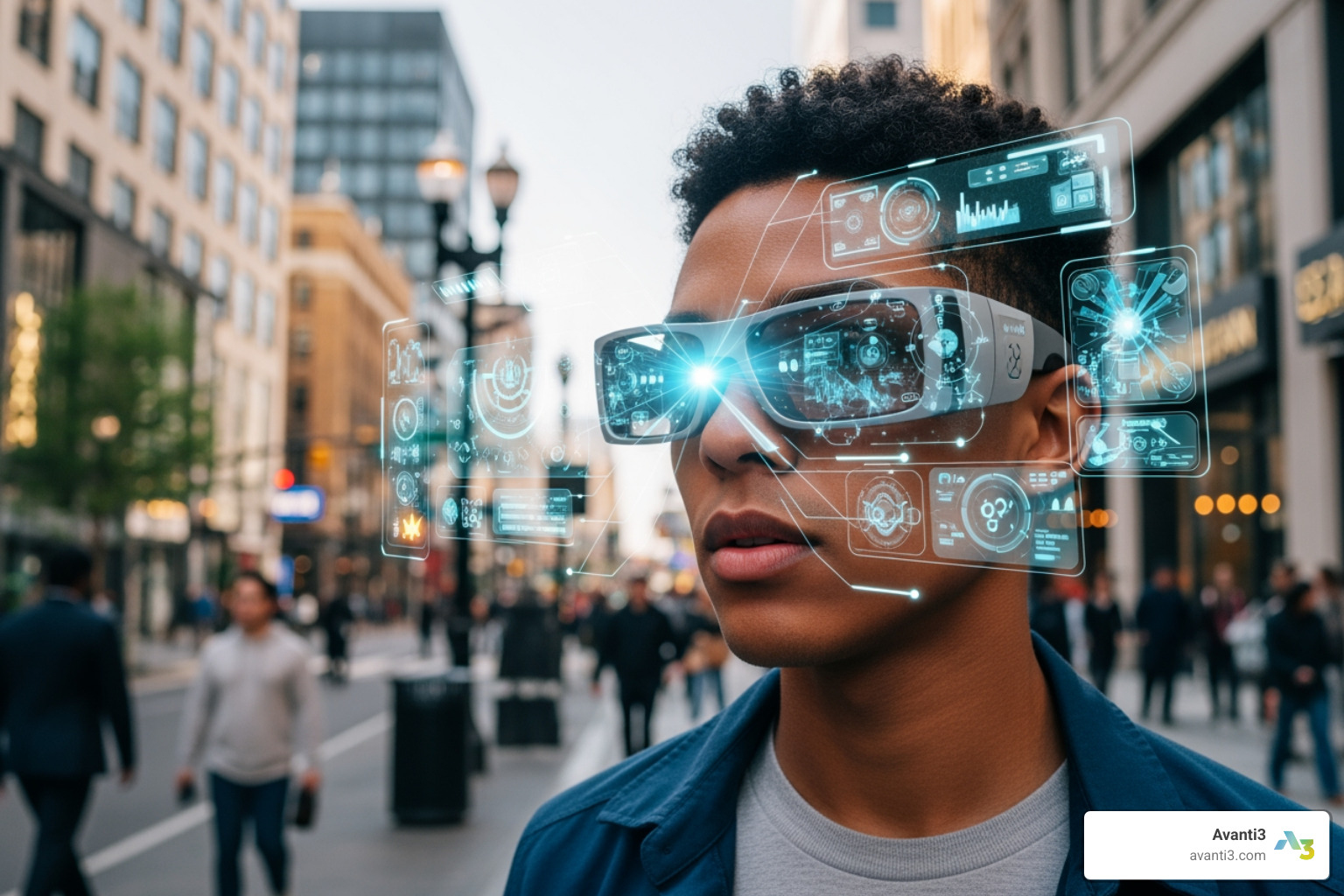
The future of AR social media is looking increasingly “phygital”—a seamless blend of physical and digital realities. We are moving away from holding our phones up and toward wearing AR glasses and smart wearables. This hardware evolution will make AR a hands-free, constant companion.
One of the most exciting frontiers is the integration of blockchain. At Avanti3, we are pioneers in augmented reality NFTs. Imagine owning a digital fashion piece that you can actually “wear” in your Instagram Stories or TikTok videos through an AR filter. This gives digital assets real-world utility and provides a new way for fans to monetize their collections and show off their digital status.
AI is also playing a massive role. By combining AI personalization with AR, brands can offer hyper-personalized experiences. Instead of a generic makeup filter, an AI can analyze your skin tone and suggest the exact shade of foundation that will work for you, then show it to you in AR.
The Role of Influencers and Live Streaming in AR
Influencers are the engines of AR social media. When a creator uses a branded lens in their video, it doesn’t feel like an ad; it feels like a recommendation from a friend. This “creator collaboration” is key to driving high engagement.
In live streaming, AR is a game-changer. We’ve seen augmented reality concerts where digital avatars perform alongside real musicians, or where viewers can trigger AR effects in the performer’s room by sending “gifts” or reaching certain engagement milestones. This real-time interaction creates a sense of community that traditional broadcasts lack. For creators, this opens up massive fan monetization opportunities through exclusive AR content and digital merchandise.
Overcoming Technical Barriers and Privacy Challenges
It’s not all rainbows and unicorn filters, though. Implementing AR social media comes with its own set of hurdles:
- Development Costs: High-quality 3D assets can be expensive and time-consuming to create, though no-code solutions and automated platforms are beginning to lower the barrier to entry.
- Data Privacy: AR relies heavily on camera access and, often, facial tracking. Brands must be transparent about how this data is used and ensure they are compliant with global privacy regulations.
- Hardware Limitations: While most modern smartphones are AR-ready, older devices may struggle with complex 3D rendering, leading to a “digital divide” where some users are left out of the experience.
- Asset Creation: Reducing large 3D files to a size that can be quickly loaded on a mobile data connection without losing quality is a constant technical battle.
Building Long-Term Brand Loyalty with Avanti3
At Avanti3, we believe that AR social media is the key to the next generation of brand-consumer relationships. We don’t just build filters; we build ecosystems. By integrating Web3 technologies like NFTs and blockchain with AR, we empower brands to create customizable engagement tools that actually mean something to their community.
Our fintech solutions and rewards systems ensure that engagement isn’t just a one-time thing—it’s a long-term conversation. Whether you are looking to monetize your fanbase through unique digital experiences or want to set a new standard in digital engagement, we are here to help.
Ready to stop being a passive observer and start being an innovator? Explore our Augmented Reality Marketing solutions today and let’s build the future of your brand together. We’ll help you turn your social media presence from a simple feed into an immersive, interactive world that drives sales and builds unbreakable loyalty.