

Seeing is Believing with the Use of AR in Marketing
Why the Use of AR in Marketing Is Reshaping How Brands Connect
The use of AR in marketing has moved well past the “wow factor” stage — in May 2026, it’s a proven, measurable channel that top brands use to drive real business results.
Here’s a quick snapshot of what AR in marketing actually delivers:
- Higher engagement: AR experiences generate 200% more engagement than non-AR equivalents
- Better conversions: Consumers who interact with AR convert at 90% higher rates than those who don’t
- Fewer returns: Retailers using AR see up to a 25% drop in product returns
- Stronger recall: AR is 3x more memorable than traditional media
- More recommendations: AR campaigns drive 600% more recommendations than standard marketing methods
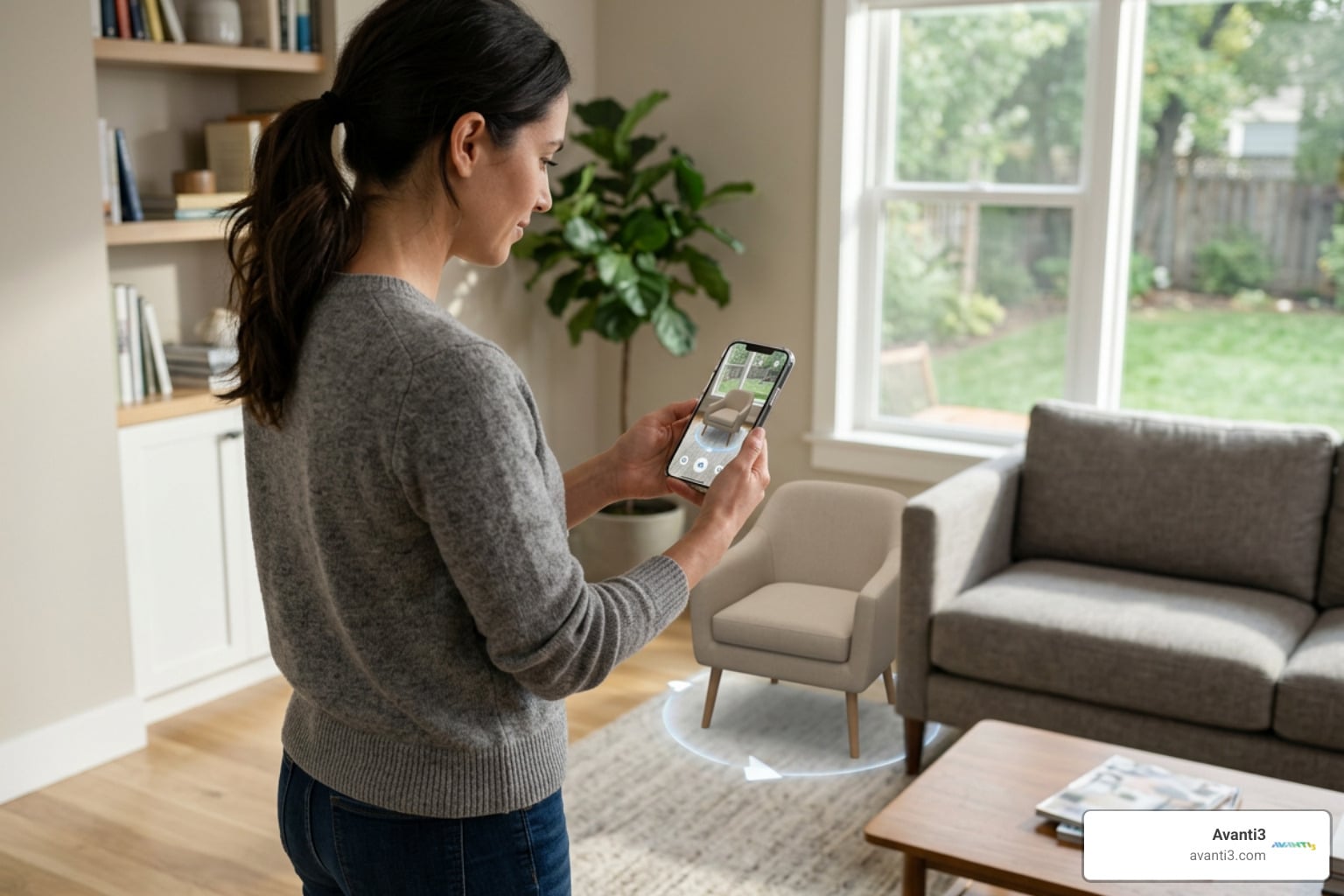
So what is AR in marketing? In simple terms, it overlays digital content — 3D models, animations, interactive experiences — onto the real world through a smartphone, tablet, or smart glasses. It lets customers see your product in their home before buying, try on a pair of glasses without visiting a store, or interact with a brand story on a cereal box. It bridges the gap between the physical and digital worlds in a way no banner ad or video ever could.
With AR marketing spend projected to hit $11.8 billion by 2028 and the global AR market on track to reach $75.9 billion by 2030, the brands investing now are building a significant lead over those still waiting on the sidelines.
I’m Samir ElKamouny, an entrepreneur and marketing strategist who has spent years helping brands scale through innovative channels — including the use of AR in marketing to create deeper audience connections and stronger revenue outcomes. In this guide, I’ll walk you through exactly how AR works across the full customer journey, which formats drive the best results, and how to build campaigns that actually perform.
Learn more about use of ar in marketing:
The Strategic Use of AR in Marketing Across the Customer Journey

To build a successful campaign, we must first understand that AR is not a one-trick pony. It isn’t just for viral social media stunts (though it does those incredibly well). Instead, the strategic use of AR in marketing spans the entire customer journey — moving buyers from initial awareness to deep consideration, final purchase, and long-term brand loyalty.
Traditional digital ads rely on passive consumption; a user scrolls past a video or glances at an image. AR, however, invites active participation. By transforming the consumer from a spectator into an active participant, brands achieve a massive “memory multiplier” effect. Because the brain processes physical interactions and spatial experiences differently than flat screens, AR experiences trigger significantly higher brand recall than 2D video.
Let’s break down how this immersive technology compares to other formats and how you can deploy it strategically.
Understanding the Use of AR in Marketing vs. VR
Many marketers lump Augmented Reality (AR) and Virtual Reality (VR) into the same “immersive tech” bucket. However, they serve completely different strategic purposes.
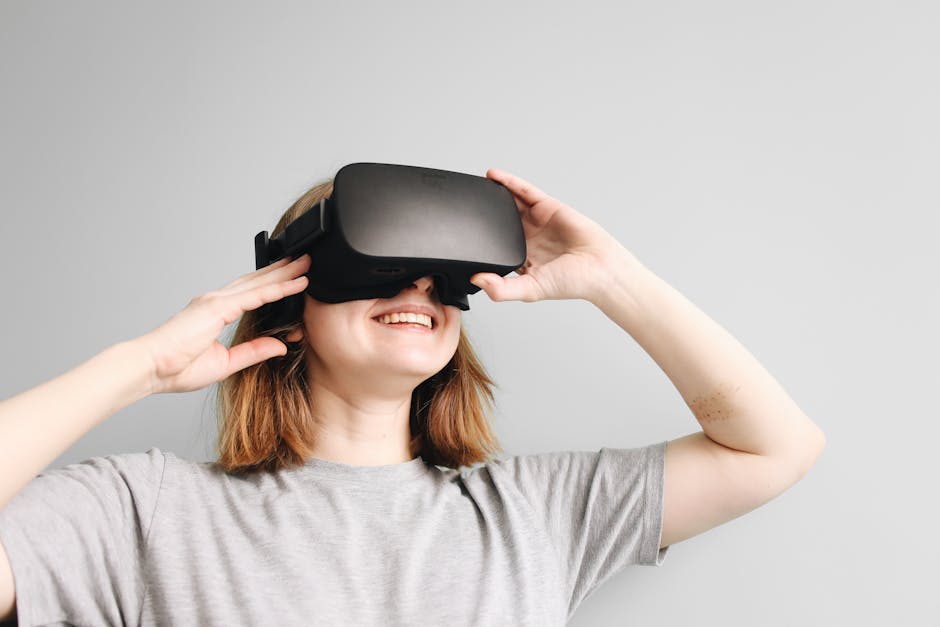
While VR cuts the user off from the physical world to place them inside a completely synthetic, simulated environment (requiring specialized, often expensive headsets), AR enhances the user’s existing real-world environment by overlaying digital assets onto physical spaces. This low friction is why AR has scaled so rapidly — almost anyone with a smartphone can access it instantly.
Here is a side-by-side comparison of how these technologies stack up against traditional digital ads:
| Feature | Traditional Digital Ads | Virtual Reality (VR) | Augmented Reality (AR) |
|---|---|---|---|
| User Environment | Flat screen (2D) | Fully virtual, closed-off environment | Real-world environment with digital overlays |
| Hardware Required | Smartphone, PC, TV | Specialized VR Headsets | Smartphone, tablet, or smart glasses |
| Friction Level | Low (passive viewing) | High (requires hardware setup) | Extremely low (scan-and-play) |
| Primary Marketing Stage | Top-of-funnel awareness | Experiential events, niche demos | Full-funnel (awareness to conversion) |
| Interactive Depth | Low (clicks, likes) | Extremely high (spatial presence) | High (interactive, contextual, shareable) |
By implementing Augmented Reality Marketing, we build experiences that meet customers exactly where they are. Rather than asking them to buy expensive gear, we use the device already in their hands to layer value directly onto their surroundings. For more on the foundational basics of how these dynamics work, check out this guide on Augmented Reality in Marketing – Mailchimp.
Core Technologies: WebAR, App-Based, and Spatial Formats
When planning your campaign, choosing the right technical framework is essential. The primary formats include:
- WebAR (Browser-Based): This technology allows users to access high-quality AR experiences directly through their web browser without downloading a dedicated app. Usually triggered by scanning QR codes on physical collateral, WebAR is perfect for mass-reach campaigns, packaging, and print media.
- App-Based AR: Built into native applications (like retail apps or social media platforms), app-based AR offers deeper tracking, more complex 3D rendering, and superior spatial mapping (using SLAM, or Simultaneous Localization and Mapping, technology).
- Marker-Based AR: This triggers an experience when the camera recognizes a specific visual cue, such as a logo, a specific image, or a QR code.
- Markerless AR: This relies on the device’s sensors, GPS, and camera to recognize flat surfaces (like floors or walls) and place digital elements realistically without needing a physical marker.
To design these experiences effectively, we must prioritize user flow and minimize steps to activation. You can explore the step-by-step process of setting up these systems in our overview of AR Experience Design. For a look at how other global brands are creatively deploying these formats, review these 15 AR Marketing Ideas for 2026.
Driving Full-Funnel Results and Measurable ROI
Let’s talk numbers. The use of AR in marketing is no longer an unproven experiment; it is a documented performance channel.
At the top of the funnel, AR campaigns generate an average of 11.2 times higher brand lift compared to traditional marketing methods. In the middle of the funnel, dwell times skyrocket. While standard social video ads struggle to capture attention for more than 6 seconds, AR campaigns routinely see average dwell times of 2 to 4 minutes.
At the bottom of the funnel, interactive AR experiences drive a 94% higher conversion rate compared to flat, non-interactive product pages. Because customers can accurately visualize products in their own space, return rates drop by an average of 25%, solving one of the most expensive headaches in e-commerce.
To maximize these metrics, we focus on establishing a deep sense of Augmented Reality Engagement that moves users seamlessly toward a call-to-action. For a deep dive into how location-targeted AR can drive massive reach and real-world sales, check out this Snapchat AR Marketing Case Study.
Real-World Applications: From Connected Packaging to Virtual Try-Ons

How are brands bringing these concepts to life in May 2026?
- Connected Packaging: Brands are turning static boxes, bottles, and bags into digital media channels. By scanning a QR code on a product’s packaging, customers can unlock interactive games, 3D brand mascots, or hidden recipes.
- Virtual Try-On: Retailers in fashion, beauty, and eyewear use AR to let customers test products on their own faces and bodies. This eliminates purchase hesitation and builds immediate buying confidence.
- Experiential and Out-of-Home (OOH): Marketers are transforming static billboards and bus shelters into interactive portals. Passersby can point their phones at a billboard to see 3D animations, play games, or instantly claim digital coupons.
To see how these visual layers change the game for retail, read our insights on AR Product Visualization. You can also check out more structural examples of How Brands Are Using AR in Marketing Campaigns.
Overcoming Implementation Gaps and Best Practices
Despite its massive potential, many brands struggle to implement AR effectively. The biggest gaps lie in 3D asset optimization and overcomplicating the user experience.
When launching an AR campaign, technical complexity should never come at the expense of user experience. A highly complex, high-poly 3D model that takes 45 seconds to load on a mobile connection will lose the customer before the experience even begins. Focus on lightweight, fast-loading assets.
Additionally, always provide clear instructions. A simple “Scan here to see this in your room” with a brief visual cue ensures that users know exactly what to do.
We specialize in streamlining these technical hurdles with custom AR Marketing Solutions tailored to your business goals. To avoid common pitfalls, it is also highly beneficial to study the industry consensus outlined in AR Marketing Best Practices.
Elevating Campaigns with the Use of AR in Marketing and Web3
As we look at the digital landscape in May 2026, the most exciting frontier is the intersection of AR and Web3.
By integrating Web3 technologies like NFTs, blockchain, and digital collectibles, we can transform a temporary AR marketing campaign into an ongoing, token-gated community. For example, a user who completes an AR scavenger hunt at a physical event can instantly mint a unique digital collectible to their wallet. This collectible can unlock exclusive future discounts, VIP access, or physical merchandise.
This is where we excel. At Avanti3, we integrate Web3 technologies with customized AR/VR tools to help creators and brands build deep community connections and unlock new avenues for fan monetization.
To explore how these combined technologies drive modern loyalty, check out our guide on AR Powering Brand Engagement. To understand where the industry is heading next, read about the current Gaps and Opportunities in AR Marketing.
Conclusion: The Future of Immersive Brand Experiences
The use of AR in marketing is no longer a futuristic concept — it is the current standard for brands that want to cut through the noise, capture active attention, and drive measurable sales. By bridging the physical and digital worlds, AR provides an intuitive, interactive, and highly memorable experience that traditional media simply cannot match.
As spatial computing hardware and Web3 integrations continue to mature throughout 2026 and beyond, the gap between early adopters and lagging brands will only widen.
We are here to help you navigate this transition. By combining advanced AR design with Web3 community tools, we help you build campaigns that don’t just look stunning, but also convert.
Ready to take your brand to the next level? Explore our Avanti3 Augmented Reality Marketing Solutions and let’s build the future of your brand experience together.