


Why your support team needs an AI upgrade
Your Support Team Is Falling Behind — Here’s Why AI Is the Fix
AI powered customer service is the use of technologies like chatbots, natural language processing (NLP), and machine learning to automate support, personalize interactions, and help customers faster — with less need for human intervention.
Customer expectations have never been higher. In 2026, people want instant answers, personalized responses, and 24/7 availability — not hold music.
The numbers back this up. Research shows that 62% of executives believe generative AI is fundamentally disrupting how businesses design customer experiences. And businesses that have fully embraced AI report 17% higher customer satisfaction and 38% shorter call handling times compared to those that haven’t.
For creators and brands, slow or impersonal support isn’t just frustrating — it actively erodes the trust and loyalty you’ve worked hard to build.
I’m Samir ElKamouny, a marketing expert who has helped scale businesses across industries — including those navigating the fast-moving world of AI powered customer service. In this guide, I’ll walk you through the best tools, real-world results, and exactly how to choose the right solution for your support team.
The Evolution of AI Powered Customer Service
The journey of support has moved far beyond the “if/then” logic of early chatbots. We’ve entered the era of the “Agentic Experience.” In the past, automated support felt like a digital maze that eventually led to a frustrated customer screaming “agent” into their phone. Today, AI powered customer service is proactive, predictive, and incredibly efficient.
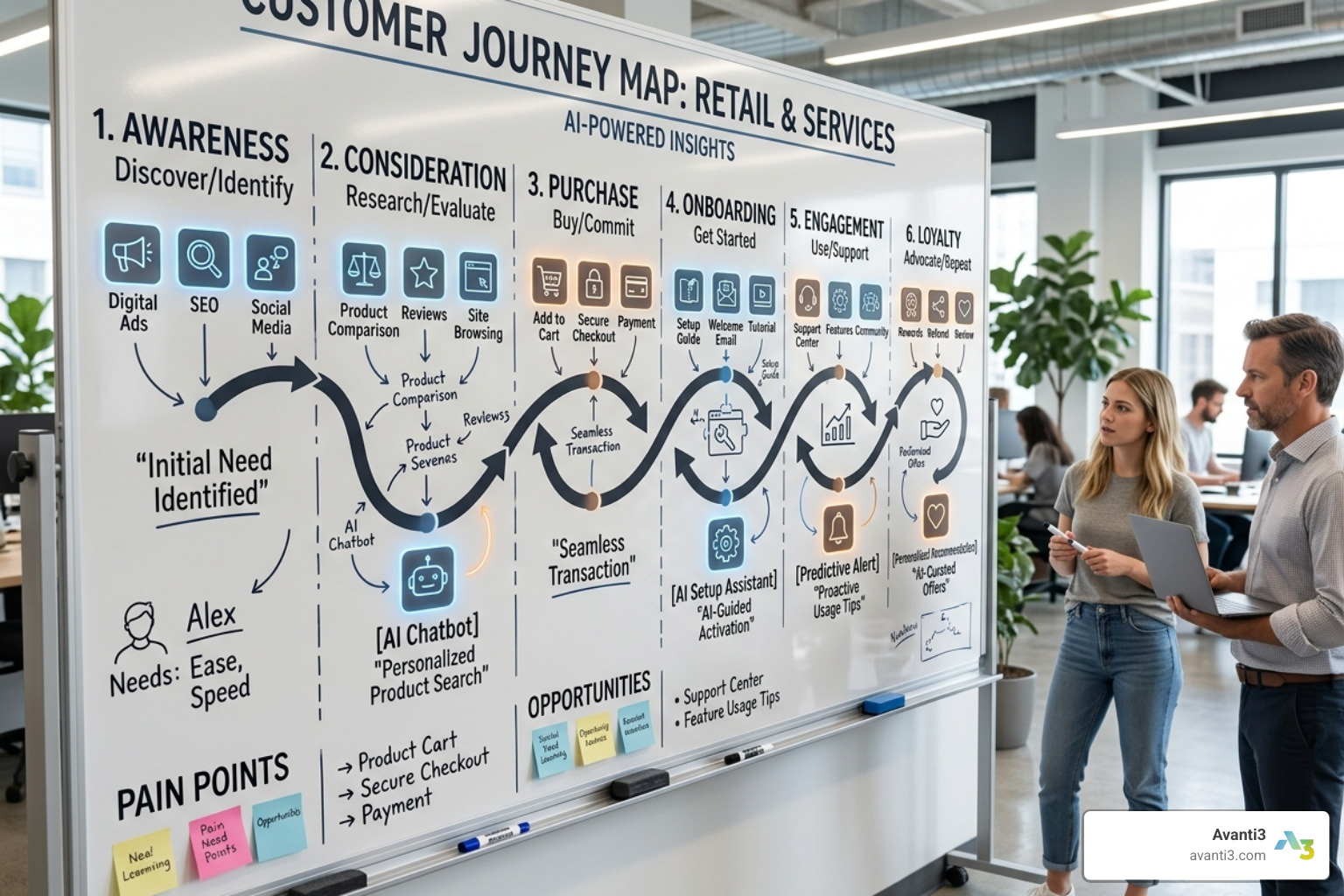
Modernization in 2026 isn’t just about replacing humans; it’s about scalability. When a business grows, its support volume often explodes. Traditionally, you’d have to hire a small army of support reps to keep up. Now, AI allows brands to scale without a linear increase in costs.
The most significant shift we see is the move from reactive to proactive service. Instead of waiting for a customer to complain that their package is late, AI systems can identify the delay in real-time and reach out with a personalized apology and a discount code before the customer even checks the tracking number. This 24/7 availability ensures that whether your customer is in London or Los Angeles, they receive the same high-quality care.
Furthermore, we are seeing a massive trend in agent empowerment. AI isn’t just for the customer; it’s for the support rep. By handling routine inquiries like “where is my order?” or “how do I reset my password?”, AI frees up human agents to tackle the complex, high-emotion issues that require genuine empathy.
Core Technologies Behind AI Powered Customer Service
To understand why this tech is so effective, we have to look under the hood. Several key technologies work in harmony to create a seamless experience:
- Natural Language Processing (NLP): This is what allows the AI to understand human language, including slang, typos, and context. It’s the difference between a bot that says “I don’t understand” and one that says “I see you’re having trouble with your login.”
- Machine Learning (ML): These algorithms allow the system to learn from every single interaction. If a certain answer consistently leads to a “thumbs down” from customers, the system learns to refine its response.
- Generative AI: Unlike old-school bots that could only use pre-written scripts, Generative AI can craft unique, contextually relevant responses on the fly. This makes the interaction feel much more “human” and less like reading a manual.
- Sentiment Analysis: This technology “reads” the customer’s mood. If the AI detects anger or frustration, it can immediately escalate the conversation to a human supervisor to prevent a bad experience from escalating.
- Voice AI: Forget “press 1 for sales.” Modern voice AI can handle natural conversations over the phone, resolving issues without the customer ever needing to touch their keypad.
- Predictive Analytics: By looking at past behavior, AI can predict what a customer might need next.
For a broader overview of the underlying technology, see Artificial intelligence. If you’re looking to dive deeper into how these technologies can be applied to your brand, check out our AI Powered Customer Service Guide.
Strategic Benefits and Measuring Success
Implementing an AI powered customer service strategy isn’t just a tech upgrade; it’s a financial and operational powerhouse. The statistics from early 2026 are staggering. Mature AI adopters are reporting a 17% higher customer satisfaction (CSAT) percentage. Why? Because customers value their time above all else.
Consider these key performance indicators (KPIs) that we track to measure success:
- Resolution Rates: Leading AI agents are now resolving up to 65% of conversations end-to-end. This means more than half of your customers get what they need without a human ever touching the ticket.
- Wait Time Reduction: Companies that have implemented advanced AI tools have seen their average wait time drop to just 33 seconds. When a 10-minute wait feels like an eternity, this is a massive competitive advantage.
- Average Handle Time (AHT): AI can reduce inbound call handling time by 38%. By summarizing previous interactions and surfacing relevant knowledge base articles instantly, AI helps human agents work faster.
- Productivity Boost: When support professionals use AI agents, their productivity increases by an average of 14%.
To see how these metrics translate into long-term loyalty, explore our insights on AI Customer Engagement.
Comparing AI Capabilities
Choosing the right approach depends on your specific needs. Are you a small creator or a massive enterprise? Here is a breakdown of how modern AI agents compare to legacy systems in 2026.
| Feature | Traditional Chatbots | Generative AI Agents |
|---|---|---|
| Logic | Rigid decision trees | Adaptive reasoning engines |
| Setup Time | Weeks of manual scripting | Hours (training on existing docs) |
| Language | Limited/Scripted | Multilingual (95+ languages) |
| Context | Often loses the thread | Maintains context across channels |
| Resolution | Mostly “deflection” | Full end-to-end resolution |
For more on how to integrate these into your broader strategy, visit Avanti3 Digital Engagement Solutions.
Implementation Roadmap and Overcoming Challenges
You can’t just flip a switch and expect AI powered customer service to work perfectly. It requires a strategic roadmap.
- Define Clear Objectives: Are you trying to reduce costs, or are you trying to improve CSAT? Your goal will dictate which tool you choose.
- Prioritize Data Quality: AI is only as good as the data you give it. If your knowledge base is out of date, the AI will give out-of-date answers.
- Seamless CRM Integration: Your AI needs to know who the customer is. It should be connected to your CRM so it can say, “I see your subscription is up for renewal,” rather than “How can I help you today?”
- Start Small: Don’t try to automate everything at once. Start with your most common FAQ and scale from there.
Challenges to Watch For:
- Legacy Systems: Integrating modern AI with older software can be tricky. Look for platforms with open APIs.
- Workforce Impact: Your team might be nervous that AI is coming for their jobs. Frame the AI as a “digital assistant” that takes away the boring parts of their work.
- Continuous Learning: AI requires “coaching.” You should regularly review interactions to ensure the AI is staying on-brand and accurate.
Learn more about managing these transitions at AI Digital Marketing.
Balancing Automation with Human Empathy and Ethics
One of the biggest mistakes a brand can make in 2026 is over-automating. While AI is great at logic, it still struggles with genuine human empathy.
The Human-in-the-Loop Model: The most successful companies use a hybrid model. AI handles the routine, but as soon as a query becomes complex or emotionally charged, it is seamlessly escalated to a human. This handoff must include a full summary of the AI interaction so the customer doesn’t have to repeat themselves.
Ethics and Privacy: Trust is the currency of the digital age. Currently, only about 42% of customers trust businesses to use AI ethically. To stay ahead, you must:
- Be Transparent: Always tell the customer they are talking to an AI.
- GDPR & Security: Ensure your AI provider follows strict data retention policies and offers privacy-by-design, ensuring no sensitive data is stored longer than necessary.
- Bias Mitigation: Regularly audit your AI to ensure it isn’t providing biased responses based on the data it was trained on.
For a deeper dive into responsible tech, see Ethical AI Implementation.
Real-World Use Cases and Future Trends for 2026
How is AI powered customer service actually looking in the wild this year?
- Gaming & Content Platforms: Major platforms have used AI agents to deflect thousands of tickets, saving millions of dollars while keeping gamers in the action.
- Fintech: Leading banks have used natural language AI to achieve a 150% boost in satisfaction for specific query types.
- Retail: Global media and retail companies are using advanced AI to provide personalized product suggestions 10 times faster than before.
- Hyper-Personalization: We are moving toward a world where the AI knows your preferences so well it can suggest solutions before you even realize there’s a problem.
- Agentic CX: The trend of 2026 is “Agentic AI”-bots that don’t just talk, but act. They can process refunds, change flight bookings, and update subscriptions autonomously.
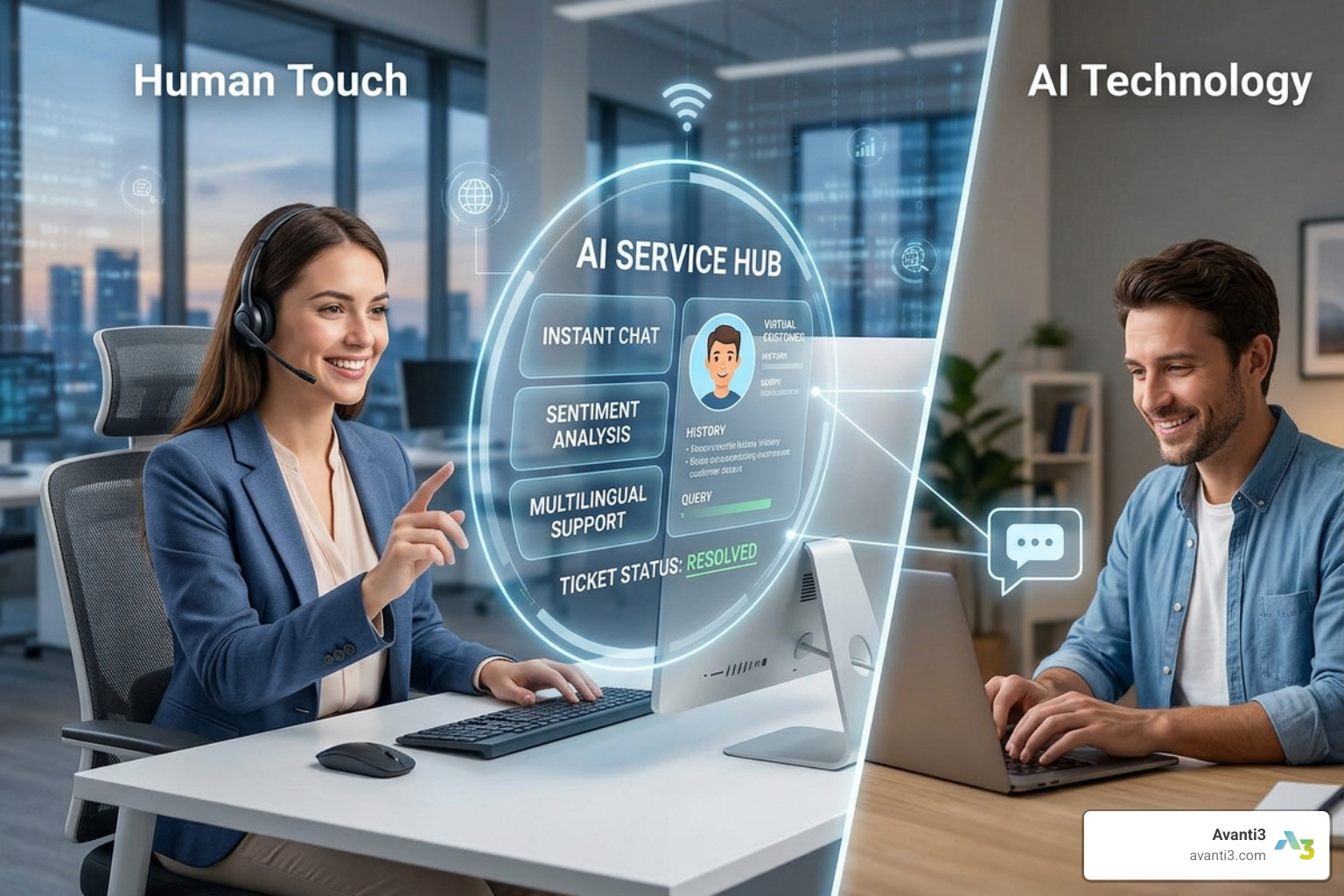
With AI agents now capable of automating up to 80% of interactions, the role of the human support leader is shifting from “manager of people” to “manager of systems.”
Explore the latest tools for this evolution at AI Tools for Creators.
Conclusion: Future-Proofing Your Support Strategy
The verdict is clear: AI powered customer service is no longer a luxury; it is a fundamental requirement for any brand or creator looking to survive in 2026. By reducing wait times, personalizing interactions, and empowering your human team, you turn your support department from a cost center into a strategic growth driver.
At Avanti3, we believe the future of digital engagement lies at the intersection of cutting-edge technology and human connection. Whether you are integrating AI to handle thousands of fan queries or using Web3 to reward your most loyal supporters, the goal remains the same: building a community that lasts.
Don’t let your support team fall behind. Start your AI upgrade today and see how a faster, smarter, and more personalized experience can transform your brand.
For more information, explore our digital engagement solutions.