

Virtual Fitting Rooms and Shopping Platforms That Actually Work
The $30 Billion Shift: Why Augmented Reality Platforms for Virtual Fitting Rooms Are Changing Retail Forever
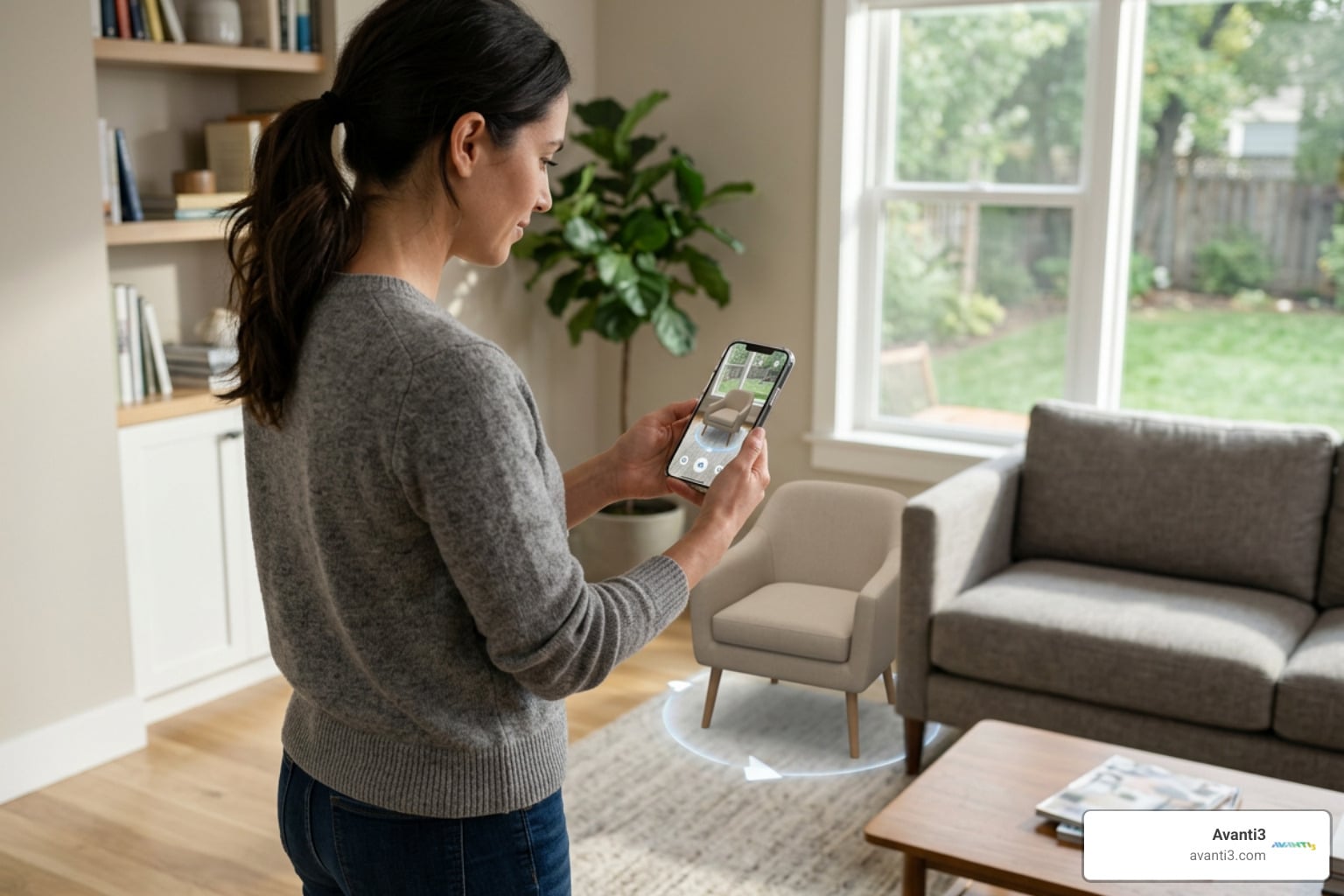
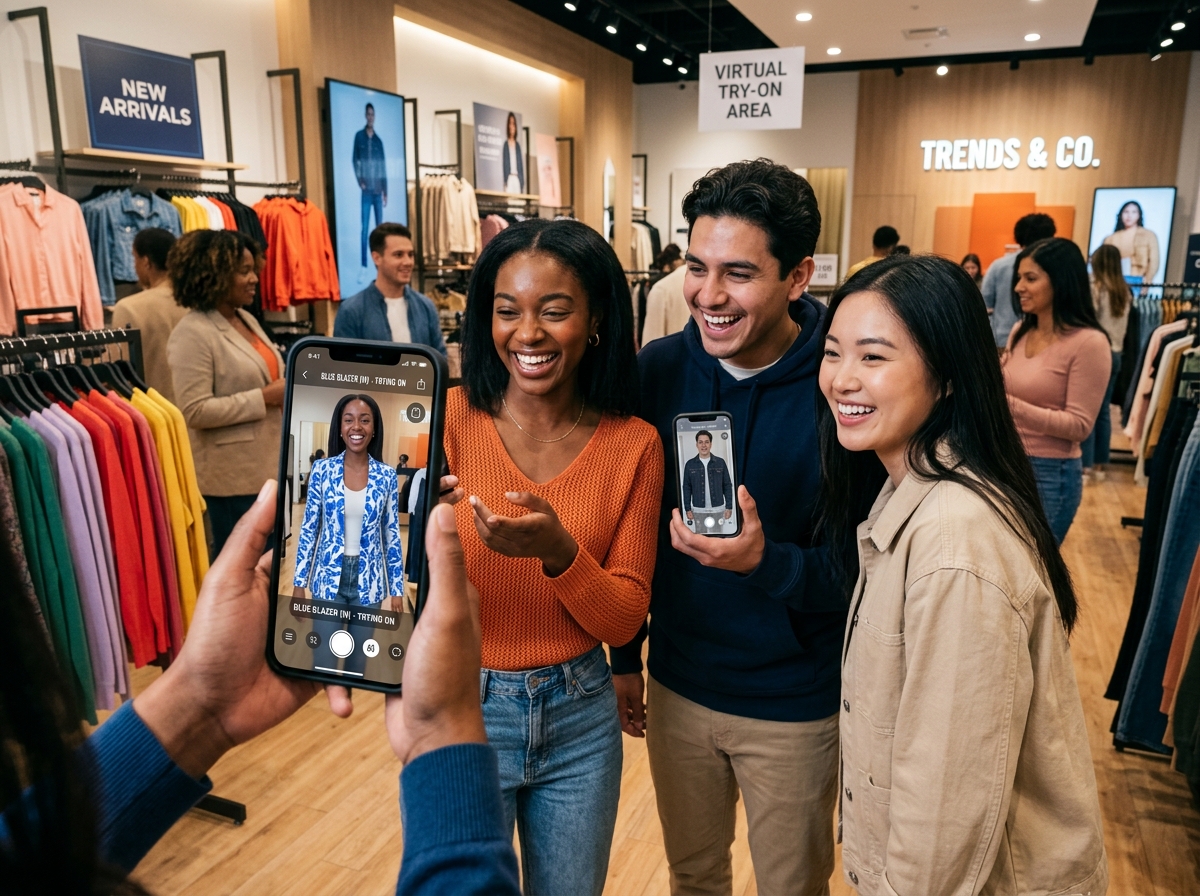
Augmented reality platforms for virtual fitting rooms are software solutions that let shoppers virtually try on clothing, shoes, eyewear, and accessories — using their smartphone camera or a smart in-store mirror — before making a purchase.
Here are the top AR platforms and solution types available right now:
| Solution Type | Best For | Cost Range |
|---|---|---|
| Mobile AR apps | Online stores, Shopify merchants | $9–$550/month |
| In-store smart mirrors | Physical retail, luxury brands | Up to $25,000/unit |
| Web-based try-on widgets | E-commerce brands, no app download needed | Varies by vendor |
| Custom-built AR platforms | Enterprise brands needing full control | $20,000–$100,000 |
Online clothing returns are a massive problem. Around one in three online fashion purchases gets returned, and poor fit drives 71% of those returns. Shoppers are essentially gambling every time they buy clothes online.
That’s a painful gap — and AR is closing it fast.
The global virtual fitting room market is expected to grow from $8.27 billion in 2025 to $30.41 billion by 2034, a compound annual growth rate of 17.7%. Brands that adopt this technology early are already seeing real results: higher conversion rates, stronger customer loyalty, and significantly fewer returns.
And it’s not just for big retailers anymore. Small and mid-sized brands can now access the same technology through affordable plug-and-play apps.
I’m Samir ElKamouny, a marketing expert and entrepreneur who has helped scale businesses using cutting-edge technology, including augmented reality platforms for virtual fitting rooms and immersive digital experiences. In this guide, I’ll break down exactly how these platforms work, which solutions are worth your attention, and how to choose the right fit for your brand.
Simple augmented reality platforms for virtual fitting rooms word guide:
How Augmented Reality Platforms for Virtual Fitting Rooms Transform Retail
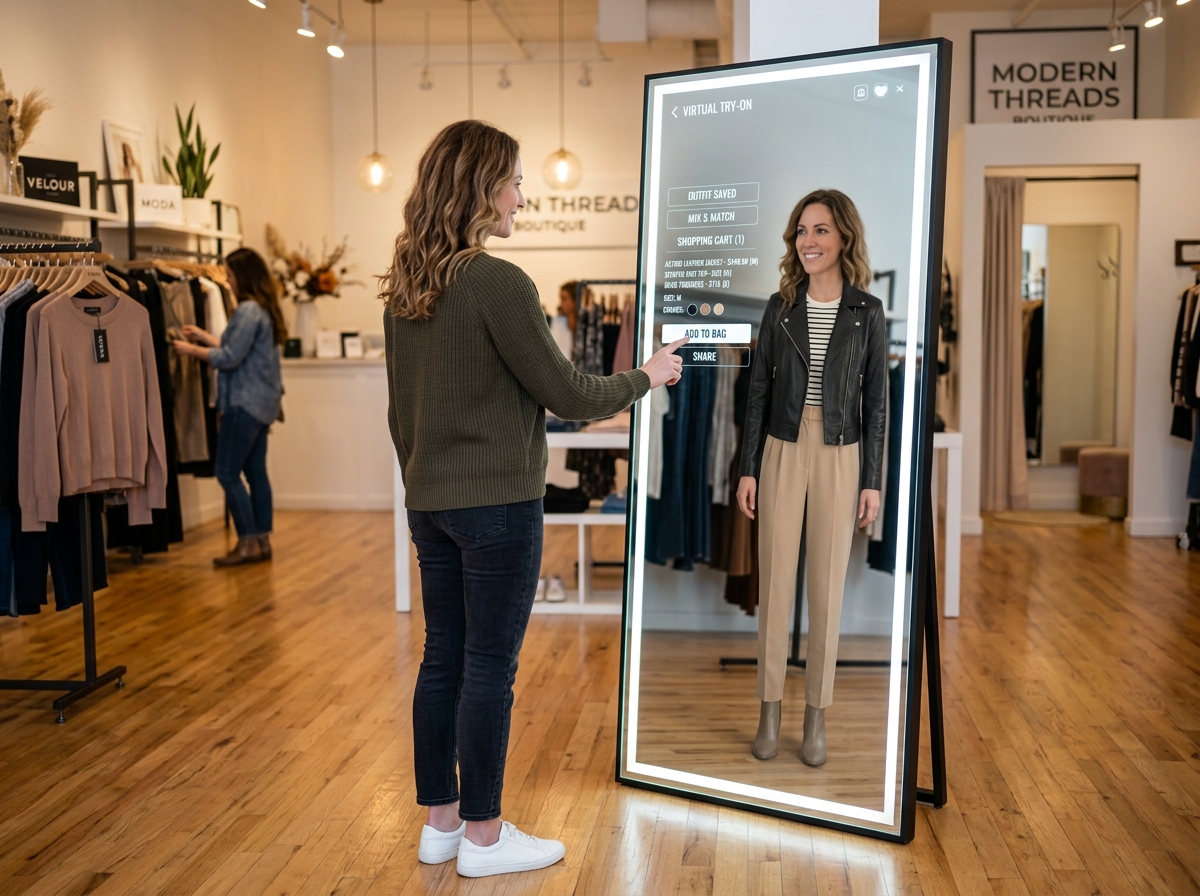
The magic of augmented reality platforms for virtual fitting rooms lies in their ability to bridge the tactile world of physical retail with the convenience of digital browsing. We are seeing a massive shift where “guessing your size” is replaced by data-driven visualization. According to recent scientific research on the virtual fitting room market, the industry is ballooning because it solves the “inconvenience” factor that causes 97% of consumers to abandon a shopping trip.
At its core, this technology uses a combination of body scanning, 3D rendering, and sophisticated AI algorithms. When a customer stands in front of a smart mirror or points their phone camera at themselves, the software identifies key body markers to create a digital “skeleton.” It then drapes a 3D model of a garment over that skeleton in real-time.
For retailers, this isn’t just a “cool feature”; it’s a strategic AR marketing solution that builds immense buyer confidence. Current AI-driven body scanning offers fit prediction accuracy between 85% and 95%, which is often more reliable than a human’s “best guess” based on a static size chart.
Comparing Implementation: Mobile AR vs. In-Store Smart Mirrors
| Feature | Mobile AR Apps | In-Store Smart Mirrors |
|---|---|---|
| Primary Hardware | Consumer Smartphone | High-definition Touchscreen Mirror |
| Typical Cost | $9 – $550+ per month (SaaS) | Up to $25,000 per unit |
| User Friction | Low (Try on from home) | Medium (Must visit physical store) |
| Tech Stack | Camera + Web/App Browser | RFID + Depth Sensors + Large Screen |
| Best For | E-commerce Scaling | Flagship Stores & Luxury Boutiques |
The Mechanics of Augmented Reality Platforms for Virtual Fitting Rooms
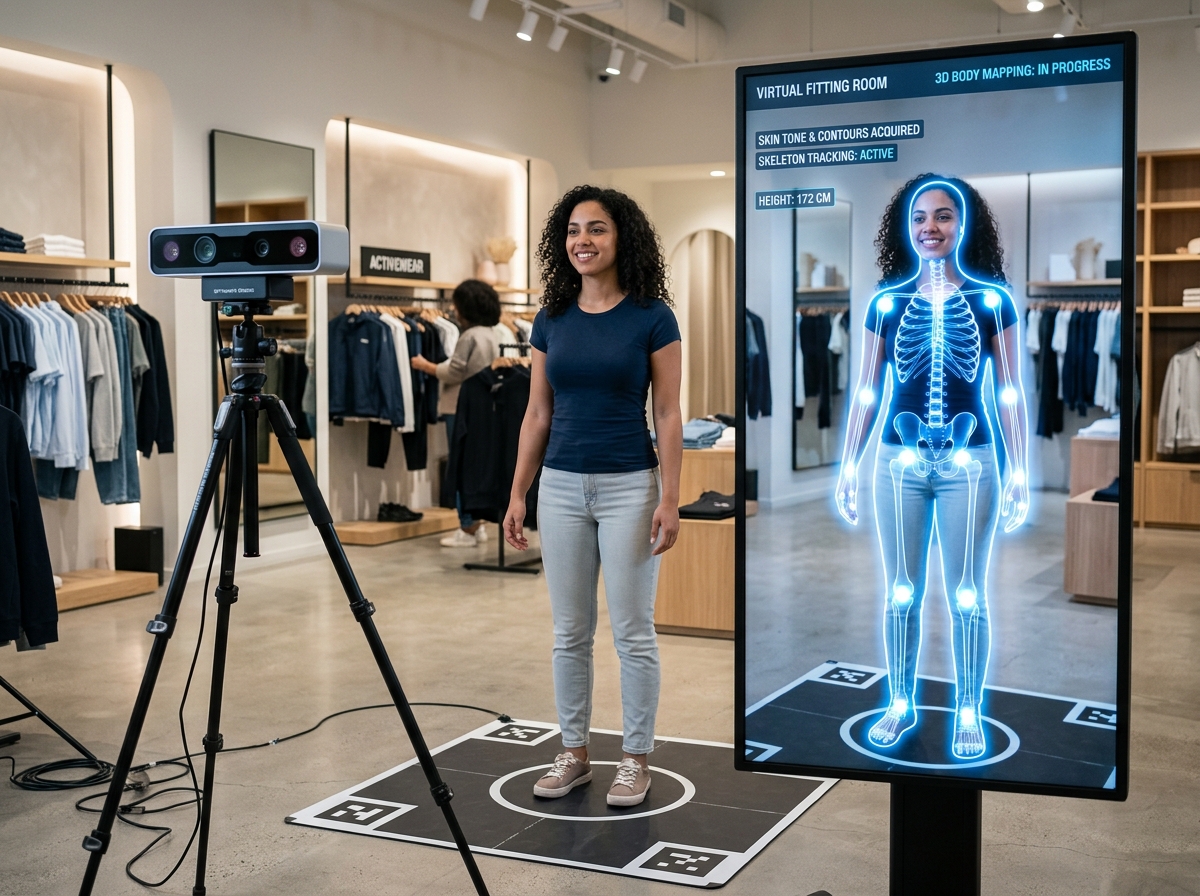
How do we actually get a digital shirt to “flow” naturally on a moving person? It starts with Intelligent Body Mapping. The software uses computer vision to process images or live video feeds, identifying joints and contours. This creates a real-time digital avatar or overlays the item directly onto the user’s live feed.
The next step is Garment Rendering. This isn’t just a flat image. High-end augmented reality platforms for virtual fitting rooms use 3D assets that account for texture replication, physics (how the fabric folds), and dynamic lighting. If you turn your body, the digital garment should react to the movement. This level of AR/VR immersive experience ensures that the shopper isn’t just seeing a sticker of a dress, but a realistic simulation of how it hangs on their specific frame.
Deep learning plays a massive role here. AI engines analyze millions of data points—from a database of over 10 million 3D body scans in some cases—to optimize how a size “Large” from Brand A compares to a “Large” from Brand B.
Key Benefits of Implementing Augmented Reality Platforms for Virtual Fitting Rooms
The business case for AR in retail is backed by staggering statistics. We’ve seen that augmented reality marketing doesn’t just entertain; it converts.
- Conversion Lift: Some platforms report that virtual fitting solutions can boost conversions by up to 200%. When shoppers see how an item looks on their body rather than a professional model, they are 65% more likely to place an order.
- The Return Rate Crisis: Returns are the silent profit killer of e-commerce. With 30% of online purchases being returned (compared to 9% offline), the cost of logistics is astronomical. AR has been shown to cut return rates by up to 30-40% by eliminating the “sizing lottery.”
- Consumer Preference: 61% of shoppers now prefer retailers that offer AR experiences. Furthermore, 40% of customers are actually willing to pay more for a product if they can experience it through AR first.
- Sustainability: By reducing the volume of shipped and returned items, brands significantly lower their carbon footprint. Less waste in the “try and return” cycle means a more sustainable fashion ecosystem.
However, we must acknowledge the “sensory gap.” Research on consumer touch preferences shows that 66% of consumers still want to touch and feel products. AR can’t simulate the softness of cashmere yet, but it can certainly tell you if the sleeves are too short!
Overcoming Technical and Implementation Challenges
While the benefits are clear, we know that implementing augmented reality platforms for virtual fitting rooms comes with hurdles.
- Cost of Entry: While a basic Shopify app might start at $9/month, a custom-built, enterprise-level solution can range from $20,000 to $100,000. For physical stores, a single high-tech smart mirror can cost $25,000.
- Visual Accuracy: If the 3D model looks “fake” or the tracking is laggy, it can actually hurt brand perception. Achieving photorealistic textures—especially for complex materials like jewelry or sheer fabrics—requires high-level technical expertise.
- Data Privacy: Scanning a customer’s body involves sensitive data. Brands must ensure they are GDPR compliant and use privacy-first architectures, often processing data on the “edge” (the user’s device) rather than storing body measurements on a central server.
- Complexity: For smaller brands, the idea of creating 3D models for an entire catalog of 1,000 items sounds daunting. Fortunately, new AI tools can now generate 3D models from simple 2D photos, lowering the barrier to entry for what used to be a virtual reality experience reserved for the elite.
Future Outlook and Integrating AR Solutions into Your Brand
The future of shopping is undeniably omnichannel. We are moving toward a world where your digital avatar—carrying your exact measurements—follows you from a mobile app to a physical store’s interactive kiosk.
Integrating these solutions into existing stacks like Shopify, Magento, or WooCommerce is becoming simpler. Most modern augmented reality platforms for virtual fitting rooms offer robust APIs and SDKs. A typical custom rollout takes about 12 to 16 weeks, covering everything from 3D asset creation to UI/UX design.
With mobile commerce now driving the majority of online transactions, the most successful brands will be those that prioritize “mobile-first” AR. Gen Z, in particular, doesn’t want to guess; they want to see. Retailers offering these AR marketing solutions see a 71% increase in shopping frequency among these younger demographics.
Real-World Success Stories in AR Retail
We don’t have to look far to see this tech in action. Large brands have paved the way, proving that the ROI is real:
- Luxury Footwear: One high-end brand achieved 18.9 million users on a social media AR shoe try-on campaign. This wasn’t just for views; it led to a significant positive return on ad spend.
- Eyewear: Brands like Fork Eyewear use website-based AR to let shoppers preview frames. Because eyewear is so dependent on face shape, this has become the industry standard, often resulting in a 4x increase in conversions.
- Custom-Fit Apparel: Brands like My KnitEver use body scanning to create dresses made-to-order. By getting exact measurements upfront, they have virtually eliminated returns and reduced textile waste.
- Beauty & Cosmetics: Virtual mirrors for makeup allow users to try on dozens of lipstick shades in seconds. This level of engagement is something a physical tester in a store simply cannot match. You can even see these experiences in augmented reality concerts and events where virtual “merch” try-ons are becoming popular.
The Role of Web3 and Digital Ownership in Virtual Fitting
At Avanti3, we believe the next evolution of the virtual fitting room isn’t just about “trying on” — it’s about owning. By integrating Web3 technologies like augmented reality nfts, brands can offer “digital twins” of physical garments.
Imagine buying a limited-edition jacket and receiving an NFT version that your digital avatar can wear in the metaverse or on social media. This creates a new layer of fan monetization and community building. We empower brands to use blockchain and AI to create customizable engagement tools that go beyond the transaction.
When a shopper uses one of our augmented reality platforms for virtual fitting rooms, they aren’t just checking a size; they are entering a brand’s digital ecosystem. This is the future of digital engagement: a seamless blend of fintech, AR, and community.
Explore Avanti3 Technology Solutions to see how we can help you bridge the gap between the physical and digital worlds.
Frequently Asked Questions
How much does a virtual fitting room cost?
Costs vary wildly. A simple Shopify app can start around $9 to $199 per month. However, building a custom platform for an enterprise brand typically costs between $20,000 and $100,000. In-store hardware like smart mirrors can reach $25,000 per unit.
How accurate are these platforms?
Modern AI-powered scanning is incredibly precise, generally offering 85% to 95% accuracy in fit prediction. This is achieved by using deep learning to compare a user’s body markers against 3D garment models.
Can I integrate AR into my Shopify store?
Yes! There are many “plug-and-play” apps that integrate directly with Shopify and Magento via simple widgets or APIs.
Does it really reduce returns?
Absolutely. Data shows that virtual fitting rooms can reduce return rates by 10% to 40%, depending on the category. Since poor fit is the reason for 71% of returns, giving customers a way to visualize the item on their own body is the most effective solution available today.