

Why Your Business Needs an Extended Reality Platform Yesterday
What Is an Extended Reality Platform (And Why It Matters Right Now)
An extended reality platform is a technology infrastructure that combines Virtual Reality (VR), Augmented Reality (AR), and Mixed Reality (MR) into one unified system — letting businesses create immersive, interactive experiences that blend the physical and digital worlds.
Here’s a quick breakdown of what that means in practice:
| Term | What It Does | Example Use |
|---|---|---|
| Virtual Reality (VR) | Puts you inside a fully digital environment | Safety training simulations |
| Augmented Reality (AR) | Overlays digital content onto the real world | Field technician guidance |
| Mixed Reality (MR) | Lets virtual and physical objects interact in real time | Collaborative design reviews |
| XR Platform | The software + hardware layer that powers all three | Enterprise training systems |
The global XR market was valued at $29.26 billion in 2022 and is projected to surpass $100 billion by 2026. That’s not hype — it reflects a fundamental shift in how businesses train employees, engage customers, and build products.
The reason? Traditional methods are falling short. 90% of executives say their company’s current training approaches need to be more effective. Meanwhile, immersive “learning by doing” achieves a 90% knowledge retention rate — compared to just 5% for lectures.
XR isn’t a future technology. It’s being deployed right now across healthcare, manufacturing, retail, and education — and businesses that wait are already falling behind.
I’m Samir ElKamouny, a marketing strategist and entrepreneur who has helped scale businesses across industries by pairing cutting-edge technology with smart execution — including working with brands adopting an extended reality platform to transform how they engage and grow. In this guide, I’ll walk you through everything you need to know to make a confident, informed decision for your business.
Extended reality platform terms to know:
The Core Components of a Modern Extended Reality Platform
To understand why an extended reality platform is so transformative, we have to look under the hood. It isn’t just a headset; it’s a sophisticated ecosystem where hardware-software convergence meets high-speed connectivity.
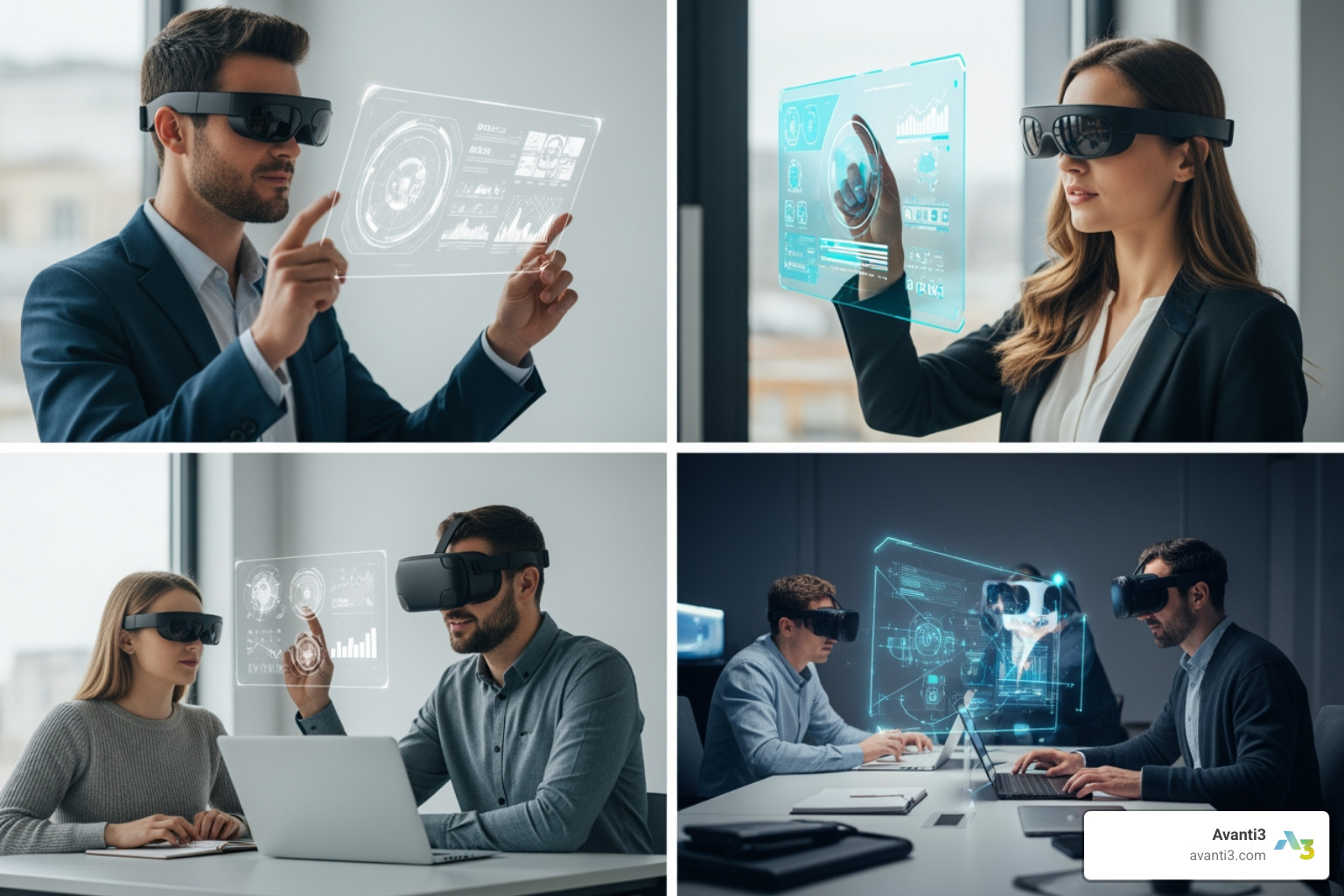
Modern platforms rely on several key technical pillars:
- Spatial Computing & Perception: This is the “brain” of the operation. It includes intelligent on-device head, hand, and eye tracking, along with environment understanding. This allows the device to know exactly where you are and what you’re looking at.
- Split-Rendering & Cloud Connectivity: To achieve photorealistic visuals without making headsets heavy and hot, many platforms use “boundless XR.” This architecture splits the processing between the device, 5G networks, and edge cloud processing.
- Real-Time Simulation & Databases: Platforms like NVIDIA Omniverse use a central “Nucleus” database. This allows multiple people to collaborate on a physically accurate 3D model in real-time, regardless of where they are in the world.
- Advanced Frameworks: Development standards like OpenXR and WebXR ensure that the content created for one device can work across others, preventing businesses from getting locked into a single hardware vendor.
By combining spatial audio (which lets you hear sounds from specific directions) and haptic feedback (the sense of touch), these platforms create a “closed feedback loop” that makes the digital world feel as tangible as the physical one.
Defining XR: The Convergence of VR, AR, and MR
We often use these terms interchangeably, but for a business strategy, the distinctions matter. Think of XR as a spectrum.
| Feature | Virtual Reality (VR) | Augmented Reality (AR) | Mixed Reality (MR) |
|---|---|---|---|
| Environment | 100% Digital | 100% Real World | Hybrid |
| Interaction | Virtual Objects only | Limited Digital Overlay | High (Digital/Physical interact) |
| Device Example | Meta Quest 3 (Immersive) | Smartphone or AR Glasses | Microsoft HoloLens |
| Best For | High-risk simulations | Quick info “Heads-up” | Complex engineering |
At one end, you have ar-vr immersive experiences that completely replace your field of vision. At the other, you have AR, which adds a layer of data to your actual surroundings. Mixed Reality sits in the middle, allowing a digital “hologram” of a car engine to sit on a real-world table, reacting when you move the table. This sensory engagement and spatial awareness are what make an extended reality platform so much more powerful than a standard 2D screen.
Why Your Business Needs an Extended Reality Platform for Training
If you’ve ever tried to learn how to change a tire by reading a manual, you know it’s a struggle. If you do it once with your hands, you’ll remember it forever. This is the “secret sauce” of XR.
According to scientific research on learning retention rates, the “worst” way to learn is a lecture (5% retention) or reading a manual (10%). However, “learning by doing” hits a massive 90% retention rate.
An extended reality platform offers:
- Scalable Apprenticeship: Historically, masters taught apprentices one-on-one. XR allows you to scale that “hands-on” experience to thousands of employees simultaneously.
- Risk-Free Environments: Surgeons can rehearse complex procedures and electrical workers can practice on “live” wires without any physical danger.
- Self-Paced Career Development: 94% of workers would stay at a company longer if it invested in their development. XR provides an engaging, self-paced way to upskill.
- Soft Skills Training: It’s not just for hard labor. Managers can use XR to practice difficult conversations or conflict resolution with realistic AI avatars.
Key Industries Driving Extended Reality Platform Innovation
While gaming gets the headlines, the real “heavy lifting” is happening in the enterprise sector.
- Healthcare: From surgical rehearsals to therapeutic treatments for PTSD, XR is saving lives. Surgeons can even use spatial streaming to view digital twins of a patient’s anatomy during a procedure.
- Manufacturing & Industrial: Companies use virtual reality experiences to design entire factories before a single brick is laid. This “digital twin” approach allows for smart building maintenance and troubleshooting before problems occur.
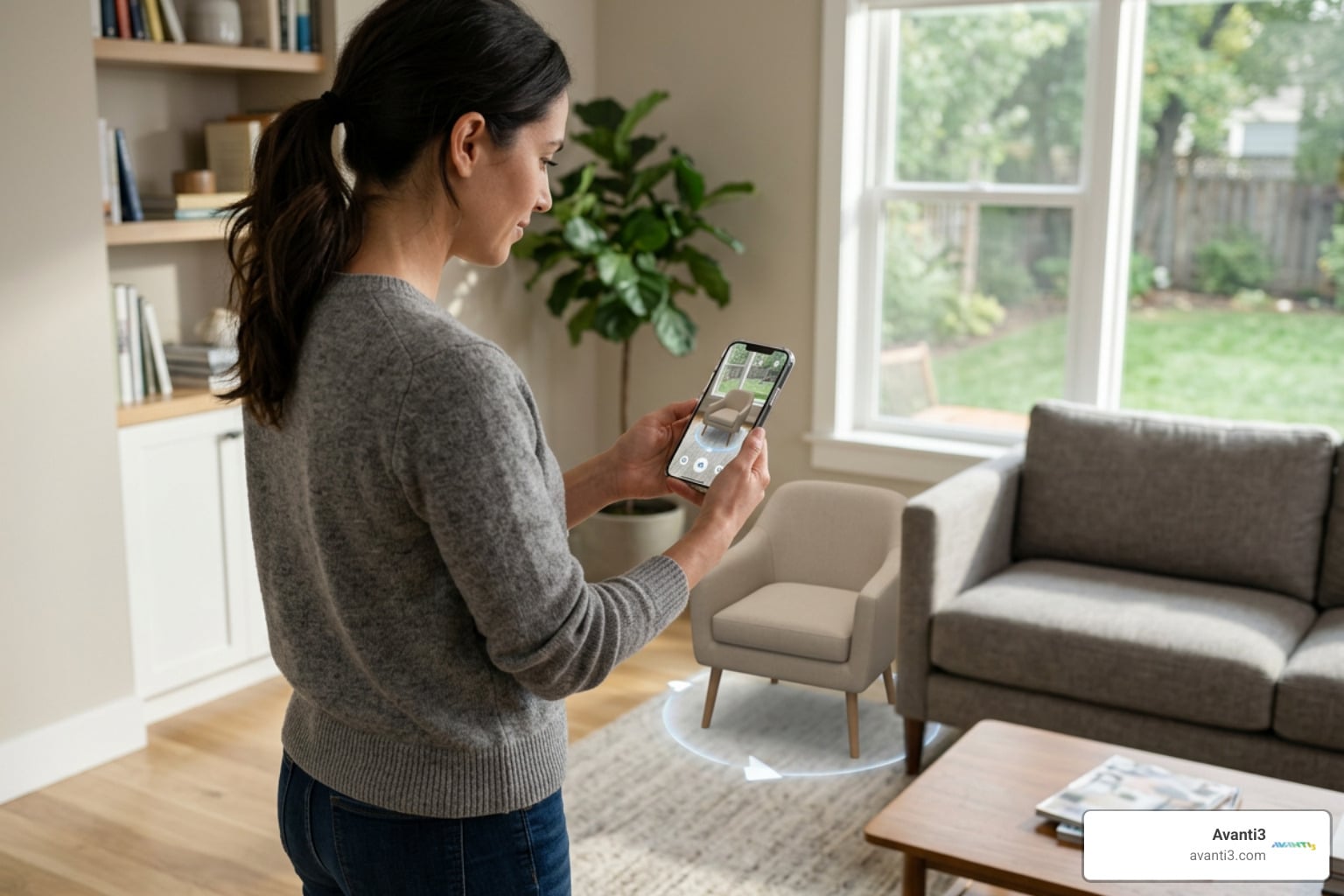
- Retail & Marketing: Brands are using augmented reality marketing to let customers “try on” clothes or see how furniture looks in their living room. It’s about moving from “searching” for a product to “experiencing” it.
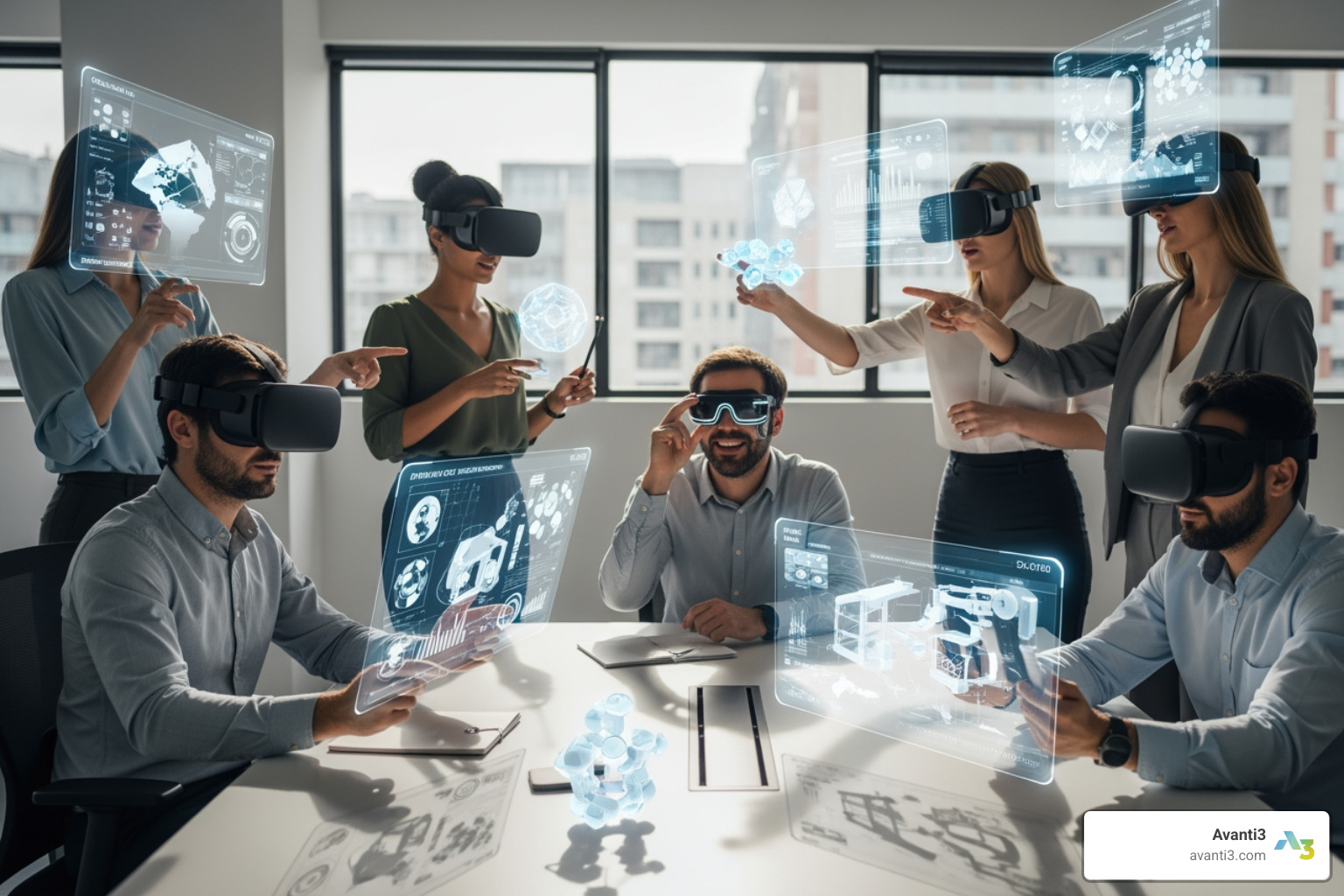
- Remote Collaboration: Platforms like Microsoft Mesh allow up to 330 people to join a virtual town hall, while smaller teams use immersive spaces in Teams for brainstorms that feel like they’re happening in the same room.
The Role of AI and Spatial Computing in Immersive Environments
The “magic” of a modern extended reality platform is increasingly driven by Artificial Intelligence. AI isn’t just a chatbot anymore; in XR, it’s the eyes and ears of the system.
Generative AI and advanced models (like Gemini or Llama) are being integrated to create:
- Environment Understanding: AI helps the headset recognize a “chair” vs. a “wall,” allowing for automated scene meshing.
- Intelligent Avatars: NPCs (non-player characters) in training simulations can now have natural, unscripted conversations with trainees using voice commands.
- Predictive Analytics: The platform can track where a trainee is looking and predict if they are about to make a mistake, providing real-time ar marketing solutions or guidance.
- Humanoid Robot Learning: Using devices like the Apple Vision Pro, researchers are capturing human movements to train robots more efficiently through teleoperation.
Overcoming Implementation Challenges and Hardware Limitations
We’ll be honest: it’s not all sunshine and holograms. Implementing an extended reality platform comes with hurdles.
- Hardware Costs & Thermal Management: High-end headsets are an investment, and keeping them cool and comfortable for long-term use is a constant engineering challenge.
- Content Creation Complexity: Creating a 3D world is harder than filming a video. However, new “no-code” tools and AI-assisted design are lowering this barrier.
- User Accessibility & Motion Sickness: Not everyone feels comfortable in VR. Issues like latency can cause “sim sickness,” though 5G and better refresh rates are rapidly fixing this.
- Data Privacy: Because XR devices track eye movements and room layouts, secure distribution and strict privacy policies are non-negotiable.
- Legacy Integration: Connecting your new XR platform to your old “technical debt” (legacy databases) requires a partner who understands both worlds, including how to integrate augmented reality nfts for digital asset management.
Scaling Success with Data Insights and ROI
One of the biggest advantages of an extended reality platform over traditional training is the data. When an employee watches a video, you only know if they clicked “play.” In XR, you know everything.
You can track:
- Time-to-proficiency: How much faster did the XR group learn compared to the classroom group?
- Learner Analytics: Where did they struggle? Did they hesitate before a specific step?
- Operational Excellence: By identifying common mistakes in the simulation, you can fix the real-world process before an accident happens.
- Global Deployment: You can push a new training module to 50 offices worldwide instantly, ensuring every employee gets the exact same high-quality instruction.
This level of insight makes calculating ROI straightforward. When you reduce training time by 40% and safety incidents by 50%, the platform pays for itself. You can even use virtual art experiences to boost employee morale and creative thinking, adding another layer of value to the investment.
Future-Proofing Your Enterprise with XR and Web3 Integration
As we look toward the next decade, the most successful companies won’t just use an extended reality platform—they will integrate it into the broader Web3 ecosystem. This is where we at Avanti3 see the most exciting potential.
Imagine a world where your XR training isn’t just a box to check, but a gateway to a larger community. By combining XR with blockchain security and NFT rewards, businesses can create truly unique digital experiences.
- Digital Ownership: Use NFTs to certify that an employee has mastered a skill, creating a tamper-proof digital resume.
- Fan Monetization & Engagement: For brands, XR platforms offer a way to host augmented reality concerts or exclusive virtual events where fans can own a piece of the experience via the blockchain.
- Fintech Solutions: Seamlessly integrate payments into the virtual world, allowing users to purchase digital or physical goods without removing their headset.
At Avanti3, we specialize in this synergy. We help you move beyond simple “immersive apps” to build a comprehensive digital strategy. Whether it’s creating augmented reality nfts for your brand or deploying a global training system, we empower creators and brands with the tools to dominate the spatial computing era.
The market is moving. The tech is ready. Your competitors are likely already exploring their options. It’s time to stop thinking of XR as a “nice to have” and start seeing it as the foundation of your future business.
Explore AR-VR Immersive Experiences today and let us help you build the reality your business deserves.