

How to Choose Virtual Concert Software
Why Virtual Concert Software Is Transforming Live Music
Virtual concert software lets artists, creators, and brands host live or pre-recorded performances online — reaching fans anywhere in the world, without a physical venue.
Here’s a quick look at what it covers:
| What You Need | What Virtual Concert Software Provides |
|---|---|
| Reach global fans | Stream to unlimited audiences worldwide |
| Sell tickets or subscriptions | Built-in pay-per-view, ticketing, and subscription tools |
| Engage your audience | Live chat, tip jars, polls, and two-way video |
| Own your data | Access and download ticket holder and viewer data |
| High production quality | HD video (1080p+) and high-fidelity audio streaming |
The entertainment industry has shifted fast. Virtual concerts now range from simple livestreams to fully immersive, interactive experiences — with platforms supporting anywhere from a handful of fans to over a million remote attendees.
For creators and brands, the appeal is clear: no venue fees, no geographic limits, and full control over the fan experience.
But with dozens of platforms available — each with different features, pricing, and technical requirements — choosing the right one takes more than a quick Google search.
I’m Samir ElKamouny, a marketing and business growth expert who has helped scale businesses across digital and entertainment industries, including navigating the rise of virtual concert software and fan engagement technology. In this guide, I’ll break down exactly what to look for so you can make a confident, informed decision.
Virtual concert software terms made easy:
Key Features to Look for in Virtual Concert Software
When we dive into digital performances, we quickly realize that not all virtual concert software is created equal. Some platforms are essentially glorified video calls, while others are high-octane engines capable of powering augmented reality concerts that feel like a trip to another dimension.
To choose the right tool, we need to look at the pillars of a successful digital event: monetization, interactivity, and immersion. If you can’t sell a ticket and your fans can’t cheer, is it even a concert?
Monetization and Ticketing
The best platforms offer multiple ways to keep the lights on. We look for:
- Pay-Per-View (PPV): Traditional digital ticketing where fans pay for a one-time access code.
- Subscriptions: Ideal for artists who perform regularly. Top-tier platforms see creators earning significant revenue through recurring fan support.
- Virtual Tipping: “Tip jars” or virtual currencies (often called “Notes” or “Gifts”) allow fans to support artists in real-time. Interestingly, some software features leaderboards where fans compete to be the top supporter, often winning prizes like autographed merch.
Interactive vs. Immersive Capabilities
There is a massive difference between watching a video and being part of an experience. We’ve broken down the capabilities you should expect:
| Feature | Interactive Platform | Immersive Platform |
|---|---|---|
| Visuals | Standard 2D Video | 3D Environments / Virtual Art Experiences |
| Audience | Chat Box / Emojis | Avatars or AR-VR-Immersive Experiences |
| Interaction | Text-based Q&A | Two-way Video / Real-time Stage Interaction |
| Scale | 100 – 10,000 attendees | Up to 1,000,000+ remote attendees |
High-Quality Audio and Video Standards for Virtual Concert Software
If the audio cuts out during a guitar solo, the magic is gone. We prioritize software that adheres to professional TV standards. For a music-first event, “good enough” isn’t enough.
We recommend looking for software that supports:
- Resolution: Minimum 1080p (Full HD), with 4K support for premium tiers.
- Audio Bitrate: At least 192kbps for standard streams, though high-fidelity platforms often offer 320kbps or even lossless MQA (Master Quality Authenticated) audio.
- Low Latency: Ideally sub-200ms. This is critical if you want the artist to react to the crowd in real-time without a painful five-second delay.
Compatibility is also key. Your fans shouldn’t have to download a clunky plugin. The best virtual concert software runs directly in modern browsers like Chrome, Safari, Firefox, and Microsoft Edge. If a fan gets an “unsupported browser” message, you’ve likely lost a customer.
Interactive Tools and Fan Engagement
The “loneliness” of a standard livestream is the biggest hurdle to overcome. We want our fans to feel like they are in the front row, not just watching a screen. This is where digital engagement platforms shine.
Modern virtual concert software uses interactive video wall technology or two-way video feeds to let the artist see the fans’ faces. Imagine a DJ looking at a wall of screens and seeing a thousand people dancing in their living rooms—that energy is infectious.
Other essential digital engagement solutions include:
- Real-time Polls: Let the audience vote on the next song in the setlist.
- Song Requests: Direct interaction that makes every show feel unique.
- Virtual Meet-and-Greets: Gated “backstage” areas for VIP ticket holders.
- Live DVR: Allowing latecomers to rewind to the beginning of the set so they don’t miss a beat.
Monetization and Data Ownership in Virtual Concert Software
One of the biggest mistakes we see organizers make is giving away their data. When you host a concert on a third-party social media site, they own the relationship with your fans. With dedicated virtual concert software, you own the data.
This means you can:
- Analyze Performance: See exactly when engagement peaked or when people dropped off.
- Download Ticket Holder Info: Build an email list for your next tour or merch drop.
- Custom Branding: Ensure the entire digital experience design reflects your brand, not the platform’s logo.
Some platforms even offer “non-archived” shows. By choosing not to record the event, you create a “once-in-a-lifetime” urgency that drives higher ticket sales. If they aren’t there live, they miss it forever.
Technical Considerations and Future Trends

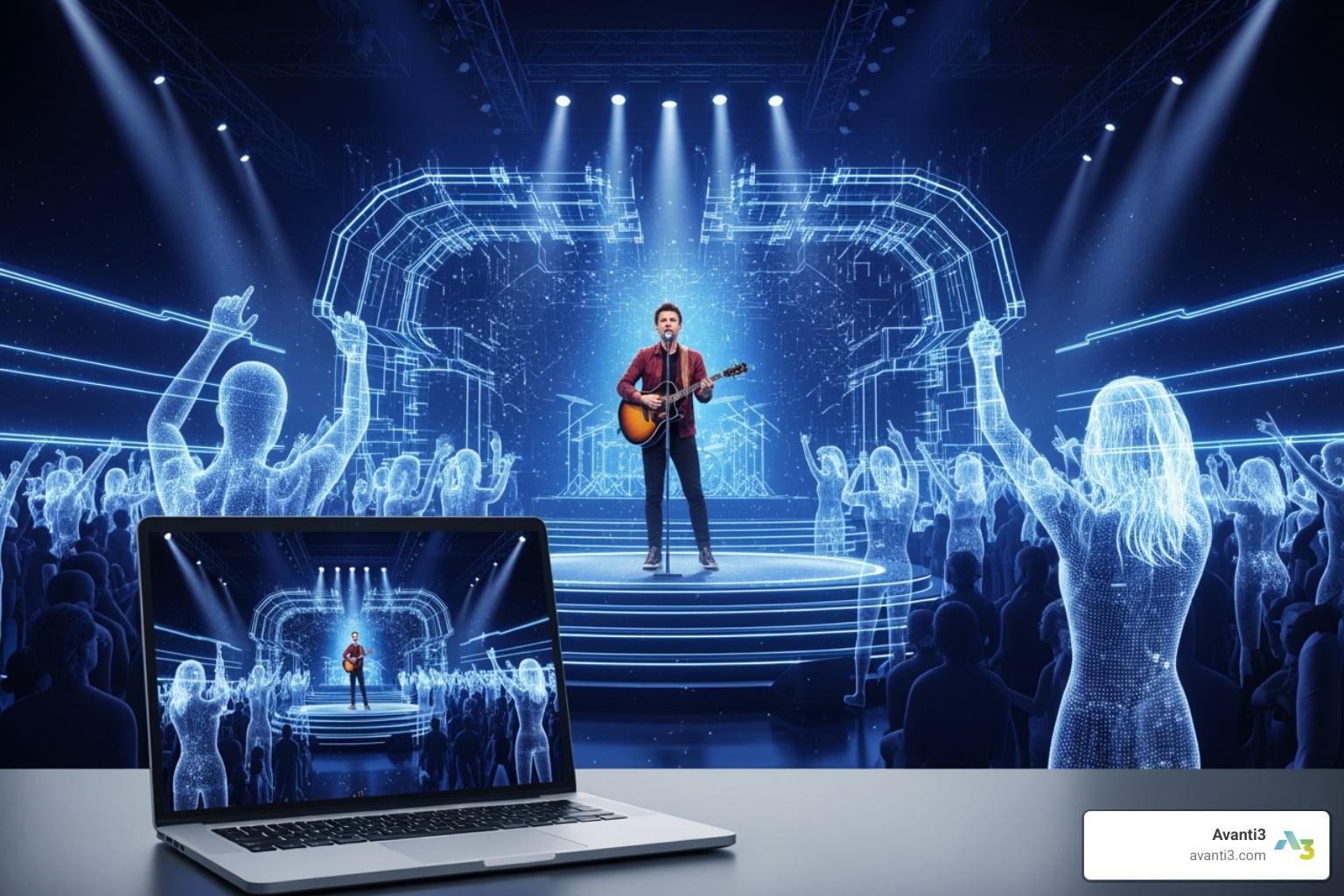
Producing a virtual concert can be as simple as a laptop on a desk or as complex as a full-scale broadcast studio. For high-end productions, we often use green screens to “transport” the artist into a digital world.
Hardware and Protocol Standards
To ensure a “production-grade” stream, we look for software that is hardware agnostic. This means it should play nice with your existing cameras, mixers, and encoders. Many top-tier platforms use WebRTC (Web Real-Time Communication), which allows for plugin-free, ultra-low latency streaming directly in the browser.
Technical highlights to check:
- Direct Encoding: Does the software encode the video locally to ensure the highest quality?
- Multi-Platform Streaming: Can you “simulcast” to 10+ platforms simultaneously to maximize reach?
- Backup Streams: Does the platform offer a “failover” option if your primary internet connection drops?
Choosing the Right Platform for Your Budget
Budgeting for virtual concert software isn’t just about the monthly subscription. We have to look at the total cost of ownership.
Typical costs include:
- Subscription Models: Basic plans can start around $12.99 – $20 per month, while professional tiers can reach $399+ per month.
- Usage Fees: Some platforms charge per viewer or per gigabyte of data streamed.
- Setup Fees: For custom immersive worlds, expect one-time design and engineering costs.
- Device Compatibility: Ensure the platform supports virtual reality experiences and ar-vr-immersive experiences if you plan to scale.
Don’t forget the “couch factor.” Many fans want to watch on their big screens. Check if the software has native apps for Apple TV, Roku, and Fire TV, or at least robust mobile apps for iOS and Android.
The Role of Immersive Technology and Web3
The future of music isn’t just a video feed; it’s an ecosystem. At Avanti3, we are seeing a massive shift toward integrating Web3 technologies into the concert experience.
We believe the next generation of virtual concert software will be defined by:
- Blockchain Ticketing: Using NFTs to prevent scalping and provide fans with “digital stubs” that unlock future rewards.
- AI Integration: Using AI to generate real-time visual effects that react to the music or the crowd’s energy.
- Fan Monetization: Creating micro-economies within the concert where fans can buy digital merch or “skins” for their avatars.
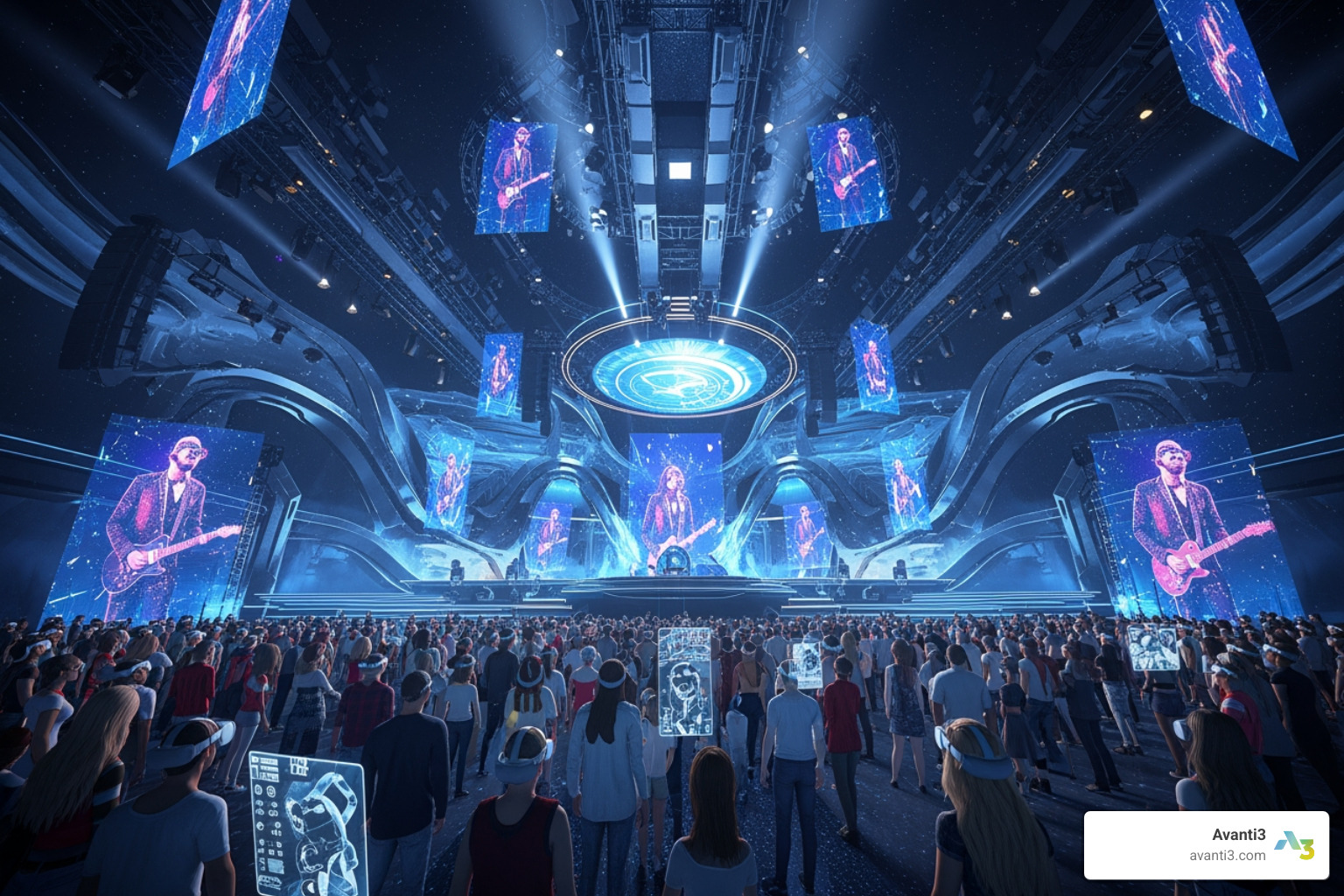
- True Immersion: Moving beyond 2D screens into ar-vr-immersive experiences where 10,000+ users can interact in a shared 3D space.
By combining these high-tech tools with a human-centered approach, we can turn a solitary screen-watching session into a global community event. Whether you are a solo artist or a global brand, the right software is the bridge between you and your fans. Choose wisely, and the world is your stage.