


5 Data-Driven Strategies to Engage Decision Makers
Why Data Driven Engagement Is the New Standard for Reaching Decision Makers
Data driven engagement is the practice of using real behavioral data, predictive analytics, and AI-powered insights to connect with your audience in ways that are timely, relevant, and measurable — rather than relying on guesswork or generic outreach.
Here’s a quick snapshot of what it means in practice:
- What it is: Using first-party data and behavioral signals to personalize every touchpoint in the customer journey
- Why it matters: 80% of consumers are more likely to do business with companies that offer personalized experiences
- How it works: Collect data → enrich and enrich it → activate insights → measure and optimize
- Key outcomes: Higher retention, lower churn, better ROI, and stronger loyalty
The stakes are real. Financial institutions spend between $200 and $450 to acquire a single new account — and when a third of newly activated customers go dormant, those costs can nearly double. The same pattern plays out across healthcare, life sciences, and the creator economy. Generic, one-size-fits-all outreach simply doesn’t move people anymore.
The problem isn’t a lack of data. It’s a lack of usable data. In fact, 76% of business decision-makers say they don’t have enough actionable customer insights to drive meaningful engagement. Meanwhile, 98.6% of executives say they want a data-driven culture — yet only 32.4% have actually built one.
That gap is exactly where the opportunity lives.
I’m Samir ElKamouny, an entrepreneur and marketing expert who has spent years helping businesses scale through smarter, more intentional data driven engagement strategies. In this guide, I’ll walk you through five practical frameworks you can apply right now to reach decision makers more effectively and turn data into real growth.
Core Components of a Data Driven Engagement System
To move beyond “gut feeling” marketing, we need a structured system that turns raw information into a conversation. In our experience, traditional engagement is often reactive—you send a blast email and hope for the best. Data driven engagement, however, is proactive and predictive.
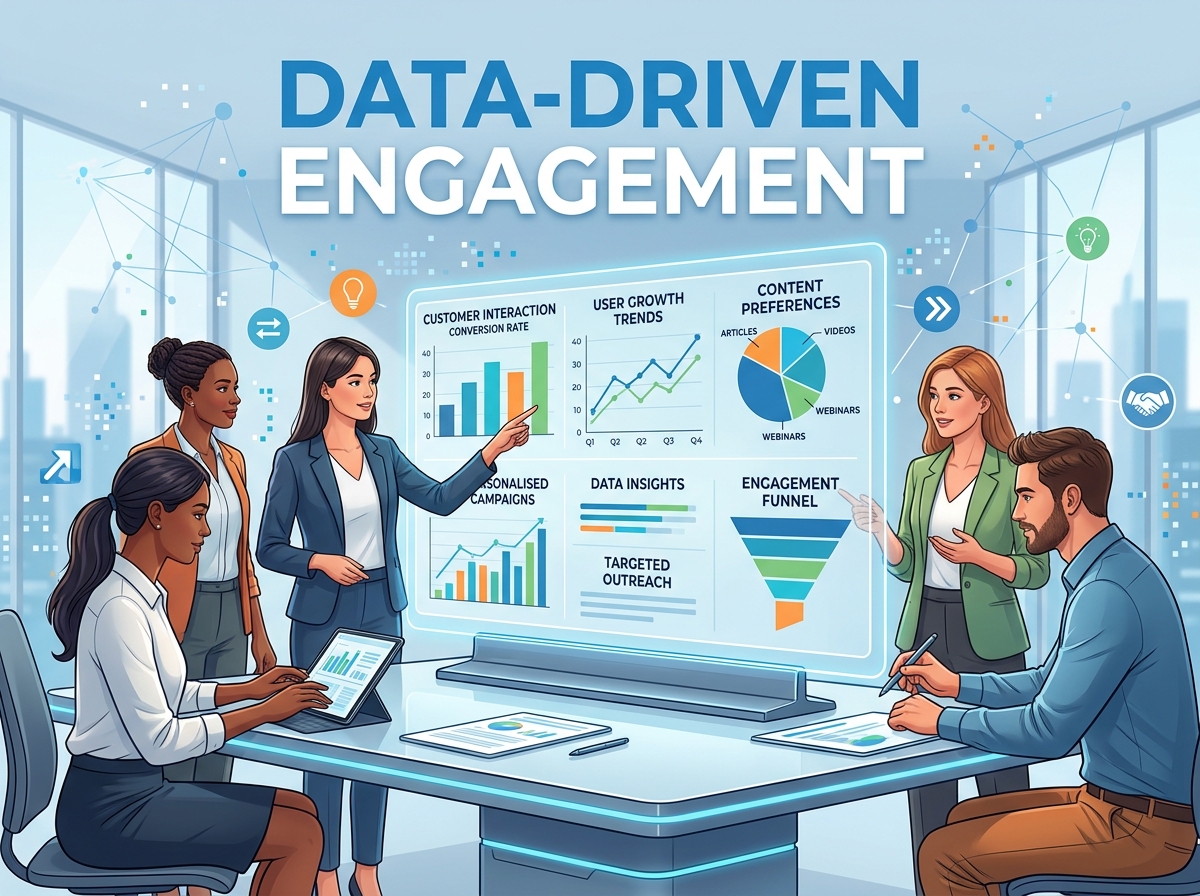
The engine of this system relies on three core pillars:
- Data Enrichment: Raw transaction or interaction data is often “messy.” AI-powered enrichment cleanses and categorizes this data, transforming a disorganized list of clicks or purchases into a structured foundation. For example, instead of seeing a random merchant ID, enrichment tells us a customer just invested in a high-end wellness subscription.
- Consumer Foresight: This is the “crystal ball” of your strategy. By analyzing billions of anonymized transactions and behavioral signals, we can surface insights that predict future spending or engagement habits.
- Behavioral Signals: We look for “intent signals”—specific actions like a user revisiting a pricing page three times in an hour—to trigger an immediate, relevant response.
Comparing the Old vs. The New
| Feature | Traditional Engagement | Data Driven Engagement |
|---|---|---|
| Strategy | One-size-fits-all | Hyper-personalized 1:1 |
| Data Source | Third-party cookies (dying) | First-party behavioral data |
| Timing | Scheduled/Static | Real-time triggers |
| Decisioning | Human intuition | AI & Reinforcement Learning |
| Goal | Reach/Impressions | Incremental ROI & Primacy |
By focusing on first-party data, we ensure that we aren’t just shouting into the void. We are building a “360-degree view” of the customer that respects their privacy while delivering the value they actually want.
Implementing Data Driven Engagement Through AI and Machine Learning
If data is the fuel, AI is the rocket engine. We’ve seen a massive shift toward “reinforcement learning,” where AI agents autonomously run experiments. Instead of a marketer manually A/B testing two subject lines for six months, an AI decisioning agent can run thousands of micro-tests in six weeks.
Research shows that 80% of consumers are more likely to make a purchase when brands offer personalized experiences. But how do we achieve that at scale?
- Real-Time Personalization: This means adjusting the user experience in milliseconds. If a user is browsing a specific category on your site, the platform should immediately surface relevant personalized data to guide their next step.
- Predictive Modeling: We use machine learning to identify “at-risk” customers before they churn. If a banking customer stops logging into their app, the system triggers a “win-back” incentive automatically.
- Intent Signals: By monitoring real-time behavior, we can distinguish between a casual browser and a high-intent buyer, ensuring your sales team focuses their energy where the ROI is highest.
Overcoming Data Silos for Omnichannel Personalization
One of the biggest hurdles we see is the dreaded “data silo.” Your marketing team has one set of data, your sales team has another, and your customer support team is looking at something else entirely. This fragmentation is why 70% of digital transformations fail.
To fix this, we advocate for Data Unification through Customer Data Platforms (CDPs). A CDP acts as a single source of truth, connecting signals from your website, mobile app, email, and even offline interactions.
- Privacy Compliance: In a post-GDPR world, data governance is non-negotiable. Using a unified platform makes it easier to manage consents and ensure you are using data ethically.
- Seamless Touchpoints: When your data is unified, the customer journey feels like one continuous conversation. A user might start a search on their phone and finish it on a laptop without ever having to repeat their preferences.
- 360-Degree View: This isn’t just a buzzword. It’s the ability to see the “Aha!” moment when a user realizes the value of your product, allowing you to double down on what works.
Explore more about how digital engagement platforms can bridge these gaps and create a unified experience.
Strategic Frameworks for Measurable Results
Building a data-driven culture isn’t just about buying the right software; it’s about shifting how your organization thinks. Harvard Business Review notes that digital transformation is less about the technology and more about the people and processes behind it.
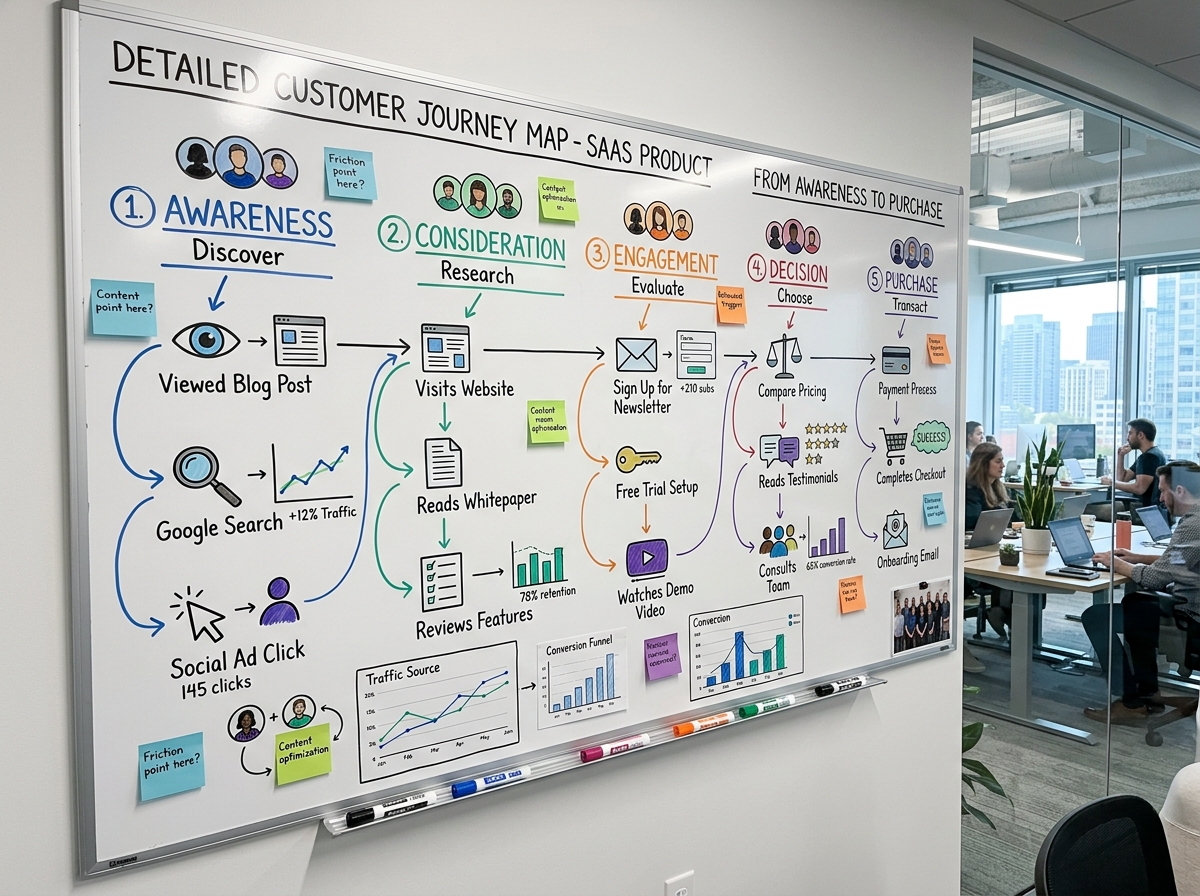
To see a real revenue lift—sometimes as high as 15% to 30%—we follow a framework centered on “Hyperlocal Data” and “Organizational Efficiency.” For example, a global aviation group managed to increase efficiency by 30% simply by giving individual departments autonomy over their own data analytics.
Scaling Data Driven Engagement with Behavioral Triggers
The most effective way to scale is to move from time-based drips (e.g., “send email on day 3”) to event-based triggers. This is the core of digital brand engagement.
- Onboarding: Use data to identify if a new user has reached their “First Value” moment. If they haven’t, trigger a helpful tutorial.
- Habit Formation: Monitor “Leading Indicators.” If a user engages with a specific feature three times in a week, they are likely forming a habit. Reward that behavior!
- Retention: If the data shows a drop in activity, the system should automatically deploy a win-back campaign.
- Expansion: Use “Next Best Action” models to suggest upgrades or cross-sells that actually make sense based on the user’s history.
Measuring Success with Advanced Analytics and KPIs
You can’t manage what you can’t measure. In data driven engagement, we look at two types of indicators:
- Leading Indicators: These are “predictive” metrics, like feature adoption rates or newsletter open rates, that tell us where the customer is headed.
- Lagging Indicators: These are “outcome” metrics, like churn reduction, revenue lift, and total ROI.
To ensure your results are real and not just a fluke, we use Holdout Groups. By keeping a small percentage of your audience away from your automated campaigns, you can measure the “incrementality”—the actual lift your data-driven strategies provided compared to doing nothing.
A well-implemented digital reward system can also provide a wealth of data, showing exactly what motivates your most loyal fans to take action.
Future Trends: AI Decisioning Agents and Hyperlocal Precision
The future of engagement is “Agentic.” We are moving toward AI Decisioning Agents—autonomous systems that don’t just follow a journey map but actually decide the best channel, time, and creative for every single individual.
- Hyperlocal Precision: Global campaigns are great, but local regulations and cultural nuances matter. Future systems will use hyperlocal data to adapt messaging for a user in Paris versus a user in New York, ensuring compliance and relevance.
- 1:1 Individual Decisions: We are moving past “segments” (e.g., “Men aged 25-34”) and toward true 1:1 personalization.
- Predictive Churn: Imagine knowing a customer is going to leave two weeks before they even know it. That’s the power of advanced predictive modeling.
This shift toward community loyalty programs ensures that engagement isn’t just a transaction—it’s a relationship.
Conclusion: Building a Sustainable Data Culture with Avanti3
At Avanti3, we believe that data driven engagement is the heartbeat of the modern economy. Whether you are a brand looking to reduce churn or a creator aiming to monetize your fanbase, the path forward is paved with insights, not guesses.
We specialize in integrating Web3 technologies—like NFTs for rewards and blockchain for transparency—to create digital experiences that feel personal and secure. By combining AI-powered analytics with immersive AR/VR tools, we help you set a new standard for how you connect with your community.
Building a data-driven culture doesn’t happen overnight, but the results—higher efficiency, reduced acquisition costs, and explosive growth—are worth the journey.
Ready to turn your data into your greatest competitive advantage? Start building your digital community with us today and let’s create something extraordinary together.