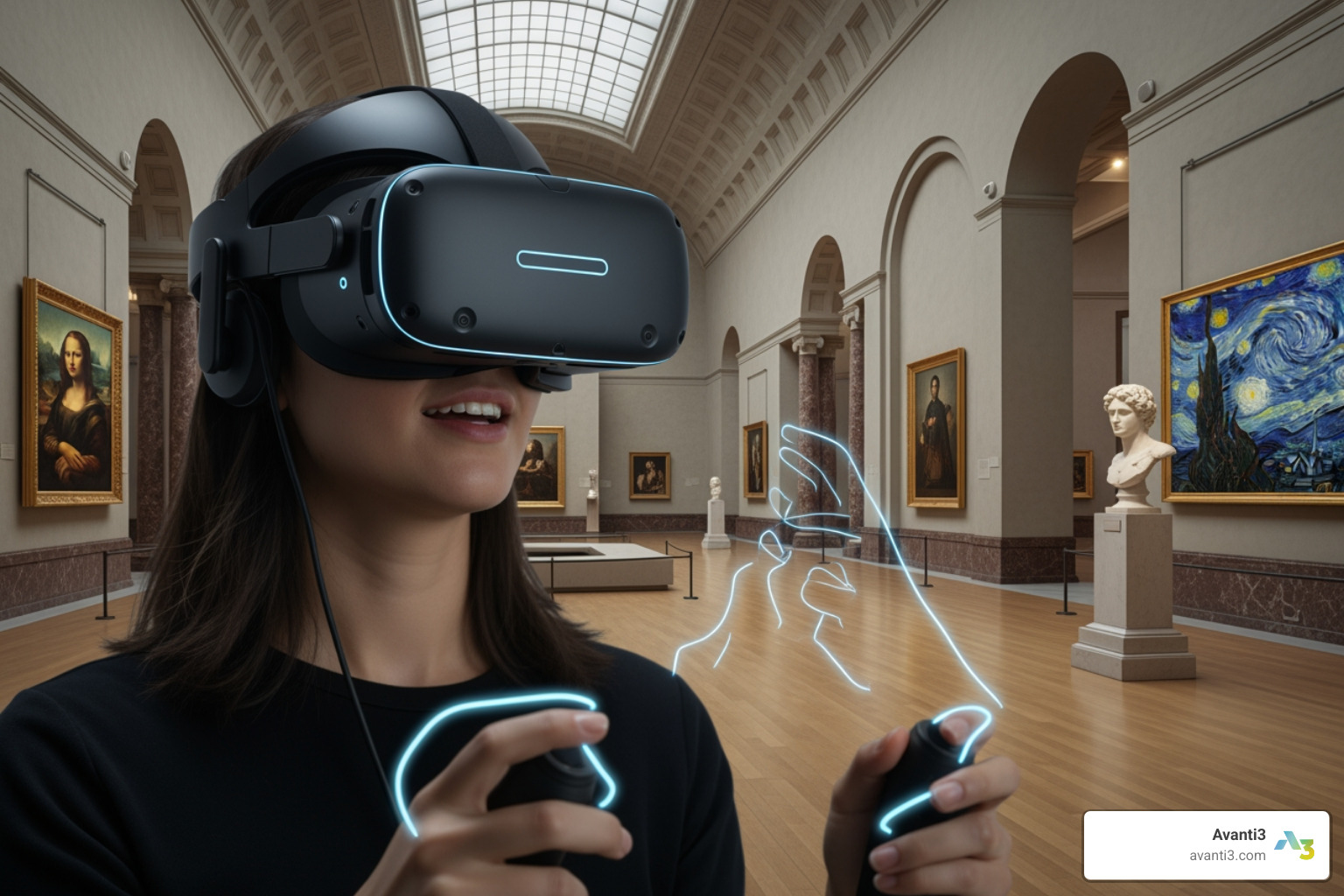


A New Way to Experience Art and History
Virtual reality museum tours let you explore world-renowned collections from anywhere with an internet connection. Using 360-degree images and immersive technology, these digital experiences bring art and history to your VR headset, web browser, or mobile device.
Quick Overview: What You Can Do With Virtual Museum Tours
- Explore thousands of museums globally through platforms like Google Arts & Culture
- View masterpieces like the Mona Lisa and the Sistine Chapel ceiling up close
- Access high-resolution imagery to see details often missed in person
- Visit anytime, anywhere, without travel costs, crowds, or barriers
- Enjoy interactive stories, audio guides, and 3D reconstructions
The museum community has acceptd VR to make art more accessible and engaging. Institutions from the Louvre to the Smithsonian now offer virtual experiences that improve physical visits with multimedia narratives and unprecedented detail, allowing you to explore at your own pace.
I’m Samir ElKamouny AV, and I’ve spent years helping brands and creators leverage emerging technologies. Through my work with Virtual reality museum tours and immersive platforms, I’ve seen how these tools democratize access to culture while creating new opportunities for engagement and storytelling.
In this guide, we’ll explore how VR is changing museums, showcase the best virtual tours, and reveal the technology behind it. Whether you’re a cultural institution or a creator, you’ll find how virtual reality is reshaping the future of art and history.
Virtual reality museum tours vocab explained:
- Virtual Museum Experiences
- museum augmented reality
The Digital Renaissance: Understanding Virtual Reality Museum Tours
The world of cultural heritage is undergoing a profound digital change, and virtual reality museum tours are at the forefront. These immersive experiences are redefining how we engage with art and history, breaking down traditional barriers and opening new avenues for exploration.
What Are Virtual Museum Tours and How Do They Work?
A virtual reality museum tour is a digital recreation of a museum or exhibition space that can be explored remotely. These tours typically rely on a combination of technologies:
- 360° Panoramas and Interactive Imagery: Thousands of high-resolution photos are stitched together to create a seamless, 360-degree view of a gallery. Interactive hotspots provide additional information, audio commentary, or close-up views of artifacts. Some tours use gigapixel images, offering enough detail to see individual brushstrokes.
- 3D Modeling and Photogrammetry: For a more immersive experience, objects and rooms are scanned and recreated as 3D models. This allows for free movement within the digital space, letting you walk around sculptures or even handle virtual artifacts.
- Access Platforms: Tours are accessible on VR headsets for full immersion, through web browsers for convenience (like on Google Arts & Culture), or via dedicated mobile apps that may include augmented reality (AR) features.
Navigation is intuitive, often using on-screen arrows or a map. While virtual tours don’t replace the feeling of a physical visit, they offer distinct advantages like eliminating crowds and providing rich contextual information for a personalized learning experience. For more insights, check out our work on virtual art experiences.
The Benefits of Going Virtual: Accessibility, Engagement, and Preservation
The rise of virtual reality museum tours is a major step toward democratizing access to culture. The benefits impact both visitors and institutions.
For Visitors:
- Global and Inclusive Access: Explore world-renowned collections from anywhere, eliminating travel costs and physical barriers. This is a game-changer for individuals with mobility challenges, ensuring everyone can engage with art.
- Crowd-Free Exploration: Stand in front of the Mona Lisa without jostling for position. Virtual tours allow for an intimate, unhurried encounter with art, letting you pause and reflect at your own pace.
- Improved Educational Tools: Guided audio, interactive labels, and 3D reconstructions transform viewing into an active learning journey, providing deep, contextual understanding.
For Institutions:
- Expanded Reach: Museums can connect with a global audience far beyond their physical walls, broadening their impact and fostering a diverse community of art lovers.
- Preservation: VR creates lasting digital records of temporary exhibitions, ensuring unique shows remain accessible long after they close.
- New Contextualization: Curators can showcase objects in their original historical settings or demonstrate the true scale of monumental works in ways that 2D images cannot.
By leveraging these digital pathways, museums can fulfill their mission to educate and inspire more effectively than ever. Explore our insights on digital experience design to learn more.
Step Inside the Frame: Notable Examples of Virtual Museum Experiences
Many institutions offer incredible virtual access to their collections. Here are some notable examples:
- The Met 360° Project (New York, USA): The Metropolitan Museum of Art offers stunning virtual tours of iconic spaces like the Temple of Dendur, using compelling storytelling to provide immersive access to remarkable works.
- “Mona Lisa: Beyond the Glass” (Louvre, Paris, France): This groundbreaking VR experience lets you explore Leonardo da Vinci’s masterpiece in unprecedented detail, digging into its history and layers. The Louvre also offers other curated virtual tours.
- The Kremer Museum (Netherlands): A unique museum that exists entirely in virtual reality, showcasing over 70 17th-century Dutch and Flemish old masters that can only be viewed through VR.
- Vatican Museums (Vatican City): Glide through lavish galleries and pan across Michelangelo’s iconic Sistine Chapel ceiling at your own pace with the Vatican’s official virtual tours.
- The British Museum (London, UK): Its extensive virtual tour drops you into the Great Court, where you can steer to see the Rosetta Stone in high-res detail.
- Musée d’Orsay (Paris, France): Virtually stroll through this former train station filled with impressionist and post-impressionist works by masters like Monet, Cézanne, and van Gogh.
- Van Gogh Museum (Amsterdam, Netherlands): This virtual tour offers a rare gift for fans, allowing you to wander through the largest collection of his works and trace his artistic evolution.
- Smithsonian National Air and Space Museum (Washington, D.C., USA): Admire historic planes, rockets, and Neil Armstrong’s spacesuit on a virtual tour of this massive collection.
- Pergamon Museum (Berlin, Germany): Though currently closed for renovations, its virtual tour is invaluable for exploring monumental ancient architecture like the Ishtar Gate of Babylon.
These examples highlight the depth of experiences available, proving that virtual reality museum tours offer a comprehensive exploration of our shared cultural heritage.

The Future is Immersive: Technology, Challenges, and What’s Next
Looking ahead, virtual reality museum tours are evolving from simple 360-degree views to truly interactive and emotionally resonant experiences. This next generation of digital culture is driven by cutting-edge technology and thoughtful museum innovation.
The Technology Behind the Magic: From 360° Video to Web3
Creating a compelling virtual reality museum tour relies on a blend of advanced technologies:
- Photogrammetry and 3D Modeling: This is the backbone for creating realistic virtual objects. By stitching together thousands of photos, software can create a 3D model of an artifact, allowing you to rotate, zoom, and inspect it from all angles.
- Gigapixel Imagery: For paintings, gigapixel photography captures images with billions of pixels, allowing for extreme zoom capabilities to examine the finest details of a brushstroke.
- Advanced 360° Video and Spatial Audio: Modern 360° video incorporates spatial audio, which makes sound responsive to your position and direction, greatly enhancing the sense of presence.
- AI-Powered Tours: Artificial intelligence is set to personalize the experience, with AI guides that can learn your interests, tailor content, and answer questions in real-time.
- Web3 Integration: This is where we see the most exciting potential. Integrating Web3 technologies like NFTs and blockchain can introduce digital ownership of collectibles, verifiable provenance for digital art, and new community-building opportunities. This also opens up innovative monetization models for museums, securing their future in the digital age.
We are actively exploring how these technologies can create richer, more valuable experiences. Dive deeper into how we’re pushing these boundaries with AR/VR immersive experiences.
Overcoming Problems: Challenges and Costs of Implementing Virtual Reality Museum Tours
While the appeal of virtual reality museum tours is clear, implementation comes with challenges:
- High Development and Hardware Costs: Creating high-quality VR requires significant investment in specialized equipment, skilled personnel, and VR headsets. These devices also require ongoing maintenance and cleaning.
- Hygiene and Simulation Sickness: Shared headsets raise hygiene concerns that require strict cleaning protocols. Additionally, some users may experience “simulation sickness” (nausea or disorientation), which requires careful design to minimize.
- Technical Expertise: Museums often lack the in-house expertise to develop and maintain complex VR systems, making partnerships with specialized companies crucial.
- Avoiding the “Gimmick” Trap: The biggest challenge is ensuring VR genuinely improves the educational or emotional value of a visit. A thoughtfully implemented experience can bring collections to life, but a poor one can feel like a gimmick.
The costs can be substantial, but the long-term benefits in accessibility and global reach often outweigh the challenges, especially when institutions work with experienced partners to create sustainable solutions.
The Next Canvas: The Future of Storytelling and Digital Art
The future of virtual reality museum tours promises experiences that are not just immersive but also personal, interactive, and social.
- Hyper-realism and Social VR: Advancements in graphics and haptics will create hyper-realistic environments. We’ll also be able to “visit” museums with friends and family in shared virtual spaces, changing the experience into a collaborative journey.
- Gamification and Interactive Narratives: Future tours will integrate gamified elements, turning exploration into an adventure. Interactive storytelling will allow users to influence narratives or solve historical puzzles.
- AI as a Personalized Guide: AI will likely become a personal curatorial assistant, adapting tours to individual interests and knowledge levels, offering deeper insights and connections.
- Blurring Physical and Digital: We will see a seamless integration of AR and VR with physical museum spaces, where one complements the other to create a richer, more complete experience.
- Empowering Digital Storytellers: New platforms are enabling museums to design and publish interactive stories without extensive coding knowledge. This democratizes content creation, allowing curators to focus on narrative and scholarship.
For us, the future is about empowering creators and brands with the tools to leverage these emerging technologies. By creating compelling and emotionally rich virtual reality museum tours, we can build stronger communities around culture and ensure our shared heritage remains vibrant and accessible for generations to come. If you’re ready to explore these possibilities, we invite you to create your own AR/VR immersive experiences with us.