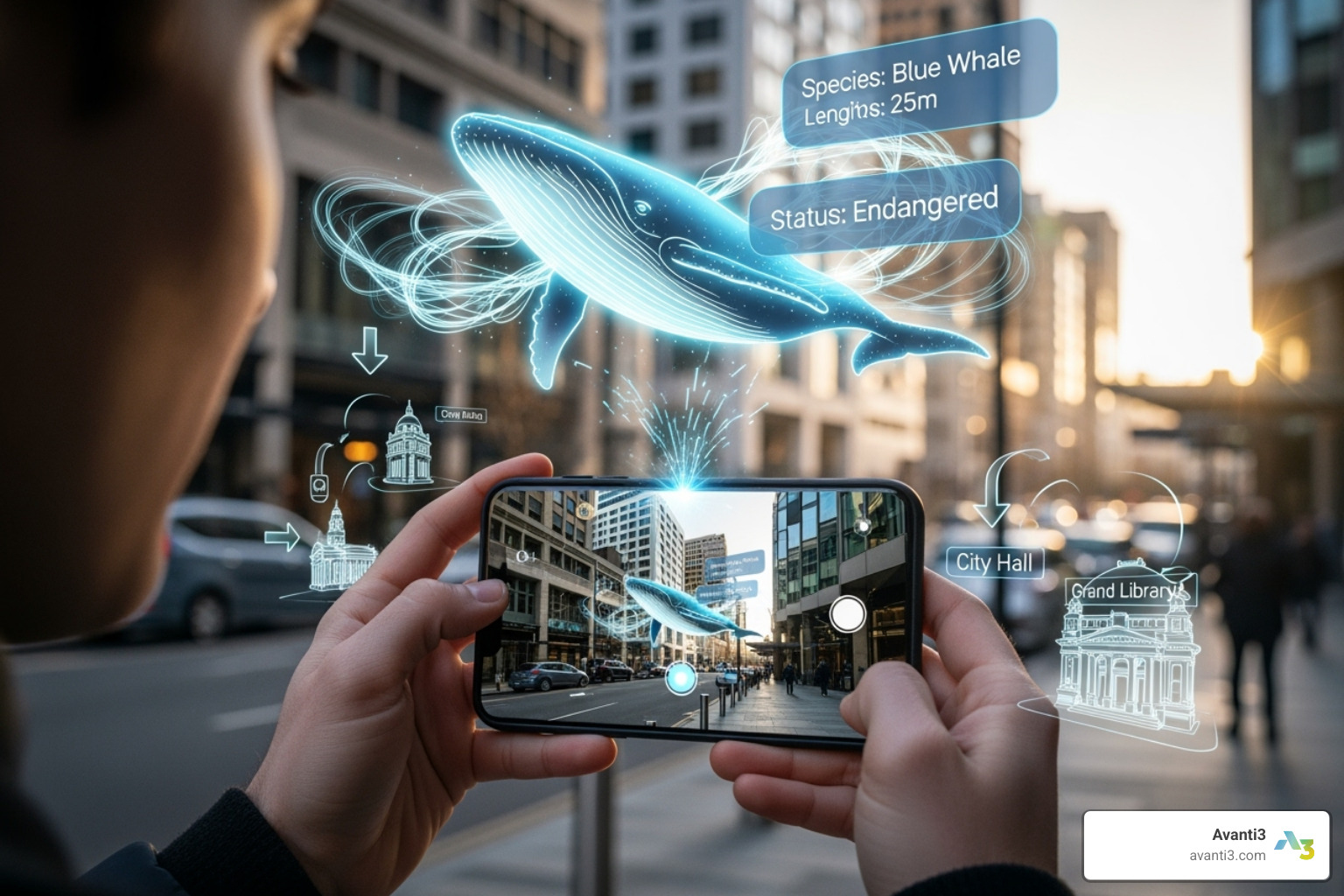


Why AR Is Your Gateway to Revolutionary Digital Engagement
Create AR experiences that transform static content into interactive digital worlds, no coding skills required. With no-code platforms, anyone can build immersive augmented reality content in minutes, not months.
Quick Start Guide to Create AR Experiences:
- Choose your AR type: Marker-based (scan images), markerless (surface tracking), or WebAR (browser-based)
- Select a no-code platform: Many platforms offer intuitive drag-and-drop interfaces
- Upload your content: Add 3D models, videos, images, or interactive elements
- Publish and share: Generate QR codes or shareable links for instant access
The results speak volumes. AR experiences deliver a 94% increase in conversion rates, 70% boost in memory encoding, and 95% higher visual attention compared to traditional content. Users spend over 4 minutes on average engaging with AR, far more than with typical promotional videos.
One creator’s first experience captures AR’s magic perfectly: “My mind was blown after I viewed a 3D object jump off an image on the paper.” This shift from static to dynamic is what makes AR so powerful for brands and creators.
The technology has evolved dramatically. Early AR required complex trigger images and constant camera focus. Today’s platforms use surface tracking, face recognition, and work directly in web browsers, making app downloads unnecessary. The AR creation landscape is more accessible than ever.
I’m Samir ElKamouny AV, and I’ve helped countless businesses transform their digital engagement through innovative technologies that Create AR experiences for deeper audience connections. My expertise in scaling businesses and marketing innovation has shown me how AR breaks through traditional content limitations to build lasting brand loyalty.

How to Create AR Experiences Without Code
Just as website creation evolved beyond needing HTML and CSS, the same revolution has come to augmented reality. Today, you can create AR experiences that rival professional productions without writing a single line of code. No-code AR platforms transform complex development into an intuitive process with drag-and-drop interfaces. You can easily manipulate 3D models, videos, and interactive content to focus on your creative vision, not technical problems. This approach enables faster prototyping, reduces costs, and makes powerful AR tools accessible to everyone.
Using these platforms, you can create compelling AR/VR Immersive Experiences with video, 3D models, and 360-degree content, crafting stories that stick with your audience.
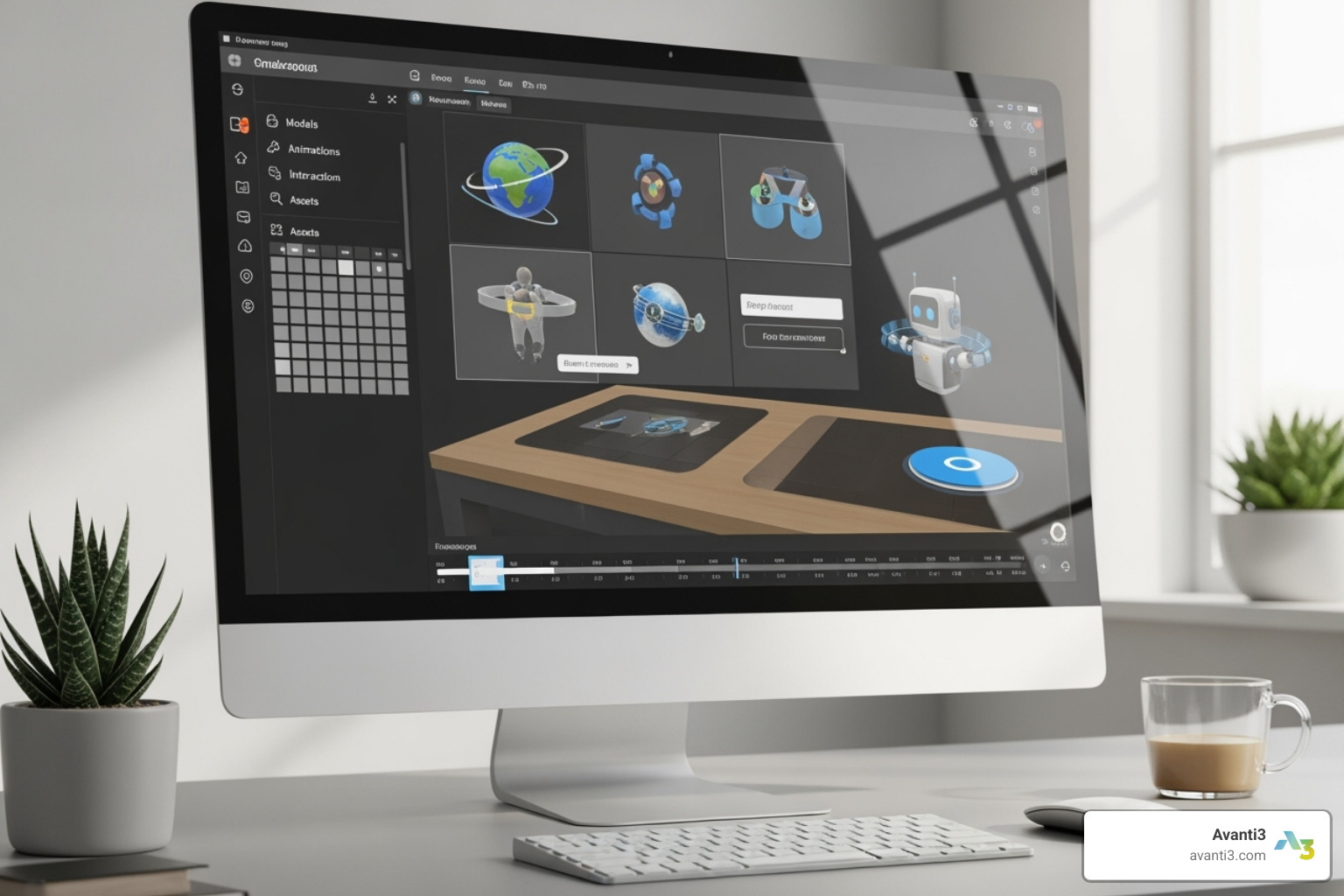
Understanding the Types of AR You Can Build
Before you start, it’s helpful to know the main types of AR:
- Marker-based AR: Uses image tracking to trigger digital content from a specific image, like a QR code or product packaging.
- Markerless AR: Uses surface tracking to place virtual objects on real-world surfaces like floors or tables, perfect for product visualization.
- WebAR: Delivers browser-based AR experiences instantly via a link or QR code, eliminating the need for app downloads. The WebXR Device API standard enables these experiences to work seamlessly across different browsers and devices.
- Geolocation AR: Ties digital content to specific real-world locations, creating interactive, location-based guides.
- Face Tracking AR: Overlays digital elements onto a user’s face, enabling virtual try-ons for makeup and accessories.
A Step-by-Step Guide to Create AR Experiences
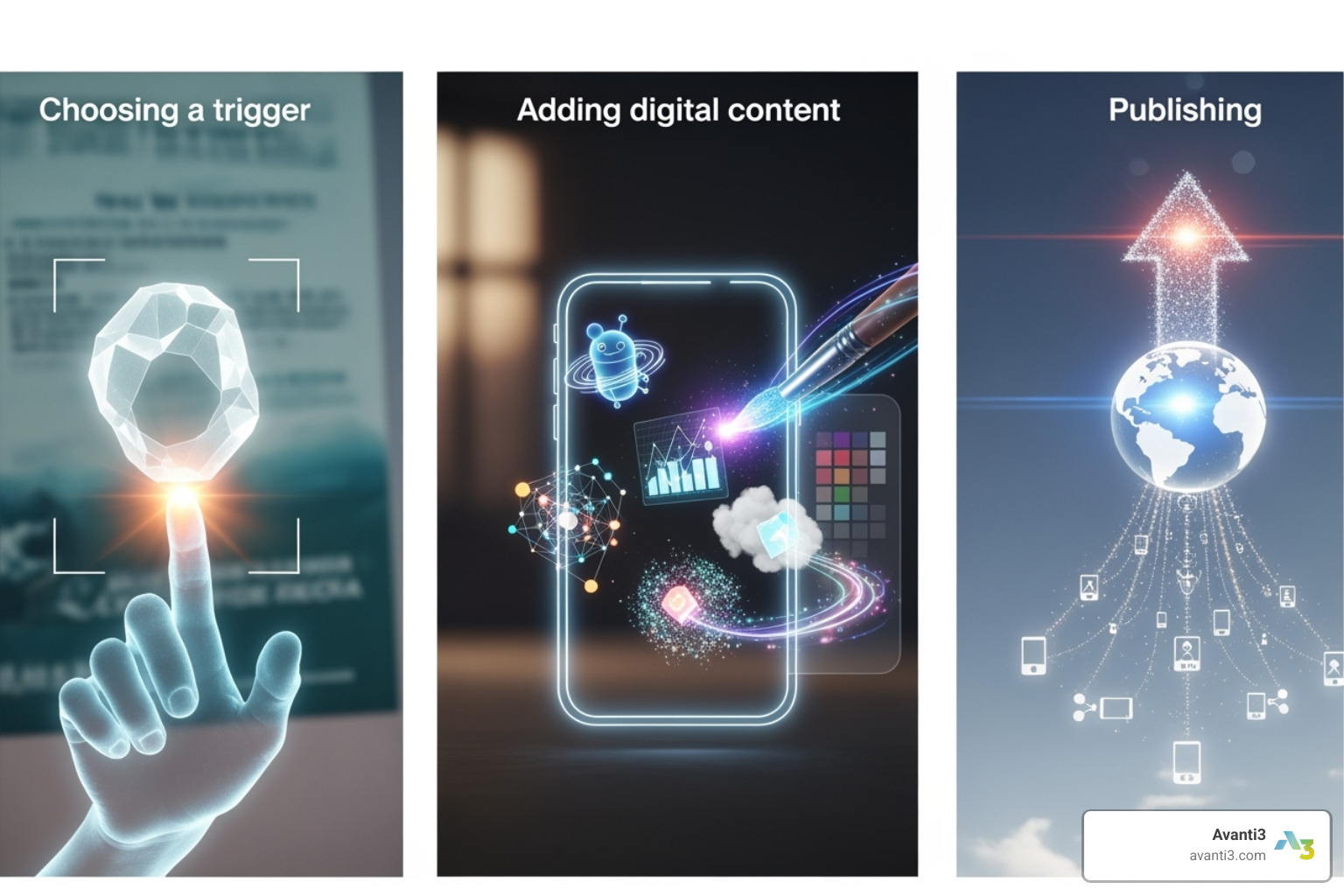
The process is surprisingly straightforward and can be broken down into three main stages.
-
Step 1: Choose Your Trigger. For marker-based AR, upload an image (like a poster or business card) that will activate your experience. For markerless AR, select surface tracking to allow content to appear on any flat surface.
-
Step 2: Add Your Content. Use a drag-and-drop interface to add 3D objects, layer videos, and include interactive buttons that link to websites or trigger animations. You can fine-tune lighting, scale, and positioning to perfect your scene.
-
Step 3: Publish and Share. The platform will generate a QR code and a shareable link for easy distribution. Always test your experience on different devices before launching to ensure it works flawlessly for all users. For more advanced techniques, you can learn how to build an AR app for the web.
WebAR vs. App-Based AR: What’s the Difference?
Choosing between WebAR and a native app is a critical decision.
WebAR offers the best accessibility. With no app to download, users can access your content instantly through their browser. This instant access and wider reach make it ideal for marketing campaigns, product launches, and broad Digital Fan Engagement where you want to minimize friction.
App-based AR, on the other hand, provides more power and performance. Native apps can offer smoother animations, handle more complex 3D models, and provide offline access. They also allow for deeper integration with device features like GPS and notifications. The choice depends on your goals: WebAR excels for reach and marketing, while a dedicated app is better for complex, long-term engagement.
Opening up AR’s Potential Across Industries and the Future
Augmented reality is a transformative technology reshaping how we interact with information and products. The benefits are clear: AR boosts engagement, improves memory, and drives conversions. Compelling statistics show a 95% increase in visual attention, a 70% increase in memory encoding, and a 94% increase in conversion rates with AR visualization. With accessible creation tools, AR’s potential can be harnessed across industries for significant business growth.
Real-World Applications of Augmented Reality
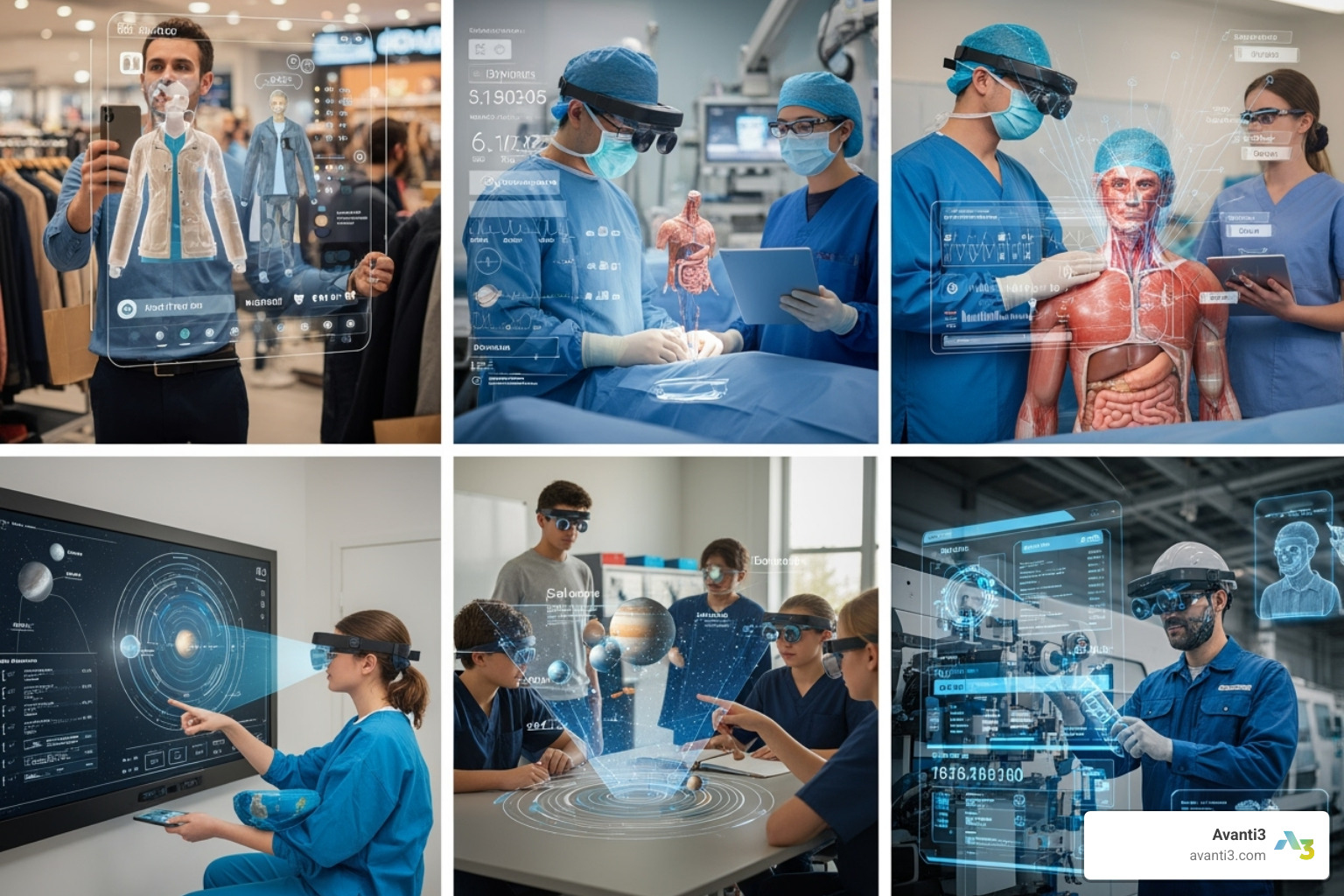
AR is already making waves across various sectors:
-
Retail: Virtual Try-On and Product Previews
AR is revolutionizing shopping by allowing customers to virtually try on items or preview products like furniture in their own space. This reduces returns, increases purchase confidence, and boosts conversion rates significantly. -
Marketing: Interactive Ads and Brand Awareness
AR turns passive ads into interactive experiences. Animating product packaging or launching immersive campaigns via QR codes captures attention and builds brand loyalty. For more on this, see our insights on Augmented Reality Marketing. -
Education: Immersive Learning
In education, AR brings abstract concepts to life. Students can interact with 3D models of human anatomy or historical artifacts, which improves understanding and retention. The productivity gains for learning with XR are proven, reaching 20-35% in some training scenarios. -
Art & Entertainment: Virtual Galleries and Live Experiences
Artists are using AR to create interactive installations and virtual galleries. It also improves live events, like adding digital layers to performances for unforgettable Augmented Reality Concerts.
The Future of Immersive Content and How to Create AR Experiences for Web3
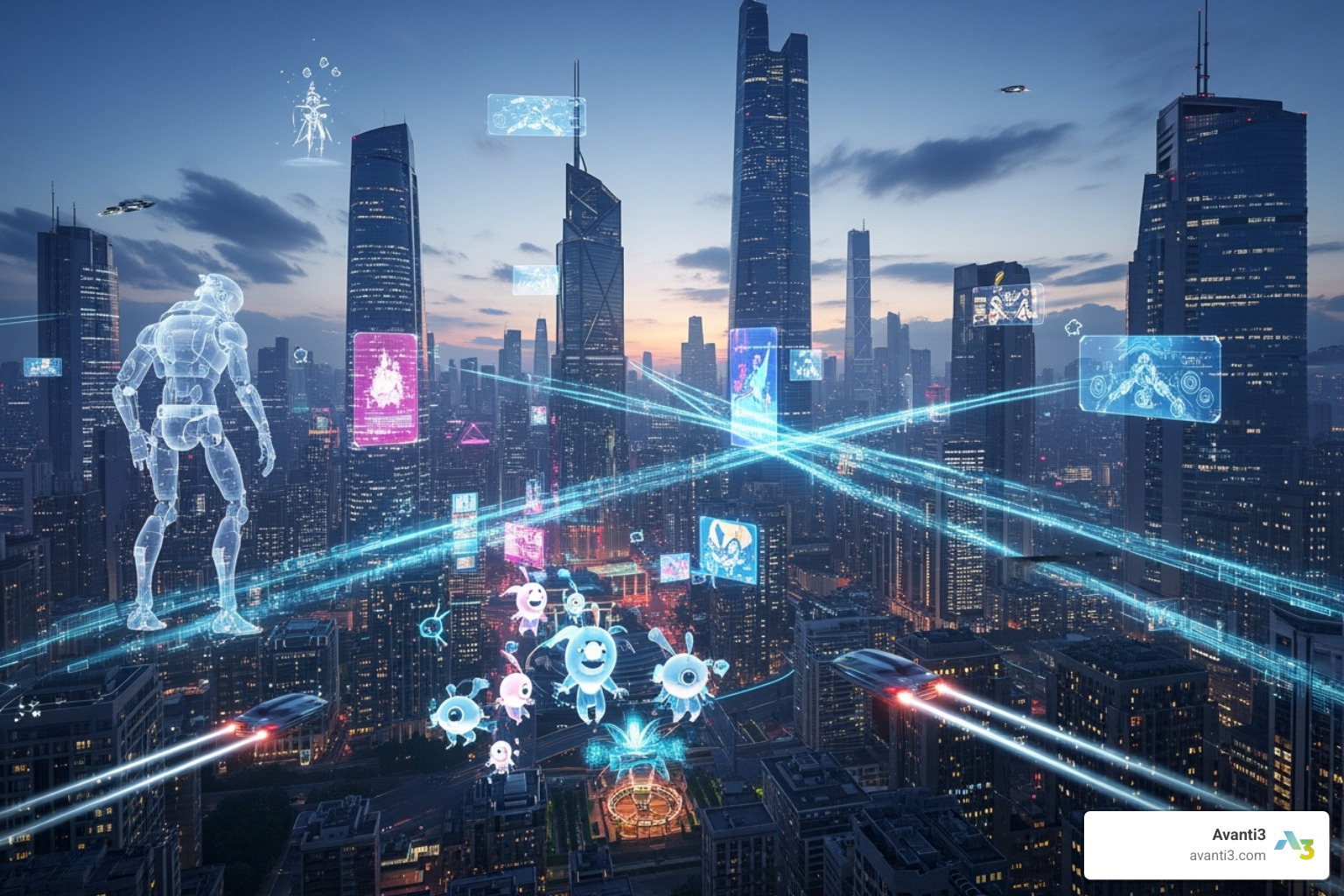
AR’s journey is accelerating toward a future integrated with AI and the Web3 ecosystem, opening new frontiers for creativity and digital engagement.
Future Trends: AI, Web3, and the Metaverse
-
AI Integration: AI will boost AR creation with tools that can generate 3D models and textures automatically. It will also make AR experiences smarter, allowing virtual objects to react intelligently to user input.
-
Web3 Gaming & Digital Collectibles: AR will play a crucial role in the booming Web3 gaming industry. It provides a visual, interactive layer for digital assets, embodying the Web3 concept of “true asset ownership.” Imagine bringing a unique Augmented Reality NFTs to life in your living room, creating a tangible connection to your digital collectibles.
-
The Metaverse: AR is a primary interface for the metaverse, layering digital information onto our physical reality. This blended approach will allow us to interact with metaverse elements as part of our everyday lives without being fully disconnected from our surroundings.
At Avanti3, we integrate Web3 technologies like NFTs, blockchain, AR/VR, and AI to empower creators and brands with customizable engagement tools. We offer unique digital experiences and community-building opportunities, setting a new standard in digital engagement and fan monetization.
Conclusion
The world of augmented reality is no longer a futuristic dream; it’s a powerful, accessible tool available now. The advent of no-code platforms has removed technical barriers, empowering anyone to create AR experiences that are engaging and impactful. As AR converges with AI and Web3, we’re stepping into an exciting era where digital assets gain real-world presence.
Don’t be left behind. The tools are here, the audience is ready, and the possibilities are endless. It’s time to empower your brand, delight your audience, and transform engagement. Build your digital community with us and let’s open up the future of immersive experiences together.