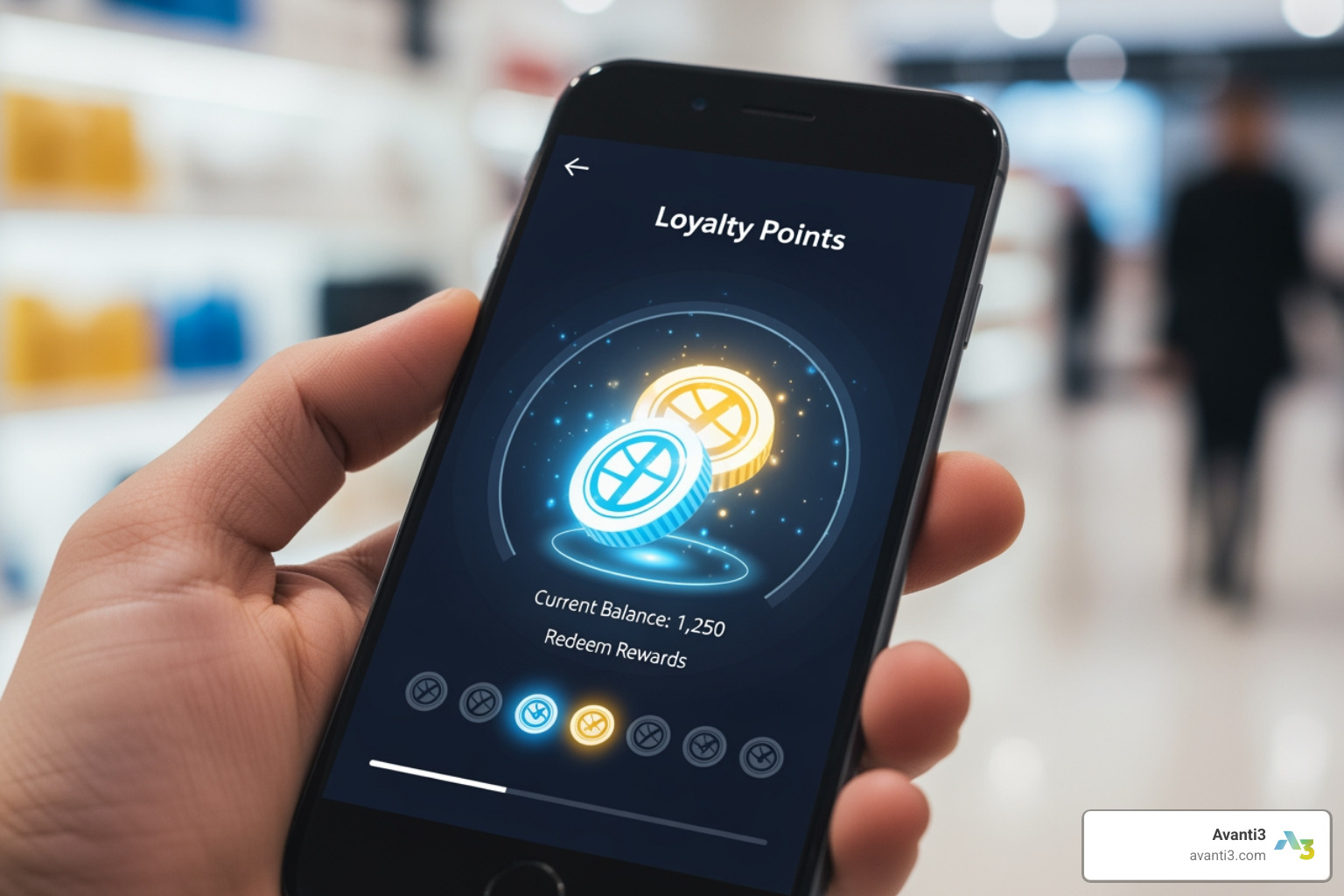


Why Brands Are Rethinking Customer Rewards
Tokenized loyalty programs are converting traditional points into digital assets on a blockchain. Instead of siloed rewards that expire, customers get tokens they truly own, can trade, and use across multiple brands. This shift gives customers true ownership of their rewards in digital wallets, allows for interoperability between partner brands, and creates tradable value. For businesses, blockchain provides transparent, tamper-proof tracking and lower operational costs via smart contracts.
The data is compelling: while 54% of loyalty members were inactive in 2022, early tokenized programs show dramatic results. Boba Guys’ blockchain-based program achieved an 800% ROI with a +67% visit frequency and +65% spend per member. With the global loyalty market growing at 9.5% annually through 2028 and payment networks like Visa reporting 13.7 billion tokens issued, the move toward tokenization is clear. These programs solve the customer frustrations of expiring points and limited options, creating flexible and engaging ecosystems that benefit both brands and their communities.
The Problem with Points: Why Traditional Loyalty is Fading
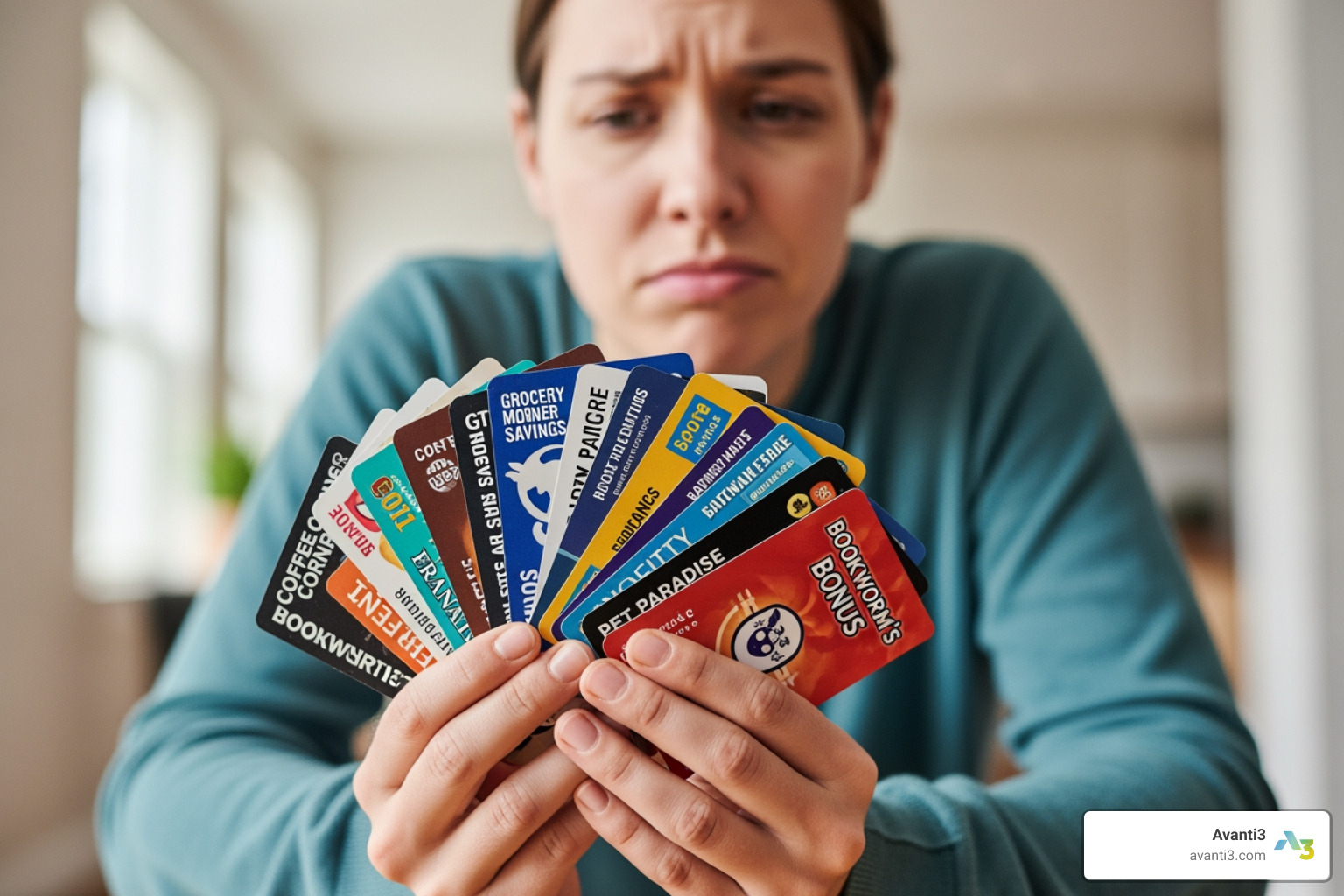
Traditional loyalty programs are struggling with serious challenges that tokenized loyalty programs are ready to solve. One of the biggest issues is low engagement; in 2022, a staggering 54% of loyalty members were inactive. This disinterest often stems from a perceived lack of value and sheer customer frustration. When rewards are restrictive, impersonal, or expire, customers lose interest. These transactional programs fail to build an emotional connection, leading a significant 61% of consumers to switch brands.
For businesses, these programs carry high costs and the complexity of scaling partnerships. Another major issue is the siloed experience. Points from one brand are non-transferable, forcing customers to juggle an average of 29 loyalty accounts. This fragmentation, combined with data security concerns over centralized databases, highlights the system’s flaws.
Despite these issues, the global loyalty market is growing by 9.5% each year up to 2028, showing that customers want better loyalty solutions. You can learn more here: The global loyalty market is growing. This is precisely where tokenized loyalty programs offer a modern approach.
The Core Mechanics and Benefits of Tokenized Loyalty Programs
From Points to Digital Assets: How Tokenization Works
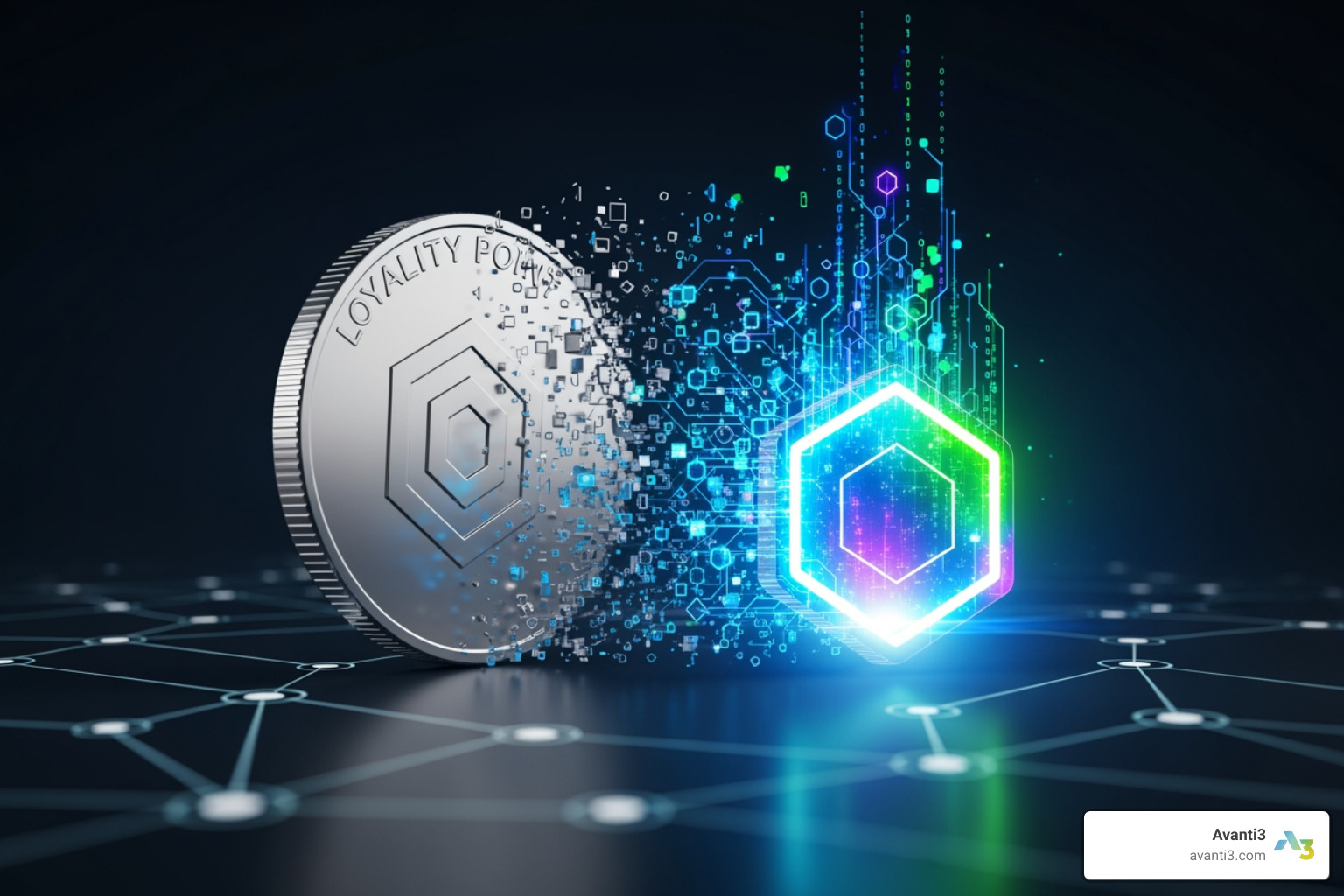
Tokenization converts loyalty points into digital tokens on a blockchain, fundamentally changing how value is managed. When a customer earns a reward in a tokenized loyalty program, it’s minted as a cryptographic token they own in a digital wallet. This process is powered by blockchain technology, a decentralized and immutable ledger ensuring security and transparency.
Smart contracts are key, acting as self-executing agreements that automate token issuance, transfer, and redemption. They enforce program rules automatically, reducing administrative costs and errors.
Loyalty tokens come in two main types:
- Fungible tokens (like ERC-20 on Ethereum or BEP-20 on BNB Chain): These are interchangeable and hold the same value, ideal for points representing a consistent value (e.g., 1 token = $0.01).
- Non-fungible tokens (NFTs): These are unique digital assets representing exclusive access, collectibles, or membership tiers. Their value is based on scarcity and desirability.
This shift from brand-controlled points to customer-owned assets is a core advantage, as shown below.
| Feature | Token-Based Loyalty | Traditional Points Programs |
|---|---|---|
| Technology | Blockchain (decentralized, immutable) | Regular databases (centralized, mutable) |
| Redemption | Quick and flexible, often across multiple brands | Often slow, limited to issuing brand, cumbersome |
| Transferability | Easy to trade, sell, or gift to others | Usually not transferable or tradable |
| Visibility | Full transaction visibility on public ledger | Limited transparency, opaque |
| Value | Can appreciate, user-defined value for NFTs | Fixed value, often depreciates |
| Security | Cryptographically secured, more robust | Vulnerable to centralized breaches |
| Expiration | Often no expiration (unless programmed by smart contract) | Often expire, leading to “breakage” (unredeemed points) |
| Ownership | True customer ownership of digital assets | Brand-controlled permission to use points |
A Win-Win: The Benefits for Businesses and Customers

Tokenized loyalty programs create a genuine win-win scenario for both businesses and their customers.
For Businesses, the benefits are substantial:
- Cost Reduction & Efficiency: Smart contracts automate reward management, cutting operational costs and financial liability from unredeemed points.
- Improved Partnerships & Network Effects: Interoperability allows for seamless cross-promotions without complex contracts, creating a powerful network effect.
- Richer Data Insights: On-chain data provides unparalleled, privacy-compliant insights for personalization, which is crucial as cookie-based tracking declines. Explore Personalized Data strategies.
- Increased Engagement & ROI: Boba Guys’ tokenized program saw an 800% ROI, +67% monthly visit frequency, and +65% spend per member.
- New Revenue Streams: Monetization is possible through token sales or secondary market fees.
- Stronger Brand Community: Giving customers a tangible asset fosters a deeper sense of belonging.
For Customers, the perks are equally compelling:
- Flexibility & Versatility: Use rewards across brands, convert them to digital money, or trade them. Singapore Airlines’ KrisPay lets flyers turn miles into digital money for retail.
- True Ownership & Control: Customers control their tokens in their own digital wallets, empowering them with a Digital Reward System.
- Tradability & Potential Value Appreciation: Tokens can be traded on secondary markets and may appreciate in value. A Deloitte study found 72% of members bought crypto, showing comfort with digital assets.
- Ease of Use: A single digital wallet can manage all tokens, simplifying the experience for mobile users.
- Improved Security & Trust: Blockchain’s transparency builds trust through a verifiable, tamper-proof system.
Creating a Connected Ecosystem: Interoperability and Secondary Markets
One of the most transformative aspects of tokenized loyalty programs is the creation of an interconnected ecosystem through interoperability and secondary markets. Tokens are no longer trapped within a single brand.
- Cross-Brand Redemption: Customers can earn tokens at a café and redeem them at a bookstore, exponentially expanding redemption options. Singapore Airlines’ KrisPay program is a prime example, allowing miles to be converted into digital money for partner stores.
- Secondary Markets: As customer-owned assets, tokens can be traded or sold on open marketplaces. This increases the rewards’ perceived value and reduces unredeemed point liability for businesses. Our NFT Marketplace Development expertise helps create these dynamic environments.
This interconnectedness creates a powerful network effect, where each new brand adds value to the entire ecosystem. It turns passive point collection into active participation in a brand’s economy.
Tokenization in Action: Real-World Examples
Tokenized loyalty programs are already being implemented by innovative brands across various industries.
- Starbucks Odyssey: While the initial program has concluded, Starbucks is integrating its learnings from using NFTs for unique digital collectibles and real-world experiences into its global loyalty strategy.
- Lacoste Undw3: The fashion brand’s token-enabled program offers holders exclusive access to a creative community platform with contests, games, and interactive events.
- Nike .SWOOSH: Nike engages its community by allowing token holders to influence new shoe designs, building a deeper connection with fans.
- Boba Guys’ ‘Passport’ Program: This NFT-based program achieved an 800% ROI, a 67% increase in visit frequency, and a 65% increase in spend per member.
- Shake Shack & Cash App: The restaurant offers Bitcoin rewards to customers who pay with Cash App, a simple entry into crypto-based loyalty.
- Airline Industry Adoption: Northern Pacific airline issues tokens for flights and status, while Singapore Airlines’ KrisPay improves flexibility by converting miles to digital money.
These examples show the versatility of tokenized programs, from tradable rewards to exclusive digital passes. For more on this exciting trend, you can explore More on Web3 loyalty schemes.
Building Your Program: Implementation, Challenges, and the Future of Loyalty
Key Considerations for Implementing Tokenized Loyalty Programs
Launching a tokenized loyalty program requires careful planning. It’s about building a new, engaging, and compliant ecosystem for your community.
- Technological Requirements: Choose a scalable, secure, and interoperable blockchain like Ethereum or faster alternatives like BNB Chain. Develop secure smart contracts to automate token management and provide users with easy-to-use digital wallets.
- CRM Integration: Ensure your new blockchain platform can communicate with existing CRM and sales systems for a unified view of customer data.
- Data-Driven Marketing: Leverage transparent on-chain data to create highly personalized rewards and campaigns. This is key for effective Personalized Data strategies.
- User Experience (UX): Design a simple, mobile-first interface. Since 69% of people prefer mobile access to loyalty programs, an intuitive UX is critical for adoption.
- Security Measures: Implement robust security, including data encryption, multi-factor authentication, and regular audits. For large token reserves, consider offline “cold storage.”
- Regulatory Compliance: Stay current with financial regulations (KYC/AML), consumer protection laws, and data privacy rules (GDPR).
- Growth and Education: Plan for scalability to handle high transaction volumes. Educate users on the benefits of tokens over points with clear guides and simple onboarding to drive adoption.
The Future Outlook for Tokenized Loyalty Programs: AI, DeFi, and the Metaverse
The journey for tokenized loyalty programs has just begun, but it faces potential challenges like user adoption, evolving regulatory compliance, and smart contract security. Managing the value fluctuation of tradable tokens is also a consideration.
Despite these problems, the future is bright with exciting integrations:
- DeFi (Decentralized Finance): Customers could stake or lend their loyalty tokens to earn additional rewards, turning them into income-generating assets.
- AI (Artificial Intelligence): AI can analyze on-chain data to deliver hyper-personalized reward recommendations, deepening AI Customer Engagement.
- Metaverse Rewards: Loyalty tokens could be spent on exclusive digital items, virtual land, or experiences in the metaverse.
- DAOs (Decentralized Autonomous Organizations): Token holders could gain voting rights on program features, empowering the community.
At Avanti3, we are building this future. We integrate Web3 technologies like NFTs, blockchain, and AI to provide brands with tools for superior engagement and fintech solutions. We craft unique digital experiences and robust rewards systems that build strong communities. This new standard in digital engagement is key to creating deeper connections between brands and their customers.
The future of loyalty is personal and engaging. By embracing tokenization, brands can build thriving communities where loyalty is truly valued.
Ready to transform your customer relationships? Let’s Explore Digital Engagement Platforms together.