

Why Retail Customer Engagement Technology Matters Now
Retail customer engagement technology refers to the software, platforms, and tools that enable brands to interact with customers across digital and physical channels—creating personalized, seamless experiences that drive loyalty and revenue. Here’s what you need to know:
Core Components:
- Customer Data Platforms (CDPs) – Unify customer data from all touchpoints for a 360-degree view
- AI & Machine Learning – Power personalized recommendations, predictive analytics, and automated messaging
- Omnichannel Platforms – Deliver consistent experiences across email, SMS, mobile apps, social media, and in-store
- Immersive Technologies – AR/VR, metaverse experiences, and digital rewards for next-level engagement
- Analytics & Measurement – Track real-time behavior, campaign performance, and customer lifetime value
Why It Matters:
- 66% of consumers will leave a brand if their experience isn’t personalized
- 86% of consumers say personalized experiences increase brand loyalty
- 70% of consumers will buy more when they have a seamless omnichannel experience
- Companies with top satisfaction rankings grow revenue 2.5x faster than competitors
The days of one-size-fits-all marketing are over. Customers now expect brands to recognize them, remember their preferences, and deliver relevant experiences whether they’re shopping online, browsing on mobile, or walking into a physical store. If retailers don’t lift their engagement strategy, they risk losing customers to competitors who do.
According to a Retail Dive report, 86% of retail executives face challenges with their marketing technology stacks—including limited integrations and data silos that prevent them from delivering the personalized experiences customers demand. Meanwhile, 73% of customers expect more AI interactions in their daily lives, and emerging technologies like AR, VR, and blockchain are reshaping what’s possible in retail engagement.
I’m Samir ElKamouny, and I’ve spent years helping businesses scale by combining big ideas with strategic execution in sales, marketing, and customer engagement. Throughout my career, I’ve witnessed how retail customer engagement technology transforms brands from transactional to relational, open uping financial freedom and sustainable growth for entrepreneurs who accept it.
The Modern Retail Customer Engagement Technology Stack
Gone are the days when a simple e-commerce website or an in-store POS system constituted a retailer’s entire technology footprint. Today, a modern retail customer engagement technology stack is a sophisticated ecosystem designed to meet the evolving demands of customers who no longer differentiate between online and offline shopping. To them, it’s all just shopping—and they expect it to be seamless, personalized, and delightful at every turn.
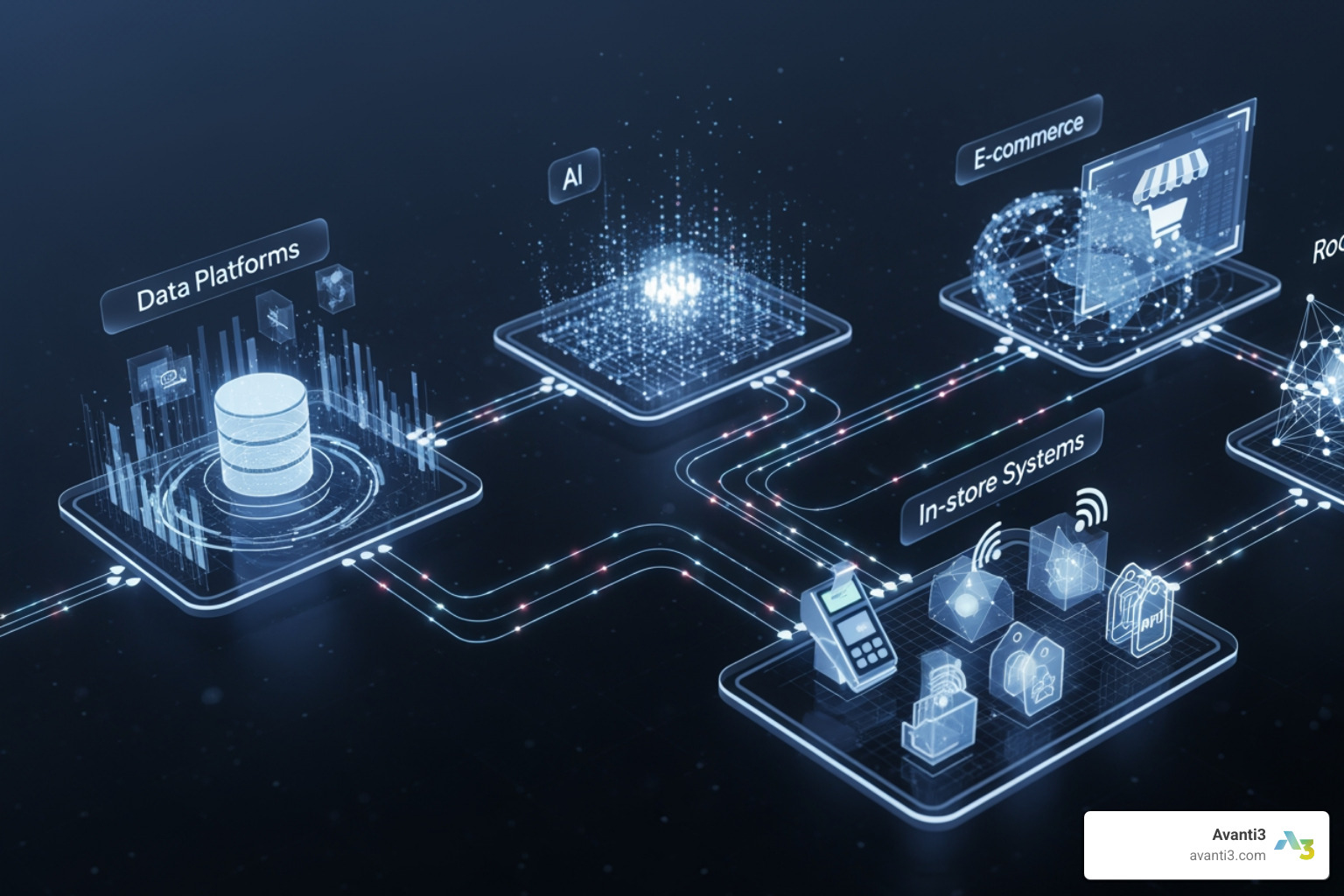
The truth is, building and maintaining this kind of stack isn’t easy. A staggering 86% of executives from retail, restaurant, and CPG brands report challenges with their martech stacks, often pointing to limited integrations and persistent data silos as the main culprits. These aren’t just technical headaches—they’re critical blockers that prevent brands from making real-time, data-driven decisions and delivering the consistent, personalized experiences customers demand.
At its heart, a modern tech stack enables what we call “phygital retail”—a seamless blend of physical and digital experiences. Whether a customer is browsing your website at midnight, chatting with an AI assistant on their phone, or walking into your flagship store, their journey should feel fluid and connected. Every interaction should recognize who they are, remember their preferences, and offer relevant suggestions. This holistic approach is essential for effective customer journey orchestration, where every touchpoint is thoughtfully designed to guide customers through their unique path.
The goal is simple: create a cohesive digital experience that fosters genuine engagement and lasting loyalty. Our Digital Engagement Solutions are built precisely for this purpose, helping brands stitch together disparate systems into a powerful, unified engagement platform that actually works.
The Foundation: Unifying Customer Data for a 360-Degree View
Imagine trying to build a skyscraper on shifting sand. That’s essentially what retailers are doing when they attempt to personalize customer experiences without a solid data foundation. The cornerstone of any effective retail customer engagement technology stack is the ability to unify customer data, creating what we call a “360-degree view” of each individual.
This is where Customer Data Platforms (CDPs) become invaluable. CDPs collect, unify, and activate customer data from every source imaginable—online browsing behavior, in-store purchases, email interactions, social media engagement, and more. Before CDPs, this data typically lived in isolated silos across different departments and systems. Your customer’s online browsing history might be completely separate from their in-store purchase records, leading to disjointed and often irrelevant communications.
With a CDP, retailers finally overcome these data silos and gain a single source of truth about their customers. This unified view reveals not just what a customer bought, but how they shop, what they prefer, when they’re most receptive to engagement, and why certain products resonate with them. It’s about understanding the complete customer story, not just isolated chapters.
This holistic approach is crucial for accelerating personalization at scale. When you have a complete picture of your customer’s inventory and operations, you can create truly Personalized Data strategies that feel natural rather than forced. It’s about remembering customer preferences, recognizing them across channels, and providing relevant offers and recommendations—something 91% of consumers say makes them more likely to shop with a brand.
By keeping retail customers at the center of your data strategy, you empower every interaction to be more meaningful and impactful. This isn’t just good practice—it’s the foundation that makes everything else possible.
The Engine: AI and Machine Learning for Hyper-Personalization
Once you have that pristine, unified data foundation, the next step is to release the power of AI and machine learning. These technologies are the “engine” that transforms raw data into actionable insights and hyper-personalized customer interactions. It’s no surprise that 73% of customers expect more interactions with AI in their daily lives—they’ve grown accustomed to its convenience and uncanny ability to know what they want.
AI and machine learning excel at analyzing vast datasets to predict behavior, personalize recommendations, and automate messaging at scale. Predictive analytics can anticipate what a customer might want next or even identify when they’re at risk of churning, allowing you to intervene before it’s too late. AI-powered recommendations—those “customers who bought this also bought” suggestions—have become so effective that brands like Avon have seen a 23% increase in conversions using them.
Sentiment analysis takes this further by analyzing customer feedback from reviews, social media comments, and support tickets to gauge how people feel about your brand. This allows you to respond proactively and address issues before they snowball into bigger problems. Meanwhile, automated messaging and virtual assistants handle a significant portion of customer inquiries, providing instant support around the clock. When implemented well, these AI agents can resolve 50% of customer interactions, freeing up human agents to focus on more complex, emotionally nuanced situations that truly benefit from a human touch.
The results speak for themselves. Renault used an AI-powered virtual assistant on WhatsApp and saw a 93% decrease in customer service wait times. That’s not just efficiency—that’s change.
This isn’t just about making things faster; it’s about making them better. AI helps deliver targeted campaigns, automate customer journeys, and ensure every message resonates with the person receiving it. Our AI Customer Engagement solutions leverage these advanced capabilities to create truly intelligent and responsive customer experiences, ensuring that personalization isn’t just a feature—it’s the core of every interaction.
The Future: Immersive Retail Customer Engagement Technology
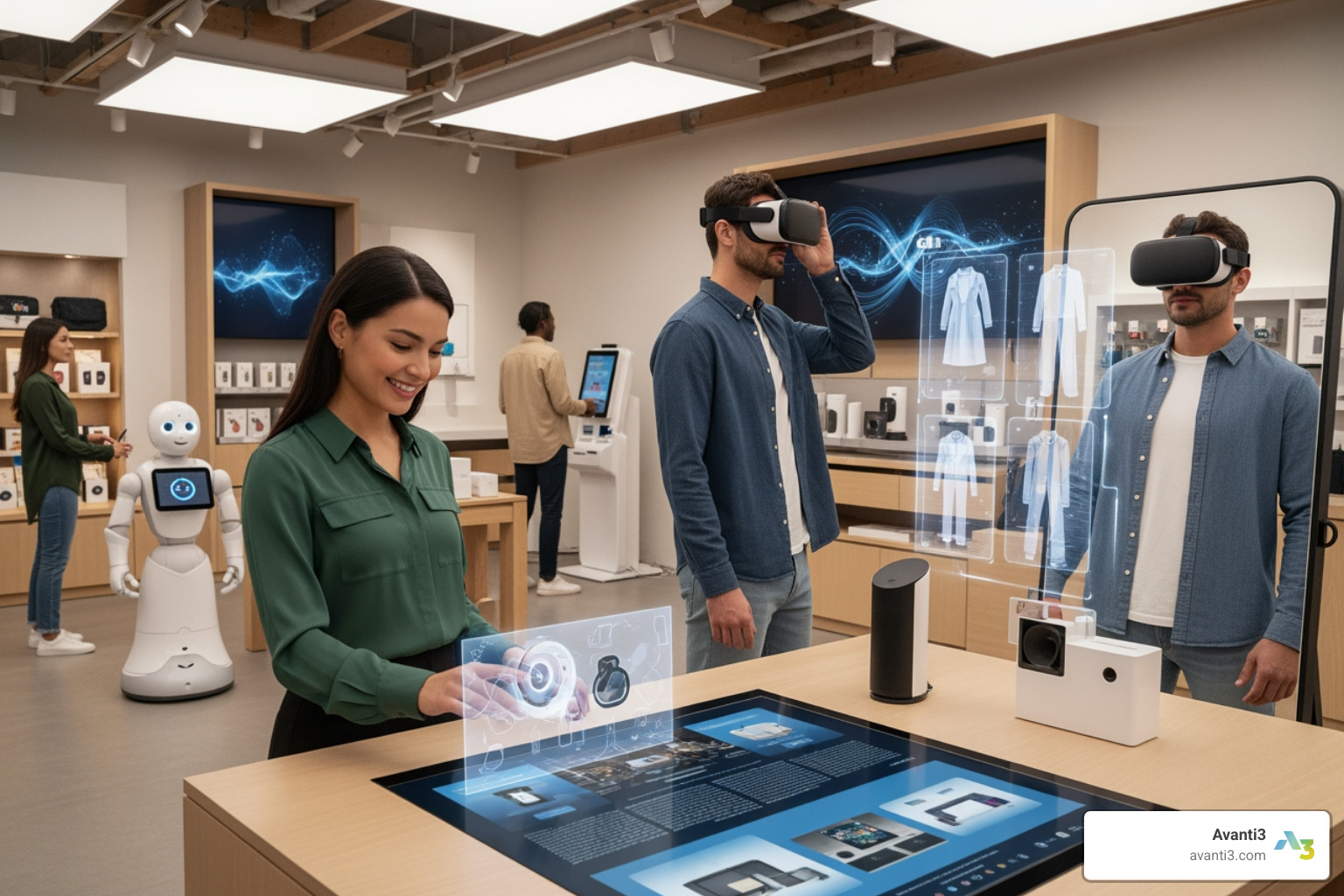
The horizon of retail customer engagement technology is brimming with immersive experiences that blur the lines between physical and digital worlds. Technologies like Augmented Reality (AR), Virtual Reality (VR), and the evolving metaverse are no longer science fiction—they’re becoming integral to how customers interact with brands, especially younger generations who expect these digital-first experiences.
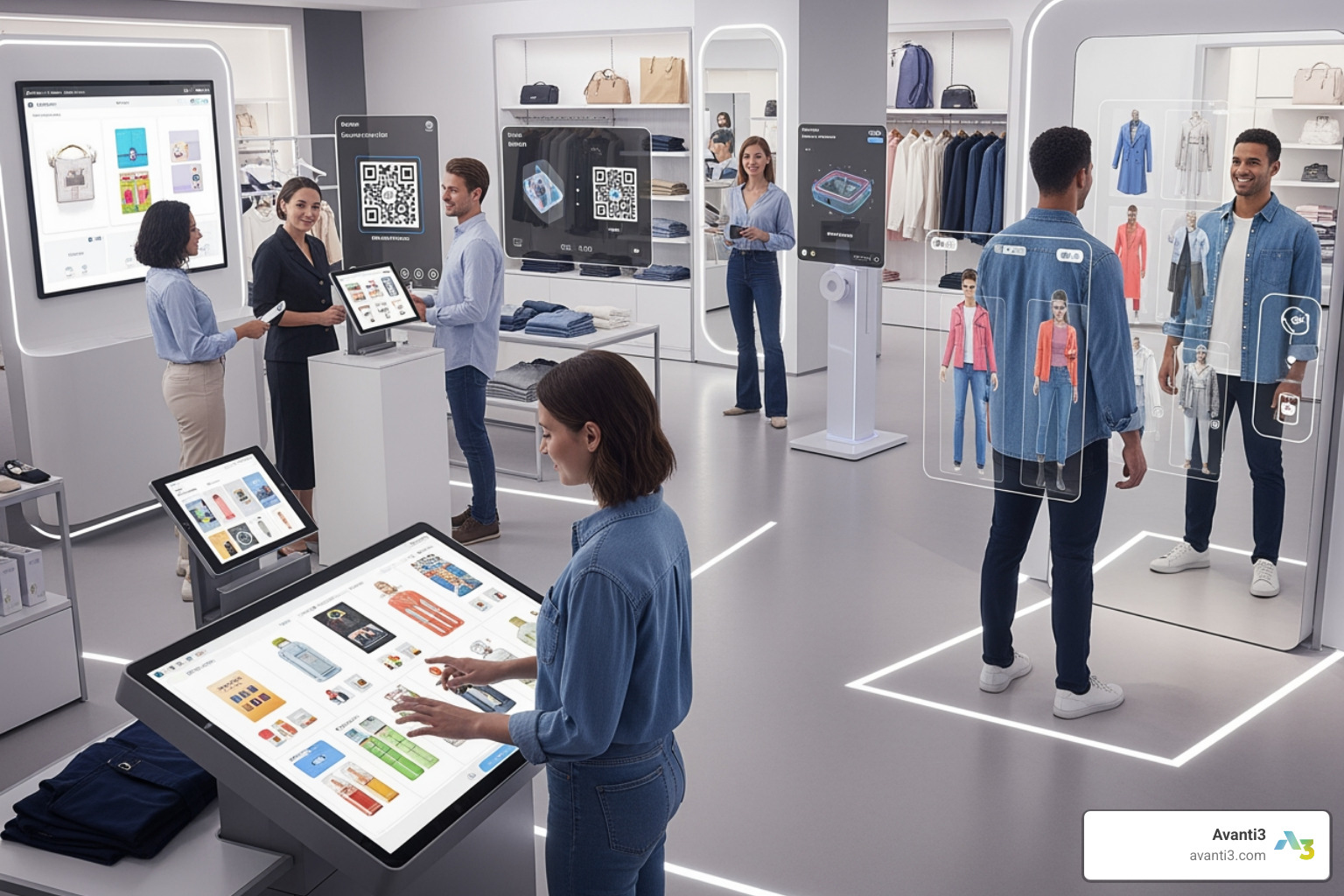
Augmented Reality (AR) overlays digital information onto the real world, typically through a smartphone camera. This technology offers incredible utility for retailers by reducing uncertainty in the buying process. Imagine trying on clothes virtually before buying them, visualizing how a new sofa would look in your living room, or seeing how a lipstick shade would look on your skin tone—all without leaving your home. These “virtual try-ons” bridge the confidence gap that often exists in online shopping. Our AR/VR Immersive Experiences are designed to bring these interactive possibilities to life, making shopping more engaging and confident.
Virtual Reality (VR) and the metaverse take this even further. The metaverse represents a persistent, interconnected virtual world where users can interact with each other, brands, and digital assets in entirely new ways. Retailers are meeting shoppers in the metaverse by creating virtual storefronts and immersive brand experiences. Tommy Hilfiger partnered with Roblox to create a digital game where customers could experience their products and community in a completely new dimension. This offers unique opportunities for engagement and community building, especially with younger demographics like Gen Z who are native to these digital spaces.
Beyond just experiences, emerging Web3 technologies like Non-Fungible Tokens (NFTs) are revolutionizing loyalty programs. NFTs can represent unique digital collectibles, exclusive access to events or products, or personalized rewards that deepen customer connection and provide a new form of digital ownership. This taps into the growing desire for unique digital assets and community within brand ecosystems. We’re seeing how Digital Reward System powered by NFTs can create novel incentives and foster a stronger sense of belonging among your most passionate customers.
The research on how immersive tech enhances the customer experience underscores the profound impact these technologies have on engagement and satisfaction, changing shopping from a transaction into a truly memorable adventure.
The Goal: Driving Loyalty and Lifetime Value with Technology
All this sophisticated retail customer engagement technology serves a singular, crucial purpose: to drive customer loyalty and increase Customer Lifetime Value (LTV). It’s a well-established truth that loyal customers aren’t just repeat buyers—they’re advocates who contribute significantly to a brand’s sustained success. According to Harvard Business Review, loyal customers drive significant revenue growth, with companies at the top of their satisfaction rankings growing revenue roughly 2.5 times as fast as their peers.
Technology helps foster this loyalty through several interconnected strategies. Hyper-personalization is no longer optional—86% of consumers say personalized experiences increase their loyalty. By leveraging CDPs and AI, brands can deliver messages, offers, and product recommendations that resonate deeply with individual customers. NA-KD increased customer lifetime value by 25% simply by unifying customer data and creating personalized campaigns across multiple channels.
Seamless omnichannel experiences eliminate friction and build trust. When customers experience consistent interactions across all touchpoints—whether physical or digital—their satisfaction soars. In fact, 70% of consumers say a seamless experience will lead them to purchase more from a company. This consistency signals that you truly understand and value them as individuals, not just transaction numbers.
Robust loyalty programs powered by modern technology go far beyond simple points systems. Our Community Loyalty Programs leverage gamification to motivate customers and build habits, making engagement more fun and rewarding. With Web3 technologies, these programs can offer unique digital assets like NFTs and exclusive community access, forging deeper emotional connections that transcend traditional loyalty mechanics.
Proactive customer service enabled by AI-powered tools and unified customer data means faster, more efficient, and more personalized support. When issues are resolved quickly and empathetically, positive brand sentiment builds naturally. Additionally, championing social causes resonates strongly with today’s purpose-driven consumers, especially Gen Z—24% of whom will boycott brands that don’t align with their values. Technology helps brands communicate their values authentically and engage customers in meaningful initiatives. Levi’s, for example, encourages thrift and secondhand shopping to keep denim out of landfills, engaging customers in their sustainability efforts.
Measuring the effectiveness of these technology investments is paramount. Key Performance Indicators (KPIs) like customer retention rates, average order value, conversion rates, and Customer Lifetime Value provide tangible evidence of ROI. Livestream commerce conversion rates, for instance, are approaching 30%—a testament to the power of engaging, technology-enabled experiences. By continually analyzing these metrics and conducting impact analysis, we can refine strategies and ensure that technology investments are truly driving long-term value, not just creating impressive dashboards.
Conclusion: Building Your Future-Proof Engagement Strategy
The landscape of retail customer engagement technology is vast and constantly evolving, but the destination is clear: creating meaningful, lasting relationships with your customers that drive real business results. We’ve walked through the essential building blocks—from unifying customer data with CDPs to using AI for hyper-personalization, and exploring the exciting frontier of immersive technologies like AR, VR, and the metaverse. Each piece plays a vital role in changing casual shoppers into loyal brand advocates.
The truth is, implementing these technologies isn’t always straightforward. With 86% of retail executives reporting challenges with their martech stacks, you’re not alone if you’re feeling overwhelmed by data silos, integration headaches, and the breakneck pace of innovation. But here’s the good news: success doesn’t require perfection from day one. It requires commitment, internal collaboration, and a willingness to experiment and learn.
The most successful retailers foster a culture where teams work together across departments—marketing talks to IT, customer service collaborates with sales, and everyone shares insights and learnings. This internal collaboration breaks down the silos that plague technology stacks and creates a unified approach to customer engagement.
Investing in loyalty isn’t just about implementing new technology—it’s about fundamentally shifting how you think about customer relationships. Loyal customers drive revenue growth 2.5 times faster than average. When you prioritize their experience, personalize their journey, and meet them seamlessly across every channel, you’re not just improving satisfaction scores. You’re building the foundation for sustainable, long-term growth.
Navigating this complex technology landscape often requires expertise that goes beyond what most internal teams can develop alone. The importance of a strategic partner who understands both the technology and the retail landscape cannot be overstated. That’s where Avanti3 comes in.
We specialize in integrating Web3 technologies like NFTs, blockchain, AR/VR, and AI to create customizable engagement tools and fintech solutions that truly stand out. Our approach helps brands open up unique digital experiences, build robust rewards systems, and foster genuine community connections—the kind that keep customers coming back not just because they need to, but because they want to.
Future-proofing your brand means staying ahead of customer expectations, not just keeping up with them. It means being ready to accept new technologies as they emerge while maintaining the human connection at the heart of every interaction. By combining the right technology stack with strategic thinking and expert partnership, you can create customer experiences that don’t just meet today’s standards—they set tomorrow’s.
The retail world is changing faster than ever, but the fundamentals remain constant: understand your customers deeply, engage them authentically, and reward their loyalty meaningfully. The technology is simply the tool that makes it all possible at scale.
To learn how to build a cohesive and powerful customer experience, explore our Digital Engagement Platforms.