

Why NFT Affiliate Marketing is Your Gateway to Web3 Earnings
NFT affiliate marketing lets you earn commissions by promoting NFT-related products and services to your audience. Here’s what you need to know:
Quick Answer: NFT Affiliate Marketing Opportunities
- NFT Marketplaces – Earn 10-50% of trading fees (OpenSea, Rarible, LooksRare)
- NFT Creation Tools – Get 20-50% commissions on software subscriptions
- Gaming Platforms – Promote play-to-earn games and virtual assets
- Educational Courses – Earn 15-45% on NFT and Web3 training programs
- Financial Services – Commission on crypto lending and NFT-backed loans
The NFT market reached over $24.3 billion in sales during 2022, and despite market fluctuations, the number of active NFT buyers and sellers has grown every quarter since Q2 2020. This growth creates massive opportunities for affiliates who can bridge the gap between curious newcomers and valuable NFT products.
Unlike traditional affiliate marketing, NFT programs often offer higher commission rates (sometimes 50% or more) because the industry values community growth and word-of-mouth promotion. Many payments come in cryptocurrency, and some programs use smart contracts for instant, transparent payouts.
The beauty of NFT affiliate marketing lies in its simplicity – you don’t need to create NFTs, understand blockchain technology deeply, or invest thousands of dollars. You just need to connect the right people with the right products.
I’m Samir ElKamouny AV, and I’ve helped scale countless businesses through strategic marketing and sales optimization, including ventures in the rapidly evolving Web3 and NFT affiliate marketing space. My experience has shown me that the most successful affiliates focus on authentic promotion and genuine value creation for their communities.
NFT affiliate marketing word guide:
What is NFT Affiliate Marketing (And Why Should You Care?)
Think of NFT affiliate marketing as earning a referral fee for introducing people to the Web3 tools, platforms and services they actually need. Whenever someone buys through your special link, you collect a commission – no inventory, no customer-service headaches.
Non-Fungible Tokens certify unique digital ownership of artwork, collectibles, virtual land, and more. Because the concept is still new to many consumers, they rely heavily on trusted recommendations. That’s where affiliates shine.
While traditional programs usually pay 3-8%, many NFT programs start at 20-50%, and smart contracts can automate both tracking and instant payouts. Once your link is clicked and the purchase is confirmed on-chain, a contract splits the revenue and ships your share straight to your wallet. No invoices, no “missing” payments.
The power of word-of-mouth marketing is amplified in Web3, where communities value authenticity over banner ads. Combine that with generous commissions and you have a recipe for meaningful, recurring income.
More info about NFT Marketplace Development explains how modern platforms are evolving – and why there’s never been a better time to position yourself as the helpful guide who connects newcomers with the right solutions.
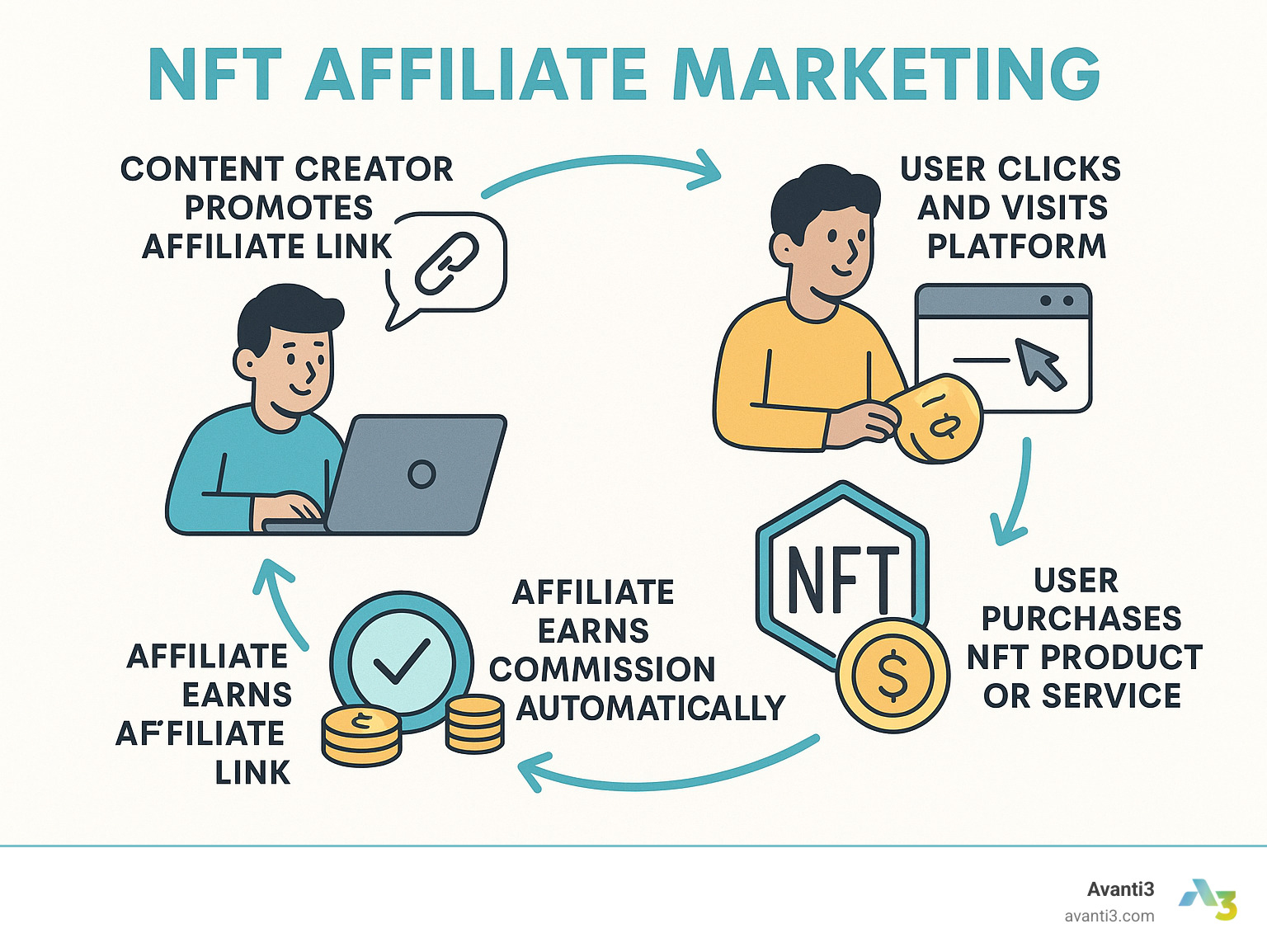
How the Process Works from Click to Commission
- You receive a unique link with tracking parameters (your digital fingerprint).
- A cookie – or, on many Web3 sites, a wallet binding – ties the visitor to your ID for 30-365 days.
- When the visitor completes a transaction, a smart contract allocates your share automatically.
- Payment arrives in crypto (often ETH or a platform token) or, if you prefer, in fiat through PayPal/bank transfer.
The blockchain makes the whole flow transparent: every commission is publicly verifiable.
Key Benefits for Earners

- Tiny start-up cost – only an internet connection and willingness to learn.
- Passive income – evergreen content keeps earning long after it’s published.
- Work from anywhere – set your own hours, no warehouse or office needed.
- Above-average commissions – 20-50% (sometimes higher) beats most affiliate niches.
- Ecosystem impact – by educating users you actively grow Web3 adoption.
- No product creation or support – the vendor handles everything.
More info about Digital Reward System shows how blockchain-based incentives make these programs even more engaging and transparent.
5 Types of NFT Affiliate Programs to Explore
The world of NFT affiliate marketing offers five main categories of programs, each with unique opportunities and commission structures. Think of this as your menu of options – you don’t need to dive into all of them at once, but understanding what’s available helps you find the perfect fit for your audience and interests.
The five main categories are:
- NFT Marketplaces
- NFT Creation & Minting Tools
- Play-to-Earn (P2E) & NFT Gaming Platforms
- NFT-Related Financial Services (NFT-Fi)
- Web3 & NFT Educational Courses
Each category attracts different types of users and offers varying commission rates. Some focus on one-time purchases while others provide recurring revenue opportunities. The key is matching your content style and audience with the right program type.
NFT marketplaces typically offer lower commission percentages but higher transaction volumes. Educational courses might have fewer sales but much higher commission rates per sale. Gaming platforms often provide the most engaged audiences, while financial services target more sophisticated users with bigger budgets.
Your success depends less on picking the “best” category and more on choosing one that aligns with your genuine interests and knowledge. If you’re passionate about gaming, promoting play-to-earn platforms will feel natural. If you love teaching, educational courses might be your sweet spot.
The beauty of this space is that you can start with one category and gradually expand as you learn what resonates with your audience. Many successful affiliates begin by focusing deeply on one area before branching out to complementary categories.
1. NFT Marketplaces
Think of NFT marketplaces as the busy digital equivalent of art galleries mixed with trading floors. These platforms are where the magic happens – creators showcase their work, collectors find new pieces, and traders hunt for the next big opportunity.
NFT affiliate marketing with marketplaces taps into this constant flow of activity. Every time someone buys, sells, or trades an NFT, the platform takes a small cut (usually 2.5-10% of the transaction). As an affiliate, you get a slice of those trading fees when you bring new users to the platform.
Here’s what makes marketplace affiliate programs interesting: you earn from both primary sales (when creators first mint and sell their NFTs) and secondary sales (when collectors resell to other buyers). This means each person you refer can potentially generate multiple commissions over time as they continue trading.
The math works like this – if your referral sells an NFT for 10 ETH on a platform charging 2.5% fees, the marketplace earns 0.25 ETH. Your commission might be 50% of that fee, putting 0.125 ETH in your pocket. Not bad for a single referral!
Building a user base for marketplaces is all about understanding what different people want. Art collectors gravitate toward digital paintings and photography. Gamers get excited about character skins and virtual items. Sports fans love officially licensed team collectibles. The variety means you can find a niche that genuinely interests you.
The beauty of promoting marketplaces is their universal appeal. Almost anyone curious about digital ownership can find something valuable on these platforms. Your content can range from simple “how to buy your first NFT” guides to deep dives analyzing trending collections and market movements.
What’s particularly exciting is how these platforms are constantly evolving. New features like virtual galleries, social trading, and creator tools keep giving you fresh content angles to explore with your audience.
More info about NFT Digital Art Sales shows how artists and platforms are revolutionizing digital art monetization through blockchain technology.
2. NFT Creation & Minting Tools
If you want to earn serious money with NFT affiliate marketing, NFT creation tools are where the big commissions live. These platforms solve a real problem – they let anyone create and mint NFTs without needing to code or understand blockchain technology.
NFT-as-a-Service (NaaS) platforms are like the WordPress of the NFT world. They provide drag-and-drop interfaces, template libraries, and automated minting processes that turn complex blockchain operations into simple point-and-click actions.
Your target audience here includes artists who want to tokenize their work, small businesses exploring blockchain marketing, and entrepreneurs building NFT-based projects. Since these customers often need ongoing support and advanced features, they’re willing to pay premium prices for quality tools.
The commission potential is impressive because you’re dealing with high-value transactions. Subscription models typically offer 20-50% recurring commissions, which means a single referral to a $200/month platform could put $40-100 in your pocket every month for as long as they stay subscribed.
One-time purchase fees for premium features or enterprise packages can generate even larger payouts. Some programs offer $500-1,000+ commissions for enterprise sales, making a single successful referral worth more than most people earn from dozens of traditional affiliate sales.
The secret to promoting these tools effectively is showing, not just telling. Create tutorials that walk viewers through the entire NFT creation process. Share case studies of successful creators who’ve built profitable NFT businesses using these platforms. Empowering non-technical users is the core value proposition – your content should break down barriers and prove that anyone can participate in the NFT economy.
What makes these affiliate programs particularly attractive is that you’re helping solve real business problems. When someone uses your link to sign up for an NFT creation platform and goes on to launch a successful collection, you’ve genuinely contributed to their success while earning substantial commissions.
3. Play-to-Earn (P2E) & NFT Gaming Platforms
Gaming might just be the most exciting frontier for NFT affiliate marketing. Think about it – gamers are already comfortable spending money on digital items, and they understand the value of rare, powerful gear. Now imagine those items are NFTs that players can actually own, trade, and sell for real money.
In-game assets are the heart of play-to-earn gaming. These aren’t just cosmetic items sitting in your inventory – they’re NFTs representing characters, weapons, armor, and tools that players need to compete effectively. When someone buys a legendary sword NFT through your affiliate link, you earn a commission on what could be a substantial purchase.
Virtual land creates some of the most valuable opportunities in gaming affiliate marketing. Players buy plots of digital real estate to build on, rent out, or develop into profitable ventures. As these metaverse games grow more popular, land values often increase, making early purchases feel like smart investments rather than just gaming expenses.
Character skins and cosmetic items might seem less important, but don’t underestimate their appeal. Gamers love expressing their personality and showing off their achievements. The traditional gaming cosmetics market is worth billions annually, and NFT versions add the bonus of true ownership and resale value.
Gaming guilds represent a unique affiliate opportunity that many people overlook. These organizations help new players get started by lending them NFT assets, providing training, or offering scholarships to expensive play-to-earn games. Guild membership often involves subscription fees or revenue sharing, creating recurring commission opportunities.
Revenue from new player sign-ups typically works through referral programs where you earn when someone creates an account and starts playing. The best programs also pay milestone bonuses when your referred players reach certain levels, make their first purchase, or achieve specific in-game accomplishments.
Commissions on in-game purchases provide ongoing earning potential because successful games create economies where players regularly spend money. Whether it’s upgrading equipment, buying new characters, or purchasing virtual real estate, active players generate multiple commission opportunities over time.
The gaming audience is particularly valuable for affiliate marketers because they’re already comfortable with digital ownership concepts. They understand why a rare item might be worth hundreds of dollars, and they’re willing to invest in things that improve their gaming experience or earning potential.
A growing and engaged audience makes gaming one of the most promising areas for NFT affiliate marketing. These players don’t just make one purchase and disappear – they become part of gaming communities, participate in events, and continue spending money as games evolve and expand.
4. NFT-Related Financial Services (NFT-Fi)
The world of NFT-Fi (NFT Finance) represents one of the most sophisticated and potentially lucrative areas of NFT affiliate marketing. Think of it as traditional finance meeting digital collectibles – and the commission opportunities can be absolutely massive.
NFT-backed loans are revolutionizing how collectors access liquidity. Instead of selling their prized digital assets, owners can use them as collateral to borrow money. It’s like taking out a loan against your house, except your “house” is a rare digital artwork or gaming character. The borrower keeps ownership while accessing cash they need.
The beauty for affiliates is that these loans often involve substantial amounts – we’re talking tens of thousands or even hundreds of thousands of dollars. When you earn a commission on loan origination fees, even a small percentage translates to significant earnings.
Fractional ownership platforms are democratizing access to expensive NFTs. $69 million Beeple artwork? Fractional ownership lets regular people buy small shares instead of needing millions upfront. These platforms charge management fees and transaction costs, sharing portions with affiliates who bring in new investors.
Staking platforms offer NFT holders a way to earn passive income by locking their assets in smart contracts. Users earn rewards in cryptocurrency or additional NFTs, similar to earning interest on a savings account. The platforms profit from fees or taking a percentage of rewards generated.
Earning commissions on interest or loan origination fees can be incredibly rewarding because financial services involve much larger dollar amounts than typical NFT purchases. A 1% commission on a $100,000 NFT-backed loan still puts $1,000 in your pocket from a single referral.
However, this is definitely a more advanced niche that requires solid understanding of both NFTs and decentralized finance concepts. Your audience needs to be sophisticated enough to grasp the risks and benefits of using digital assets as financial instruments. You can’t just throw around terms like “yield farming” and “liquidity pools” without proper explanation.
The earning potential is substantial precisely because financial services typically involve larger transaction amounts than simple NFT marketplace purchases. But the trade-off is a smaller, more specialized audience that requires extensive education about mechanics and risks involved.
More info about AI Digital Marketing explores how artificial intelligence is changing financial services marketing and customer acquisition in the Web3 space.
5. Web3 & NFT Educational Courses
NFT affiliate marketing becomes incredibly rewarding when you’re promoting educational content because you’re genuinely helping people learn valuable skills. There’s something deeply satisfying about earning commissions while empowering others to succeed in the Web3 space.
Online courses represent one of the most straightforward affiliate opportunities in the NFT world. The value proposition is crystal clear – people invest in education to gain skills that can transform their careers or create new income streams. Course topics span everything from “Your First NFT Purchase” guides for complete beginners to advanced training on smart contract development and NFT project marketing.
Webinars and live training sessions often convert much better than pre-recorded courses because they create that human connection. People love the opportunity to ask questions directly and learn alongside others. Many course creators recognize this value and offer higher commissions for promoting their live events – sometimes 50% or more.
E-books and digital guides serve as perfect entry points for people who want to dip their toes into NFT knowledge without making large investments. While individual commissions might be smaller (maybe $10-30 per sale), these products often have higher conversion rates because the barrier to purchase is so low.
The real magic happens when you focus on building authority by educating your audience first. When you consistently provide valuable free content about NFTs, blockchain technology, or Web3 trends, people naturally start viewing you as a trusted expert. This trust creates a natural pathway to affiliate promotions that don’t feel pushy or sales-heavy.
High commission percentages make education affiliate marketing particularly attractive. It’s common to see 30-50% commissions on course sales. A $500 NFT marketing course with 40% commission puts $200 in your pocket per sale, and educational products often convert better than other digital products because people understand the long-term value of knowledge.
The educational market serves beginners entering the space, which creates a constantly refreshing audience as mainstream adoption grows. Your content can evolve naturally – starting with basic concepts like “What is an NFT?” and progressing to advanced strategies as your audience becomes more sophisticated.
What makes educational affiliate marketing sustainable is that you’re solving real problems. People genuinely need to understand this technology to participate safely and successfully. When you recommend a course that helps someone avoid costly mistakes or launch their first successful NFT project, you’ve created real value for everyone involved.
More info on our Blog provides ongoing insights into Web3 education trends and effective strategies for building authority in emerging technology spaces.
Getting Started with NFT Affiliate Marketing: Your 5-Step Launchpad

Launching an NFT affiliate marketing business is simpler than most people think. Follow these five streamlined steps and you’ll move from curious observer to paid promoter in record time.
1. Pick a Clear Niche
Trying to serve “everyone interested in NFTs” is the fastest route to burnout. Decide whether you’ll talk to art collectors, gamers, crypto investors or developers, then learn their pains and language.
2. Build a Single Strong Platform
Start with one primary channel—blog, YouTube, Twitter or Discord—so you’re not spreading yourself thin. Consistency beats omnipresence. Provide tutorials, reviews and insights before dropping any links. Trust first, promotion second.
More info about Web3 Community Management
3. Choose 1-2 Relevant Programs
Match offers to your audience, check commission rates, cookie windows and payout terms, and read the fine print. Beginning with just a couple of programs keeps things manageable.
4. Promote Transparently
Always disclose that links are affiliate links, weave recommendations naturally into helpful content, and skip spammy tactics. Authenticity is your long-term asset.
More info about NFT Engagement Tools
5. Measure & Improve
Use the dashboards each program supplies: double down on content that converts, test different headlines or call-to-actions, and keep refining. Web3 moves fast—so should your optimizations.
Small, continual tweaks compound quickly, turning that first commission notification into a dependable revenue stream.
Top Strategies for Promoting Your NFT Affiliate Links
The best affiliates combine high-value content with genuine community interaction.
Market trends from Chainalysis confirm that NFT adoption keeps expanding, so staying visible where conversations happen is key.
Create Evergreen SEO Content
Well-researched blog posts, “best of” lists and step-by-step guides rank in search engines, sending you traffic—and commissions—around the clock. Focus on long-tail keywords such as “best NFT marketplace for photographers” to avoid heavy competition.
More info about our Digital Marketing Category
Engage Where Your Audience Hangs Out
Twitter threads, Reddit replies and Discord AMAs let you answer questions in real time and share links when they genuinely solve a problem. Become a trusted voice, not a link-dropper.
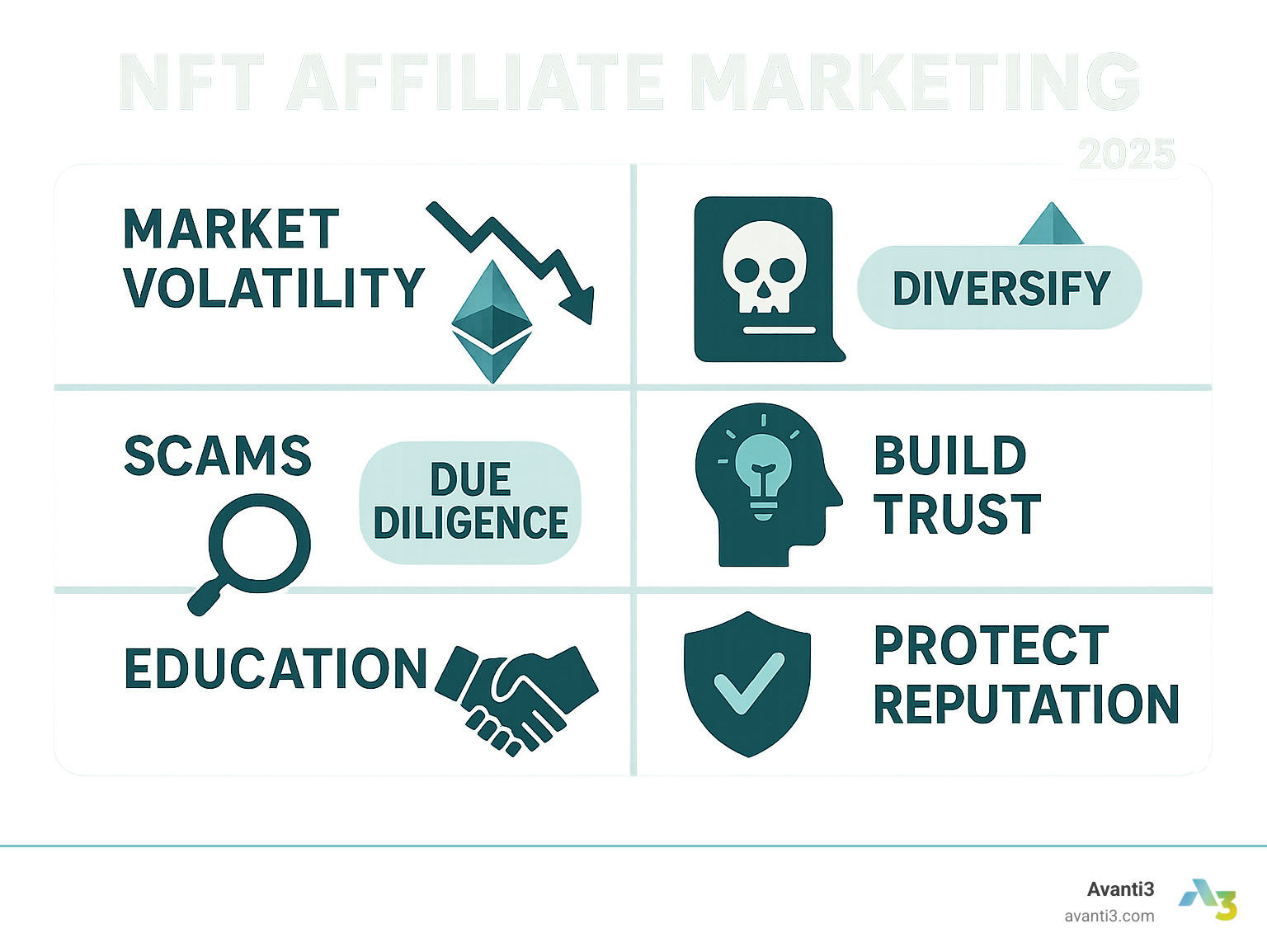
Watch Out for Common Pitfalls
- Diversify to protect yourself from market swings.
- Verify every project before recommending—scams hurt your reputation.
- Stay compliant with disclosure rules in your jurisdiction.
By focusing on education, transparency and consistency, you position yourself as a long-term resource rather than a fleeting hype account.
Frequently Asked Questions about NFT Affiliate Marketing
Is NFT affiliate marketing still profitable?
Yes. Transaction volume keeps growing and many programs offer 20–50% commissions—far above traditional rates—making it an attractive, sustainable income stream for helpful affiliates.
Do I need to be a crypto expert to start?
No. Start with the basics, be upfront about what you’re learning, and specialise in a single area. Most programs provide educational materials you can learn from—and share with your audience.
How much can I realistically earn?
Anywhere from a few hundred dollars a month as a side hustle to full-time income. Results depend on audience size, engagement and the types of programs you promote, but high-ticket Web3 tools can pay hundreds per sale.
Conclusion
NFT affiliate marketing lets you tap into the expanding Web3 ecosystem without writing code or minting your own collection. With commissions regularly north of 20%—and sometimes recurring—it’s one of the most lucrative, low-barrier ways to earn online today.
Success belongs to affiliates who prioritise education and transparency. Do that, and every piece of content becomes an asset that keeps working for you long after it’s published.
Avanti3 is building the engagement layer that powers this future—integrating NFTs, blockchain, AR/VR and AI so creators and brands can reward, engage and grow their communities.
Ready to take the first step? Explore how to build powerful digital engagement platforms and start turning your Web3 curiosity into real-world income.