

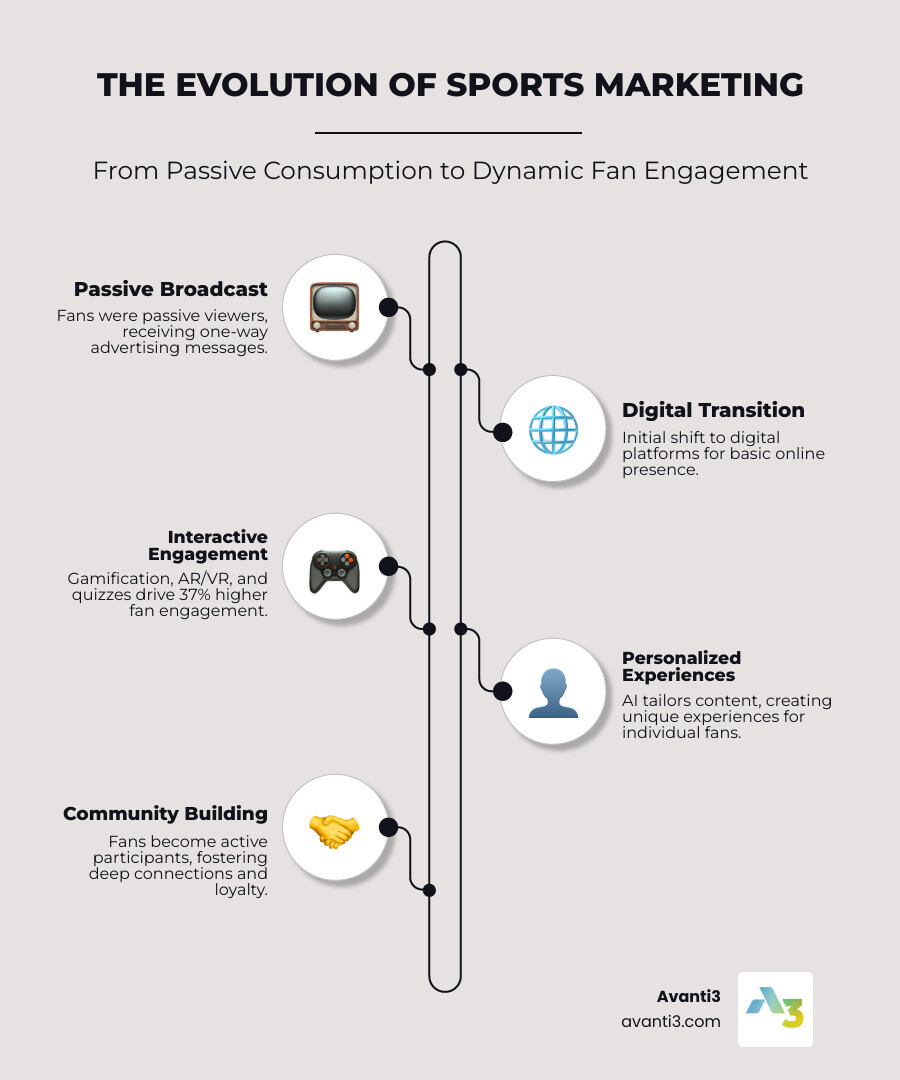
The Evolution of Sports Marketing: From Passive Viewing to Active Engagement
Interactive sports marketing is changing how fans connect with their favorite teams and brands by creating two-way digital experiences that go far beyond traditional advertising. Instead of passively watching commercials, fans now participate in games, access exclusive content, and engage with immersive technologies like AR and VR.
Key Interactive Sports Marketing Methods:
- Gamification – Quizzes, challenges, and reward systems that drive 37% higher engagement
- Immersive Technology – AR/VR experiences that blur the line between fan and player
- Digital Collectibles – NFTs and exclusive content that create lasting value
- Real-time Interaction – Live polls, social media campaigns, and instant feedback
- Personalized Experiences – AI-driven content custom to individual fan preferences
The numbers tell the story of this massive shift. The sports market generates $55.7 billion in revenue and is projected to grow at 5.19% annually through 2029. Meanwhile, sports sponsorship has reached $115 billion with 8.7% annual growth. Yet traditional viewership is declining – only 47% of Gen Z identifies as sports fans compared to nearly 70% of Millennials.
This disconnect has forced brands and teams to rethink their approach. The days of one-way broadcast advertising are ending. Today’s fans expect authentic interaction, personalized content, and meaningful participation in the sports they love.
The shift represents more than just new technology – it’s about building genuine communities. When fans can compete in virtual challenges, access behind-the-scenes content, or collect digital memorabilia, they transform from passive viewers into active participants. This deeper engagement drives 19% higher conversion rates and creates the emotional connections that fuel long-term brand loyalty.
I’m Samir ElKamouny AV, and I’ve spent years helping brands and creators harness cutting-edge technology to build meaningful audience connections through interactive sports marketing campaigns. My experience scaling businesses has shown me that the future belongs to those who can turn spectators into active community members through innovative digital experiences.
Interactive sports marketing basics:
What is Interactive Sports Marketing and Why is it a Game-Changer?
Think about the last time you watched your favorite team play. Did you just sit there quietly, or did you find yourself checking social media, voting in live polls, or sharing your reactions online? That’s the difference right there – interactive sports marketing recognizes that modern fans don’t want to be passive observers anymore.
We’ve moved way beyond the old playbook of slapping a logo on a jersey and calling it a day. Today’s fans crave authentic participation. They want to feel like they’re part of the team’s journey, not just watching from the sidelines. This shift has forced brands to completely rethink their approach to sports marketing.
The magic happens when brands stop talking at fans and start having real conversations with them. Interactive sports marketing creates those meaningful touchpoints where fans can engage, compete, and connect with both the brand and other fans. It’s about building genuine community rather than just broadcasting messages.
This change is driving what we call Return on Relationship (ROR) – a concept that goes far deeper than traditional ROI metrics. Instead of just measuring clicks and conversions, brands are focusing on building lasting emotional connections that turn casual viewers into passionate advocates.
What makes sports marketing so powerful is the intense emotional connection fans already have with their teams. Sports fans don’t just like their teams – being a fan becomes part of their identity. They wear the colors, know the stats, and feel genuine joy or heartbreak based on game outcomes. When brands tap into this passion through interactive experiences, they don’t just gain customers – they become part of the fan’s personal sports story.
The beauty of interactive sports marketing lies in its ability to improve these natural fan behaviors. Instead of interrupting the game experience with traditional ads, smart brands create experiences that add value to what fans already love doing – discussing plays, predicting outcomes, and celebrating victories together.
For brands looking to master this approach, understanding Digital Brand Engagement principles is essential. The key elements of successful sports marketing provide additional insights into building campaigns that truly resonate with today’s connected fans.
The game has changed, and the brands winning today are those that understand fans want to be players, not just spectators.
Key Trends Shaping the Future of Fan Engagement
The sports marketing world is changing faster than a last-second touchdown drive. What worked five years ago feels ancient today, and what’s coming next will blow your mind. The numbers don’t lie – with Gen Z viewership declining to just 47% compared to nearly 70% of Millennials identifying as sports fans, we’re facing a wake-up call that demands action.
The solution isn’t to panic. It’s to accept the incredible technologies and strategies that are reshaping how fans connect with their favorite teams and brands.
Gamification is leading the charge by turning every fan into an active player. We’re not talking about simple trivia questions anymore. Modern gamification includes fantasy leagues, prediction challenges, and reward systems that make fans feel like they’re part of the team. The results speak for themselves – brands see a 37% increase in user engagement when they add game-like elements to their campaigns.
Immersive technologies like AR and VR are creating experiences that seemed impossible just a few years ago. Fans can now sit courtside from their couch, see real-time player stats floating above the field through their phone, or take virtual tours of team facilities. These aren’t gimmicks – they’re genuine game-changers that blur the line between watching sports and being part of the action.
The magic happens when hyper-personalization meets artificial intelligence. Every fan is unique, and AI Digital Marketing makes it possible to deliver content that feels custom-made for each person. Instead of generic messages, fans receive recommendations, content, and experiences based on their actual preferences and behaviors.
Phygital experiences are bridging the gap between digital engagement and real-world events. Picture walking into a stadium and using your phone to open up exclusive AR content, or visiting an activation booth that combines physical prizes with digital collectibles. These experiences create those “wow” moments that fans share on social media and remember long after the game ends.
Behind all of this innovation, data-driven strategies are the engine that makes everything work. Every click, share, and interaction provides valuable insights that help brands understand what fans really want. This isn’t about collecting data for the sake of it – it’s about using that information to create better, more engaging experiences.
The most exciting trend is Web3 integration, where blockchain technology, NFTs, and decentralized platforms are opening entirely new possibilities. Fans can now own unique digital collectibles, participate in exclusive communities, and even have a stake in team decisions. Web3 Platform Solutions are changing fans from passive viewers into active stakeholders.
Top 5 Interactive Sports Marketing Trends for 2025:
- Gamification – Turning passive fans into active participants
- Immersive AR/VR Experiences – Creating impossible-to-forget moments
- AI-Powered Personalization – Delivering truly custom content
- Phygital Activations – Blending digital magic with real-world events
- Digital Collectibles & Web3 – Giving fans ownership and community
The future of interactive sports marketing isn’t just about keeping up with technology – it’s about understanding that today’s fans want to be part of the story, not just watch it unfold. The brands and teams that accept these trends will build the passionate, engaged communities that drive long-term success.
From Spectators to Superfans: The Power of Gamification and Immersive Tech
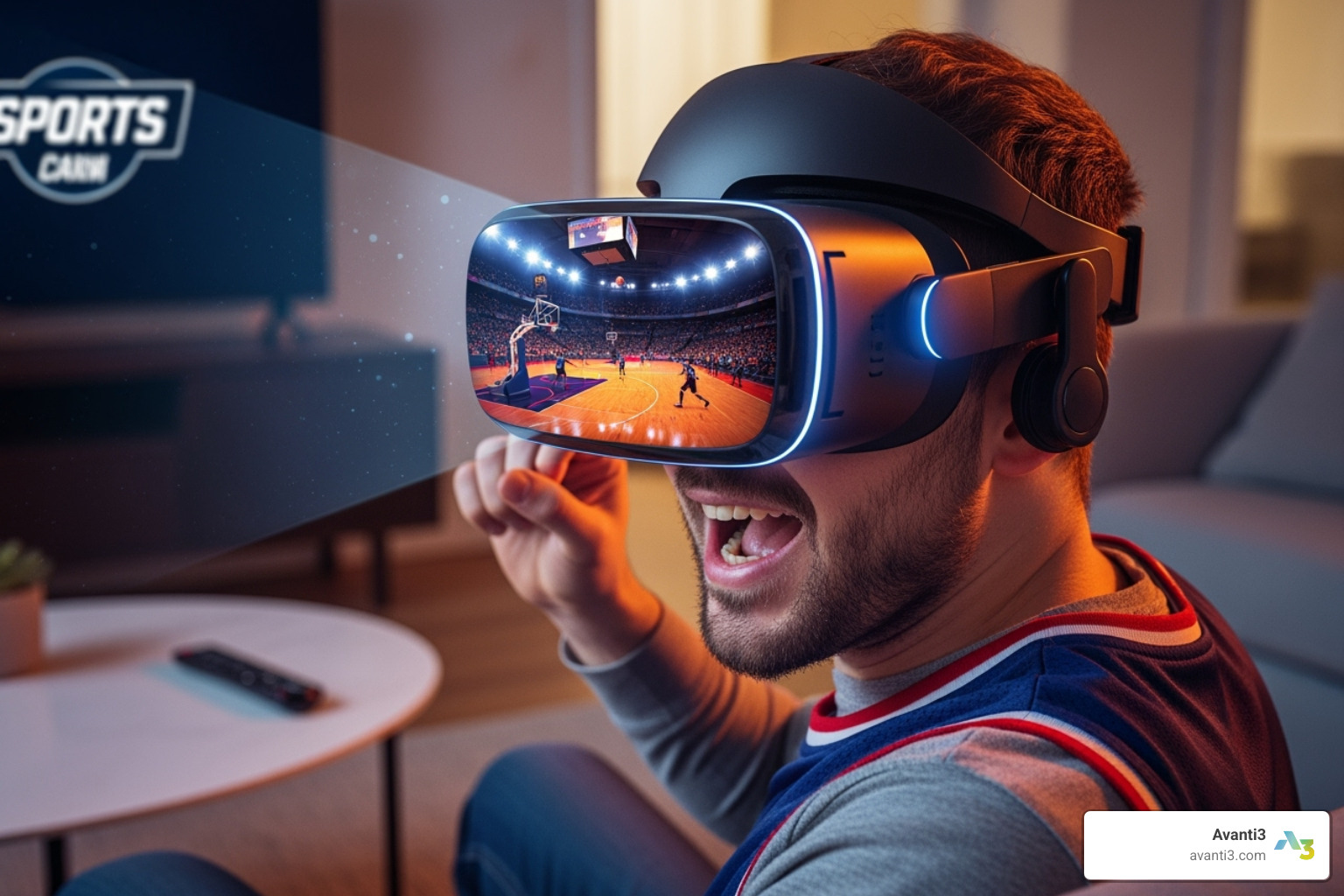
The magic of interactive sports marketing happens when we stop treating fans as passive observers and start inviting them into the action. It’s about changing that casual viewer scrolling through their phone during halftime into someone who’s actively participating, competing, and feeling like they’re part of something bigger.
This change isn’t happening by accident. We’re using gamification and immersive technologies to create experiences that don’t just improve reality – they create entirely new realities where fans can live out their sports dreams.
Gamification: Turning Fandom into Active Participation
Think about why you can’t put down your favorite mobile game. It’s not just the pretty graphics – it’s the way it makes you feel. The rush of competition, the satisfaction of earning rewards, the pride that comes with status, and that irresistible urge to beat your friends on the leaderboard.
Interactive sports marketing taps into these same psychological drivers. When we add game mechanics to fan experiences, we’re speaking directly to what motivates people at their core.
Picture a fan checking their team’s app during lunch break. Instead of just reading scores, they’re answering trivia questions about last night’s game, climbing leaderboards by predicting tonight’s starting lineup, and completing challenges that open up exclusive behind-the-scenes content. Maybe they’re participating in virtual training drills that mirror what their favorite players do in practice.
The results speak for themselves. Gamified experiences drive a 37% increase in user engagement – that’s more than a third more time fans spend interacting with brands. We’re also seeing 19% higher conversion rates compared to traditional marketing approaches. When brands integrate AI-powered gamification tools, customer satisfaction jumps by 30%.
But here’s what’s really exciting: this isn’t just about keeping people busy. Every quiz answer, every challenge completed, every badge earned gives us valuable insights into what fans truly care about. We’re building relationships while gathering the data that helps us create even better experiences.
Our Digital Reward System helps brands create these engaging mechanics, while our Community Loyalty Programs turn individual participants into thriving communities of superfans.
The Immersive Arena: How AR and VR are Enhancing the Fan Experience
If gamification gets fans participating, immersive technologies make them feel like they’re actually there. Augmented Reality (AR) and Virtual Reality (VR) are dissolving the boundaries between watching sports and experiencing them firsthand.
Imagine taking a virtual stadium tour of your favorite team’s home venue from your living room. You’re walking through the same tunnels the players use, seeing the locker room where championship celebrations happen, standing on the field where legends were made. This isn’t science fiction – it’s happening right now.
During live games, AR overlays are changing the in-stadium experience. Fans point their phones at the field and instantly see real-time player stats, replay key moments from different angles, or answer interactive trivia questions that appear right over the action. Sports broadcasts using AR technology see 15% higher viewer engagement because fans aren’t just watching anymore – they’re exploring.
The at-home VR experience is where things get really wild. You can sit courtside at the NBA Finals, experience the game from your favorite player’s perspective, or even step into virtual training sessions. One professional basketball team made history by offering live, in-game 360-degree VR experiences, proving this technology has moved from concept to reality.
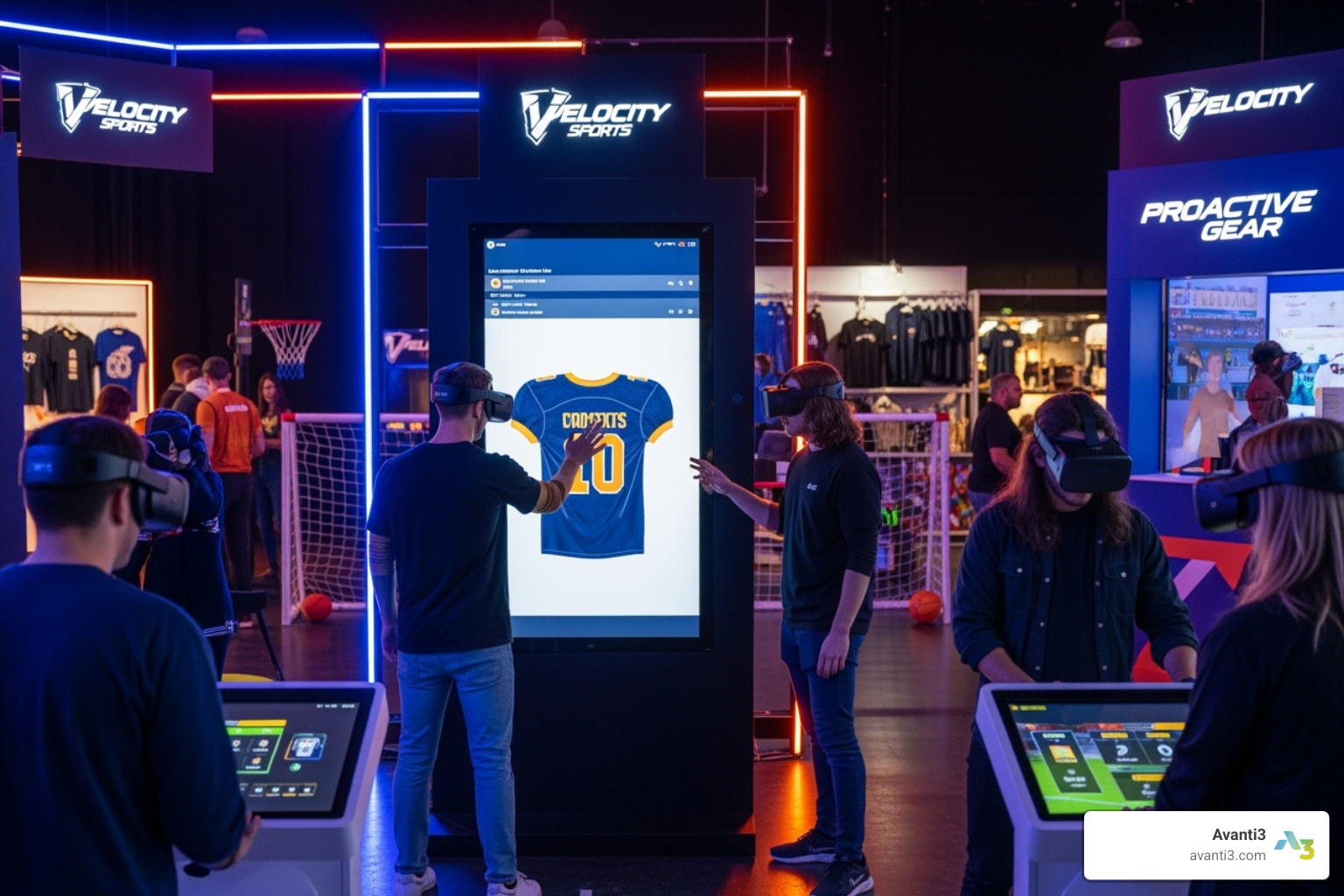
Virtual merchandise try-ons are solving a problem we’ve all had – buying that jersey online and hoping it looks as good in person. With AR, fans can see exactly how they’ll look in their team gear before purchasing, leading to 94% higher conversion rates and fewer disappointed customers.
These aren’t just cool tech demos. They’re creating the kind of emotional connections that turn casual fans into lifelong supporters. When someone experiences a game through their hero’s eyes or explores a legendary stadium virtually, they’re not just consuming content – they’re living it.
Our Augmented Reality Marketing solutions help brands create these magical moments, while our Virtual Reality Experiences transport fans to places they’ve only dreamed of being. To see how these technologies are reshaping the entire sports landscape, check out this comprehensive look at How AR and VR are shaping sports.
The Winning Strategy: Best Practices for Interactive Sports Marketing

Creating successful interactive sports marketing campaigns isn’t just about having the coolest tech – it’s about understanding your fans and giving them experiences they actually want. After years of helping brands connect with their audiences, I’ve learned that the magic happens when you combine smart strategy with genuine fan insight.
The foundation of any winning campaign starts with clear objectives. What do you want fans to do? How do you want them to feel? Without these answers, even the most impressive AR experience will fall flat. Next comes audience understanding – and I mean really understanding your fans, not just their demographics. What makes them cheer? What frustrates them? When are they most engaged?
Authentic integration is where many campaigns stumble. Your interactive elements shouldn’t feel like add-ons; they should feel like natural parts of the fan experience. Think of how fantasy football seamlessly blends with watching games – that’s the gold standard.
A seamless user experience can make or break your campaign. If fans need a manual to participate, you’ve already lost them. Finally, cross-channel promotion ensures your brilliant activation doesn’t exist in a vacuum. Every touchpoint should work together to amplify your message.
Data-Driven Decisions: Measuring Success in Interactive Sports Marketing
Here’s the truth about interactive sports marketing: if you’re not measuring it, you’re probably missing the point. The days of crossing your fingers and hoping for the best are over. Today’s successful campaigns are built on solid data and continuous optimization.
The metrics that matter have completely shifted. We’re no longer impressed by how many people saw an ad. Instead, we focus on Key Performance Indicators that show real engagement – things like participation rates, time spent interacting, and how often fans return for more. These numbers tell the real story of your campaign’s impact.
Fan data collection happens naturally through every quiz, game, and AR experience. This isn’t about being sneaky – it’s about understanding preferences so you can create better experiences. When a fan completes a trivia challenge about their favorite player, they’re telling you what content they value most.
A/B testing and ROI analysis keep campaigns sharp and effective. We test different game mechanics, reward structures, and interaction types to see what resonates. Companies using AI-powered tools for this optimization see a 30% increase in customer satisfaction because they’re constantly improving based on real feedback.
Personalization through data is where the magic really happens. Instead of generic experiences, fans get content custom to their interests, their team preferences, and their engagement history. It’s like having a conversation with each fan individually, even when you’re reaching thousands.
| Metric Category | Traditional Marketing Metrics | Interactive Marketing Metrics |
|---|---|---|
| Reach/Exposure | TV Viewership, Impressions | User Participation Rates, Social Shares, App Downloads |
| Engagement | Ad Recall, Brand Awareness | Dwell Time, Interaction Rate, Conversion Rate, Repeat Visits |
| Loyalty/Retention | Repeat Purchases | Loyalty Program Sign-ups, Digital Collectible Ownership, UGC |
| Data/Insights | Demographics, Surveys | First-Party Data, Behavioral Analytics, Preference Data |
To dive deeper into how AI can transform your approach, check out our insights on AI Customer Engagement. For more on leveraging data effectively, explore Using data analytics in sports marketing.
Designing an Effective Interactive Sports Marketing Campaign
Now for the fun part – bringing it all together into campaigns that fans can’t stop talking about. The best interactive campaigns share some common DNA, and understanding these elements can transform your approach.
Large-scale activations create those “you had to be there” moments that generate buzz far beyond the event itself. Think bigger than a simple booth – imagine a giant interactive game where fans test their skills against virtual athletes, or an immersive experience that lets them walk through their team’s historic moments. These activations become content goldmines, generating photos, videos, and stories that fans share organically.
Social media amplification turns every participant into a broadcaster. The NFL’s partnership with Nickelodeon generated more than two billion social media impressions because they designed experiences specifically for sharing. Your interactive elements should feel incomplete until fans post about them.
Multigenerational appeal ensures your campaign reaches the entire fan base. Sports bring families together, and your interactive experiences should too. Design activities that grandparents and grandchildren can enjoy side by side – whether that’s a simple prediction game or an AR experience that works for all skill levels.
Tangible takeaways have evolved far beyond branded t-shirts. Today’s fans want digital collectibles that have real value and meaning. Our Augmented Reality NFTs let fans own unique digital memories from their experiences. Imagine a personalized trading card featuring the fan’s photo with their favorite player, or exclusive content that open ups based on their participation.
Personalized merchandise and exclusive content extend the experience beyond the event. Behind-the-scenes interviews, player meet-and-greets, or early access to tickets become rewards that drive deeper engagement. These aren’t just giveaways – they’re relationship builders.
The key is making every element feel intentional and connected. Your gamification should feed into your data collection. Your AR experience should create shareable moments. Your rewards should encourage return visits. When everything works together, you don’t just run a campaign – you create a community.
For expert guidance on crafting these comprehensive experiences, explore our Digital Experience Design solutions.
Conclusion: The Future of Fandom is Interactive
The change we’ve witnessed in interactive sports marketing represents more than just a trend – it’s a complete reimagining of how fans connect with the sports they love. We’ve moved from an era where fans sat quietly in front of their TVs to one where they actively shape their own experiences through gamification, immersive technologies, and personalized digital interactions.
This shift from passive consumption to active engagement isn’t just changing the fan experience; it’s revolutionizing how brands build lasting relationships. When fans can compete in virtual challenges, collect digital memorabilia, or experience games through AR and VR, they become invested participants rather than distant observers. The numbers speak for themselves – 37% higher engagement rates and 19% better conversion rates prove that interactive experiences create deeper connections.
Technology has become the great enabler of this revolution. AI personalizes every interaction, AR brings digital elements into the real world, and Web3 technologies like NFTs give fans true ownership of their digital collectibles. These aren’t just fancy tools – they’re the foundation of a new relationship between fans, teams, and brands.
At Avanti3, we’re passionate about building the tools that make this future possible. Our platform empowers creators and brands to harness these cutting-edge technologies, creating customizable engagement experiences that turn casual viewers into devoted community members. We believe the future of fandom isn’t just about watching sports – it’s about participating, owning, and truly belonging to something bigger than yourself.
What’s the main difference between traditional and interactive sports marketing?
Think of it this way: traditional sports marketing was like shouting through a megaphone at a crowd. You’d broadcast your message – maybe a TV commercial during halftime or a billboard outside the stadium – and hope fans noticed. It was all about one-way communication where fans passively consumed whatever brands put in front of them.
Interactive sports marketing flips this completely. Instead of talking at fans, we’re talking with them. Fans become active participants through games, challenges, and immersive experiences. They’re not just watching a commercial – they’re playing a trivia game, trying on virtual jerseys, or competing for digital rewards.
The focus has shifted too. Traditional marketing obsessed over impressions and reach – how many eyeballs saw your ad. Interactive marketing cares more about engagement and meaningful data. We want to know what fans actually do, what they prefer, and how they behave. This creates much richer, more valuable relationships that last long after the game ends.
How can smaller brands or teams afford interactive marketing?
Here’s the exciting part – you don’t need a Super Bowl budget to create amazing interactive sports marketing experiences. The digital revolution has democratized these tools in ways we couldn’t imagine just a few years ago.
Scalable digital tools and no-code platforms have made interactive marketing accessible to everyone. You can start with simple social media campaigns – maybe a prediction game for upcoming matches or a quiz about team history. These cost almost nothing but can generate incredible engagement if done creatively.
The secret sauce isn’t your budget; it’s your creativity. Some of the most viral sports marketing campaigns succeeded because they were clever and authentic, not because they spent millions. Focus on understanding your fans and creating experiences they genuinely want to participate in.
As you see success, you can gradually add more sophisticated elements like AR filters or digital collectibles. The beauty of modern platforms is that they grow with you, scaling up as your audience and budget expand.
How does interactive marketing help with fan data collection?
This might be the most powerful advantage of interactive sports marketing – every single interaction becomes a valuable data point. When fans participate in your games, challenges, or immersive experiences, they’re voluntarily sharing insights about their preferences, behaviors, and motivations.
Unlike traditional advertising where you guess what fans might want, interactive experiences show you exactly what they care about. Which players do they ask about in trivia games? What merchandise do they try on virtually? How do they engage with different types of content?
This first-party data comes directly from your fans through opt-in mechanics, making it incredibly accurate and valuable. Fans don’t mind sharing information when they’re having fun and getting value in return. A well-designed interactive experience feels like entertainment, not a survey.
The real magic happens when you use this data to personalize future experiences. Every interaction teaches you more about individual fans, allowing you to create increasingly relevant content and offers. This creates a positive cycle where better personalization leads to higher engagement, which generates even better data.
For brands looking to build comprehensive fan engagement strategies that leverage this data effectively, our Digital Fan Engagement solutions provide the tools and insights needed to turn every interaction into a deeper relationship.