

Why the Ticketing Industry Needs a Revolution
How event ticketing uses blockchain is revolutionizing an industry plagued by fraud, scalping, and unfair practices. Here’s the quick breakdown:
- NFT tickets create unique, verifiable digital assets that can’t be counterfeited
- Smart contracts automatically enforce resale rules and price caps
- Decentralized ledgers provide transparent, tamper-proof transaction records
- Direct creator-fan relationships eliminate middleman fees and enable new revenue streams
The current ticketing landscape is broken. Ticketmaster controls 80% of the top 100 arenas, while fans face counterfeit tickets, bot-driven sellouts, and secondary market prices that can surge 50% to 500% above face value. The 2018 Ticketfly data breach compromised 26 million accounts, highlighting the risks of centralized systems.
This traditional model locks out genuine fans while scalpers profit, artists lose control, and everyone pays inflated fees to intermediaries.
Blockchain technology offers a fundamentally different approach. Instead of relying on centralized databases, it creates a decentralized, transparent system where tickets exist as unique digital assets with built-in rules about pricing, transfers, and authenticity.
I’m Samir ElKamouny, and through my work helping businesses adopt innovative technologies, I’ve seen how understanding how event ticketing uses blockchain can transform creator-fan relationships. This guide will show you exactly how this technology works and why it matters for the future of live events.
How Event Ticketing Uses Blockchain to Solve Core Problems
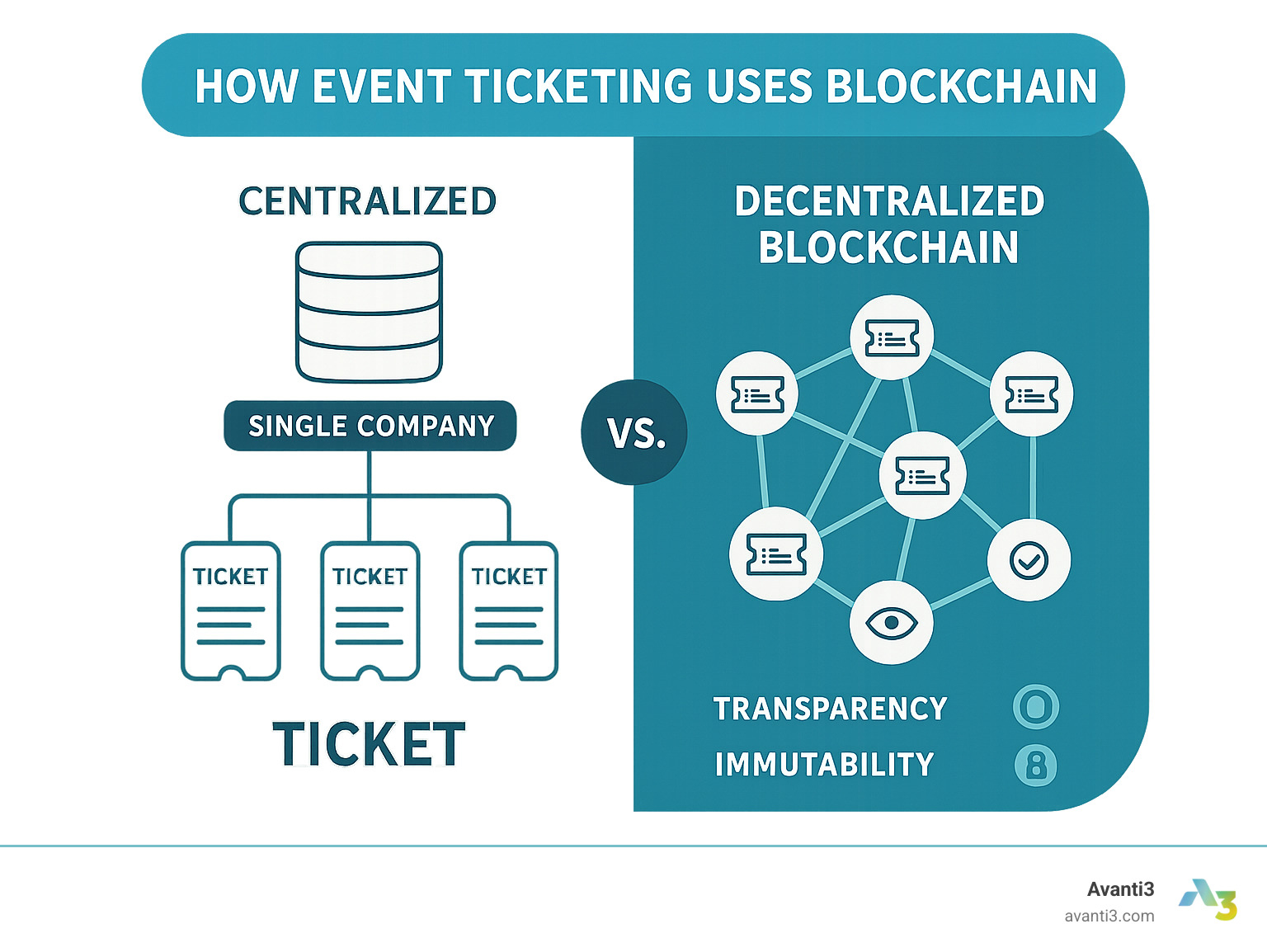
Frustrations like fake tickets and bot-driven sellouts are symptoms of a broken system. How event ticketing uses blockchain represents a fundamental shift away from these problems. Instead of relying on centralized databases that can be hacked or manipulated, blockchain creates a decentralized ledger where every transaction is recorded permanently and transparently.
Think of blockchain as a shared digital ledger where every ticket’s creation, purchase, or transfer is recorded immutably. This immutability means the record can’t be changed or deleted. The transparency of this system allows everyone to see transactions in real-time, bringing openness to a historically opaque industry.
This decentralized approach offers remarkable security. Data is spread across countless nodes, so there is no single point of failure for hackers to target. The real game-changer, however, is smart contracts: automated rules coded to execute when certain conditions are met. These can prevent scalping, ensure artists are paid from resales, and guarantee ticket authenticity—all without a middleman.
The result is reduced fraud, as every ticket has a verifiable digital fingerprint, and fair pricing, as smart contracts can cap resale prices and neutralize the bots that dominate ticket sales.
To understand how these unique digital assets are reshaping industries, explore our insights on NFT Marketplace Development.
Eliminating Counterfeits with Verifiable NFT Tickets
The uncertainty of buying secondhand tickets is precisely what blockchain technology is designed to eliminate. Non-Fungible Tokens (NFTs) are unique digital assets that act as unforgeable certificates of authenticity.
When a concert ticket becomes an NFT, it gains cryptographic security—an unbreakable digital lock proving it’s genuine. It also comes with a traceable ownership history, as every transfer is recorded on the blockchain. You can see who owned it before you, when they bought it, and for how much.
This creates a system that is impossible to duplicate. While a paper or mobile ticket can be copied, the cryptographic signature of an NFT cannot. At the venue, staff use on-chain verification to instantly confirm your ticket is the real deal by checking the blockchain.
This provides incredible peace of mind. With verifiable tickets, authenticity is guaranteed from the moment of purchase.
Taming the Wild West of Resales with Smart Contracts
The secondary ticket market often benefits everyone except the fans. Smart contracts change this by acting as digital referees that enforce fair play automatically through programmable logic.
To stop outrageous markups, smart contracts can implement price caps, preventing tickets from being resold above a set percentage of face value. The system simply won’t allow a transfer that violates this rule.
Smart contracts also enable royalty splits, creating ongoing artist revenue and organizer revenue from resales. Instead of scalpers pocketing all the profit, a smart contract can automatically send a portion of the resale price back to the artist and venue.
These contracts can also enforce transfer restrictions, such as limiting the number of times a ticket can be resold. By eliminating bots through these automated rules, genuine fans get a fair shot at reasonably priced tickets.
The rules are baked into the code and execute automatically, creating a fairer marketplace for everyone. Understanding these self-executing agreements is crucial to grasping smart contracts explained.
Creating Radical Transparency and Improved Security
Traditional ticketing systems operate like black boxes, and the 2018 Ticketfly data breach that compromised 26 million accounts illustrates the risk of this centralized approach.
Blockchain creates a public ledger where every transaction is visible and part of an immutable record. A ticket’s complete transaction history is permanent and unchangeable.
This fosters a trustless environment—not because people are untrustworthy, but because trust is guaranteed by the system’s mathematical proofs, not corporate promises. Security is dramatically improved. Instead of a single database, information is distributed across thousands of computers, offering powerful data breach prevention.
For attendee data protection, this is a massive upgrade. Personal information is secured by the same cryptographic methods that protect billions in cryptocurrency. This transparency benefits everyone: organizers can track ticket distribution, artists can identify their true audience, and fans can verify ticket authenticity.
The Anatomy of a Blockchain Ticketing System
Understanding how event ticketing uses blockchain means looking at how the technology orchestrates a ticket’s entire journey—from its creation as a digital asset to its validation at the venue.

The process unfolds in five key stages: event creation, ticket minting, secure transfer, validation, and post-event utility. This system handles each step with mathematical precision while keeping the user experience simple. The blockchain handles the complexity behind the scenes, eliminating worries about authenticity or scams.
The Technical Stack: What’s Under the Hood?
Most blockchain ticketing platforms run on public blockchains, with Ethereum being a popular choice due to its robust smart contract capabilities. Ethereum hosts about 80% of weekly NFT volume and 80% of all decentralized apps run on it or compatible networks.
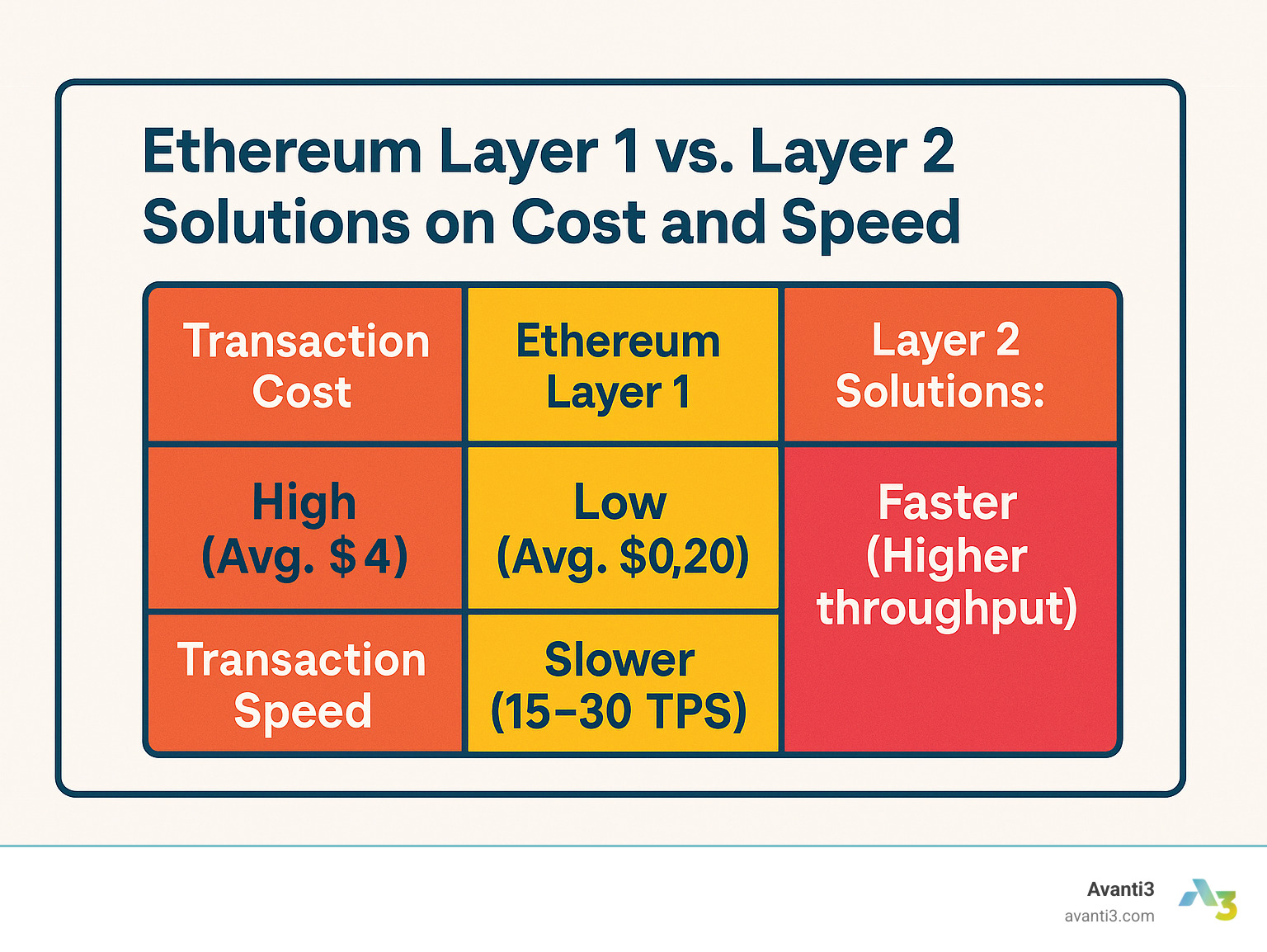
However, Ethereum’s main network can be slow and expensive, handling only 15-30 transactions per second with fees around $4 per transaction. This isn’t practical for selling tens of thousands of tickets.
Layer 2 solutions like Arbitrum and Polygon solve this. They act as express lanes, processing transactions faster and more cheaply while retaining Ethereum’s security. For example, Arbitrum’s average transaction fee is just $0.20—a 95% cost reduction.
The key is balancing on-chain versus off-chain data. Critical information like ownership and pricing rules are secured on-chain. Less critical data, like high-resolution images, is stored off-chain using systems like the InterPlanetary File System (IPFS). This approach ensures both security and cost-efficiency.
From Mint to Scan: The Ticket Lifecycle
A blockchain ticket’s journey is a seamless process, from its creation to becoming a collectible.
-
Event creation: Organizers define the event and encode rules—like resale price caps or artist royalties—directly into the smart contract.
-
Ticket minting: Each ticket is created as a unique NFT with an unforgeable digital fingerprint, stamping it with proof of authenticity.
-
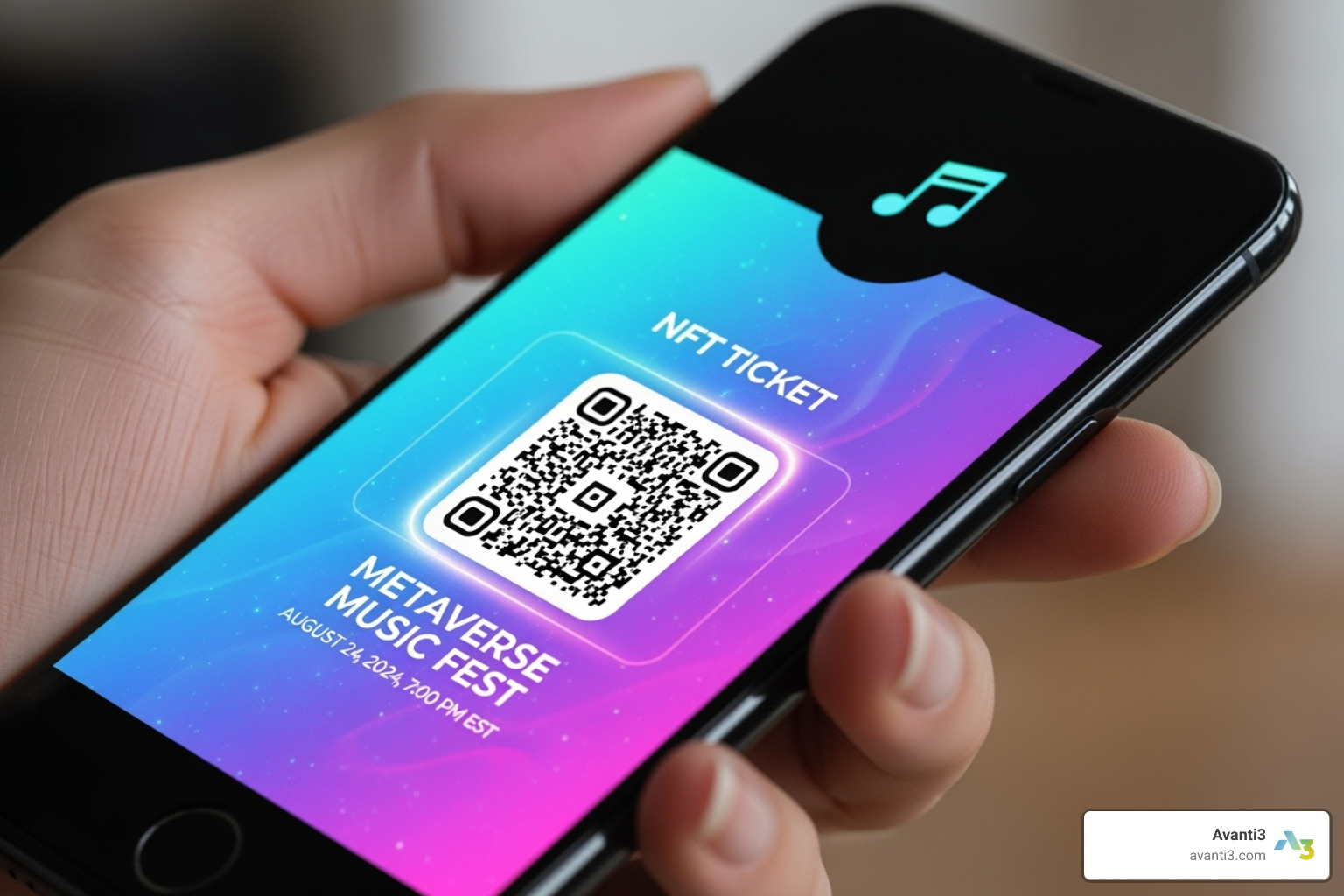
Secure purchase: The NFT ticket is transferred directly to the fan’s digital wallet. Modern platforms make this as simple as any other online purchase, hiding the crypto complexity.
-
Controlled resale: The smart contract automatically enforces the rules set during creation, ensuring a fair secondary market where artists and organizers can receive a share of resale profits.
-
On-site validation: Dynamic QR codes, which change every few seconds, make screenshots useless and entry seamless. The system instantly verifies the ticket’s authenticity against the blockchain.
-
Post-event utility: After the event, the NFT becomes a digital collectible. It can open up exclusive content, future discounts, or special fan experiences, turning a simple ticket into a long-lasting piece of memorabilia.
This lifecycle shows how event ticketing uses blockchain to create value far beyond a traditional paper stub. For creators, our More info about NFT Engagement Tools can help build these deeper fan relationships.
The Ripple Effect: Benefits for Everyone Involved
When we look at how event ticketing uses blockchain, it’s clear this isn’t just about fixing a broken system—it’s about creating something new that benefits everyone. The technology creates win-win scenarios for artists, organizers, and attendees.
This innovation is about empowering creators and improving fan experiences, setting a new standard for digital engagement and fan monetization.
At Avanti3, we’ve seen how Web3 technologies can revolutionize creator-fan relationships. If you’re curious about how these solutions could work for your brand, explore our Web3 Platform Solutions to see what’s possible.
For Event Organizers & Artists
For years, artists and organizers have watched scalpers profit while genuine fans were priced out. Blockchain ticketing flips this script.
Secondary market control is achieved through smart contracts that enforce resale price caps. More excitingly, organizers can earn new revenue streams via automatic royalty payments from every resale. The 2019 UEFA Super Cup proved this works at scale, using blockchain to distribute over 80% of its tickets, which dramatically reduced fraud.
Reduced fraud costs are a major benefit. Eliminating counterfeit tickets means less need for extra security and no more disappointed customers at the gate.
Most importantly, blockchain enables direct fan engagement. With tickets tied to digital wallets, organizers know their audience, allowing for better marketing, stronger communities, and the ability to reward loyal fans.
For Fans & Attendees
Buying tickets has been a frustrating experience for too long. Blockchain delivers a better way.
- Guaranteed authenticity: Every NFT ticket is verifiably real and recorded on the blockchain. You can prove you own it.
- Fairer prices: Smart contracts cap resale markups, preventing the extreme price gouging common on secondary markets.
- True ownership: Your ticket doesn’t disappear after the show. It becomes a digital collectible in your wallet, a verified piece of event history.
- Exclusive perks: Artists can reward ticket holders with rare content, behind-the-scenes footage, or early access to future events. Some platforms even build loyalty programs based on attendance history.
- Improved user experience: Modern platforms handle the crypto complexity behind the scenes, making the purchase process as simple as any other online transaction.
This change creates a more transparent, fair, and engaging ecosystem for everyone involved in live events.
Navigating the Road Ahead: Challenges and Future Innovations
While the benefits of how event ticketing uses blockchain are clear, the path to widespread adoption has its challenges. However, the future prospects for this technology in event management are incredibly exciting.
Current Challenges to Widespread Adoption
Integrating blockchain into an established industry presents several problems:
- User Experience (UX) & Crypto Wallet Complexity: For the average fan, interacting with crypto wallets can be intimidating. Simplifying the user experience by abstracting away the underlying complexity is crucial for mass adoption.
- Scalability Concerns: While Layer 2 solutions help, scaling for massive global events remains a technical challenge that requires further optimization.
- Regulatory Ambiguity: The evolving legal landscape for NFTs and digital assets can be a barrier for large organizations that require clear legal frameworks.
- Integration Costs & Legacy Systems: Implementing blockchain can require significant upfront investment, and integrating with existing legacy systems is often complex.
- Public Education: Overcoming skepticism requires educating both organizers and attendees about the tangible benefits of blockchain ticketing.
The Future of How Event Ticketing Uses Blockchain and Beyond
Despite these challenges, the future is bright, with innovations set to transform event management:
- Improved Loyalty Programs: Tokenized incentive systems can reward fans for attendance and engagement with exclusive content, merchandise, or VIP experiences.
- Fan Governance (DAOs): Loyal fans, holding specific NFTs, could vote on event details like setlists or merchandise, empowering communities through Decentralized Autonomous Organizations (DAOs).
- Immersive Experiences: Integrating blockchain with AR/VR can create unique experiences. NFT tickets could open up AR overlays at concerts, as explored in Augmented Reality Concerts.
- Token-Gated Content: NFT tickets can serve as keys to open up exclusive digital content, online communities, or private events.
- Sustainable Event Practices: Blockchain can provide transparent, immutable records of sustainable practices, from supply chains to carbon offsetting.
- Integration with IoT and AI: Combining blockchain’s secure ledger with IoT and AI can optimize crowd management, personalize experiences, and improve security.
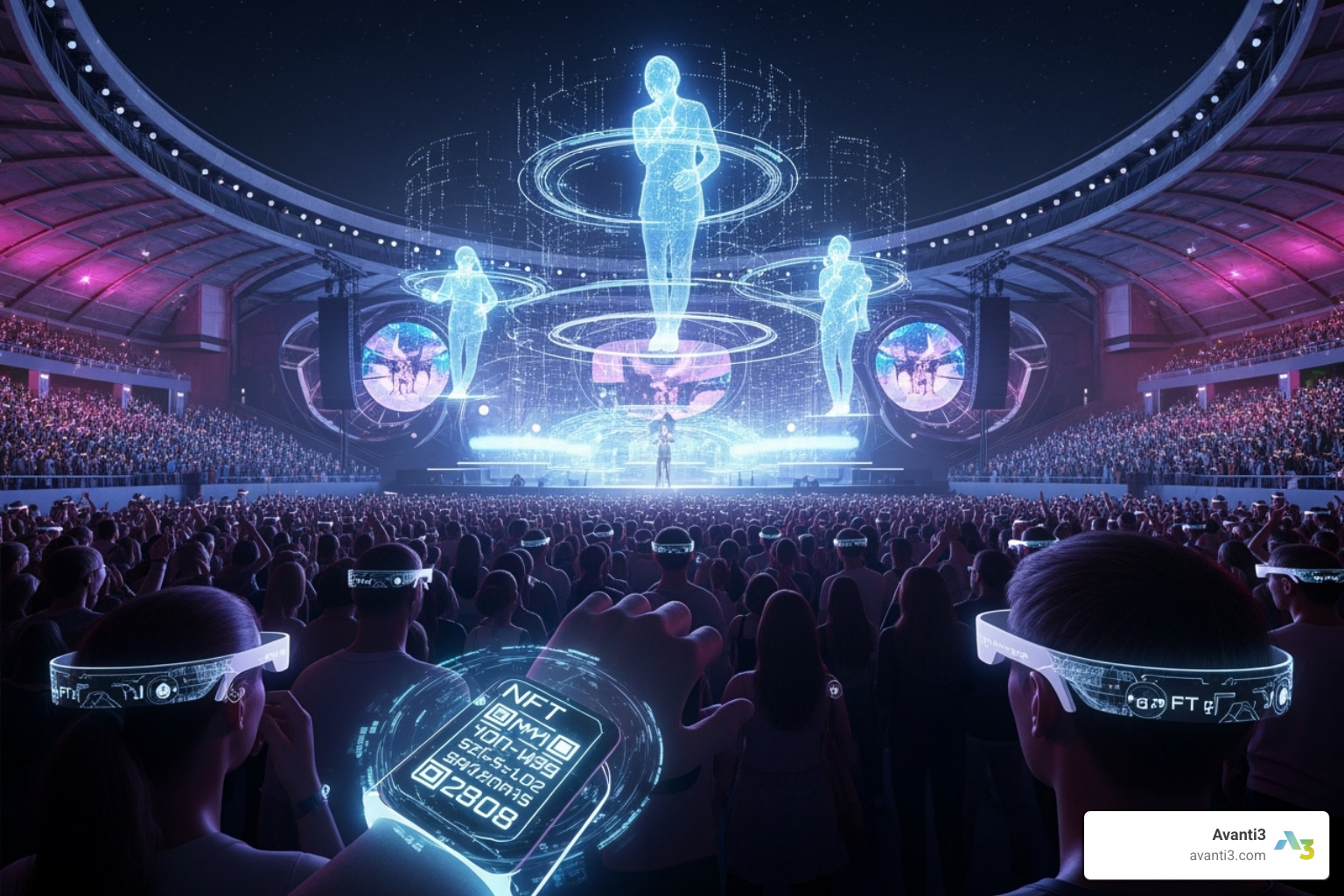
The evolution of how event ticketing uses blockchain is about building new possibilities for connection and engagement. To dig deeper into how blockchain can revolutionize content, check out More info about Blockchain Content Distribution.
Frequently Asked Questions about Blockchain Event Ticketing
New technology brings new questions. When it comes to how event ticketing uses blockchain, the concept might sound complex, but the benefits are straightforward. Here are answers to the most common questions we hear.
Is blockchain ticketing more expensive for fans?
Not necessarily, and it’s often cheaper in the long run.
While early blockchains had high “gas fees” (transaction costs), modern Layer 2 solutions have largely solved this. An average transaction on Arbitrum, a popular Layer 2, costs about $0.20, compared to $4 on Ethereum’s main network. In general, Layer 2 transactions cost just 5-10% of their Layer 1 counterparts.
These small blockchain fees often replace or reduce the multiple, unpredictable fees from traditional ticketing middlemen. More importantly, by preventing scalping and fraud, you’re far less likely to pay inflated secondary market prices. The overall value—guaranteed authenticity and fair pricing—typically results in a better deal.
Do I need to be a crypto expert to buy an NFT ticket?
Absolutely not. Modern platforms are designed to make the experience as simple as any other online purchase.
Many platforms use custodial wallets, handling the crypto complexity for you. You don’t need to manage private keys or understand wallet addresses. Some even let you pay with a credit card, converting the payment to crypto automatically in the background.
The user experience is so streamlined that you can get a secure, authentic ticket without needing to understand the underlying blockchain technology. It just works.
Can blockchain completely eliminate ticket scalping?
Blockchain can drastically reduce and disincentivize scalping, though completely eliminating it remains a challenge. Think of how streaming services made music piracy inconvenient for most people; blockchain does the same for scalping.
Smart contracts are the key weapon. Organizers can set hard price caps, control how tickets are resold, and even invalidate tickets traded against the rules. The transparency of the blockchain also makes it difficult for bots to operate anonymously.
This system squeezes scalpers’ profit margins and exposes their operations, making their business model far less viable. As one industry expert noted, while it may never be fully eliminated, it can finally be brought under control.
The bottom line is that blockchain gives organizers and fans the most powerful defense against scalping ever created, shifting the power back to artists and genuine fans.
Conclusion: Building the Future of Live Events
The ticketing industry has been ripe for change. For too long, fans, artists, and organizers have struggled with a system that benefits intermediaries at the expense of those who matter most.
How event ticketing uses blockchain is a fundamental shift toward fairness and transparency. We are moving from a world controlled by a few powerful players to one where technology enforces fair rules for everyone.
When you buy an NFT ticket, you get a piece of digital history that can’t be faked. When an artist uses a smart contract to cap resale prices, they ensure genuine fans get fair access. This technology is not just fixing old problems; it’s creating new opportunities for connection. A concert ticket can now open up exclusive content or give you a vote on a future setlist.
Yes, challenges remain. User adoption of new tools takes time, and the technology is still evolving. But just as online shopping went from intimidating to second nature, blockchain ticketing is on the same trajectory.
At Avanti3, we see this technology empowering creators with new ways to engage audiences and build sustainable revenue. We are creating tools that foster deeper, more meaningful relationships between artists and fans.
The future of live events is being built now. It’s a future with more transparency, fairness, and engagement. We’re just getting started.
Ready to be part of this revolution? Explore Web3 Creator Platforms and find how you can help build the future of digital engagement and fan experiences.