

Why Decentralized Social Platforms Matter Now
Decentralized social platforms are alternatives to traditional social networks, operating on independently run servers instead of being controlled by a single company. This model distributes control across user networks, giving you ownership of your data and content. Key benefits include censorship resistance, algorithmic choice, portability of your identity, and community-led governance.
The shift is gaining momentum. Search interest in decentralized social media has risen 145% over the last five years. Meanwhile, traditional platforms like X (formerly Twitter) have lost about 20% of their US daily user base since late 2022, and emerging platforms like Bluesky have grown to 40 million users.
For creators and brands, this is a fundamental reimagining of online communities. It prioritizes direct audience relationships and opens new paths for monetization without corporate intermediaries.
I’m Samir ElKamouny AV, and my work shows how these tools can transform creator-audience relationships and open up revenue streams that traditional platforms can’t match.
The World of Decentralized Social Platforms: A Deep Dive

The internet is constantly evolving, and with it, our expectations for online interaction. We’ve seen a growing demand for greater user autonomy, open protocols, and community governance, all of which are hallmarks of decentralized social platforms. These platforms champion interoperability, allowing for a richer, more connected experience where users, not corporations, are at the helm.
What Are Decentralized Social Networks and How Do They Differ?
A decentralized social network operates without a single central authority. Unlike traditional “walled garden” platforms where one company controls all data and policies, decentralized networks distribute these functions across many independent servers or nodes. This gives users more control over their online experience.
There are two main types of decentralized networks:
-
Federated Networks: These consist of independent, interconnected servers (“instances”) that use a common protocol to communicate. Think of it like email, where a Gmail user can message a Yahoo user. Each instance has its own administrator and rules, but users can interact across the network. The “Fediverse,” which includes platforms like Mastodon, is a prime example.
-
Distributed Networks: This model is the most decentralized, with no central servers at all. Data is held by every participant (node), and interactions are peer-to-peer. This structure is highly censorship-resistant but can be technically complex to build and scale.
In short, centralized networks are controlled by one company, federated networks are run by multiple server administrators, and distributed networks have no central authority. This shift, endorsed by groups like the Electronic Frontier Foundation (EFF), aims to return control and choice to users, as detailed in “An Introduction to the Federated Social Network”.
Core Technologies and Protocols Enabling the New Social Web
Open protocols are the backbone of the decentralized social web, enabling communication across different networks.
-
ActivityPub: This W3C-recommended standard powers The Fediverse, allowing servers for platforms like Mastodon and Pixelfed to communicate. It enables seamless sharing of content and interactions across different services. The standard is a result of efforts by the W3C Social Web Working Group to promote interoperability.
-
AT Protocol (Authenticated Transfer Protocol): Developed by Bluesky, this protocol is designed for large-scale public conversations. It features account portability, custom algorithms, and built-in moderation, allowing users to move their identity and content between services.
-
Nostr (Notes and Other Stuff Transmitted by Relays): Nostr uses a simple relay system where users send signed messages. It emphasizes cryptography and user-owned keys, creating a resilient and flexible network structure.
These open standards prevent user lock-in and foster permissionless innovation. At Avanti3, we leverage these technologies for Blockchain Content Distribution, giving creators and brands true ownership of their digital assets.
The Main Benefits for Users and Creators

The move to decentralized social platforms offers tangible benefits for users and creators, addressing key frustrations with traditional social media.
-
Data Ownership and Privacy: You own your data, giving you greater control and reducing the risk of exploitation. Many networks use public-key cryptography for improved security and allow for anonymous accounts, aligning with our focus on Personalized Data solutions.
-
Censorship Resistance: With no single authority, these platforms are more resilient to arbitrary content removal or bans. This empowers free speech and protects activists in restrictive environments, a benefit highlighted by the Electronic Frontier Foundation (EFF).
-
Algorithmic Choice: Instead of being subject to a single, opaque algorithm, you can choose your own content feed. Bluesky, for example, offers over 40,000 algorithmic feeds, allowing you to curate your experience based on your interests.
-
Permissionless Innovation: Open protocols allow anyone to build new apps and features on top of existing networks. This fosters a vibrant ecosystem where innovation can thrive without corporate gatekeepers.
-
Direct Creator Monetization: Decentralized platforms enable new economic models beyond advertising. With features like creator coins, NFTs, and direct tipping, creators can build direct financial relationships with their audience. On DeSo, creators have already earned over $30 million. This is a core focus of our Web3 Creator Platforms.
The Challenges and Drawbacks of Decentralized Social Platforms
Despite their promise, decentralized social platforms face significant challenges.
-
Content Moderation: Without a central authority, moderation is a major hurdle. It often falls to server admins or community filtering, which can be inconsistent and allow harmful content to spread. For example, a 2023 Stanford study found problematic content in the Fediverse, and Bluesky received 6.48 million user reports in 2024. Balancing free speech with safety is a complex, ongoing battle where our AI Customer Engagement solutions can help develop better tools.
-
Scalability and User Experience (UX): Many decentralized architectures struggle to handle massive user loads without sacrificing performance. The user experience can also be complex compared to polished centralized apps, creating a barrier to mainstream adoption.
-
User Adoption and Network Effects: It’s difficult to attract users away from established platforms where their friends already are. Overcoming the powerful network effect of social media giants is a key challenge for emerging decentralized alternatives.
-
Funding and Sustainability: Open-source and community-driven projects often struggle with long-term funding, which can risk their stability and lead to data loss if servers shut down.
Overcoming these issues requires innovation and community effort to foster growth in this promising space.
Leading Approaches and Features in Decentralized Social Platforms
The decentralized social landscape is diverse and rapidly evolving. Here are some leading platforms:
-
Bluesky: Operating on the AT Protocol, Bluesky has grown to 40 million users. Its key feature is 40,000+ algorithmic feeds, giving users control over their content consumption. A growing developer ecosystem is building new apps on its protocol.
-
Mastodon: A pioneer in the Fediverse using ActivityPub, Mastodon has 9.8 million users across 9,500+ independent instances, each with its own rules. Its philosophy is “Social networking that’s not for sale.”
-
Pixelfed: A decentralized alternative to Instagram, Pixelfed uses ActivityPub to connect with the Fediverse. It hosts 904,000 users who have shared over 97 million photos and videos.
-
Threads: While centralized, Meta’s Threads is integrating with the Fediverse, allowing its 400 million+ monthly active users to opt-in and share content with platforms like Mastodon. This could bridge the gap between centralized and decentralized social media.
-
DeSo (Decentralized Social): A layer-1 blockchain built for social media, DeSo stores all content on-chain, ensuring true data ownership. It has processed over 85 million transactions and offers extremely low transaction costs, making it ideal for social applications.
-
Nostr: A simple protocol using cryptographic keys and relays, Nostr gives users full ownership of their identity and data, allowing for flexible, community-driven interactions not tied to a single server.
Our expertise in Digital Community Building helps brands and creators steer these emerging platforms to foster authentic engagement.
Monetization, Cryptocurrency, and the Creator Economy
Decentralized platforms are revolutionizing creator monetization by moving beyond the ad-driven model. This shift empowers creators to capture more of the value they generate through direct economic tools.
-
Creator Coins and Social Tokens: These tokens represent a creator’s influence, allowing fans to invest in them directly. On platforms like DeSo, they can also be used as a signal to rank content and reduce spam.
-
NFTs (Non-Fungible Tokens): Creators can tokenize their content, turning posts or art into unique, sellable assets. This opens new avenues for digital art sales and collectibles, a field we specialize in with NFT Digital Art Sales.
-
Direct Payments and Tipping: Integrated crypto tipping allows fans to support creators directly, bypassing intermediaries and fostering a more transparent financial relationship.
-
Premium Features: Money-native protocols enable features like paid direct messages and premium content subscriptions, creating new, direct revenue streams for creators.
-
Low Transaction Costs: Purpose-built blockchains like DeSo make these interactions affordable. A post on DeSo costs a fraction of a cent, compared to over $100 on Ethereum, making micro-transactions feasible.
The results are tangible: creators have already earned over $30 million on DeSo. We are passionate about building Digital Reward System solutions that leverage these innovations for a more equitable creator economy.
The Future is Composable: Building Your Community in a Decentralized World
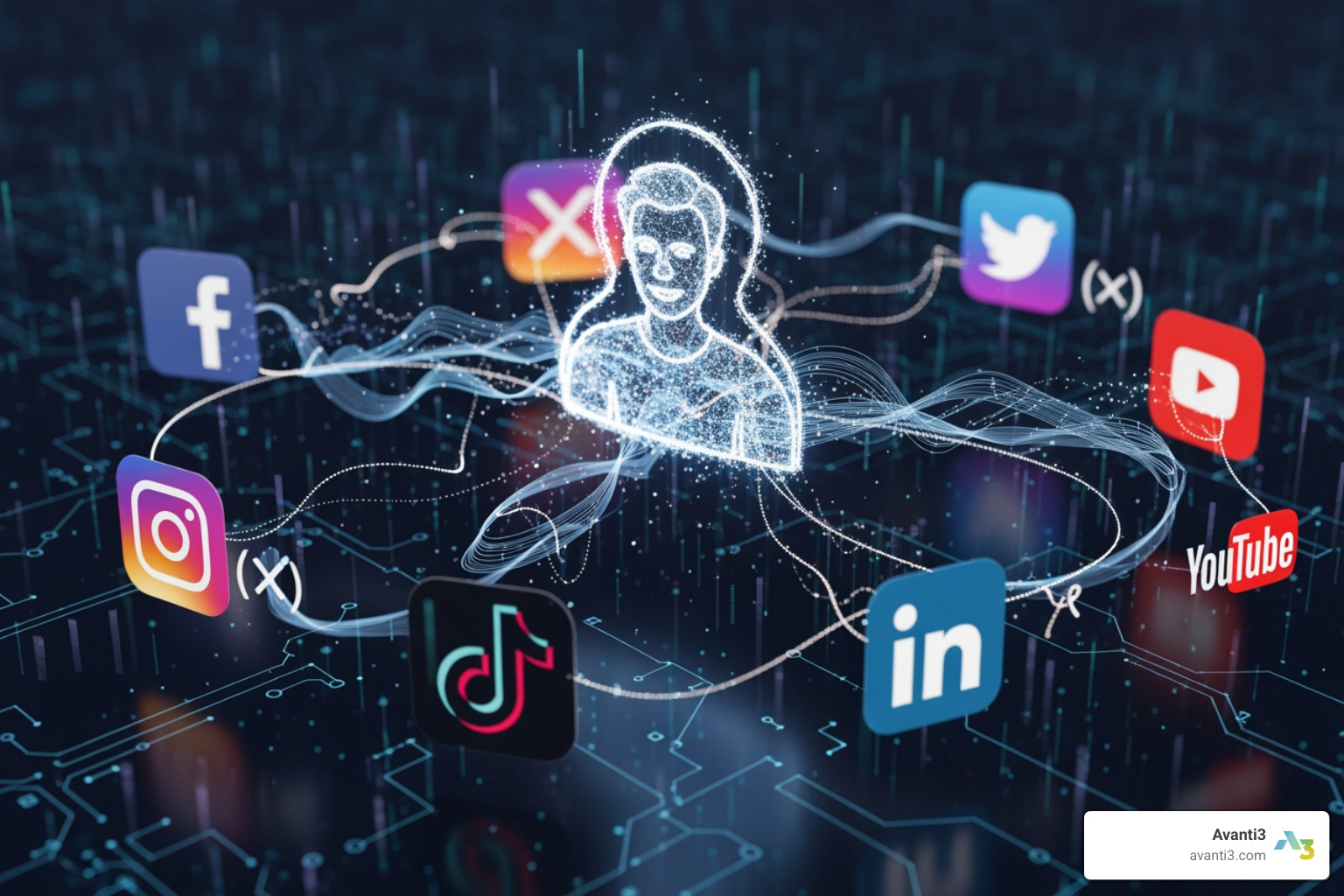
The future of social media is composable, where a single, portable identity allows you to move your content, followers, and social graph across different applications. This rebalances power, putting users in control. As traditional platforms face declining engagement, the appetite for alternatives is growing.
For brands, this is an opportunity to build direct, resilient community relationships, free from the control of a single corporation. Avanti3 helps brands leverage AR/VR Immersive Experiences and AI to create engaging, future-proof communities in this new landscape.
AI and AR/VR will deepen this shift, enabling personalized experiences and immersive social environments. Avanti3 integrates Web3 technologies—NFTs, blockchain, AR/VR, and AI—to empower creators with customizable engagement tools and fintech solutions, setting a new standard for fan monetization and community building.
While challenges in moderation and scalability remain, the momentum toward a decentralized web is clear. By embracing open standards and user ownership, we can build a more equitable and innovative internet.
Ready to shape the future of your online community? We invite you to explore tools for building online communities with us and find how decentralized platforms can open up unprecedented growth for your brand.