The Dawn of a New Reality
AR VR blockchain technologies are converging to create the next generation of digital experiences. This fusion allows users to gain true ownership of virtual assets, conduct secure transactions, and enjoy immersive interactions that blur the lines between physical and digital worlds. Key benefits include true digital ownership, secure transactions via smart contracts, improved privacy, and new monetization channels for creators.
The numbers tell a compelling story. The global Web3 gaming market is projected to reach nearly $29 billion by 2030, growing at 18.7% annually. Meanwhile, AI-improved 2D and 3D content creation is outpacing traditional methods.
But this isn’t just about gaming. As business influencer Bernard Marr notes, spatial computing, AI, and blockchain are converging to redefine our interaction with both digital and physical worlds. From virtual property tours secured by blockchain to AI-powered VR environments, we’re witnessing the birth of the “Convergence Ecosystem.”
I’m Samir ElKamouny AV, and I’ve spent years helping businesses steer emerging technologies. I’ve seen how AR VR blockchain integration creates unprecedented opportunities for creators and brands to build deeper, more profitable relationships with their audiences.
The New Digital Fabric: The Convergence of AR VR Blockchain
Imagine your AR glasses showing friend reviews in a coffee shop as your blockchain wallet pays automatically. Or attending a VR concert and truly owning the digital merchandise you buy, ready to transfer to other virtual worlds. This isn’t science fiction—it’s the reality being built today with the convergence of AR VR blockchain technologies, creating what experts call a “Convergence Ecosystem.”
This is a complete reimagining of how we interact with digital content, own virtual assets, and control our digital identities. The World Economic Forum highlights how spatial computing, AI, and blockchain are redefining our digital and physical interactions. Each technology amplifies the others: AR/VR create immersion, blockchain ensures ownership and security, and Web3 principles empower users. If the internet connected information, Web3 connects value. Combined with AR and VR, it creates a digital fabric where virtual experiences are as real and valuable as physical ones.
Securing the Metaverse: How AR VR Blockchain Improves Trust
How do you create trust in a world that doesn’t physically exist? Without verified ownership and secure transactions, virtual worlds would be chaotic.
Blockchain solves this by acting as an unbreakable digital notary. When you buy a virtual item, blockchain creates an immutable record proving it’s yours. No corporation can take it away, no server crash can delete it, and no hacker can duplicate it.
The benefits of integrating blockchain into AR VR blockchain environments are game-changing:
True Digital Ownership: Through NFTs and blockchain verification, you truly own digital items, not just a license. Projects like Augmented Reality NFTs are already bridging digital and physical fields, letting you own virtual items in your real-world AR experiences.
Secure and Transparent Transactions: Smart contracts automate purchases of virtual land or collectibles. Transactions are instant, transparent, and executed without a middleman.
Improved Data Security: Blockchain’s cryptographic security keeps your personal information safe and gives you complete control over who sees it, making your virtual identity as secure as your real one.
Censorship Resistance: Content on blockchain networks remains accessible even if platforms shut down, creating an open and resilient metaverse.
The Creator Economy: Incentivizing Content on AR VR Blockchain Platforms
The creator economy is getting a massive upgrade. Traditional platforms take huge cuts and control content, but the AR VR blockchain convergence flips this model.
Content Monetization and Royalties: Blockchain enables direct creator-to-consumer transactions, bypassing large platform fees. Smart contracts can also automatically pay creators royalties every time their work is resold.
Community Governance through DAOs: Creators and fans gain power over platforms. Instead of corporate control, communities can vote on changes, policies, and resource allocation.
Micropayments and Incentives: It’s now easy to reward creators directly for their work, from a virtual world design to an AR filter. Our Web3 Creator Platforms and Blockchain Content Distribution solutions make these interactions seamless.
This shift ensures creators get fair compensation while communities gain influence, empowering the people who build digital spaces.
The Role of Generative AI in This Technological Trio
While AR, VR, and blockchain create the foundation, generative AI brings these worlds to life. AI acts as a creative assistant, building virtual worlds in minutes.
Personalized Experiences: AI makes each user’s journey unique. A VR learning environment adapts to your pace, while an AR shopping assistant remembers your style. The digital world truly knows you.
3D Content Creation and Dynamic Worlds: AI solves the content bottleneck by automatically generating realistic 3D models, textures, and landscapes. AI-assisted content creation is already growing faster than traditional methods.
AI-driven NPCs and Intelligent Interactions: AI creates non-player characters (NPCs) that hold real conversations and remember past interactions, making virtual worlds feel alive.
For deeper insights, Bernard Marr’s Generative AI in Practice offers practical applications.
Real-World Revolution: How Industries are Adopting Immersive Tech
The AR VR blockchain revolution is happening now, with experimental tech becoming practical business solutions.
Gaming: The Web3 gaming market is projected to hit $29 billion by 2030. Players truly own in-game items, trade them across games, and earn income via play-to-earn models.
Retail: AR try-ons and blockchain-verified authenticity are changing shopping. Our AR VR Immersive Experiences showcase how retailers build trust and boost sales.

Real Estate: Virtual tours and blockchain-secured deals streamline property transactions. Buyers can explore properties in VR and complete purchases transparently. Dubai’s Land Department is already using blockchain for this.
Healthcare: AI-powered VR training is combined with secure blockchain patient records. Surgeons use mixed reality for precision, while blockchain secures patient data.
Finance: AI fraud detection is paired with blockchain transaction security, creating faster, more secure Web3-enabled financial services.
These examples show how Augmented Reality Marketing and immersive tech are becoming necessities. The convergence is here, changing how we work, shop, and connect.
The Future is Immersive: Challenges, Directions, and Your Role in It
The future is knocking, and it’s wearing AR VR blockchain glasses. We’re on the threshold of a digital revolution that promises to reshape how we work, play, and connect. But every revolution comes with growing pains.
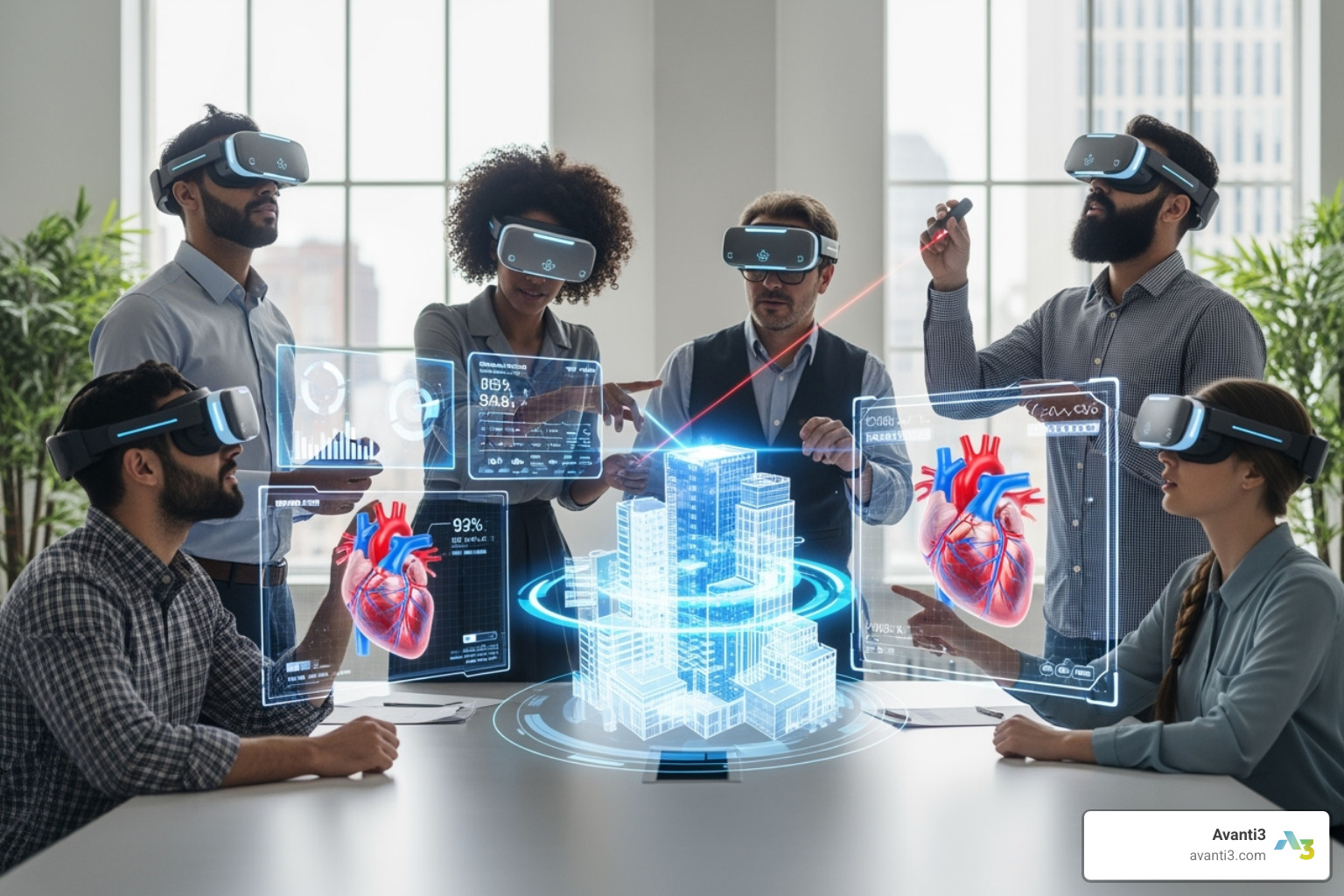
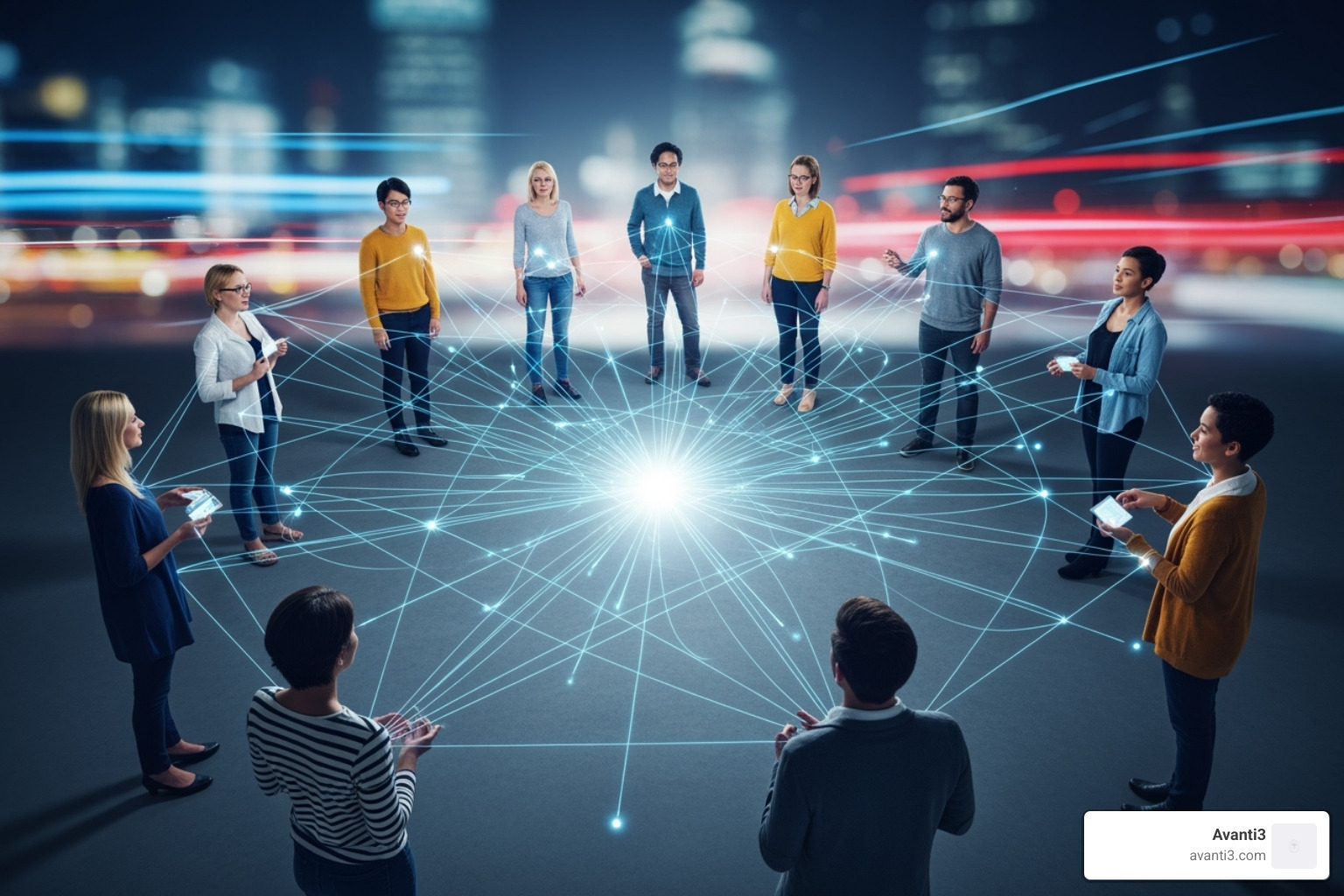
The image above captures the goal: a world where diverse teams collaborate seamlessly in mixed-reality environments. Getting there requires navigating real challenges while keeping our eyes on the incredible possibilities ahead.
Navigating the Frontier: Current Challenges and Future Directions
Building the immersive future requires acknowledging current roadblocks.
Scalability: Current blockchains struggle with the high transaction volumes needed for real-time AR VR blockchain experiences. However, Layer 2 scaling solutions and new consensus mechanisms are emerging to solve this.
Hardware costs: High-end VR/AR hardware remains expensive, limiting access. The “unbundling of the smartphone” and new devices are making AR more accessible, but inclusivity remains a challenge.
User adoption: Many find Web3 platforms and digital wallets complex. The key is creating intuitive experiences that prioritize value over technicality, so users don’t need a computer science degree to participate.
Interoperability standards: A connected metaverse needs standards. Moving assets between virtual worlds is often impossible, but blockchain offers a solution with standardized protocols for asset exchange.
Regulation: Technology outpaces law, creating gray areas for digital assets, data privacy, and IP rights. Clear regulation is essential for building trust and preventing fraud.
Despite these challenges, the future is exciting. Breakthroughs like “proof-of-location” consensus are ideal for AR apps. As highlighted in a new report by the World Economic Forum, the convergence of spatial computing, AI, and blockchain is redefining our world and opening up new possibilities.
Building the Future: Key Considerations for Creators and Businesses
For creators and businesses entering the AR VR blockchain space, the principles for success are straightforward.
User experience: This is your North Star. If a platform is confusing, users will leave. The best implementations make the technology invisible, allowing users to feel the benefits without the complexity.
Security focus: Security is paramount. While blockchain is secure, that protection must extend throughout your application. Regular audits are essential for maintaining user trust.
Community building: Web3 thrives on connection and shared ownership. Build vibrant communities by fostering interaction, empowering users with governance, and rewarding participation. A strong community becomes your biggest advocate.
Strategic implementation: Plan thoughtfully instead of chasing trends. Identify your specific challenges and select the right AR VR blockchain tools to solve them. Focus on innovation that delivers user value.
At Avanti3, we’ve built our platform on these principles. We provide the infrastructure for creators and brands to build meaningful relationships with their audiences through unique digital experiences, rewards systems, and community-building tools that set new standards in digital engagement.
The convergence of AR, VR, and blockchain is a chance to create a more equitable, creative, and connected digital future. Despite the challenges, the rewards are extraordinary. Now is the time to start exploring these possibilities.
Explore our NFT engagement tools to start building your immersive community