

The New Standard for Customer Experience
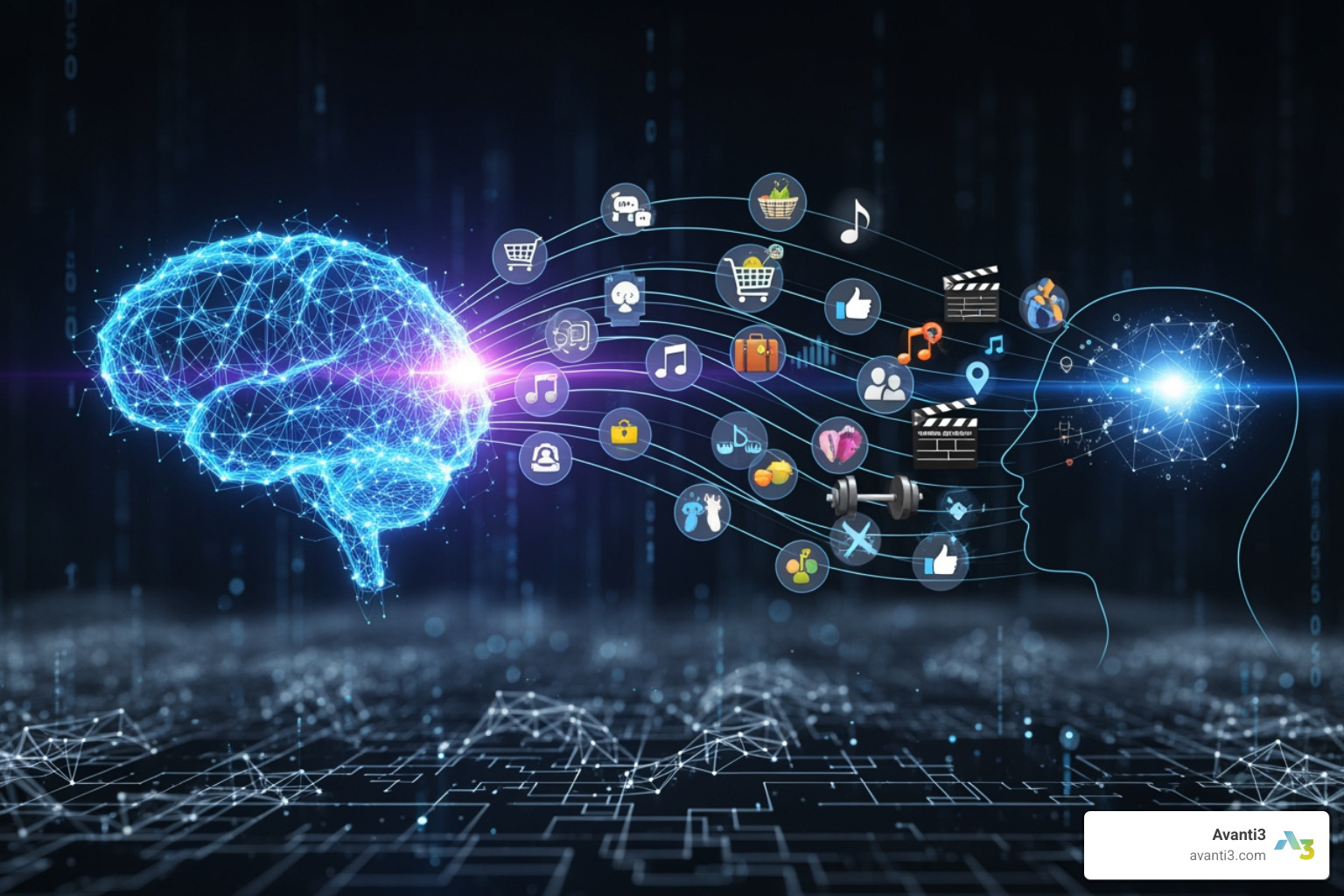
AI powered personalization is the use of artificial intelligence and machine learning to deliver highly customized experiences, content, and recommendations to individual users in real-time by analyzing vast amounts of behavioral, demographic, and contextual data.
Quick Answer: What You Need to Know
- What it is: AI analyzes customer data (browsing, purchases, preferences) to automatically deliver custom content, products, and messaging to each individual
- How it works: Machine learning algorithms identify patterns, predict preferences, and adapt experiences in real-time without manual intervention
- Key benefits: 5-8x return on marketing spend, 15-25% increase in conversion rates, 40% more revenue for fast-growing companies
- Core difference: Traditional personalization uses manual rules and segments; AI personalization is predictive, dynamic, and adapts instantly to each interaction
Over 75% of consumers are turned off by content that doesn’t feel relevant. Yet most brands still deliver generic experiences while their customers drown in choices—thousands of products, endless content, and constant noise across every channel.
The stakes are clear: 71% of consumers now expect personalized content, and three-quarters of business leaders consider it crucial for success. Fast-growing organizations drive 40% more revenue from personalization than their slower competitors. The gap between winners and everyone else isn’t just widening—it’s accelerating.
Traditional personalization can’t keep up. Rule-based systems require constant manual updates, and static segments become outdated the moment they’re created. By the time you understand what a customer wants, their needs have already changed.
AI changes everything. It processes millions of data points instantly, predicts what each person needs before they ask, and adapts in real-time to every interaction. The result? Experiences that feel less like marketing and more like mind-reading.
Consumers today are bombarded with 4,000-10,000 ads every single day. To cut through that noise, messages need to be sharp, relevant, and timely. That’s where AI powered personalization steps in, changing generic interactions into meaningful dialogues. It moves us beyond broad demographics to a world where every customer feels seen, heard, and understood.
This shift isn’t just about making customers happy; it’s about staying competitive. Organizations prioritizing customer experience (CX) achieve three times the revenue growth of their peers. This isn’t a trend; it’s the new standard.
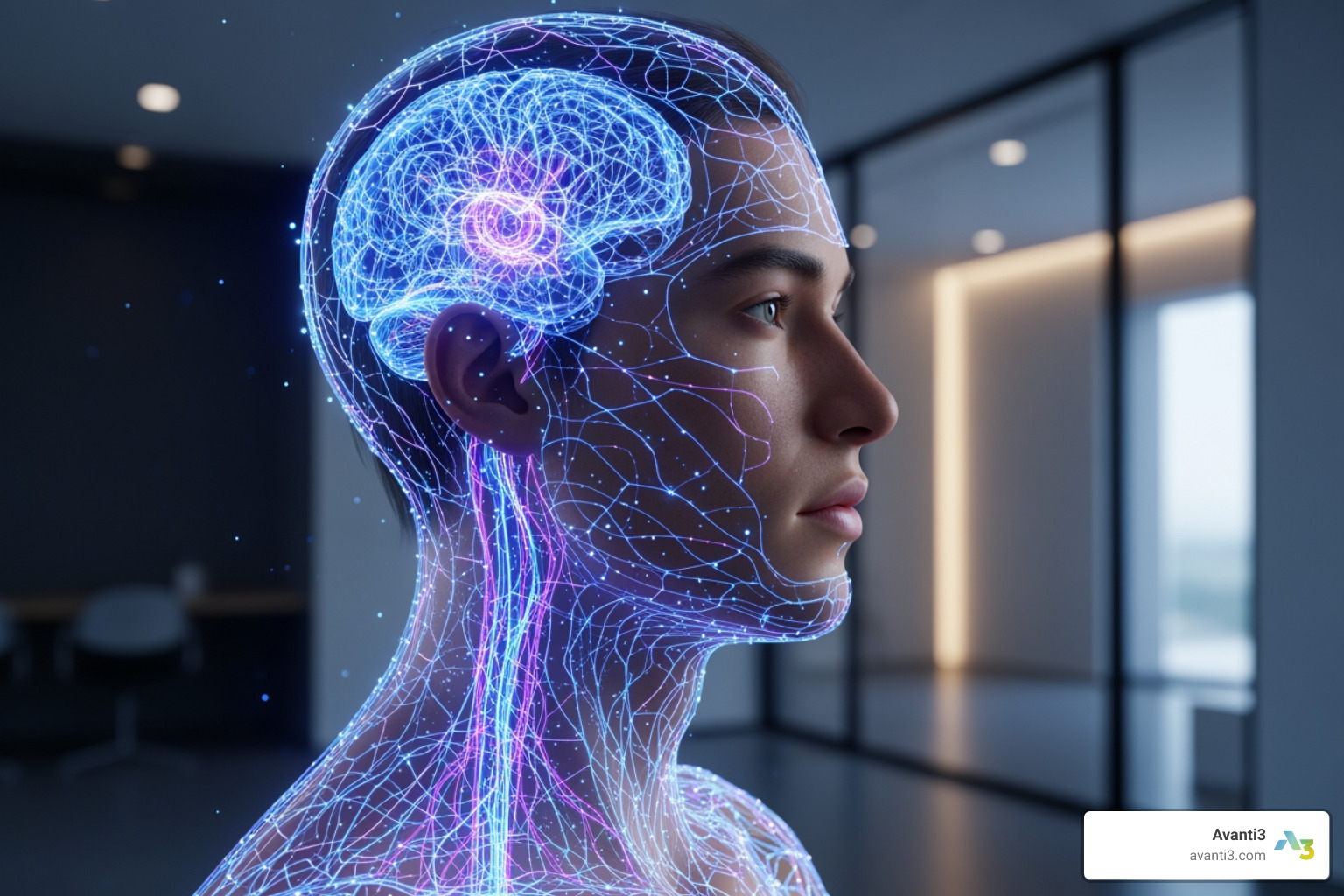
So, how exactly does AI powered personalization differ from the traditional approaches we’ve relied on for so long? Let’s take a look:
| Feature | Traditional Personalization | AI Powered Personalization |
|---|---|---|
| Approach | Rule-based, manual segmentation, predefined conditions | Predictive, dynamic, adaptive, machine learning-driven |
| Data Usage | Limited, often static historical data, explicit preferences | Vast, real-time, behavioral, contextual, implicit patterns |
| Adaptability | Slow to adapt, requires manual updates | Real-time, continuous learning, autonomous optimization |
| Scale | Difficult to scale beyond basic segments | Easily scales to individual, one-to-one experiences |
| Complexity Handled | Simple, straightforward rules | High, identifies complex patterns and nuanced preferences |
| Experience Quality | Relevant but often generic | Hyper-relevant, often anticipatory, truly unique |
| Key Technologies | CRM, simple analytics, email platforms | Machine Learning, NLP, Predictive Analytics, Real-time Data Platforms |
The contrast is stark. Traditional methods can’t handle the complexity and speed of modern consumer behavior. They’re like sending a handwritten letter in an age of instant messaging—charming, but not efficient. AI powered personalization is built for the digital age, offering unparalleled relevance and impact.
Mastering AI Powered Personalization: From Strategy to ROI
The Core Technologies and Capabilities
Let’s pull back the curtain on AI powered personalization. It’s a carefully orchestrated symphony of technologies working together to understand and predict what your customers want.
At the foundation, machine learning algorithms scan vast amounts of data—browsing patterns, purchase history, time on page—to spot patterns invisible to humans. They understand nuance and context, going beyond simple “if-then” rules.
Predictive analytics takes this a step further, forecasting what customers will do next. This allows AI powered personalization to be proactive rather than reactive, anticipating needs and timing messages for maximum impact.
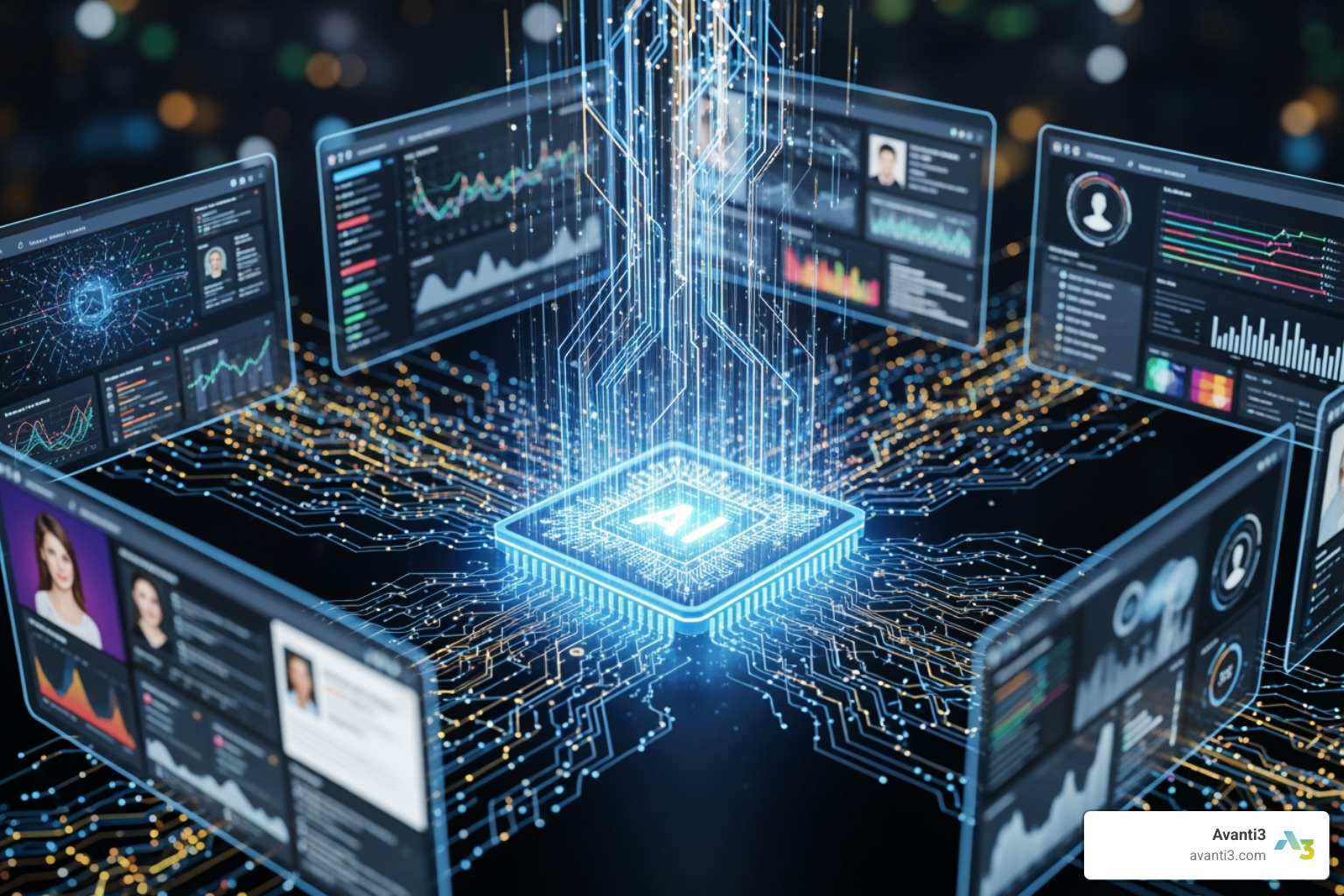
None of this matters without real-time data processing. Customer preferences shift by the minute. Real-time processing means every click and scroll instantly updates a customer’s profile, allowing the system to suggest complementary products within milliseconds.
Recommendation engines make this technology visible to customers, powering the “you might also like” suggestions that feel spot-on. They use sophisticated models like collaborative and content-based filtering. With two-thirds of customers valuing relevant recommendations, these engines are proven to work.
Finally, Natural Language Processing (NLP) helps AI understand human language, from chatbot queries to social media sentiment. This allows for crafting messages that feel authentic and integrate with AI Digital Marketing strategies to create resonant conversations.
Opening up Key Business Benefits
Here’s where AI powered personalization shows up on your bottom line. The return on investment isn’t just good—it’s transformative.
When customers see what they want, they buy. AI personalization drives a 15-25% jump in conversion rates compared to generic approaches. That’s a fundamental shift in customer interaction.
But the real magic is in customer lifetime value. Relevant interactions build loyalty. With 78% of customers more likely to make repeat purchases from brands that understand them, the impact is clear. This translates to a 15% increase in customer retention—and keeping customers is far more profitable than acquiring new ones.
Your marketing budget also works harder. AI powered personalization focuses resources effectively, delivering a 5-8x return on marketing spend by targeting the right people with the right message.

This drives genuine customer satisfaction. When people feel understood, they become brand advocates. The numbers paint the full picture: fast-growing organizations generate 40% more revenue from personalization than their slower competitors. When you lift your AI Customer Engagement strategy with personalization, every interaction becomes an opportunity for growth.
Developing an Effective Implementation Strategy
Launching AI powered personalization requires careful planning and systematic execution. You don’t need to get everything perfect before you start seeing results.
Data readiness comes first. Your AI is only as good as its data. Start by unifying customer information from all touchpoints (CRM, web analytics, social media) into a single source of truth, like a customer data platform. Ensure this data is clean, structured, and consistent to avoid poor personalization.
Next is tool selection. The market is crowded, so choose tools that integrate with your existing tech stack, can scale with your growth, and offer customization. A robust A/B testing framework is non-negotiable for continuous improvement.

Deployment and testing should start small. Choose a specific customer segment or single channel for a pilot program, like personalized email subject lines. Use A/B testing from day one to compare your personalized experiences against control groups. This focused approach lets you learn what works, identify issues early, and build expertise before a full-scale rollout.
This phased approach—solid data foundation, thoughtful tool selection, and measured deployment—ensures your AI powered personalization efforts deliver real value from the start and continue improving over time. It’s an ongoing commitment to understanding your customers better every day.
The Future of Engagement: Hyper-Personalization, Ethics, and Your Next Steps
The Next Frontier: Hyper-Personalization and Agentic AI
Beyond AI powered personalization lies an even more exciting frontier: hyper-personalization. If personalization is a barista remembering your order, hyper-personalization is that barista knowing you want something different on a rainy day based on past preferences.
Hyper-personalization creates truly one-to-one experiences that adapt in real-time to every interaction. It’s not just about knowing preferences; it’s about understanding the context of each moment. The results are significant: fast-growing organizations gain 40% more revenue from hyper-personalization compared to slower competitors.
This precision is made possible by Agentic AI. These are not typical algorithms; they are autonomous decision-making systems that observe, plan, act, and learn without constant human direction. They proactively optimize the user experience.
For example, an Agentic AI system might notice you browsing hiking gear, check the weather forecast for your area, and proactively send a timely offer on a waterproof jacket that matches your style. That’s anticipating needs before they’re fully formed.
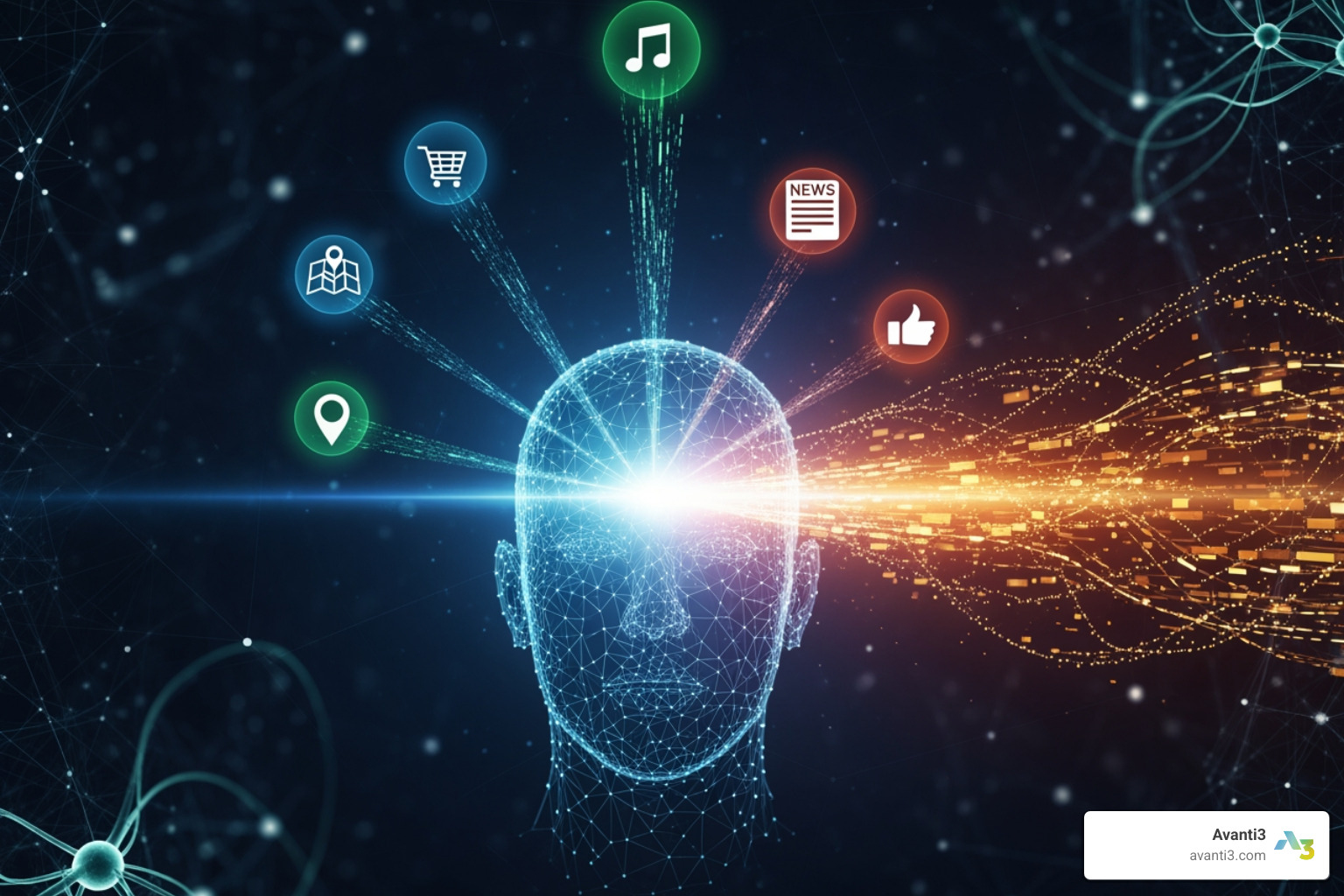
These systems leverage large language models to instantly generate content, promotions, and articles that align with each person’s evolving tastes. Imagine a travel agent powered by Agentic AI that doesn’t just recommend destinations but dynamically creates a personalized itinerary and learns from your feedback in real-time.
This is the future of customer experience—seamless, intuitive, and deeply personal. For creators and brands, this opens up incredible possibilities for dynamic content and adaptive digital experiences. AI tools for creators are designed with this vision in mind, enabling unique digital interactions that build genuine connections.
Navigating Challenges and Ethical Considerations of AI Powered Personalization
Powerful technology comes with real responsibility. While AI powered personalization offers incredible benefits, we must address the challenges and ethical questions it raises.
Data privacy is the top concern. For AI to work, it needs data, which makes people nervous. With customer trust in data security low and security breaches common, transparency is paramount. Be clear about what data you collect and why, and comply with regulations like GDPR and CCPA.
Then there’s algorithmic bias. AI learns from data, and if that data contains historical biases, the AI will learn and potentially amplify them. This can lead to discriminatory pricing or exclusionary content. The fix requires diverse training data and rigorous, ongoing auditing of algorithms for fairness.
The “black box” nature of some AI models can breed suspicion. While you can’t explain every calculation, you can be transparent about the principles behind your personalization. As scientific research on e-commerce governance and consumer behavior emphasizes, ethical design and transparency are critical for building consumer trust.
Finally, there’s the “creepiness factor.” There’s a fine line between helpful and intrusive. Just because we can personalize something doesn’t mean we should. The goal is thoughtful service, not surveillance. Building trust means continuously monitoring algorithms and always asking: “Would I be comfortable if this were done to me?”
Ensuring Responsible Use and Getting Started with AI Powered Personalization
The path to effective and ethical AI powered personalization is an ongoing journey requiring technical skill and a strong ethical compass. We must ensure our AI systems put customers’ well-being and trust first.
Ethical AI models are non-negotiable. This means actively preventing bias by using diverse datasets and regularly auditing algorithms for fairness. Strong data governance makes this possible, including clear data use policies and stringent security protocols.
User consent must be front and center. Proactively and honestly communicate with customers about data usage. Ask for explicit consent, provide easy opt-out options, and be transparent about how AI influences marketing.
The goal is value creation for both the business and the customer. Personalization should genuinely improve the customer experience, making it more convenient and relevant. When customers perceive real value, trust deepens, leading to loyalty and engagement.
Here are essential practices for responsible AI powered personalization: Prioritize data quality with clean, accurate data. Be transparent about data use. Seek consent explicitly and offer clear opt-outs. Combat bias by monitoring algorithms and diversifying data. Ensure security with robust cybersecurity measures. Focus on value by creating genuinely helpful experiences. Respect boundaries to avoid the creepiness factor. Continuously iterate and optimize based on metrics and feedback. Foster cross-functional collaboration across marketing, tech, and legal teams. Finally, align with business goals to ensure personalization strategies support overall objectives.
At its core, AI powered personalization is about building deeper, more meaningful relationships. By empowering brands to create unique digital experiences that set a new standard in digital engagement, it offers a path to transform the customer experience. Harnessing this power responsibly and effectively is the key to unlocking its full potential.