


Why AI Customer Experience Solutions Are Reshaping Business

AI customer experience solutions use artificial intelligence to automate support, personalize interactions, and deliver smarter customer service at scale.
Quick Overview:
- What they do: Automate support, personalize interactions, and provide 24/7 service.
- Key benefits: Faster responses, reduced costs, and higher customer satisfaction.
- Core technologies: AI chatbots, machine learning, NLP, and sentiment analysis.
- Main challenges: Skill gaps, integration complexity, and balancing automation with a human touch.
The numbers tell a compelling story. 65% of CX leaders now view AI as a strategic necessity that has made older customer experience operations obsolete. Meanwhile, a growing number of consumers prefer interacting with bots for immediate service. We’re witnessing a fundamental shift in how businesses connect with their audiences.
This change isn’t just about automationit’s about creating meaningful, personalized interactions that scale. AI-powered tools can track customer sentiment, predict churn, and deliver hyper-personalized experiences. Companies implementing these solutions are seeing dramatic results, including faster response times, higher resolution rates, and improved customer satisfaction.
For a broader context on how AI is reshaping customer service globally, you can explore the background of customer service automation and how it has evolved alongside digital change.
The challenge? Nearly 80% of CX leaders want to increase their AI budgets, yet many struggle with implementation. Integration complexity, workforce readiness, and customer trust remain real problems.
I’m Samir ElKamouny, and I’ve spent years helping businesses transform their customer engagement strategies. In my work implementing AI customer experience solutions, I’ve seen how the right approach creates better experiences for audiences and financial freedom for companies.
Ai customer experience solutions terms to know:
The Transformative Power of AI Customer Experience Solutions
When we talk about an AI customer experience (CX), we’re referring to the strategic integration of artificial intelligence throughout the entire customer journey. This isn’t just about adding a chatbot; it’s about leveraging machine learning, NLP, and predictive analytics to create seamless, intelligent, and proactive interactions. The goal is to improve every stage, from inquiry to post-purchase support, making it faster, more efficient, and deeply personalized.
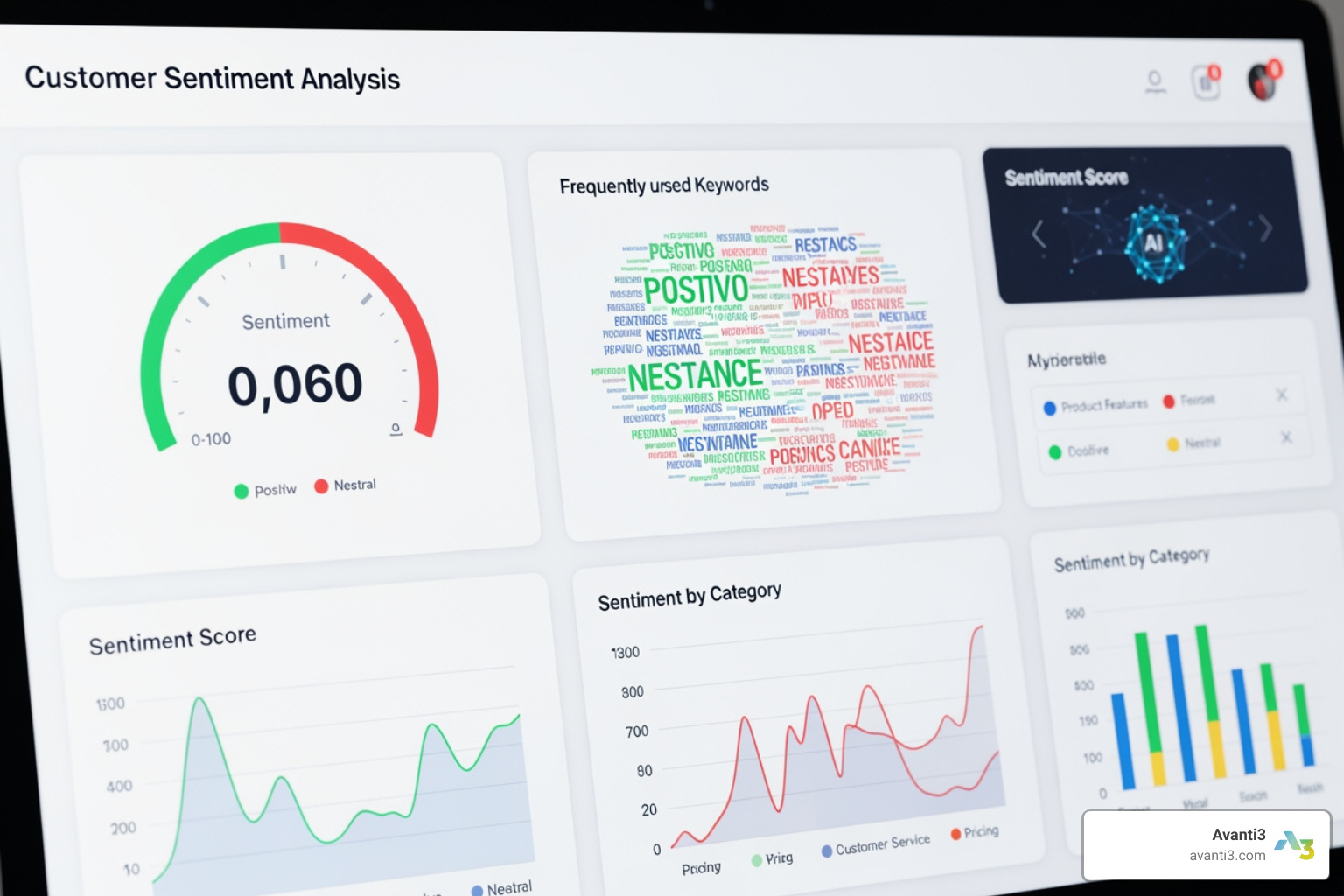
The role of data in powering AI for CX cannot be overstated. AI thrives on data, using customer information—from past interactions and purchase history to browsing behavior—to learn, predict, and respond intelligently. This data allows AI to understand customer intent, personalize recommendations, and even anticipate needs.
How AI Improves Customer Interactions and Service
So, how exactly do AI customer experience solutions improve customer service? The benefits are multi-faceted:
- 24/7 Support: AI-powered chatbots and virtual assistants offer round-the-clock availability, ensuring customers get assistance anytime. This is a game-changer for global businesses.
- Instant Responses: For common queries, AI provides immediate, accurate answers, eliminating wait times and boosting satisfaction.
- Hyper-Personalization: AI analyzes customer data to tailor interactions, from product recommendations to proactive problem-solving. This level of personalization makes customers feel seen and valued.
- Consistent Brand Experience: AI can be trained with your brand’s specific tone, ensuring every interaction reflects a consistent brand personality, whether with a bot or an AI-assisted agent.
- Increased Efficiency and Reduced Costs: By automating routine tasks, AI frees up human agents to focus on more complex issues. This intelligent triage leads to significant time and cost savings. We’ve seen real-world examples where companies have deflected thousands of tickets, boosting first response times by over 80% and saving over a million dollars. In another case, a fintech startup saw its first reply time drop by 64% and achieved an 80% one-touch response rate.
- Sentiment Analysis and Intelligent Triage: AI can analyze customer sentiment in real-time, allowing for intelligent routing that prioritizes urgent or frustrated customers to human agents for a more empathetic response when needed.
Key Features and Applications of AI in CX
When we evaluate AI customer experience solutions, we look for a suite of features that create a seamless customer journey:
- AI-powered Chatbots and Virtual Assistants: The frontline of support, handling multiple queries simultaneously and learning from each interaction.
- Predictive Analytics: AI analyzes historical data to forecast customer behavior, identify churn risks, and anticipate needs, allowing businesses to be proactive.
- Natural Language Processing (NLP): This allows AI to understand, interpret, and respond to human language in a natural way across any channel.
- Voice Assistants and Conversational AI: Beyond text, voice AI enables natural spoken interactions for a more convenient customer experience.
- Automated Routing and Intelligent Triage: AI analyzes incoming contacts to understand intent and sentiment, routing them to the best agent or resolving them automatically.
- Agent-Assist Tools (AI Copilots): These AI tools work alongside human agents, providing real-time suggestions, knowledge base access, and response drafts to improve efficiency.
- Self-Service Knowledge Bases: AI helps maintain and optimize knowledge bases, suggesting new content so customers can easily find answers themselves.
- Sentiment Analysis: AI detects a customer’s emotional state, allowing the system or agent to adjust their approach for a more effective resolution.
These features, when integrated effectively, create a powerful ecosystem for customer engagement. For those looking to leverage AI beyond just customer service, understanding how these technologies can be applied across various digital touchpoints is crucial. You can find More info about AI Digital Marketing to explore broader applications.
Overcoming the Challenges of AI Implementation
While the benefits of AI customer experience solutions are clear, implementation presents real challenges that must be addressed head-on.

A key challenge is the impact on the customer service workforce. There’s a concern that AI will take jobs, and 66% of leaders believe their team lacks the necessary skills. Our approach emphasizes that AI should augment human capabilities, not replace them. This shift requires upskilling teams to become “AI-powered” agents who handle complex, high-value interactions.
System integration complexity is another major hurdle. Integrating new AI platforms with legacy systems requires significant technical expertise and careful planning. Then there’s the investment required, as the initial outlay for technology and training can be substantial.
Customer trust issues and a perceived lack of human touch are also significant. Some customers prefer human interaction, especially for complex issues. Transparency is key: let customers know they’re interacting with AI and provide clear escalation paths to human agents. Finally, data privacy concerns are paramount. AI systems rely on vast amounts of customer data, making robust data governance and security protocols non-negotiable.
Measuring Success and Ensuring Trust with AI Customer Experience Solutions
To ensure AI customer experience solutions deliver real value, we must rigorously measure their success and work to build customer trust.
Measuring Success:
We track several Key Performance Indicators (KPIs) to gauge effectiveness:
- Customer Satisfaction (CSAT): Measured via surveys, CSAT can be significantly boosted by AI’s speed and personalization. Some companies, for example, have achieved 98% CSAT scores after implementing AI.
- Net Promoter Score (NPS): A measure of loyalty that improves as AI makes interactions more efficient.
- First Response Time (FRT): AI chatbots dramatically reduce FRT, often to mere seconds, with some companies seeing drops of over 60%.
- Resolution Rate: Tracks how many issues are resolved by AI without human intervention. We’ve seen resolution rates increase by nearly 10% and one-touch resolution rates climb over 60%.
- Operational Cost Savings: Quantifying the reduction in agent workload and call volume attributable to AI.
- Agent Productivity: Measuring how AI tools empower agents to handle more complex cases effectively.
Ensuring Trust and Reliability:
Building trust in AI is crucial. Here’s our approach:
- Role of Quality Data: AI is only as good as its training data. We ensure systems are grounded in trusted, up-to-date CRM data and knowledge bases.
- Transparency: We advocate for clear communication, letting customers know when they are interacting with AI.
- Bias Mitigation: We implement rigorous testing and auditing to identify and correct biases in AI models, ensuring fair interactions.
- Human Oversight and Handoffs: We design systems with seamless escalation paths to human agents for complex or sensitive issues.
- Data Security and Privacy: We uphold strict data governance policies to protect customer data through encryption and other security measures.
The Future of Customer Engagement with AI
Looking ahead, the future of AI customer experience solutions is incredibly exciting, promising even more personalized, proactive, and immersive interactions.
We’re moving towards a landscape where AI isn’t just reacting to customer needs but actively anticipating them, often within new, decentralized environments.
Emerging Trends: From Hyper-Personalization to Web3 Integration
The evolution of AI in CX is driven by several key trends:
- Advanced AI-driven Personalization: Beyond basic recommendations, AI will create truly unique customer journeys, adapting interactions in real-time based on sentiment and context.
- Generative AI for Dynamic Interactions: Generative AI will enable more natural, human-like conversations, capable of understanding complex nuances and crafting creative solutions.
- Proactive and Predictive Customer Service: AI will increasingly identify potential issues before they impact the customer, such as automatically re-routing a delayed delivery or offering help based on product usage.
- Web3 Integration and Decentralized CX: We envision AI customer experience solutions operating within Web3 environments, leveraging blockchain, NFTs, and Decentralized Autonomous Organizations (DAOs) to create new forms of engagement.
- NFTs in Loyalty Programs: Customers could earn unique, tradeable NFTs as loyalty rewards, open uping exclusive experiences. This connects to our work in Digital Community Building.
- DAOs for Community-Driven Support: Customer communities could collectively govern support resources or vote on product features, with AI managing interactions.
- Improved Data Ownership: In Web3, customers have greater control over their data. AI will adapt to respect user data sovereignty while still offering personalized services.
- Immersive Experiences with AR/VR: Integrating AI with augmented and virtual reality will lead to immersive support, like a virtual assistant guiding you through a product setup in AR.
- AI for the Creator Economy: For creators, AI will be indispensable for managing fan engagement and personalizing content. Our expertise at Avanti3 in integrating Web3 technologies and AI is designed to empower creators and brands with these new tools.
Getting Started with AI Customer Experience Solutions
The journey to implementing AI customer experience solutions is an essential step for any forward-thinking business. Here are some actionable steps to get started:
- Identify Your Pain Points: Don’t implement AI for its own sake. Start by addressing a specific problem, like long wait times or repetitive queries, that AI can clearly solve.
- Start Small, Think Big: Begin with a pilot project, like a chatbot for FAQs. Learn from this experience, gather data, and then scale up.
- Choose the Right Tools: The market is flooded with AI solutions. Look for platforms that offer the key features we discussed, integrate well with your existing systems, and align with your budget. The best tool is one that solves your specific problems effectively.
- Train Your Team: Prepare your workforce for the shift. Provide training on how to use AI tools and how their roles will evolve to focus on higher-value customer engagements.
- Accept a Data-Driven Approach: Continuously collect and analyze data from your AI interactions to refine your models and optimize the customer journey.
- Partner with Experts: Implementing advanced AI customer experience solutions often requires specialized knowledge. Working with partners who understand both AI technology and your business needs can significantly accelerate your success. At Avanti3, we specialize in helping businesses steer this complex landscape.
Ready to transform your customer interactions? Let’s talk about how AI customer experience solutions can work for you. You can Start your AI customer engagement journey today with us and explore how we can help you integrate these powerful technologies into your business.