


Why AI Driven Recommendations Are Reshaping Digital Experiences
AI driven recommendations are changing how businesses connect with customers, using machine learning to analyze user data and predict what people want. Here’s a quick look:
- What they are: Intelligent systems that suggest relevant products, content, or services by analyzing user behavior and preferences.
- How they work: Through algorithms like collaborative filtering (what similar users like), content-based filtering (item attributes), and hybrid models.
- Why they matter: They drive significant revenue, with 80% of Netflix views and 35% of Amazon purchases coming from recommendations.
- Key benefits: Increased sales, higher engagement, improved retention, and a better user experience.
The numbers are compelling. Personalization can raise revenues by 5-15%, and the recommendation engine market—valued at $6.88 billion in 2024—is projected to triple in five years. These systems cut through information overload and reduce decision fatigue, helping users find products and content they genuinely love.
I’m Samir ElKamouny, and I’ve spent years helping businesses scale through innovative technology. I’ve seen how AI driven recommendations create lasting success by turning data into meaningful customer connections that fuel both engagement and revenue.
What Are AI-Driven Recommendations?
Imagine a personal shopping assistant who knows your tastes perfectly. That’s an AI-driven recommendation system. It’s sophisticated software that analyzes vast amounts of data—browsing habits, purchase history, and clicks—to suggest things you’ll actually want. These systems use machine learning to spot patterns impossible for humans to identify, understanding context and anticipating needs.
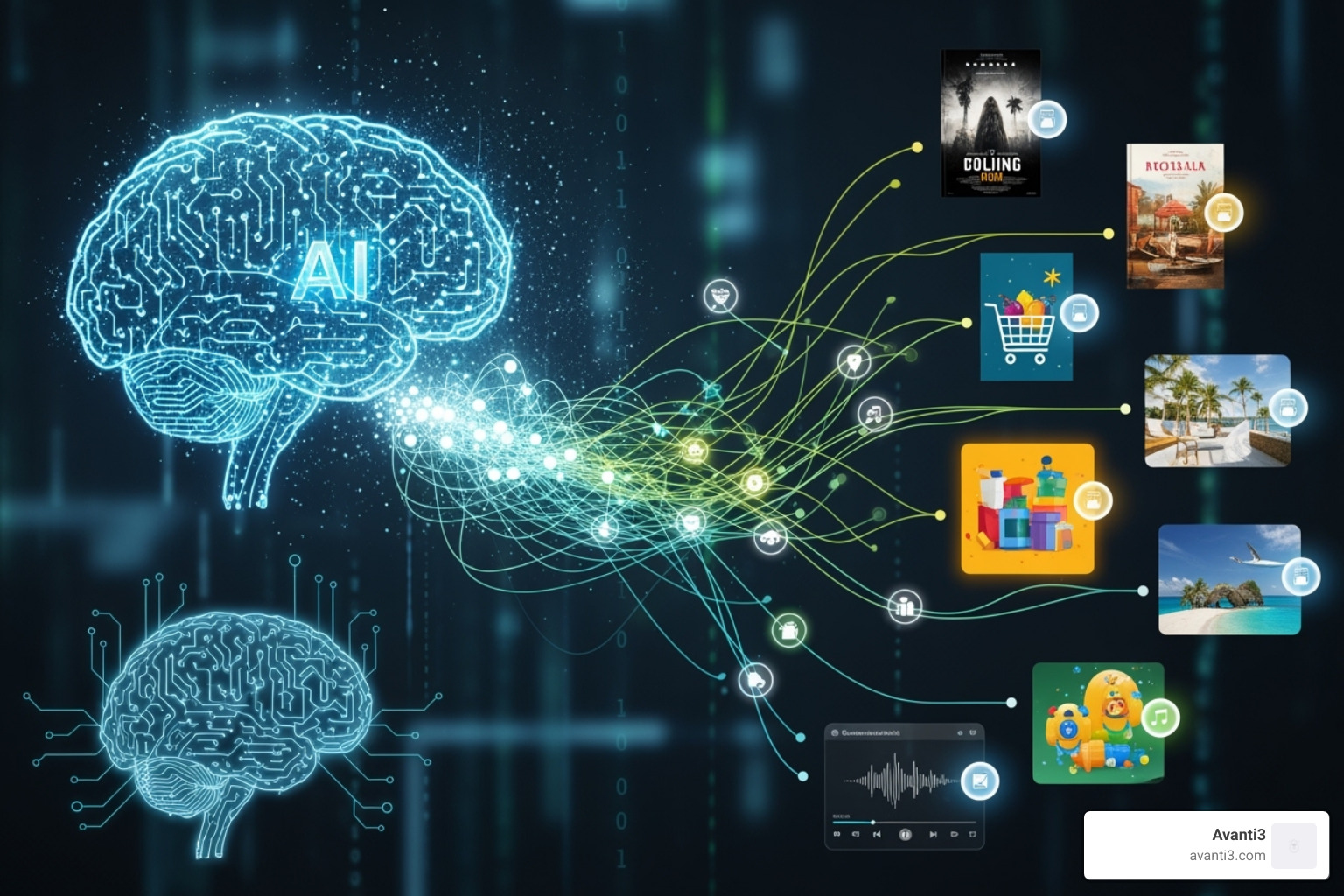
When they work well, the experience feels effortless. When they don’t, frustration sets in; 76% of customers feel this way without personalized interactions. These systems are now essential for turning overwhelming choice into delightful findy.
The Evolution from Traditional to AI Methods
Before AI, recommendations were simpler. Traditional methods included rule-based suggestions (if you buy A, see B), manual curation by experts, and simple popularity lists. These approaches were rigid, slow, and couldn’t scale or adapt to individual tastes.
AI changed the game. AI driven recommendations introduce dynamic learning, continuously refining suggestions based on new data. They offer real-time adaptation to your current actions and provide massive scalability, serving millions of users with unique, personalized recommendations simultaneously. As NPR’s history of recommendation systems highlights, this evolution is what makes modern digital experiences feel so intuitive.
Core Components of a Recommendation System
An effective system requires several interconnected parts. It starts with data collection, gathering user behavior (clicks, searches), item details (product descriptions, genres), and contextual data (device, time of day). This includes explicit data like ratings and implicit data revealed through behavior. Mastering personalized data is foundational.
This raw data then undergoes preprocessing to clean and structure it. The machine learning algorithms then analyze the prepared data to find patterns and make predictions. Real-time processing ensures recommendations are always fresh and relevant to a user’s current actions. Finally, a robust data infrastructure (databases, cloud computing) provides the power to handle everything at scale.
How AI Driven Recommendations Work and Why They Matter
The magic of AI driven recommendations is their ability to translate complex data into simple, relevant suggestions. They observe your clicks, pauses, and purchases in real-time, compare your behavior with millions of others, and predict what you’ll love next. This isn’t just a feature; it’s a strategic imperative.
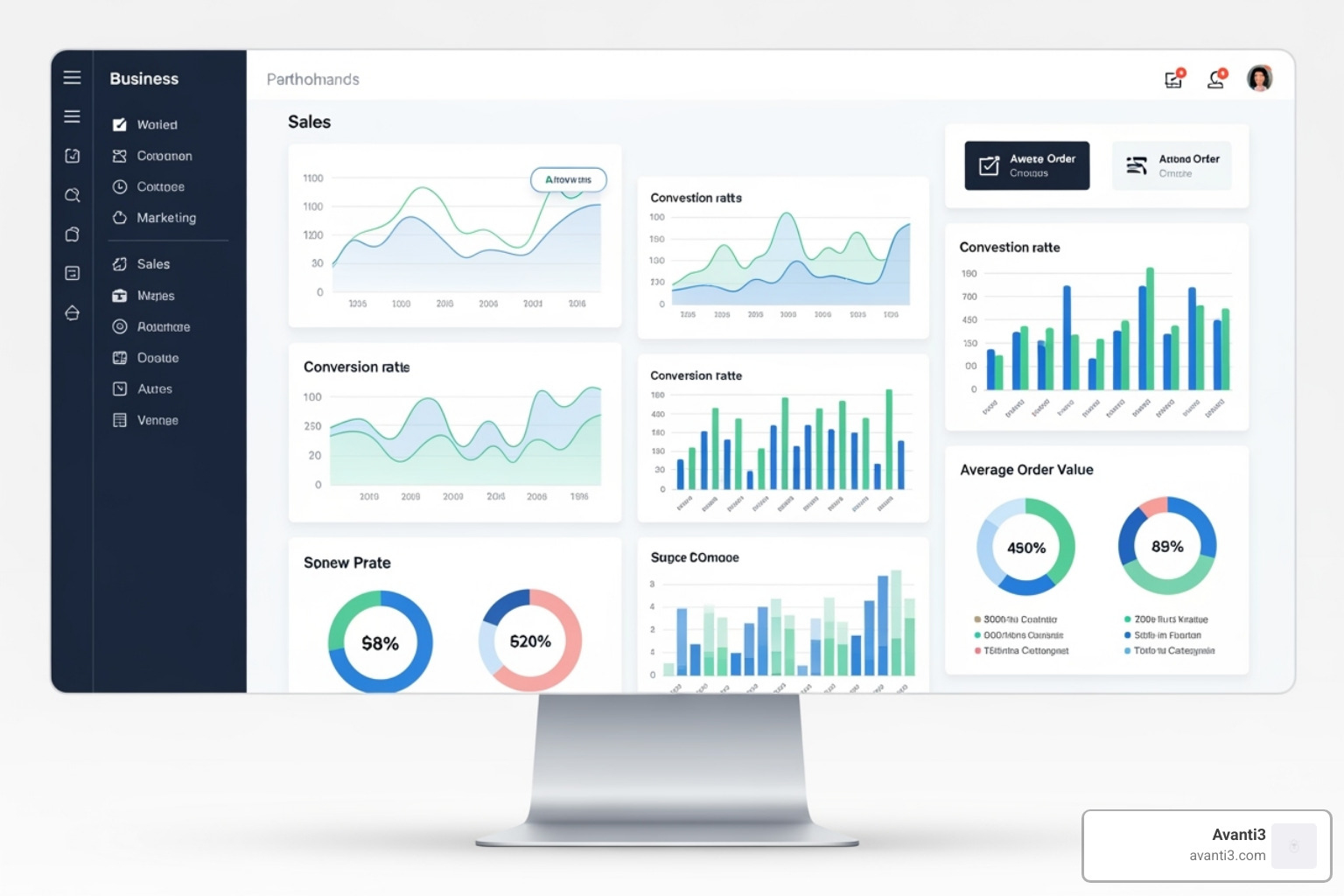
The business impact is undeniable. McKinsey reports that 35% of Amazon purchases and 80% of Netflix views come from recommendations. This leads directly to increased sales, improved customer engagement, and better customer retention, with personalized experiences driving a 44% increase in repeat purchases. It’s about helping people find what they’re looking for, which in turn builds loyalty.
Primary AI Recommendation Algorithms
The “brain” of the system is its algorithms. While complex, they generally fall into three categories:
-
Collaborative filtering works on the idea that “people who liked X also liked Y.” It finds users with similar tastes to recommend new items, enabling serendipitous findies. It’s famously used by Amazon and Spotify but struggles with new users or items (the “cold-start problem”). You can learn more about collaborative filtering.
-
Content-based filtering focuses on item characteristics. If you watch several action movies, it will recommend more action movies. This works well for new users but can create a “filter bubble,” limiting findy. More details can be found on content-based filtering.
-
Hybrid systems combine both approaches to get the best of both worlds, overcoming individual weaknesses. This is why most major platforms like Netflix use a hybrid recommendation system to balance personalization with findy.
| Algorithm Type | Strengths | Weaknesses | Best Use Cases |
|---|---|---|---|
| Collaborative Filtering | Excellent for serendipitous findy; no item metadata needed. | Cold-start problem (new users/items); sparse data issues. | Large user bases with rich interaction history (e.g., streaming services, e-commerce with many ratings). |
| Content-Based Filtering | Good for new users; effective for niche items; avoids cold-start for new users. | Can create filter bubbles; requires detailed item metadata; less serendipitous. | When detailed item descriptions are available and users have clear, consistent preferences (e.g., news articles, academic papers, specific product categories). |
| Hybrid Systems | High accuracy; handles cold-start better; balances personalization and findy. | Complex to implement; higher computational demands. | Most large-scale recommendation systems (e.g., Netflix, Amazon) aiming for robust, comprehensive, and evolving personalization. |
Real-World Applications and Challenges
AI driven recommendations are everywhere, from e-commerce sites suggesting products to media platforms like Netflix and Spotify curating your next watch or listen. In travel, they suggest destinations and hotels, while in finance, they can recommend investment portfolios.

At Avanti3, we leverage AI in our Digital Fan Engagement strategies, helping creators in the Web3 space recommend NFTs and digital experiences that resonate with their audience.
However, challenges exist. Data privacy is a major concern, requiring compliance with regulations like GDPR. Algorithm bias can perpetuate societal inequalities if not carefully monitored. Building user trust through transparency is crucial, as is overcoming the technical “cold start” problem for new users. Finally, the cost and complexity of building and maintaining these systems require significant investment.
Implementing and Measuring Your AI Strategy
Implementing an AI driven recommendation system is achievable with a clear roadmap. Start by defining clear objectives: are you trying to increase order value, boost conversions, or improve retention? Next, focus on data preparation, ensuring your user, product, and interaction data is clean and structured. This is especially critical for complex data environments like our Web3 Creator Platforms.
After choosing the right algorithms for your goals, the key is seamless integration into your user journey. At Avanti3, we focus on Digital Experience Design to ensure recommendations improve, not interrupt, the experience. Finally, AI is not “set it and forget it.” Continuous monitoring and optimization through A/B testing and model retraining are essential for long-term success.
Measuring Success and ROI
To know if your strategy is working, track the right metrics. Key performance indicators include:
- Conversion Rate: The percentage of users who act on a recommendation.
- Click-Through Rate (CTR): How often users click on recommended items.
- Average Order Value (AOV): Whether recommendations are encouraging larger purchases.
- Customer Lifetime Value (CLV): How recommendations contribute to long-term loyalty and repeat business.
- Recommendation-Driven Revenue: The total revenue directly attributable to your recommendation engine.
Tracking these numbers will prove the ROI of your system and guide future improvements.
Emerging Trends and Future Directions
The world of AI driven recommendations is constantly evolving. Explainable AI (XAI) is a major trend, building user trust by showing why a recommendation was made. Reinforcement learning is creating more adaptive systems that optimize for long-term engagement, not just immediate clicks.
We’re also seeing a rise in multi-modal recommendations that use images, audio, and video, powered by technologies like computer vision and natural language processing. These create richer, more nuanced suggestions. In the Web3 space, AI agents are opening new frontiers by interacting with blockchain networks to create novel, personalized experiences.
At Avanti3, we are at the forefront of integrating these emerging technologies to build the next generation of digital engagement. The journey with AI is one of continuous adaptation, and we’re excited to lead the way.
Ready to transform your customer engagement with smarter, more personalized experiences? Explore our digital engagement solutions and find how we can help you leverage the power of AI to build deeper connections with your audience.