

The Problem with Points
Blockchain loyalty system technology is changing how businesses reward customers by replacing traditional points programs with transparent, secure, and transferable digital assets stored on a decentralized ledger. Here’s what you need to know:
Key Features of Blockchain Loyalty Systems:
- Transparency: Every transaction is recorded on an immutable ledger visible to all parties
- Ownership: Customers truly own their rewards as digital tokens, not just account balances
- Transferability: Rewards can be traded, sold, or used across multiple brands and platforms
- Security: Cryptographic protection prevents fraud and unauthorized manipulation
- Automation: Smart contracts execute rewards instantly without manual processing
Customer loyalty programs are broken. Despite billions invested, they suffer from low redemption rates, opaque rules, and high operational costs. For customers, it’s a frustrating experience of silently expiring rewards, fluctuating value, and points trapped in siloed systems, unusable across brands. For companies, it means maintaining expensive infrastructure while struggling with fraud and growing balance-sheet liabilities from unredeemed rewards.
Blockchain technology offers a radically different approach. Instead of vague promises in a centralized database, rewards become tangible digital assets tied to the user, not the app. Every token carries context, every rule is visible, and there’s no room for silent expirations or back-end discretion. Blockchain loyalty systems provide clean records and automatic fulfillment, changing passive point-collecting into active, meaningful engagement.
I’m Samir ElKamouny, and I’ve spent my career helping businesses scale through innovative marketing and technology solutions, including implementing blockchain loyalty systems that transform customer engagement. My mission is to help creators and brands build communities where every interaction creates lasting value.
Essential Blockchain loyalty system terms:
The Rise of the Blockchain Loyalty System: How It Works and Why It Matters
The concept of a Blockchain loyalty system isn’t just a buzzword; it’s a fundamental shift in how we approach customer relationships. It takes the fragmented, frustrating world of traditional loyalty programs and injects transparency, security, and genuine value.
The Cracks in Traditional Loyalty: Why a Change is Needed
Traditional loyalty programs are struggling, plagued by issues that leave both businesses and customers short-changed. Key problems include:
- Opaque Reward Structures: Customers find it difficult to understand how points are earned or redeemed, leading to frustration.
- Limited Flexibility: Systems are notoriously siloed, preventing users from transferring or sharing rewards across different brands. This fragmentation means valuable points often go unredeemed.
- High Operational Costs: Maintaining centralized loyalty systems is costly and inefficient, with expenses for intermediaries and complex IT infrastructure eating into profitability.
- Fraud and Mismanagement: Centralized databases are vulnerable to hacking and manipulation, compromising the program’s integrity and eroding trust.
- Lack of Personalization: Generic discounts that don’t resonate with specific customer needs reduce the incentive for continued engagement.
- Unredeemed Points Liability: For businesses, the growing volume of unredeemed points creates a large balance-sheet liability that companies must account for.
Here’s a quick look at how the two approaches stack up:
| Feature | Traditional Loyalty Programs | Blockchain Loyalty System |
|---|---|---|
| Transparency | Opaque rules, hidden terms, centralized data | Every transaction on immutable ledger, visible rules |
| Flexibility | Siloed, limited transferability, brand-specific | Interoperable, transferable, tradable across brands |
| Cost | High operational, intermediary fees, fraud risk | Reduced overhead, automated, lower fraud risk |
| Security | Centralized databases vulnerable to hacks | Cryptographic security, tamper-proof, fraud prevention |
| Ownership | Points owned by brand, subject to change | Customers own rewards as digital assets (tokens) |
| Redemption | Complex, slow, limited options, expiration dates | Instant, automated via smart contracts, diverse utility |
| Personalization | Often generic, limited by data silos | AI-driven, highly personalized, dynamic engagement |
The Blockchain Solution: Building Trust and Utility
The Blockchain loyalty system emerges as a powerful antidote to these traditional woes, leveraging core principles to create a fair and efficient loyalty experience.
At its heart, blockchain brings transparency and immutability. Every transaction is recorded on an immutable ledger, eliminating ambiguity about rules or balances. This cryptographic security makes loyalty data tamper-proof, protecting the program from fraud. As Deloitte’s analysis on making blockchain real for loyalty programs emphasizes, this foundational trust is a game-changer.
Decentralization removes the barriers of siloed loyalty programs. This approach allows for the digitization of rewards and their transfer—not just between members, but also across different loyalty programs, fostering true interoperability.
Smart contracts are the engine of a Blockchain loyalty system. These self-executing agreements automatically process rewards when predefined conditions are met, ensuring instant and accurate redemptions without manual processing or delays.
Perhaps the most exciting aspect is the tokenization of rewards. Loyalty points are transformed into digital assets, or tokens, that customers truly own. These assets are records on the blockchain ledger assigned to a specific wallet owner. This ownership empowers customers to hold, trade, or reinvest their rewards, turning vague promises into tangible value. Our Digital Reward System leverages this tokenization to create dynamic and engaging reward experiences.
Open uping Value for Businesses
For businesses, adopting a Blockchain loyalty system offers tangible benefits that directly impact the bottom line and improve customer relationships.

Blockchain solutions lead to significantly reduced overhead by automating manual operations, minimizing fraud, and standardizing reward handling. This eliminates costly intermediaries and complex infrastructure.
The inherent security of blockchain provides robust fraud prevention. With every transaction cryptographically secured and immutable, the chances of malicious manipulation are drastically reduced, safeguarding the program’s integrity.
Businesses also gain access to powerful real-time data analytics. Brands can see how users interact with their rewards, and with AI-powered insights, they can monitor transactions in real time to adjust strategies on the fly.
A Blockchain loyalty system naturally fosters improved partner networks. The interoperability of tokenized rewards makes it easier to form coalitions, creating a broader ecosystem where customers can earn and redeem rewards. This increases engagement and grows your network while reducing costs. Our NFT Engagement Tools can further amplify these partnerships by offering unique digital collectibles as rewards.
Finally, blockchain helps alleviate the balance-sheet liability from unredeemed points. By making rewards more flexible and easier to redeem, customers are more likely to use them, reducing the financial burden of outstanding obligations.
Empowering Customers with True Ownership
For customers, the shift to a Blockchain loyalty system is revolutionary, changing loyalty into an experience of genuine empowerment and value.
Here are the key customer benefits:
- True asset ownership: With tokenized rewards, points become digital assets tied to you, not the app. They don’t disappear if a brand rebrands or pivots.
- Inter-brand transferability: The freedom to exchange assets with other users and across different programs consolidates fragmented rewards into a single, manageable wallet.
- No silent expirations: On the blockchain, every rule is visible. There’s no space for silent expirations or back-end discretion, which builds trust.
- Seamless experience: Blockchain connects the disconnected loyalty world, allowing customers to use rewards as a seamless part of everyday transactions.
- Cross-brand collaboration: As businesses develop protocols for interoperability, customers benefit from a wider array of earning and redemption opportunities.
A Blockchain loyalty system makes rewards tangible, flexible, and genuinely valuable, putting customers in the driver’s seat of their loyalty journey.
Navigating the Path to Adoption: Building a Blockchain Loyalty System
While the promise of a Blockchain loyalty system is immense, adoption requires careful consideration of technical and user experience factors.
One challenge is scalability. Early blockchains were not ideal for high-volume loyalty programs due to slow speeds and high fees. However, modern layer-two scaling solutions and newer blockchains have solved this, offering thousands of transactions per second for fractions of a cent, making blockchain a viable choice for any scale of loyalty program.
User adoption is another critical hurdle. The technology can feel complex, so the user experience must be seamless. Solutions like meta transactions allow users to interact with blockchains without needing to understand gas fees or own cryptocurrency, simplifying the onboarding process for everyone.
Interoperability standards are crucial for an interconnected loyalty ecosystem. For rewards to flow freely between brands, there needs to be a common set of protocols, and efforts are underway to establish them.
Regulatory considerations also play a role. As loyalty points become tokenized digital assets, they might fall under different regulatory frameworks. Companies must ensure compliance while leveraging the benefits of transparency.
When building a system, businesses face a choice between public vs. private blockchains. Public blockchains (like Ethereum or Polygon) offer maximum decentralization, while private blockchains (like Hyperledger Fabric) offer more control and privacy, making them attractive for enterprise applications. The choice depends on the specific needs for transparency, control, and security.
Several companies are already implementing blockchain-based loyalty programs. Starbucks, with its Odyssey program, is leveraging Web3 technology for customer engagement. The travel industry is also ripe for disruption, with airlines experimenting with blockchain to manage complex loyalty points, as noted in an FCM Travel article. These real-world examples demonstrate that the future of loyalty is already being built.
The Future is Intelligent and Interconnected
The true magic of a Blockchain loyalty system unfolds when it converges with other technologies, particularly Artificial Intelligence (AI). This synergy promises a future where loyalty programs are not just efficient but also deeply personal and dynamic.
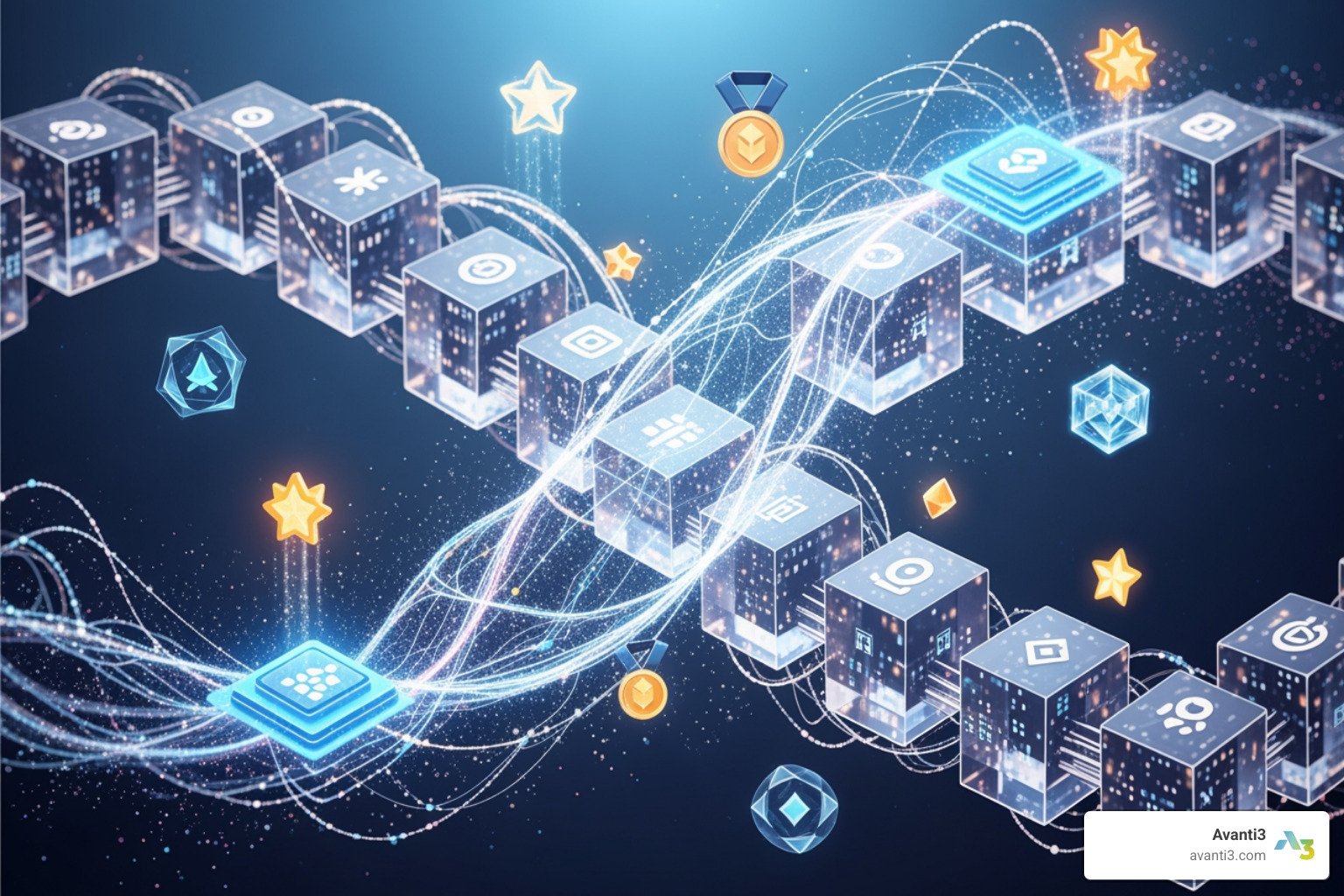
AI integration with blockchain can create far more personalized loyalty experiences. By analyzing customer behavior and preferences, AI can deliver highly personalized rewards. Instead of generic discounts, a user might receive an offer custom to their specific interests or habits. AI-powered insights can also monitor loyalty transactions in real time, enabling businesses to adjust reward strategies on the fly.
Beyond personalization, AI can drive dynamic gamification. Loyalty programs can evolve from simple point accumulation to engaging experiences with personalized challenges, reward tiers, and interactive quests. This transforms loyalty from a passive activity into an active, enjoyable part of the customer relationship.
The combination of blockchain and AI also paves the way for global loyalty marketplaces, where loyalty points from various brands are traded as digital assets. This consolidates the fragmented loyalty ecosystem, creating an unprecedented free flow and exchange of rewards.
Finally, we can envision decentralized reputation systems. Beyond monetary rewards, blockchain can acknowledge customer loyalty and engagement by tracking community contributions and brand advocacy. This fosters a deeper connection between customers and brands. Our Digital Community Building solutions are designed to help brands leverage these futuristic possibilities, creating spaces where loyalty is genuinely valued and rewarded.
Conclusion: Building the Future of Customer Engagement
We stand at the precipice of a significant change in customer loyalty. The era of passive points and siloed systems is making way for a future powered by the Blockchain loyalty system. This isn’t just an incremental improvement; it’s a fundamental shift from vague promises to tangible, digital assets that customers truly own and control.
We’ve explored how blockchain addresses the core flaws of traditional loyalty programs. By providing transparency, decentralization, and automated rewards via smart contracts, it creates a better system for everyone. Tokenization gives customers true ownership of their rewards, allowing them to transfer or trade them. For businesses, this means reduced overhead, fraud prevention, and real-time insights. For customers, it means a seamless and secure experience where their loyalty is truly valued.
While challenges like scalability and user adoption remain, innovative solutions are continuously emerging. The integration of AI further amplifies these capabilities, paving the way for personalized rewards, dynamic gamification, and interconnected global loyalty marketplaces.
At Avanti3, we believe in empowering creators and brands to forge deeper, more meaningful connections with their audiences. We integrate Web3 technologies like NFTs, blockchain, AR/VR, and AI to provide customizable engagement tools and fintech solutions, setting a new standard in digital experiences and community building. The Blockchain loyalty system is a cornerstone of this vision, enabling us to help brands build communities where every interaction creates lasting value.
The future of customer engagement is transparent, secure, and deeply personal. It’s a future where loyalty is not just earned but truly owned. Let us help you steer this exciting new landscape. Build your next-gen community with our advanced software.