

Why AR Technology Matters for Digital Engagement
AR technology overlays digital content onto your real-world environment through devices like smartphones or headsets. Unlike virtual reality (VR), which creates a completely new world, AR improves your current reality with interactive, computer-generated graphics and information in real time.
This enables interactive product visualization, access to overlaid information, immersive gaming, and hands-free assistance. AR works by using a device’s camera and sensors to map the environment, allowing algorithms to accurately place and anchor virtual content in the real world. Users can interact with this content through touch, voice, or gestures.
AR is changing how brands connect with audiences, from retailers letting customers preview products at home to educators bringing lessons to life. The global AR market is projected to exceed $60 billion, driven by accessible smartphone platforms and advancing hardware.
I’m Samir ElKamouny, and I’ve spent years helping businesses leverage emerging technologies. My work with AR technology focuses on building engaging digital experiences that drive real results for creators and brands looking to stand out in an increasingly digital world.
Ar technology word guide:
Understanding the Fundamentals of AR Technology
This section breaks down the core concepts, components, and types of augmented reality to provide a foundational understanding. We’ll explore how AR technology differs from its immersive cousins, how it actually works, and the various forms it takes.
Defining Augmented Reality: Key Concepts
At its heart, AR technology is about merging the digital with the physical. It’s an interactive experience where a real-world environment is improved with computer-generated visual elements and sounds. Unlike virtual reality (VR), which completely immerses you in a simulated environment, AR keeps you rooted in the real world while adding virtual elements to it. This distinction is part of the “reality-virtuality continuum,” a spectrum ranging from a completely real environment to a completely virtual one, with AR being closer to the real end.
To better understand the differences between these immersive technologies, let’s look at a comparison:
| Feature | Augmented Reality (AR) | Mixed Reality (MR) | Virtual Reality (VR) |
|---|---|---|---|
| Level of Immersion | Low to Medium (improves real world) | Medium to High (blends real and virtual) | High (replaces real world) |
| Real-World Environment | Present and improved | Present and interactive with virtual | Replaced entirely with virtual |
| Digital Content | Overlaid onto real world | Interacts with and anchors to real world | Creates the entire world |
| Hardware | Smartphones, tablets, smart glasses, HUDs | Headsets (e.g., Microsoft HoloLens, Magic Leap) | Headsets (e.g., Meta Quest, Valve Index) |
| User’s Perception | Partially generated, partially real | Partially generated, partially real, highly interactive | Completely computer-generated |
| Primary Goal | Improve existing reality | Seamlessly blend and interact with both realities | Create a new, simulated reality |
How AR Technology Works: Core Components and Processes
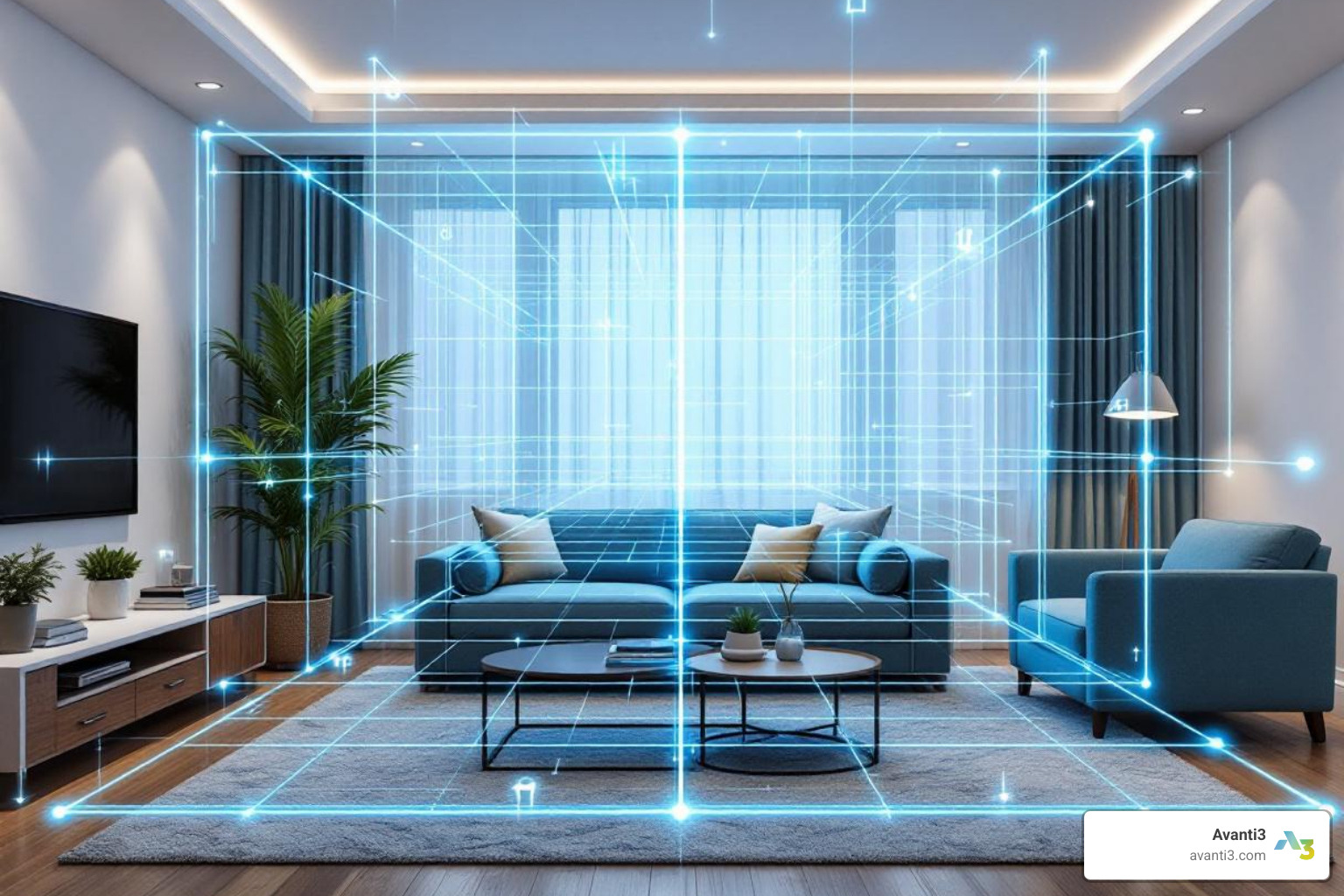
The magic of AR technology lies in its ability to perceive the real world and seamlessly integrate digital content. This process relies on a sophisticated interplay of hardware and software.
First, the system uses cameras and sensors (like accelerometers and gyroscopes) to gather information about the user’s surroundings. Then, powerful algorithms process this data for environmental understanding. A cornerstone technology called Simultaneous Localization and Mapping (SLAM) builds a map of the space while tracking the device’s position within it. This ensures virtual objects remain anchored in the real world as you move.
Finally, the device’s processors render the 3D virtual objects and integrate them with the live camera feed, matching lighting and perspective. The combined reality is then presented to the user on a screen or through AR glasses, creating a dynamic and responsive experience.
Types of AR and Essential Hardware
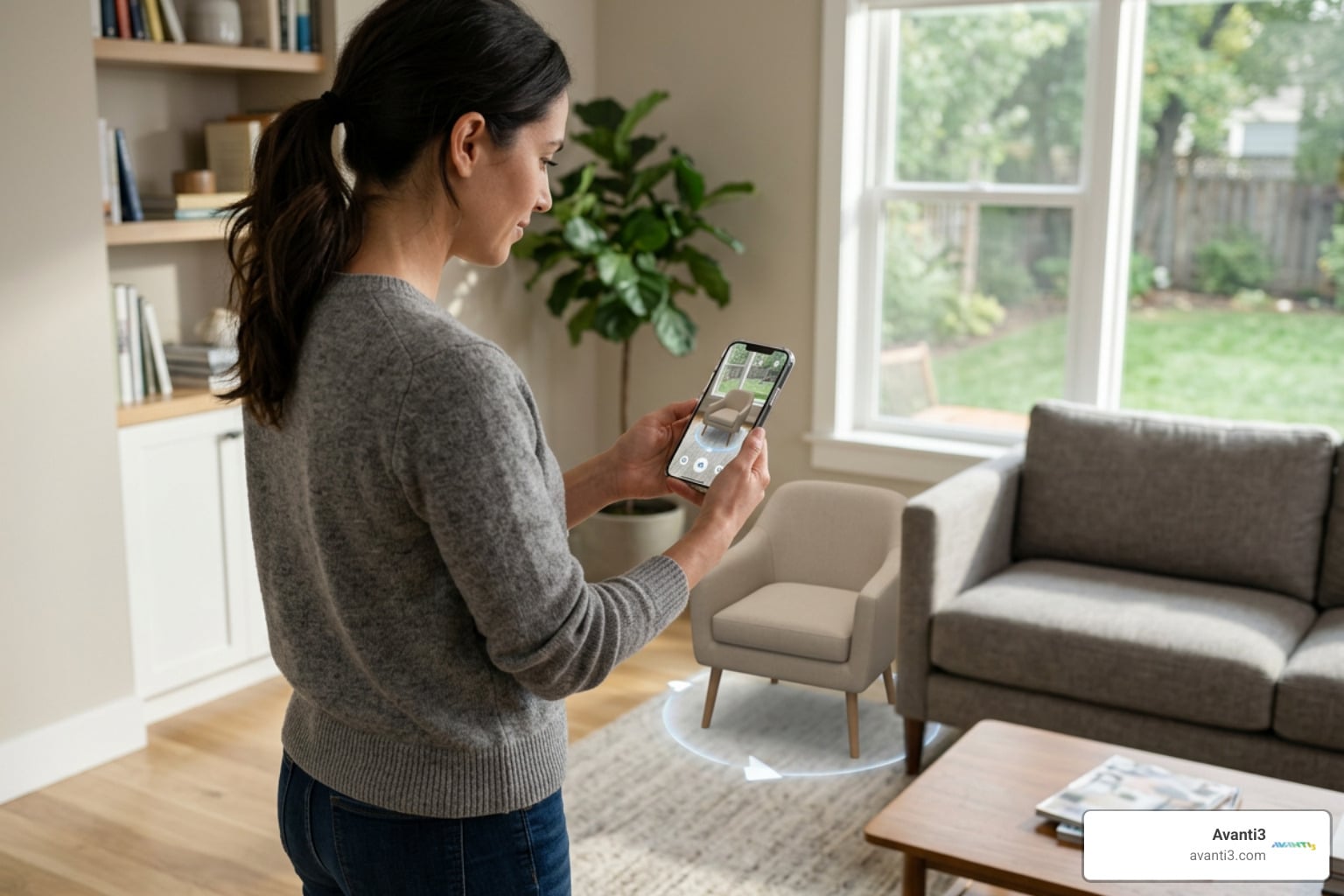
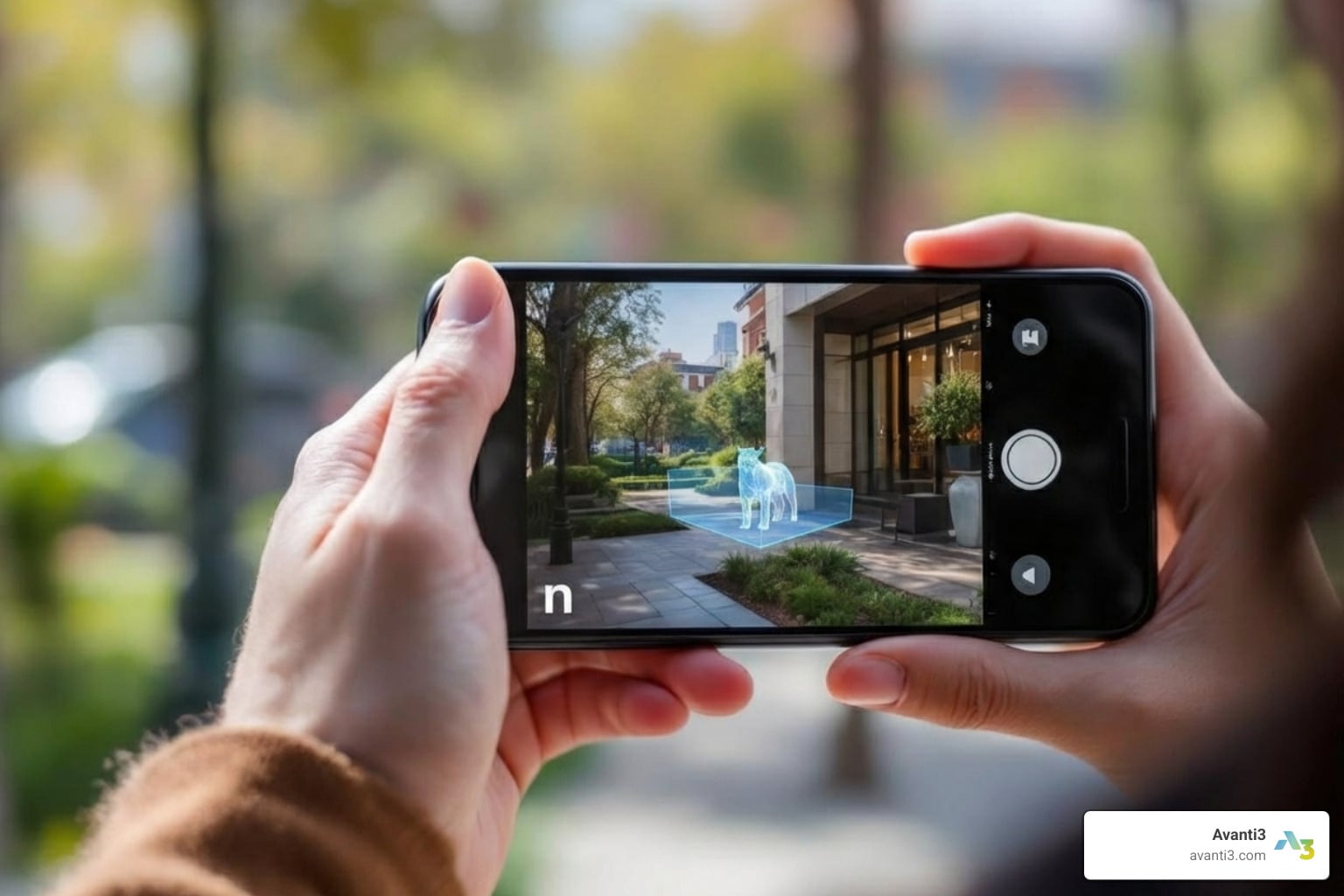
AR technology manifests in various forms. Marker-based AR uses specific visual cues like QR codes to trigger digital content. In contrast, markerless AR uses algorithms like SLAM to understand the environment and place virtual objects anywhere, offering greater flexibility. This is the technology behind apps that let you place virtual furniture in your room. A subset of this is location-based AR, which uses GPS to place content at specific geographic coordinates, famously used in games like Pokémon GO. Lastly, spatial AR uses projectors to overlay graphics directly onto real-world objects.
These experiences are delivered through various hardware:
- Smartphones and Tablets: The most common and accessible AR devices, thanks to their powerful cameras and processors.
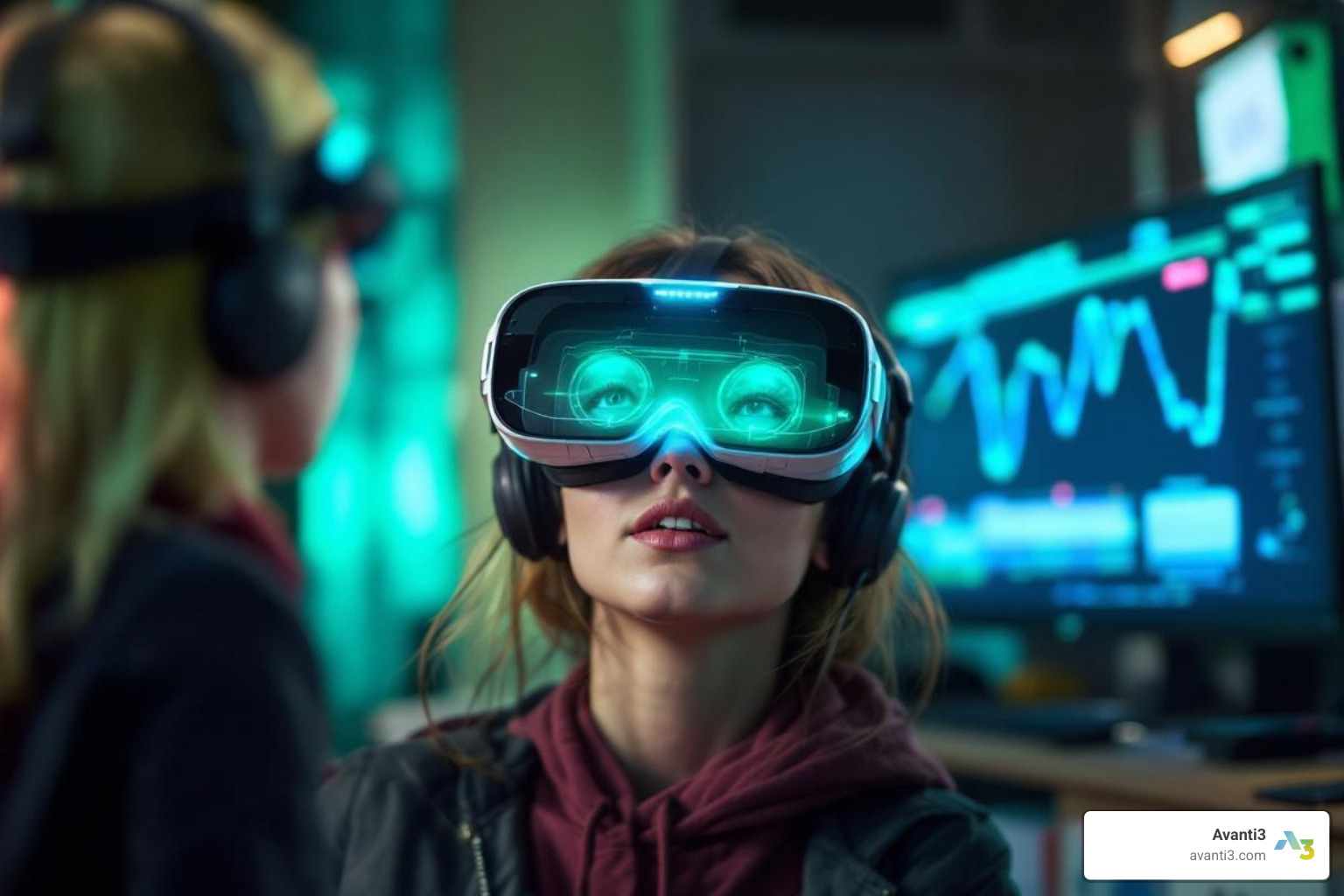
- AR Headsets and Smart Glasses: Wearable devices like the Microsoft HoloLens offer a more immersive, hands-free experience by projecting digital images onto transparent lenses.
- Heads-Up Displays (HUDs): Primarily found in vehicles, these project information like speed and navigation onto the windshield.
Overview of AR Development Platforms and Frameworks
The growth of AR technology is fueled by robust development platforms. Apple’s ARKit and Google’s ARCore provide the tools to create high-quality markerless AR for iOS and Android devices. Powerful game engines like Unity and Unreal Engine are used for creating complex 3D content, while WebXR enables AR experiences directly in web browsers. These platforms are essential for companies like Avanti3 as we build engaging digital experiences that blend the digital and physical worlds for creators and brands.
The Impact and Future of Augmented Reality
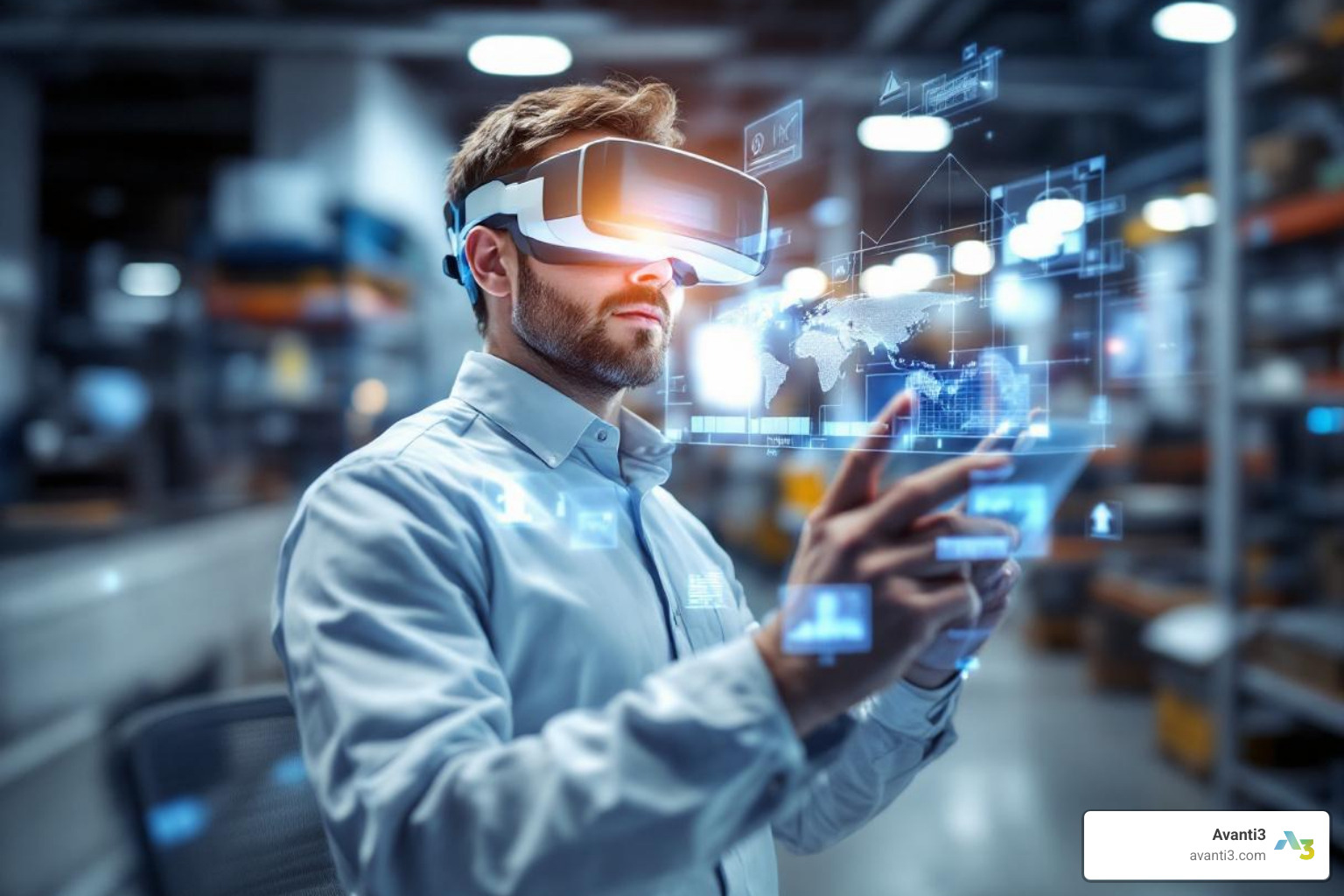
This section explores the real-world impact of AR across industries, its benefits and challenges, and what the future holds for this transformative technology.
Real-World Applications of AR Technology
AR technology has moved beyond a novelty to become a powerful tool across numerous industries.
- Retail: “Try before you buy” apps from retailers like IKEA and Wayfair allow customers to visualize products in their own homes, boosting confidence and reducing returns. Virtual try-on for fashion and makeup is also common.
- Healthcare: AR provides surgeons with overlaid patient data during operations and offers medical students interactive 3D anatomical models for training.
- Education: AR makes abstract concepts tangible, allowing students to explore virtual planets in their classroom or dissect a virtual frog.
- Entertainment: Location-based games like Pokémon GO and popular social media filters on Instagram and Snapchat are mainstream examples of AR.
- Industrial and Maintenance: Workers use AR glasses to receive step-by-step assembly or repair instructions overlaid directly onto equipment, reducing errors and improving efficiency.
- Navigation and Translation: Google Maps uses AR to overlay walking directions onto the real world, while apps can translate foreign text on signs in real time through a phone’s camera.
Key Benefits and Current Challenges
AR technology offers compelling advantages. For consumers, it leads to more informed decisions, engaging learning, and enriched entertainment. For businesses, it drives brand awareness, improves operational efficiency, and provides a competitive advantage. We help brands create AR Marketing Solutions that drive engagement and sales.
However, AR faces significant problems. Privacy concerns are paramount, as devices that constantly record the environment raise questions about data collection and misuse. Safety and user distraction are also risks, particularly when using AR while walking or driving. Other challenges include user adoption barriers like the high cost and bulkiness of current headsets, as well as technical limitations in processing power and battery life.
The Future of AR: Trends and Development
The journey of AR technology has been marked by key milestones, from Ivan Sutherland’s first head-mounted display in 1968 to the coining of the term “augmented reality” in 1992, and the mainstream explosion with Pokémon GO in 2016. The launch of developer platforms like Apple’s ARKit and Google’s ARCore in 2017 made powerful AR accessible to millions.
Future Outlook for Augmented Reality:
The future of AR is bright, driven by several key trends. Deeper AI integration will make AR experiences more intelligent and contextual. Cloud-powered AR will enable lighter, more powerful hardware by offloading heavy processing tasks. We can expect a new generation of AR glasses that are as discreet and comfortable as regular eyeglasses.
AR technology will be a foundational layer for the metaverse and spatial computing, allowing us to interact with our digital and physical worlds seamlessly. This will create new opportunities for Augmented Reality Concerts and other immersive events.
At Avanti3, we are particularly excited about integrating AR technology with Web3 and blockchain. Our vision involves leveraging NFTs for digital ownership, using blockchain for secure interactions, and incorporating AI to personalize experiences. This will empower creators and brands with customizable engagement tools and fintech solutions, setting a new standard in digital engagement and fan monetization. We believe this combination will enable truly unique virtual reality experiences and virtual art experiences that redefine how we interact with digital content.
To explore how Avanti3 can help you harness the power of AR technology, we invite you to learn more about our AR VR Immersive Experiences.