


Why Building an Engaged Online Community is Your Greatest Business Asset
Understanding how to build an engaged online community starts with recognizing its immense value. The numbers are compelling: online communities can generate an ROI of over 4,500%, and since 81% of customers need to trust a brand before buying, communities are essential trust-building engines.
Unlike typical social media, where engagement is low, nearly 50% of online community members are actively engaged. Why? Because communities foster a genuine sense of belonging that social media can’t replicate. For businesses, this translates to increased customer retention, loyalty, and higher lifetime value.
The challenge is that most platforms limit your control and data ownership, leaving you vulnerable to algorithm and policy changes. The solution is to build a community you truly own.
I’m Samir ElKamouny, and I help brands build powerful communities. This guide will show you how to create an engaged online community that delivers real business results while giving you full control.
Let’s start with the foundation.
How to build an engaged online community vocab explained:
- create online community
- how to build a community
- building successful online communities
The 7-Step Blueprint for How to Build an Engaged Online Community
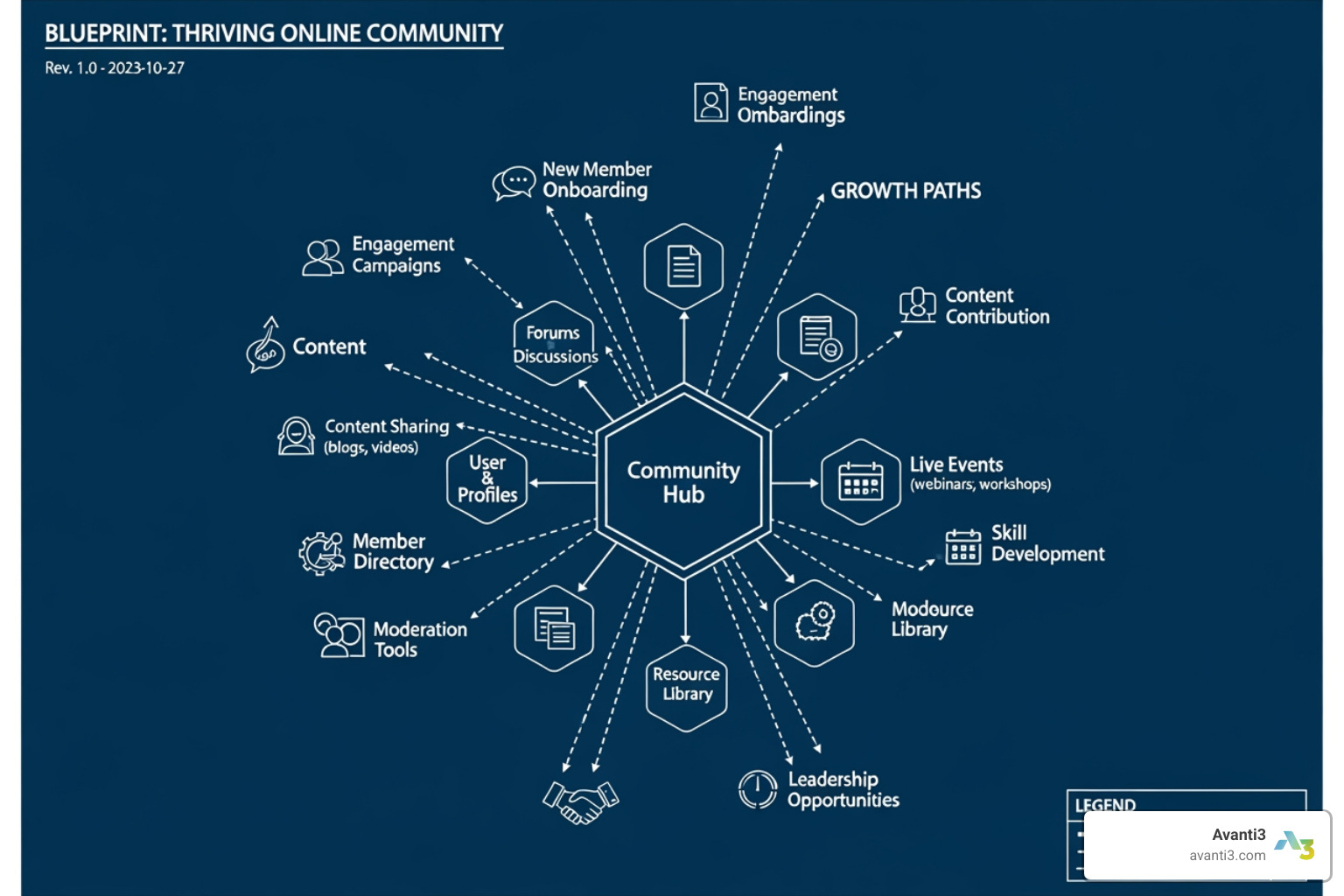
Building a thriving community is about cultivating an ecosystem where members connect and grow. We’ve distilled this into a 7-step blueprint to guide you from concept to a flourishing community that achieves your business goals.
This blueprint covers purpose, platform selection, content creation, relationship building, technology, monetization, and sustainable growth.
Let’s explore the first steps of how to build an engaged online community.
Step 1: Laying the Foundation with a Clear Purpose and Niche
Before anything else, define your “why.” What problem are you solving for your audience? This purpose is your community’s bedrock. Next, identify your ideal member—their interests, struggles, and goals—to tailor the experience. A focused niche, like “digital marketing for e-commerce,” attracts members with shared needs and prevents your community from becoming too general.
Your core values and mission statement should extend from your brand’s identity, attracting like-minded people. Finally, ensure your community’s purpose aligns with business goals, whether it’s increasing retention or gathering product feedback. Communities can be for learning (like a study group for professionals) or centered on a brand’s mission (like our own at Avanti3, which unites customers and experts).
For more insights into building community foundations, explore More info about Digital Community Building 2.
Step 2: Choosing Your Platform and Establishing Guidelines
Selecting the right digital home is a critical step in how to build an engaged online community. Your platform choice impacts everything from customization to data ownership.
Here’s a comparison of common platform types:
| Feature/Consideration | Social Media Groups (e.g., Facebook Groups) | Forums (e.g., dedicated forum software) | Custom-built/All-in-One Platforms (e.g., specialized community software) |
|---|---|---|---|
| Ownership & Control | Low (platform owns data, dictates rules) | High (you own data, full control) | High (you own data, full control) |
| Customization | Limited (branding, basic features) | Moderate to High (themes, plugins, custom features) | High (custom to exact needs, unique branding) |
| Moderation Tools | Basic to Moderate (dependent on platform) | Strong (granular permissions, anti-spam, user trust levels) | Strong (often includes advanced AI/ML for content moderation) |
| Monetization Options | Limited (indirectly via ads, external links) | Moderate (subscriptions, premium sections, ads) | High (integrated memberships, courses, digital products, Web3 features) |
| User Experience | Familiar, but can be distracting | Can feel dated, but good for long-form discussion | Modern, streamlined, custom to community purpose |
| Data Portability | Low (difficult to export members/content) | High (easy migration of data) | High (designed for data export and integration) |
While social media groups are easy to start, they lack control and are prone to distractions and policy shifts. For maximum control, customization, and monetization, custom-built or all-in-one platforms are the superior choice for long-term growth.
Regardless of the platform, establish clear community guidelines. These rules set the tone for a healthy environment, covering member behavior, moderation, and what to do in case of conflicts. A zero-tolerance policy for harassment and discrimination is non-negotiable. For a deeper dive into community platforms, visit More info about Community Building Platforms.
Step 3: Creating Engaging Content and Encouraging Participation
Content is the lifeblood of your community. A consistent stream of valuable, interactive content is a crucial part of how to build an engaged online community. Use a content calendar to plan themes, Q&As, and member spotlights to maintain consistency.
Spark conversations by asking smart, open-ended questions. Encourage User-Generated Content (UGC) by inviting members to share their successes and insights; it builds trust and a sense of ownership. Offering exclusive content, like early access to features or members-only webinars, provides unique value.
Here are 5 engaging content ideas:
- “Ask Me Anything” (AMA) Sessions: Host AMAs with experts or founders.
- Weekly Challenges: Encourage members to share progress on a specific theme.
- Member Spotlights: Feature a community member to highlight their journey and foster networking.
- Interactive Polls & Quizzes: Gather opinions and test knowledge within your niche.
- Resource Roundups: Curate and share valuable articles, tools, or videos.
For more tools to improve content and engagement, explore More info about Tools for Building Online Communities and More info about Digital Fan Engagement.
Step 4: Mastering Onboarding and Building Relationships
A warm welcome can be the difference between an active member and a ghost. This step is fundamental to how to build an engaged online community. Respond promptly and thoughtfully to new members’ posts, acknowledging their insights or connecting them with others. This makes them feel seen and valued.
To avoid a “ghost town,” start with a small, core group of 5-10 passionate individuals to kickstart conversations. Build personal connections by participating in discussions and sharing your own stories. When you model supportive behavior, others will follow.
This focus on connection nurtures the four timeless factors that define a sense of community: Membership (belonging), Influence (having a say), Integration (fulfillment of needs), and a Shared Emotional Connection. Nurturing these factors creates a sticky, engaged environment where members feel deeply invested. To explore more about the foundational tools for community building, check out More info about Tools for Building a Community.
Advanced Strategies for Sustained Growth and Monetization

Once your community has initial engagement, it’s time to focus on long-term success. This means scaling your efforts, measuring impact, leveraging technology, and exploring monetization models that turn engaged members into brand advocates.
Step 5: How to build an engaged online community using technology and metrics

To sustain and understand how to build an engaged online community, you must accept data and smart tools.
- Track Key Metrics: Monitor active participation, post interactions, and user growth. The right metrics are those that align with your community and business goals.
- Create Feedback Loops: Systematically ask for, analyze, and act on member feedback, then communicate the changes. This builds trust and a sense of ownership.
- Personalize and Segment: Tailor experiences by segmenting your community based on interests or engagement levels to send more relevant messages.
- Automate Smartly: Use automation for tasks like welcome messages and event reminders, but keep the human touch. Our solutions use AI to improve personalization and efficiency. Learn more at More info about AI Customer Engagement.
- Optimize for SEO: Make your community’s public content findable through search engines by using relevant keywords.
- Re-engage Inactive Members: Use personalized outreach and targeted content to draw members back in.
At Avanti3, we also leverage Web3 technologies like NFTs and blockchain to create unique digital loyalty programs. Gamified missions and rewards can incentivize user actions and foster deeper loyalty. Explore how Web3 can revolutionize your community at More info about Web3 Community Management.
Step 6: How to build an engaged online community through monetization and advocacy
An engaged community is a powerful engine for revenue and brand growth. This requires smart monetization and advocacy strategies.
Consider these monetization models:
- Exclusive Memberships: Offer tiered access to premium content for recurring revenue.
- Selling Products/Services: Use community feedback to create and sell custom courses, digital downloads, or other products.
- Sponsorships: Partner with relevant brands that align with your community’s interests.
- Paid Events: Host exclusive workshops, webinars, or online conferences.
Beyond revenue, nurture brand advocates—your most loyal members who champion your brand organically. Empower them to share their stories. This internal social proof is highly persuasive; 53% of people are more likely to buy a product recommended by a community member.
At Avanti3, we specialize in community loyalty and engagement. Our platform uses Web3 technologies like NFTs to create unique digital rewards and gamified missions, turning casual members into fervent advocates. We offer customizable Community Loyalty Programs and NFT Engagement Tools that set a new standard in digital engagement and fan monetization.
Ready to transform your community into a powerhouse of engagement and advocacy? Learn more about our Digital Community Building services.