Understanding the Investment: Why VR App Development Cost Matters

VR app development cost typically ranges from $20,000 to $500,000+, depending on the project’s complexity, features, and chosen platform. Here’s a quick overview:
| App Type | Cost Range | Timeline |
|---|---|---|
| Simple VR Apps (360° tours, basic viewing) | $20,000 – $50,000 | 2-4 months |
| Moderate VR Apps (interactive elements, custom environments) | $50,000 – $150,000 | 4-8 months |
| Complex VR Apps (multiplayer, AI, photorealistic graphics) | $150,000 – $500,000+ | 8-18+ months |
Virtual reality is reshaping how we connect, tell stories, and experience content. With the VR market projected to reach $26.9 billion by 2027, understanding the investment is critical. The key question for any creator or brand is: what will it actually cost to build your VR vision?
Key factors that drive costs:
- Platform choice (Oculus, HTC Vive, mobile VR, Apple Vision Pro)
- Graphics quality and 3D modeling complexity
- Features like multiplayer, AI integration, and spatial audio
- Development team location and expertise
- Testing and optimization requirements
As Samir ElKamouny, I’ve seen how strategic planning around VR app development cost separates successful launches from budget overruns. Proper cost planning is essential for making informed decisions about immersive technology investments.
This guide will break down what influences VR development costs, what you can expect to pay, and how to maximize your return on investment in this exciting space.
The Main Factors Influencing VR App Development Cost
Just as you wouldn’t plan a world tour on a weekend budget, the VR app development cost is defined by your project’s scope and ambition. Key factors include app complexity, platform choice, visual fidelity, and the development team’s expertise and location.
App Complexity and Features
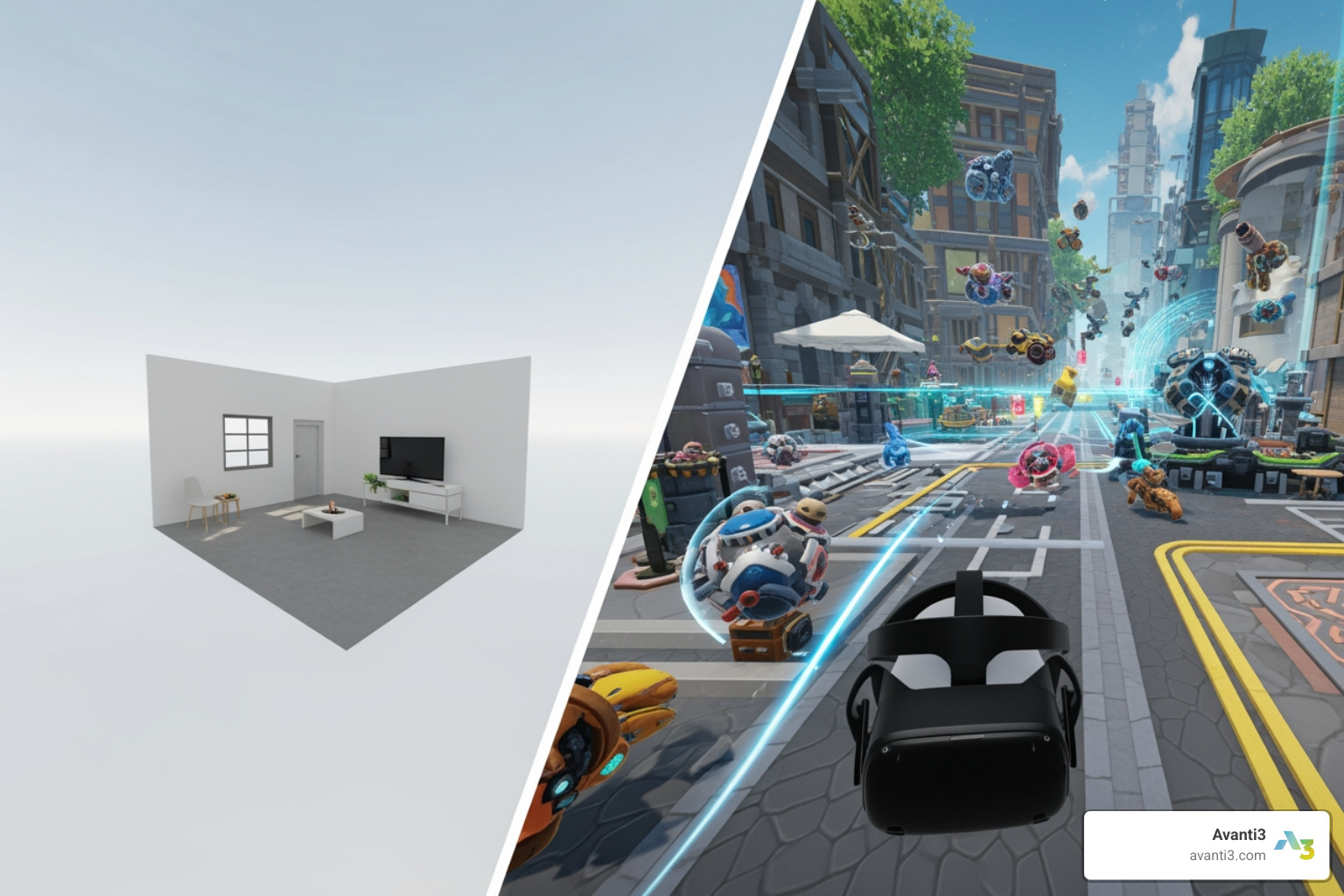
The complexity of your VR app is the single biggest cost determinant. We can categorize apps into three tiers:
-
Simple VR Apps: Entry-level experiences like 360-degree video playback or basic virtual tours. They require minimal custom assets and simple logic. Cost: $20,000 – $50,000 over 2-4 months. Some basic 360 tours can start from $5,000.
-
Moderate VR Apps: These introduce more interactivity, custom 3D environments, and simple game or educational mechanics. Think of an interactive product configurator. Cost: $50,000 – $150,000 over 4-8 months.
-
Complex VR Apps: Highly immersive applications with photorealistic graphics, advanced AI, multiplayer functionality, and sophisticated physics. Examples include multiplayer games or detailed training simulations. Cost: $150,000 – $500,000+ over 8-18+ months.
Specific features also add to the budget. Each brings unique development challenges:
- Real-time Multiplayer: Adds $20,000 – $100,000 for simultaneous user interaction.
- AI Integration: Intelligent NPCs or personalized experiences can add $15,000 – $50,000.
- Immersive Audio: Spatial audio and dynamic soundscapes can cost $5,000 – $15,000.
- User Interaction Capabilities: Advanced hand tracking, haptics, and gaze control can add $10,000 – $50,000.
- Cloud Storage and Sync: Saving user progress or shared content typically adds $5,000 – $20,000.
Starting with a Minimum Viable Product (MVP) is often a wise strategy to manage costs. For cutting-edge projects, explore how we create compelling AR/VR Immersive Experiences.
Platform, Graphics, and 3D Modeling
Your choice of VR hardware and desired visual quality are also major cost drivers.
-
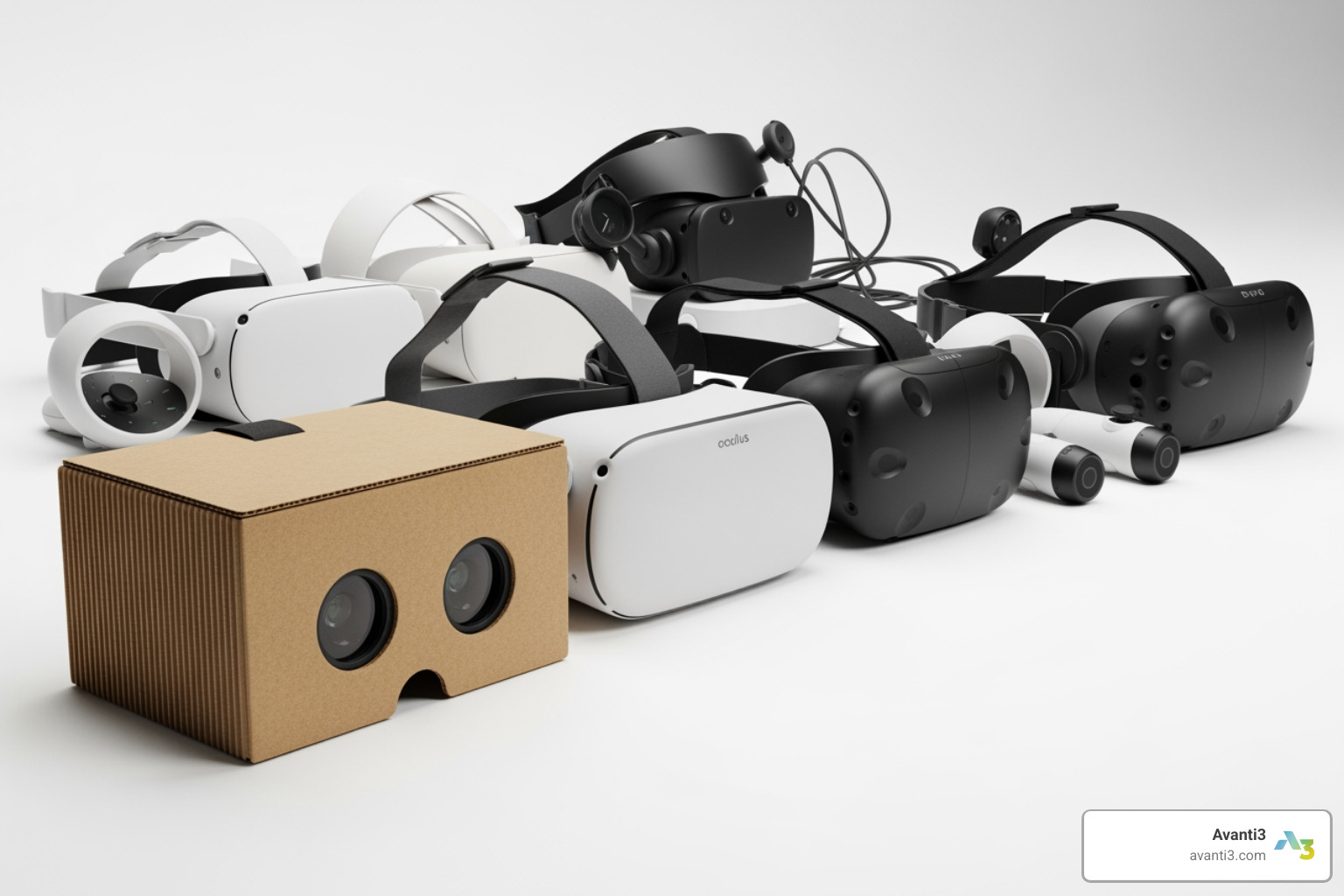
Target VR Platforms:
- Mobile VR (e.g., Google Cardboard): Most accessible but limited. Development costs range from $5,000 – $30,000.
- Console VR (e.g., PlayStation VR): A dedicated gaming experience. Costs typically range from $30,000 – $100,000+.
- PC-Tethered VR (e.g., Oculus Rift S): Superior graphics and power. Costs range from $50,000 – $200,000+.
- High-End Standalone (e.g., Apple Vision Pro): The pinnacle of current tech, with development costs from $100,000 to $500,000+.
- Cross-Platform Support: Adds $10,000 – $40,000 to build for multiple headsets.
-
Graphics, 3D Modeling, and Engines: The visual fidelity of your virtual world is a major expense. High-quality 3D models and animations can cost $5,000 – $30,000+, with photorealistic assets demanding significantly more. The level of detail in Virtual Art Experiences directly correlates with this effort. The choice of development engine also impacts cost:
- Unity: A versatile engine, with projects often costing $20,000 – $150,000+.
- Unreal Engine: Known for high-end graphics, with projects typically ranging from $30,000 – $200,000+.
Development Team and Pricing Models
The team building your app and how you pay them are fundamental to the VR app development cost. Rates vary dramatically by location.
| Region | Average Hourly Rate |
|---|---|
| US and Canada | $40 – $240 |
| Western Europe | $40 – $180 |
| Eastern Europe | $25 – $70 |
| India | $5 – $70 |
-
Team and Location: A skilled team includes developers, 3D artists, UX/UI designers, and QA specialists. While rates in North America can reach $240/hour, regions like Eastern Europe offer a balance of quality and cost-effectiveness at $25-$70/hour.
-
Pricing Models:
- Fixed-Price: Best for projects with a clearly defined scope. It offers budget predictability but is inflexible.
- Time & Material: Ideal for projects with evolving requirements. You pay for actual hours worked, offering flexibility but requiring careful budget monitoring.
-
Initial Planning: Don’t forget pre-development costs. Detailed project documentation can cost $700-$3,400, a crucial step to ensure alignment and prevent costly misunderstandings. This planning helps position projects for success in a market facing disruption from immersive technologies.
Real-World Cost Estimates and Maximizing Your Investment
Now that we’ve covered the influencing factors, let’s examine what VR app development cost looks like for real-world applications. Beyond the initial investment, it’s crucial to consider long-term value and return on investment (ROI).
Typical VR App Development Cost by Use Case
VR’s versatility spans entertainment, education, training, and more. Here’s a breakdown of typical cost ranges for different use cases:
-
VR Games:
- Simple Game: A small, single-player experience can cost $5,000 – $8,000.
- Horror Game: Requires more atmospheric design, costing $20,000 – $80,000.
- MMORPG: Highly complex multiplayer worlds start at $100,000 and can reach millions.
-
Educational VR Apps:
- General Educational Apps: Interactive lessons or virtual field trips typically cost $20,000 to $50,000.
- VR Simulation Lab: Virtual environments for hands-on training start from $15,000.
-
Enterprise Training and Simulations:
- General Training Simulations: For safety or skill development, expect to pay $50,000 to $150,000.
- Healthcare Training Apps: Simulating surgeries or patient interactions ranges from $40,000 to $120,000.
-
Virtual Tours and Visualization:
- Real Estate & Architecture: Immersive property tours or architectural visualizations can range from $5,000 to $60,000, depending on detail.
- Virtual Tourism: Exploring landmarks or destinations can cost $50,000 to $100,000.
-
Online Retail and E-commerce:
- Virtual/Augmented Reality Shops: Allowing customers to virtually try products can cost $15,000 – $25,000.
These examples, along with innovations like Augmented Reality Concerts, highlight the broad spectrum of VR development costs.
Ongoing Costs and Calculating Your VR App’s ROI
Launching your VR app is just the beginning. Ongoing expenses are crucial for a complete budget and accurate ROI calculation.
Ongoing Costs After Launch:
- Maintenance and Updates: Budget for bug fixes, content additions, and compatibility updates. Post-warranty support often costs $25-50 per hour.
- Server Fees: Recurring costs for multiplayer, cloud storage, or backend services.
- Marketing and User Acquisition: Typically 20-50% of the development cost. This includes influencer campaigns ($10,000-$50,000+) and trade shows ($15,000-$50,000+).
- “Hidden Costs”: Include hardware for testing ($5,000-$15,000), complex QA (which can add 20-30% to development), and platform distribution fees (typically 20-30% of revenue).
Monetization Strategies:
To generate revenue, consider direct sales, in-app purchases, subscriptions, advertising, or licensing for enterprise solutions.
Calculating Your Return on Investment (ROI):
While the VR app development cost can seem high, the potential for ROI is significant. The rapidly growing global AR/VR market creates fertile ground for profit. Consider the tangible benefits:
- Improved Engagement: VR’s immersion leads to deeper user connection and brand loyalty.
- Improved Training Efficiency: Studies show VR training is highly effective. For example, medical students using VR trained 20% faster and performed 38% better than traditional groups, leading to significant cost savings.
- New Revenue Streams: VR opens doors to entirely new business models.
- Competitive Advantage: Innovating in VR positions your brand as a forward-thinking leader.
Conclusion: Planning Your VR Project
Navigating VR app development cost is manageable with a clear plan. Costs vary from a few thousand dollars for a simple tour to over $500,000 for a complex simulation, driven by complexity, platform, graphics, and team choice.
Key takeaways for planning your VR project:
- Define Your Vision Clearly: A detailed project scope leads to an accurate cost estimate.
- Start Smart, Scale Later: Use an MVP approach to launch with core features and iterate based on user feedback.
- Choose Your Platform Wisely: Let your target audience and desired immersion level guide your platform choice.
- Balance Graphics and Budget: Find the right visual quality that delivers impact without breaking the bank.
- Assemble the Right Team: Experienced professionals are invaluable. Balance cost and quality when choosing a team.
- Budget for the Long Haul: Factor in ongoing maintenance, updates, marketing, and server costs.
The future of VR is bright. At Avanti3, we integrate Web3 technologies like NFTs, blockchain, AR/VR, and AI to empower creators and brands. We build unique digital experiences, foster robust reward systems, and create strong communities that set a new standard in digital engagement and fan monetization.
By carefully planning your project and understanding the nuances of VR app development cost, you can create an immersive experience that captivates your audience. Ready to bring your vision to life? Explore how we can help you create groundbreaking Virtual Reality Experiences that resonate in this evolving digital universe.