Why Virtual Reality is Revolutionizing Art Experiences
Virtual reality art exhibitions and masterpieces are changing how we experience and interact with art, making world-class collections accessible to millions while creating entirely new forms of artistic expression.
Top VR Art Experiences You Can Access Today:
- Prado Museum’s ART MASTERS – Step inside Velázquez’s Las Meninas and explore Bosch’s Garden of Earthly Delights
- Louvre’s “Mona Lisa: Beyond the Glass” – Find hidden details and the painting’s history through immersive storytelling
- The Kremer Museum – View over 70 Dutch and Flemish old masters in a fully virtual space
- Museum of Other Realities (MOR) – Experience contemporary VR-native art that exists only in virtual space
- Smithsonian’s Burning Man VR – Explore large-scale installations impossible to preserve physically
The numbers tell the story. In Shanghai, the ART MASTERS exhibition drew over 10,000 visitors in just a few months. In Buenos Aires, more than 8,600 people experienced these virtual masterpieces. This isn’t just about viewing art – it’s about stepping inside it.
Traditional museums face real limitations. Physical space restricts what can be displayed. Geographic barriers prevent global access. Fragile masterpieces can’t travel. VR solves all of these problems while creating experiences impossible in the physical world.
I’m Samir ElKamouny AV, and I’ve spent years helping creators and brands leverage cutting-edge technology to build engaging digital experiences, including virtual reality art exhibitions and masterpieces that connect audiences with culture in new ways. Let’s explore how VR is reshaping the art world and what it means for creators, institutions, and art lovers everywhere.
The Virtual Canvas: A New Era for Virtual Reality Art Exhibitions and Masterpieces
The art world is experiencing something magical. We’re witnessing the birth of a new era where virtual reality art exhibitions and masterpieces are breaking down centuries-old barriers and creating experiences that would make Leonardo da Vinci himself reach for a VR headset.
Gone are the days when viewing art meant standing behind velvet ropes, craning your neck to glimpse a masterpiece from twenty feet away. Today, you can step inside Bosch’s wild imagination, walk through Velázquez’s royal court, or examine Van Gogh’s brushstrokes so closely you can almost feel the paint still wet on the canvas.
The Unprecedented Benefits of VR Art
The change happening in museums and galleries isn’t just impressive – it’s revolutionary. VR is solving problems that have plagued the art world for generations while creating opportunities nobody saw coming.
Global accessibility might be VR’s greatest gift to humanity. Picture this: a student in rural Kenya can now walk through the Louvre’s halls during their lunch break, or someone in Alaska can attend an opening night at the Metropolitan Museum. The geographical barriers that once kept art locked away in specific locations are crumbling.
This democratization extends far beyond geography. People with mobility challenges who might struggle navigating traditional museums now have front-row access to every masterpiece. Elderly art lovers who can no longer travel can revisit their favorite galleries. Parents with young children can explore without worrying about disrupting other visitors.
For more ways we’re making art accessible to everyone, check out our Virtual Art Experiences.
Art preservation takes on new meaning in the virtual world. Think about all the masterpieces we’ve lost to wars, natural disasters, or simply the passage of time. VR creates digital immortality for artworks. The Smithsonian’s ‘No Spectators: The Art of Burning Man’ exhibition perfectly demonstrates this – preserving massive, temporary installations that would otherwise exist only in memory and photographs.
Fragile manuscripts that can’t be handled, ancient artifacts too delicate for display, or massive sculptures that can’t travel – all can live forever in virtual space. Future generations won’t just read about lost artworks; they’ll experience them.
New revenue streams are opening up for artists in ways we’re still finding. Digital-native artists are creating works that exist purely in virtual space, unconstrained by physical materials or gallery wall space. Traditional artists are finding their work reaching global audiences 24/7, not just during museum hours.
The educational opportunities are mind-blowing. Instead of reading about Renaissance techniques, art students can watch Michelangelo (virtually) paint the Sistine Chapel ceiling. History comes alive when you can walk through ancient Rome as it actually looked, understanding the context that inspired classical sculptures.
Improved storytelling transforms static paintings into living narratives. A portrait isn’t just a face on canvas anymore – it becomes a window into an entire world, complete with the sounds, smells, and atmosphere of its time period.
From a practical standpoint, VR exhibitions significantly reduce costs and environmental impact. No more shipping priceless artworks across oceans, no climate-controlled transport trucks, no massive insurance policies for traveling exhibitions. Once a VR experience is created, it can be shared infinitely without additional environmental cost.
How VR Creates Immersive Masterpiece Experiences
Here’s where things get really exciting. VR doesn’t just let you look at art – it invites you to live inside it.
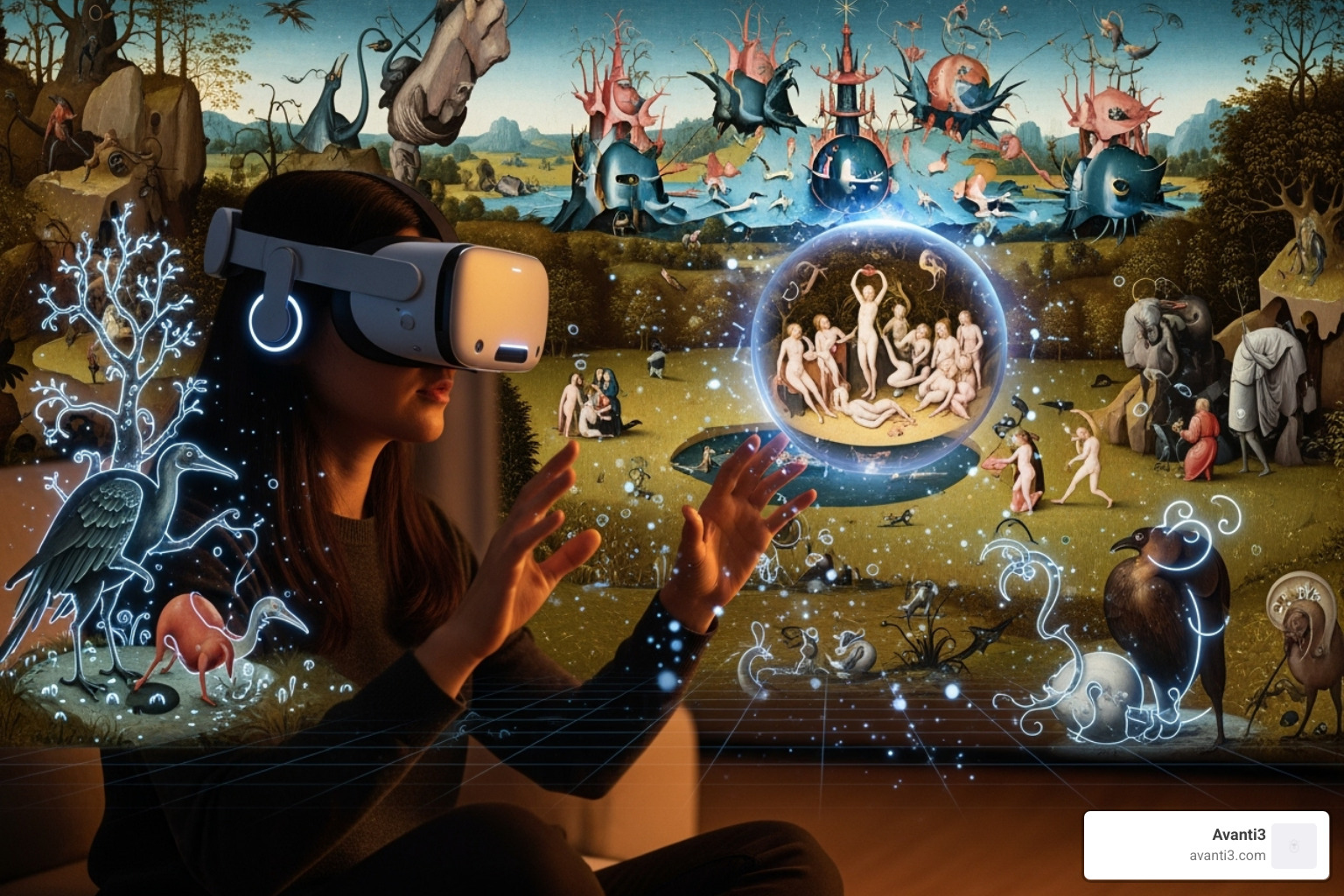
The Prado Museum’s ART MASTERS project shows us what’s possible when technology meets artistic vision. This isn’t your typical museum visit – it’s a 35-minute adventure that transforms you from observer to explorer. You’re not just looking at Bosch’s ‘The Garden of Earthly Delights’; you’re opening mysterious doors within the painting, finding hidden details that scholars have debated for centuries.
Walking through Velázquez’s ‘Las Meninas’ feels like time travel. You’re standing in the actual royal court, understanding the complex relationships between the figures through interactive design that responds to your curiosity. A virtual museum guide accompanies you, but this isn’t a dry lecture – it’s theatrical storytelling that makes art history feel like the most engaging movie you’ve ever experienced.
The numbers speak volumes about public hunger for these experiences. Over 10,000 people flocked to see ART MASTERS in Shanghai, while more than 8,600 experienced it in Buenos Aires. People aren’t just interested – they’re passionate about this new way of connecting with art. A deep dive into the ART MASTERS project reveals the meticulous research and creative vision behind this groundbreaking experience.
The Louvre’s ‘Mona Lisa: Beyond the Glass’ takes a different approach, focusing on unprecedented detail and contextualization. Instead of fighting crowds to glimpse the world’s most famous smile from across a room, you’re inches away from the canvas. You can examine the wood panel texture, see how colors have shifted over centuries, and understand restoration choices through multi-sensory engagement.
360-degree views change everything about how we experience sculpture and three-dimensional art. Walking around Rodin’s ‘The Thinker’ in virtual space, examining it from angles impossible in a traditional museum setting, creates understanding that static viewing can’t match.
The narrative-driven journeys possible in VR transform art appreciation from passive observation to active findy. You’re not just seeing what an artist created – you’re experiencing why they created it, understanding the historical context, feeling the emotions that drove their work.
Pioneering Platforms and Groundbreaking Exhibitions
The pioneers shaping virtual reality art exhibitions and masterpieces are as diverse as they are innovative, each bringing unique visions to this emerging landscape.
The Kremer Museum represents perhaps the most radical reimagining of what a museum can be. This institution exists entirely in virtual space, housing over 70 Dutch and Flemish old masters in a collection that has never existed together physically. There’s no building to maintain, no geographic limitations, no capacity restrictions – just pure access to incredible art.
Traditional powerhouses like Tate Modern are embracing VR to improve their physical offerings. Their Modigliani retrospective included a VR component that transported visitors directly into the artist’s Parisian studio. Suddenly, you’re not just seeing Modigliani’s work – you’re understanding his creative environment, the light he painted by, the space where genius happened.
The Smithsonian’s ‘Art of Burning Man’ exhibition preserved something that seemed impossible to capture – the scale and spirit of temporary desert installations. These massive artworks exist for just days in the physical world, but VR makes them permanent and accessible to millions who could never make the journey to Nevada’s Black Rock Desert.
The Museum of Other Realities (MOR) pushes boundaries even further, existing as a purely virtual space for digital-native art. This isn’t about recreating traditional art in virtual space – it’s about creating art that can only exist in VR. Artists like Kevin Mack, an Academy Award-winning visual effects pioneer, create abstract works that defy physical laws, showcasing possibilities that traditional mediums can’t match.
These platforms demonstrate how fully virtual museums are becoming legitimate cultural institutions. They’re not replacing traditional museums but expanding what’s possible, creating new categories of artistic experience that complement rather than compete with physical spaces.
The integration with blockchain technology and NFT Digital Art Sales is opening new economic models for artists and collectors. We’re seeing the emergence of art that exists simultaneously as cultural artifact and digital asset, creating new ways for creators to monetize their work while maintaining artistic integrity.
At Avanti3, we’re deeply involved in building these new ecosystems through our Web3 Creator Platforms, empowering artists and cultural institutions to create sustainable, engaging digital experiences.
Navigating the Challenges and Future of Virtual Reality Art Exhibitions and Masterpieces
Let’s be honest – this technological revolution isn’t without its growing pains. Understanding these challenges helps us build better solutions for the future.
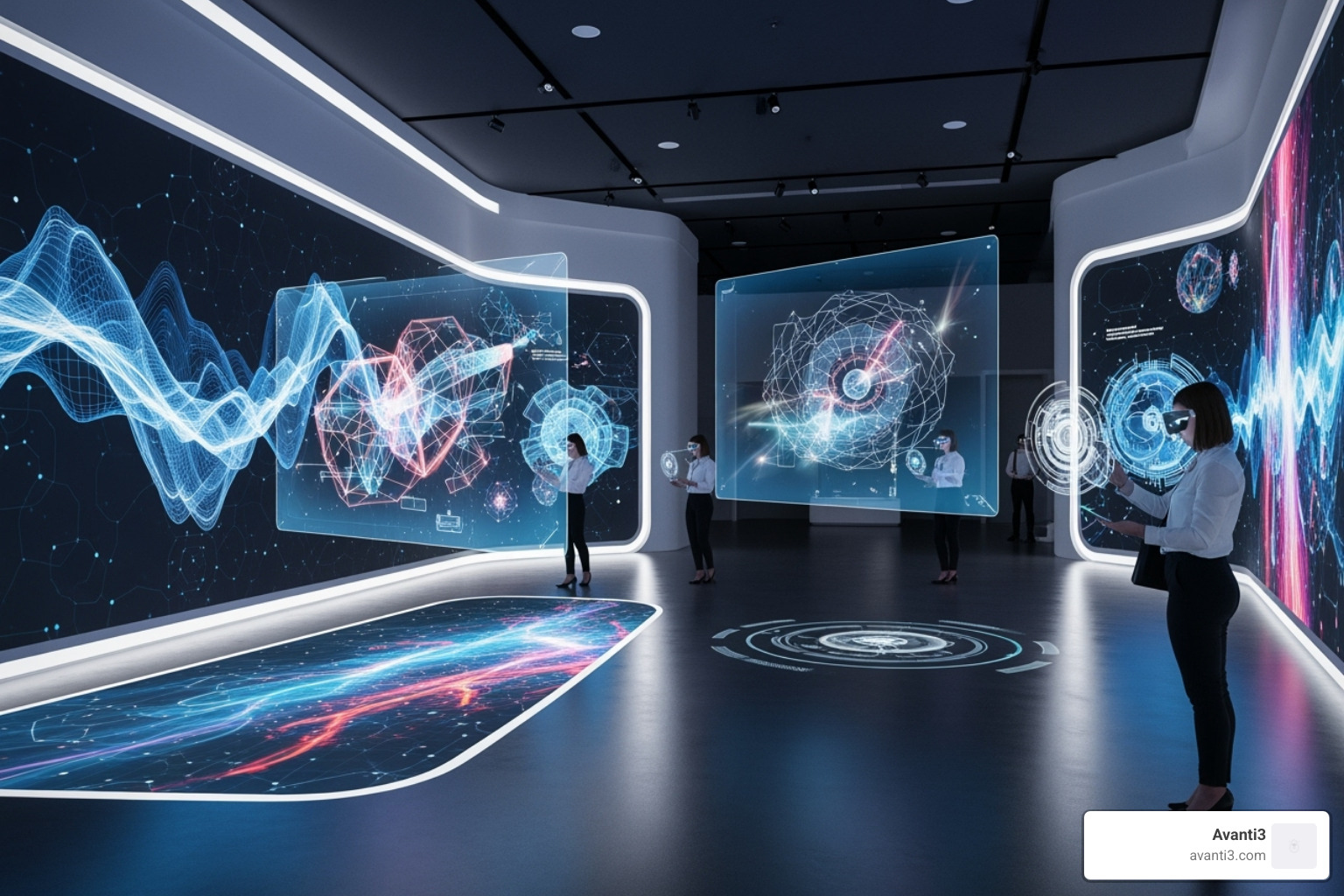
High costs remain a significant barrier. The Auckland War Memorial Museum learned this lesson the hard way when they broke around 15 VR headsets in just a couple of weeks. Quality VR experiences require substantial investment in both development and hardware, and maintenance costs can be surprisingly high.
Technical glitches can instantly shatter the magic. Nothing pulls you out of a Renaissance masterpiece faster than a frozen screen or audio that cuts out mid-experience. Hardware accessibility remains limited – not everyone owns a VR headset, and the learning curve can be steep for less tech-savvy users.
Simulation sickness affects some users, causing headaches or nausea that can turn an art appreciation session into an unpleasant experience. Hygiene concerns around shared headsets add another layer of complexity for public installations.
Perhaps most importantly, VR still struggles with limited physical interaction. You can see every brushstroke in a Van Gogh painting, but you can’t feel the texture of the paint or sense the subtle variations in canvas weave that make original artworks so compelling.
But here’s where the future gets exciting. Haptic technology is rapidly advancing, promising to bridge the gap between visual and tactile experience. Imagine actually feeling the marble surface of a Michelangelo sculpture or sensing the raised paint layers in an impressionist work.
AI-powered curation is revolutionizing how exhibitions are created and personalized. Instead of one-size-fits-all experiences, AI can adapt presentations based on viewer interests, knowledge level, and engagement patterns, creating truly personalized art journeys.
The relationship between Virtual Reality and Augmented Reality in museum settings offers fascinating possibilities:
| Feature | Virtual Reality (VR) | Augmented Reality (AR) |
|---|---|---|
| Experience | Complete immersion in digital worlds | Digital improvement of physical spaces |
| Best For | Recreating lost environments, abstract art exploration | Adding context to existing exhibits |
| Equipment | Dedicated VR headsets | Smartphones, tablets, AR glasses |
| Accessibility | Requires specific hardware | Works with devices people already own |
| Museum Use | Standalone experiences, virtual galleries | Enhancing physical visits with digital layers |
The future isn’t about choosing between VR and AR – it’s about combining them strategically. Physical museums are beginning to offer hybrid experiences where AR improves real exhibits while VR provides deep-dive experiences impossible in physical space.
We’re moving toward a world where virtual reality art exhibitions and masterpieces coexist beautifully with traditional museums. The goal isn’t replacement but improvement – making art more accessible, more engaging, and more meaningful for everyone.
At Avanti3, we’re building these future experiences through our Augmented Reality & VR Immersive Experiences, creating seamless bridges between physical and digital art worlds.
The challenges are real, but so is the incredible potential. We’re not just changing how people see art – we’re expanding who gets to experience it and what that experience can become.
Conclusion: The Future of Art is Here
We’ve just taken an incredible journey through virtual reality art exhibitions and masterpieces, and honestly, it’s hard not to feel excited about what’s coming next. The change happening right now isn’t just impressive – it’s completely changing how we think about art, creativity, and connection.
Think about it: we’ve moved from standing behind velvet ropes to stepping inside masterpieces. We’ve watched geographical barriers crumble as someone in rural Kenya can now explore the Louvre, and we’ve seen artists create entirely new forms of expression that exist only in virtual space. The democratization of art access isn’t just a fancy phrase – it’s happening right now, making culture available to people who never had these opportunities before.
Yes, we’ve acknowledged the challenges. High costs can be daunting, technical glitches are frustrating, and not everyone has access to the latest VR headsets yet. But here’s what’s remarkable: every challenge we’ve discussed is being actively solved. Haptic technology is making virtual art touchable. AI-powered curation is personalizing experiences. The costs are dropping as the technology becomes more mainstream.
The future we’re building isn’t about replacing the magic of standing in front of the actual Mona Lisa. It’s about expanding that magic, multiplying it, and making it available to millions more people. Virtual reality art exhibitions and masterpieces represent something bigger than technology – they represent the evolution of human creativity and connection.
At Avanti3, we’re not just watching this change happen – we’re actively building it. Every day, we work with creators and institutions to craft these immersive digital worlds that bring people together around shared cultural experiences. The convergence of art and technology is creating opportunities we’re only beginning to understand, and we’re honored to be part of this incredible moment in history.
The future of artistic expression is unfolding right now, and there’s room for everyone in this story. Whether you’re an artist exploring new creative possibilities, a museum looking to reach global audiences, or simply someone who loves art and wants to experience it in new ways, this is your invitation to step into tomorrow.