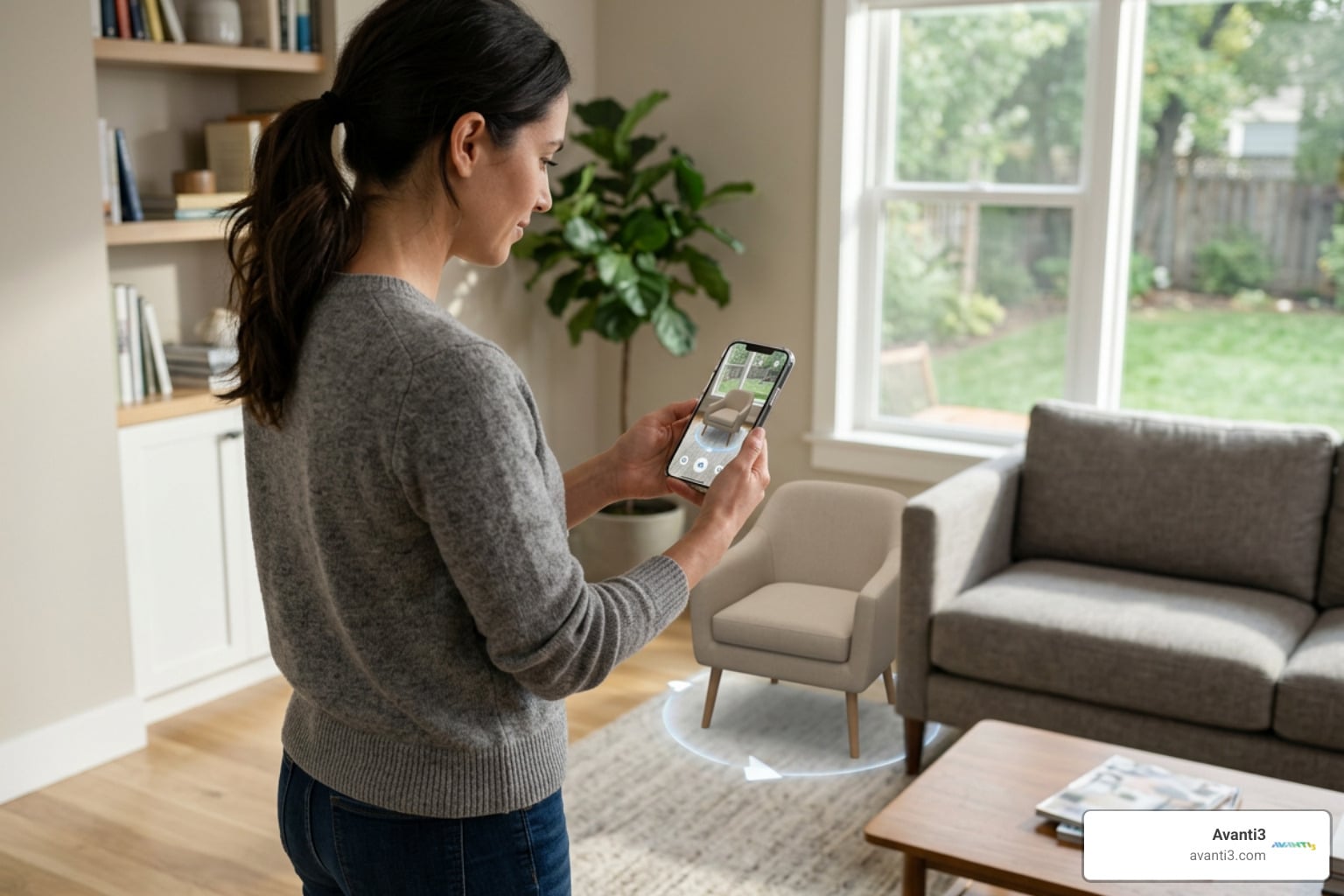


What Extended Reality (XR) Really Means
Extended reality solutions blend our physical world with digital content in real-time. This umbrella term, XR, includes:
- Virtual Reality (VR): Fully immersive digital environments that replace your physical surroundings.
- Augmented Reality (AR): Digital overlays that improve your view of the real world.
- Mixed Reality (MR): Interactive virtual objects that coexist with and respond to your physical environment.
The XR market is projected to grow from $183.96 billion in 2024 to $1,706.96 billion by 2032, a 32.1% annual growth rate.
Beyond gaming, industries are using XR to solve real problems. Surgeons achieve 75% learning retention with VR training, retailers like Macy’s cut return rates to under 2% with AR visualization, and manufacturers like DHL gain 15% productivity with AR-assisted systems.
The technology relies on specialized hardware (headsets, smart glasses), powerful software (Unity, Unreal Engine), and enabling tech like AI, 5G, and cloud computing to deliver real-time experiences.
I’m Samir ElKamouny, and I’ve spent my career helping brands transform audience engagement through innovative technology. By implementing extended reality solutions, I’ve seen how XR creates deeper community connections and opens new revenue streams.
Extended reality solutions word guide:
- AR Apps Development
- AR Powered Brand Engagement
- Cloud Based AR
The Comprehensive Guide to Extended Reality Solutions
Welcome to Extended Reality! We’re here to explain this transformative technology and how it’s reshaping industries and our interaction with reality. XR is a spectrum of immersive technologies opening new possibilities for businesses and consumers.
Defining the Reality-Virtuality Continuum
To grasp extended reality solutions, we must understand its core components: Virtual Reality (VR), Augmented Reality (AR), and Mixed Reality (MR). They exist along a “reality-virtuality continuum,” each offering a unique blend of digital and physical experiences.
| Feature | Virtual Reality (VR) | Augmented Reality (AR) | Mixed Reality (MR) |
|---|---|---|---|
| Immersion Level | Complete immersion in a simulated world. | Digital elements overlaid onto the real world. | Blends real and virtual, allowing interaction between both. |
| Hardware | Head-mounted displays (HMDs) like Meta Quest 3. | Smartphones, tablets, smart glasses. | Advanced headsets (e.g., Microsoft HoloLens 2, Apple Vision Pro). |
| Key Use Cases | Gaming, training simulations, virtual tours, Virtual Reality Experiences. | Retail product visualization, navigation, Augmented Reality Marketing, social filters. | Collaborative design, remote assistance, interactive education, spatial computing. |
Virtual Reality (VR): At the most immersive end of the spectrum, VR transports you into a completely computer-generated environment, disconnecting you from your physical surroundings. The goal is to achieve a sense of presence in a simulated world, whether for gaming, training, or exploration. Modern devices like the Meta Quest 3 offer powerful, high-resolution experiences.
Augmented Reality (AR): Instead of replacing reality, AR improves it by overlaying digital information onto your real-world view, typically through a smartphone or smart glasses. You can still see and interact with your physical environment, but with an added digital layer. AR is highly practical, with 75% of consumers more likely to buy a product after an AR preview. Retailers like Macy’s have used it to reduce return rates to less than 2%.
Mixed Reality (MR): Merging the physical and digital worlds, MR allows virtual objects and the physical environment to coexist and interact in real-time. With advanced MR headsets, you can manipulate virtual content in your physical space as if it were real. MR leverages cameras, sensors, and AI to understand your environment, creating truly interactive, digitally improved experiences.
The Core Technologies Powering XR
Behind every XR experience is a complex interplay of cutting-edge technologies.

Hardware: The Foundation of Immersion
The physical devices are paramount:
- Headsets: From VR headsets like the Meta Quest 3 to AR smart glasses and MR devices like the Microsoft HoloLens 2, these are our windows into extended realities.
- Haptic Feedback Devices: Gloves, suits, and controllers provide tactile sensations, allowing us to “feel” digital objects.
- Mobile Devices: Smartphones and tablets have become ubiquitous AR platforms, democratizing access to many extended reality solutions.
Software: Bringing Worlds to Life
Software platforms are the engines that power XR content:
- Development Engines: Unity and Unreal Engine are the titans of XR content creation, offering robust frameworks for real-time 3D rendering.
- Software Development Kits (SDKs): Tools like Apple’s ARKit and Google’s ARCore provide the building blocks for mobile AR. Standards like OpenXR Specifications for cross-platform development ensure cross-platform compatibility.
- Collaboration Tools: Platforms like Microsoft Mesh and Meta Horizon Workrooms enable shared virtual spaces for remote collaboration.
Enabling Technologies: The Unseen Connectors
These technologies are vital for XR’s functionality and scalability:
- Artificial Intelligence (AI): AI powers perception (head, hand, and eye tracking), computer vision for environment understanding, and generative AI for dynamic content. The US Air Force reduced pilot training from 12 to four months using VR, AI, and biometrics.
- 5G Networks: The high speed and low latency of 5G enable “boundless XR,” where complex computations are offloaded to edge cloud servers and streamed to devices in real-time for smoother, higher-quality mobile experiences.
- Cloud & Edge Computing: The cloud provides massive processing power for complex XR applications, while edge computing minimizes latency, which is critical for immersion. NVIDIA’s CloudXR, for instance, streams VR and AR across 5G and Wi-Fi networks.
Changing Industries with Extended Reality Solutions
The impact of extended reality solutions is far-reaching, changing how industries operate, train, and engage with customers.
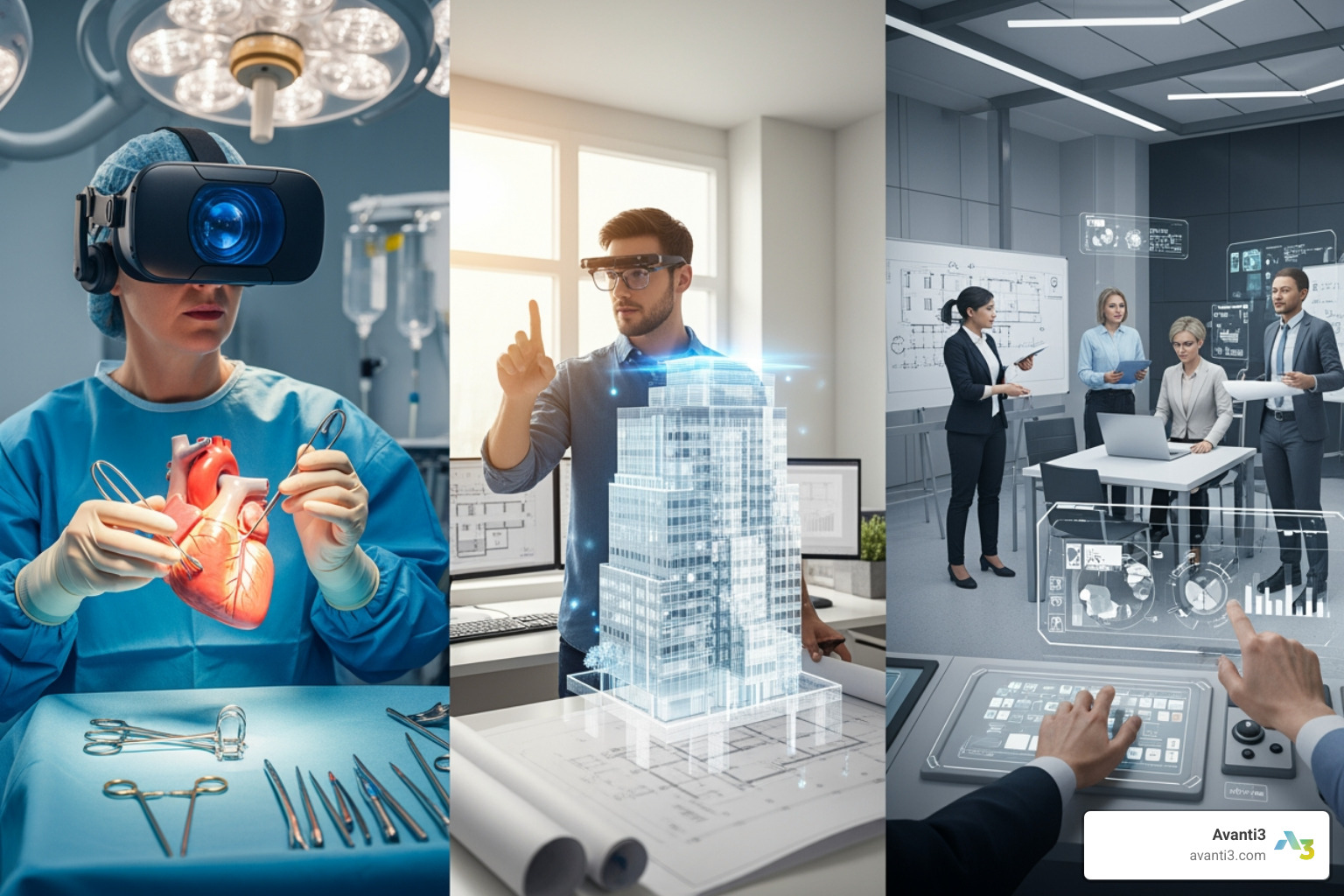
Healthcare:
- Surgical Training: Doctors practice complex procedures in VR, achieving a 75% learning retention rate compared to traditional methods.
- Remote Diagnostics & Patient Care: AR can overlay patient data during operations, while VR helps patients understand conditions or manage pain.
- Mental Well-being & Physiotherapy: VR is used for exposure therapy, pain management, and rehabilitation in controlled, engaging environments.
Retail & eCommerce:
- Virtual Try-on & Visualization: Customers can virtually try on clothes or visualize furniture in their homes, which helped companies like Macy’s reduce return rates to under 2%.
- Improved Customer Connection: 47% of consumers feel more connected with products when using immersive tech. Our AR Marketing Solutions leverage this to create impactful campaigns.
- Immersive Shopping: Virtual stores allow customers to interact with 3D products from home, driving sales and satisfaction.
Manufacturing & AECO (Architecture, Engineering, Construction, and Operations):
- Digital Twins: XR allows professionals to step inside 3D models of buildings or machinery to identify issues early and optimize designs.
- Remote Assistance & Training: AR overlays digital instructions onto equipment, guiding technicians through complex tasks. DHL reported productivity savings of 15% using an AR-based picking program.
- Safety Training: VR provides safe, realistic environments for training workers in hazardous situations, reducing accidents.
Entertainment & Education:
- Immersive Entertainment: The XR gaming market is booming, alongside experiences like Augmented Reality Concerts and Virtual Art Experiences.
- Improved Learning: XR tools lead to a 40% improvement in learning retention. Students can take virtual field trips or dissect virtual organs, making learning more engaging.
- Military Training: The US Military uses XR to improve situational awareness and significantly reduce training times.
Overcoming the Challenges of Widespread Adoption
While the potential of extended reality solutions is undeniable, several challenges remain.
High Initial Cost:
- Hardware Investment: High-end VR/MR headsets and specialized haptic equipment can be a significant investment for businesses.
- Custom Software Development: Bespoke XR applications require specialized skills and can be costly for complex enterprise solutions.
Technical Limitations:
- Battery Life and Processing Power: Mobile XR devices struggle to balance powerful graphics with adequate battery life and thermal management.
- User Comfort and Motion Sickness: Prolonged VR use can cause discomfort for some users, hindering adoption.
- Display Technology: Achieving truly photorealistic virtual objects that are indistinguishable from real ones remains a challenge.
Content Creation Gap:
- Need for Skilled Developers: The demand for skilled XR developers, designers, and 3D artists outstrips the current supply.
- Standardized Tools: The ecosystem for creating interoperable and universally accessible XR content is still evolving.
Data Privacy & Security:
- User Data Collection: XR applications often require access to cameras, spatial data, and biometrics, raising significant privacy concerns.
- Ethical Considerations: As XR becomes more immersive, ethical questions arise regarding digital identity, addiction, and the blurring lines between reality and simulation.
The Future of XR and How to Get Started
The journey of extended reality solutions is just beginning. As technology advances and integrates into our daily lives, we can expect even more profound changes.
What’s Next for Extended Reality Solutions?
The future of XR promises a landscape where immersive experiences are integral to our work, learning, and leisure.
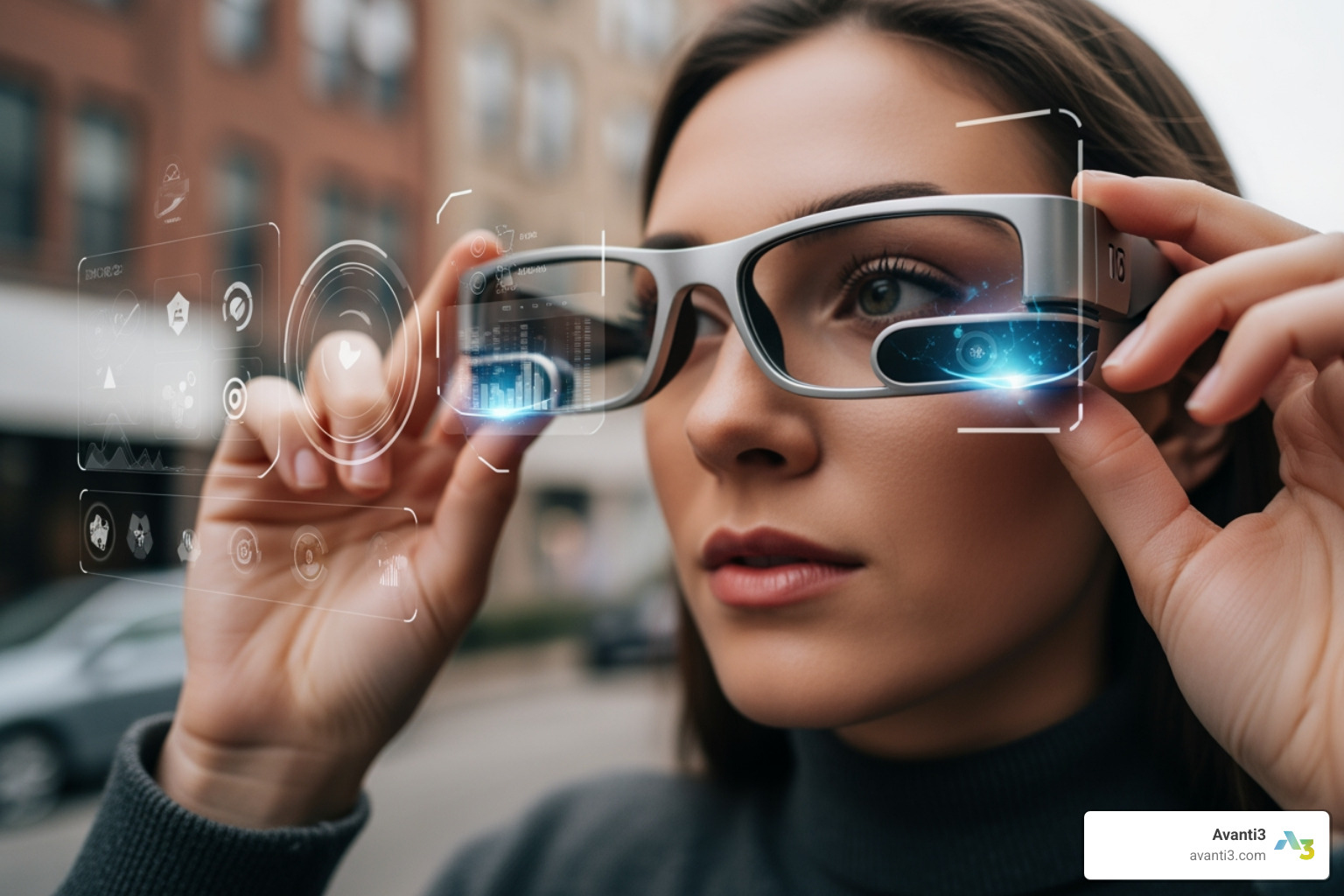
Mobile XR Evolution: The smartphone has already democratized AR. We anticipate mobile XR will continue to break down barriers, with sleek smart glasses potentially replacing other screens. The convergence of smartphones, VR headsets, and AR glasses into a single, versatile device is a compelling vision for the future.
AI-Driven Personalization: AI will make XR experiences smarter and more intuitive. Imagine context-aware AR interfaces that anticipate your needs or predictive interfaces that respond to subtle eye movements. Integration with the Internet of Things (IoT) will allow XR to pull real-time data from your environment for richer experiences.
Convergence with Web3: We are at the forefront of integrating Web3 technologies like NFTs and blockchain with XR. This convergence enables:
- True Ownership: Digital assets and experiences within XR can be owned as NFTs, giving creators and users unprecedented control and value.
- Decentralized Metaverses: Imagine metaverses where users earn tokens for contributing to the network, fostering community-driven economies and shifting power from centralized entities to users.
- New Engagement Models: We empower creators and brands with customizable tools for unique digital experiences, rewards systems, and community building within XR.
Future Growth: Market projections are staggering, with XR expected to contribute over $1.5 trillion to the global economy by 2030. This growth is fueled by continuous innovation and the increasing recognition of XR’s practical value. As NVIDIA notes, “Extended reality, or XR, is a collective term that refers to immersive technologies,” and its collective power is only just beginning to unfold.
Your First Steps into XR Implementation
1. Define Clear Business Goals: Before adopting any technology, ask: What problem are we solving? How will XR improve our processes or create new opportunities? Defining clear objectives allows you to measure the Return on Investment (ROI) effectively.
2. Start Small with Pilot Projects: You don’t need to revolutionize your entire operation overnight. Begin with a Proof of Concept (PoC) or a pilot project to test the waters, gather feedback, and demonstrate tangible benefits without a massive resource commitment.
3. Choose the Right Technology for Your Needs: Not all XR is created equal. Mobile AR might be perfect for customer-facing visualization, while VR headsets could be ideal for immersive training. Consider your audience, desired immersion, and budget to select the most suitable extended reality solutions.
4. Partner with Experts: Navigating the complex XR landscape is challenging. Partnering with experienced professionals is invaluable. We specialize in integrating Web3 technologies like NFTs, blockchain, AR/VR, and AI to empower creators and brands, helping you build unique digital experiences and community opportunities.
By taking these deliberate steps, your business can confidently step into the future of immersive technology.
Explore our immersive experiences to see how we can help you build the future.