

Why Enterprise AR Solutions Are Changing Business Operations
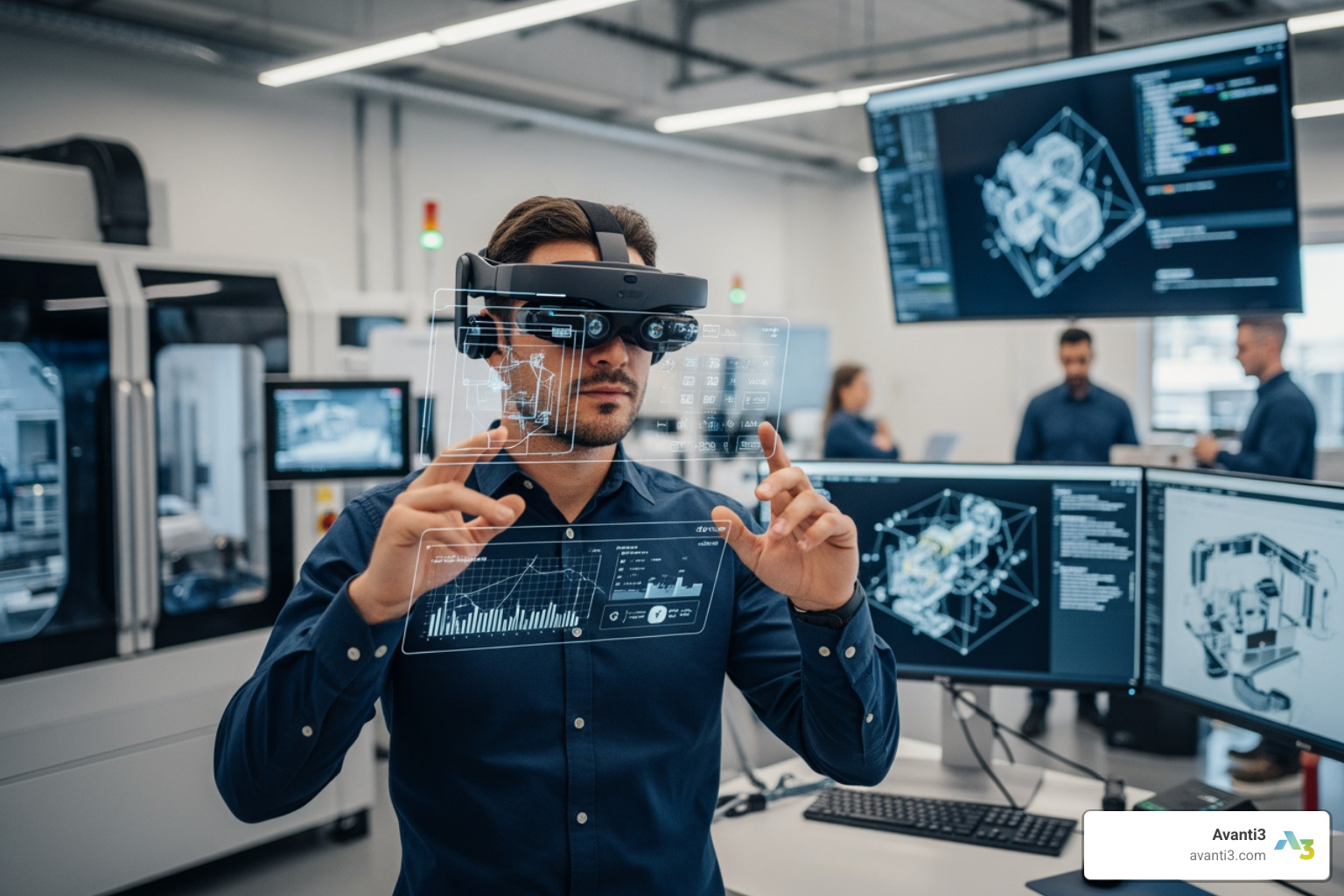
Enterprise AR solutions are revolutionizing how companies train employees, maintain equipment, and serve customers. These augmented reality platforms overlay digital information onto the physical world, helping workers perform tasks more accurately and efficiently.
The impact is measurable and significant:
- Increased Accuracy: 43% more likely to install parts correctly.
- Reduced Training Time: 80% faster employee onboarding.
- Operational Speed: 33% faster task completion times.
- Cost Savings: 20% annual reductions in scrap and waste, with over $1 million in travel savings for some field service operations.
- Error Reduction: Up to 40% fewer picking errors in warehouse operations.
The enterprise AR market is growing at a compound annual growth rate of 66%, with over 50% of enterprises expected to adopt AR by 2025. Unlike virtual reality (VR), which creates a new digital world, AR improves the one you’re in, making it a practical tool for manufacturing, logistics, healthcare, and more. At Avanti3, we specialize in helping companies implement cutting-edge technologies like AR to create measurable business impact and open up new growth opportunities.
Understanding the Landscape of Enterprise Augmented Reality
The digital change journey is a present-day imperative, and at its heart are Enterprise AR solutions. More than just gadgets, they represent a fundamental shift in the human-machine interface, bridging the digital and physical worlds. Enterprise AR overlays critical data onto the real objects you’re working with, making information available exactly when and where it’s needed.
Adoption is growing at a compound annual growth rate (CAGR) of 66%, a clear sign of its business value. With projections showing over 50% of enterprises using AR for field service by 2025, the focus is clear: making businesses smarter, safer, and more efficient.
What is Enterprise AR and How Does It Differ from Virtual Reality?
It’s important to distinguish between augmented reality (AR) and virtual reality (VR). In short, AR improves your reality, while VR replaces it.
Augmented Reality (AR) overlays digital elements like 3D models, instructions, or data onto your view of the real world. You remain aware of your physical surroundings, which are improved with contextual information. Enterprise AR solutions use this to give workers on-demand guidance, improving accuracy without disconnecting them from their tasks.
Virtual Reality (VR) creates a completely immersive digital environment, blocking out your physical surroundings. VR is ideal for applications requiring full immersion, like advanced simulations or detailed training scenarios where real-world distractions must be eliminated.
Here’s a quick comparison:
| Feature | Augmented Reality (AR) | Virtual Reality (VR) |
|---|---|---|
| Experience | Digital overlay on the real world | Fully immersive digital environment |
| Reality | Supplements reality; user sees physical world | Replaces reality; user is in a virtual world |
| Interaction | Interact with physical and virtual elements | Interact with virtual elements |
| Devices | Smart glasses, smartphones, tablets | Opaque headsets |
| Enterprise Use | Remote assistance, guided work, data overlay | Advanced simulations, virtual training |
At Avanti3, we leverage both technologies to create transformative AR/VR Immersive Experiences that cater to specific business needs, from enhancing real-world workflows to building virtual training grounds.
The Tangible Benefits and ROI of AR Adoption
Why are businesses adopting Enterprise AR solutions? They deliver a measurable return on investment (ROI) that impacts the bottom line.
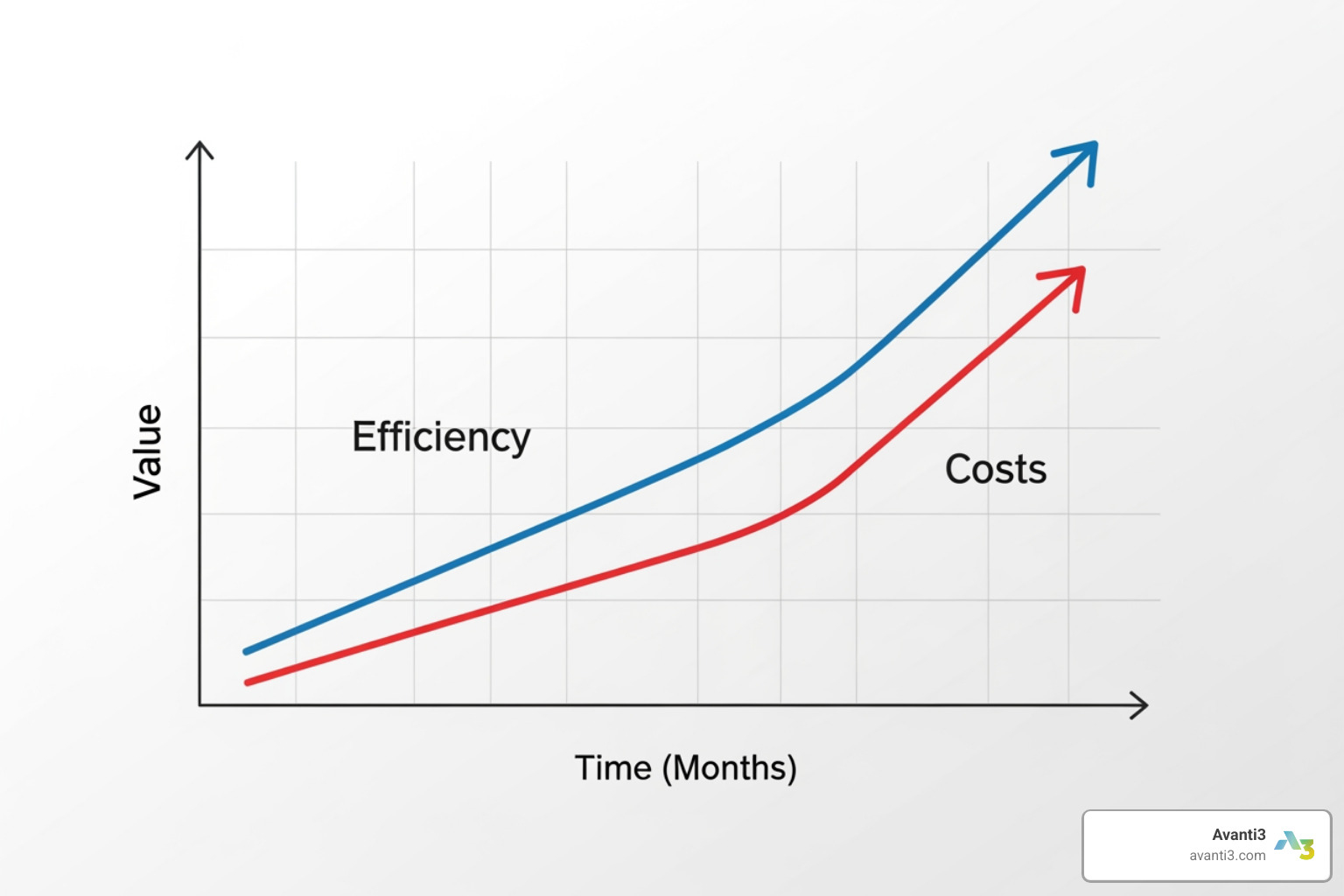
The statistics speak for themselves. AR can lead to a 43% increase in correct parts installation, which directly reduces rework and waste. Companies have reported 20% annual savings from less scrap alone.
Training is another area where AR shines, with an 80% reduction in training time. New hires get up to speed faster, saving an estimated $15,200 in onboarding costs per employee. Boeing, for example, cut wiring production time by 25% and nearly eliminated errors by integrating AR.
Operational efficiency gets a massive boost, with tasks completed 33% faster. In field services, AR-driven remote assistance can save companies over $1 million in annual travel costs by eliminating the need to fly experts to job sites. In logistics, AR can decrease order picking errors by up to 40%, a improvement given that picking can account for over half of all warehousing costs.
To measure ROI, track key metrics like task completion times, error rates, and travel expenses before and after AR implementation. A proof of concept (POC) can help quantify the specific ROI for your use case.
Key Industries and Real-World Use Cases
The versatility of Enterprise AR solutions is driving significant impact across a diverse range of industries.
- Manufacturing: AR provides workers with digital instructions and 3D models overlaid directly onto physical equipment. This improves precision for complex assembly, quality control, and maintenance procedures.
- Logistics & Warehousing: AR optimizes the supply chain by guiding workers in order picking, which can reduce errors by as much as 40%. It also helps with freight loading and compliance checks.
- Healthcare: Surgeons use AR to overlay patient data like CT scans during operations for improved precision. It’s also used for medical training with interactive 3D anatomical models and for remote maintenance of complex equipment.
- Field Services: This is a major application. AR enables remote expert assistance, where a technician on-site can get real-time visual guidance from an expert anywhere. This improves first-time-fix rates, reduces downtime, and cuts travel costs.
- Design and Engineering: Engineers can visualize 3D models in a real-world context, allowing them to walk around a virtual prototype, collaborate, and catch errors early in the design cycle.
- Retail and Marketing: Businesses use AR for virtual try-on applications and interactive product visualizations, allowing customers to see products in their own space. This is a key part of innovative Augmented Reality Marketing campaigns.
- Construction and Real Estate: AR can overlay building plans onto construction sites to verify progress and detect issues. It also allows clients to take virtual tours of unbuilt properties.
A Practical Guide to Implementing Enterprise AR Solutions
Implementing Enterprise AR solutions is a strategic integration that must align with your business goals. At Avanti3, our approach focuses on creating a strategy that considers everything from hardware selection to overcoming potential challenges, ensuring a smooth transition and maximum impact.

Choosing the Right Hardware and Software for Enterprise AR Solutions
The foundation of a successful AR deployment is selecting the right hardware and software for your specific use case, environment, and budget.
Hardware Considerations:
- Smart Glasses/Head-Mounted Displays (HMDs): These offer hands-free operation. Industrial-grade HMDs like the Microsoft HoloLens 2 provide robust spatial computing for complex tasks, while more lightweight options from brands like XReal are suited for all-day use and contextual overlays. Key specs to consider are field of view (FOV), weight, battery life, and OS compatibility.
- Mobile Devices: Smartphones and tablets are highly accessible and cost-effective AR tools, perfect for many applications like customer-facing experiences or basic field service tasks.
Software and Platforms:
Software turns hardware into powerful Enterprise AR solutions. Key types include:
- Authoring Platforms: These tools allow your team to create AR content, such as step-by-step work instructions or interactive training modules, often with low-code or no-code interfaces. This empowers subject matter experts to digitize procedures without programming knowledge.
- Remote Assistance Platforms: These specialize in connecting frontline workers with remote experts through a live video feed improved with AR annotations.
- IoT Integration: For industrial use, integrating AR with Internet of Things (IoT) data is crucial. This allows for real-time visualization of sensor data, enabling proactive maintenance and operational insights.
- Custom AR Solution Development: When off-the-shelf solutions don’t fit, custom development is key. At Avanti3, we specialize in building bespoke AR solutions custom precisely to your operational requirements and workflows.
When choosing a platform, consider ease of content creation, device compatibility, scalability, security, and integration with your existing enterprise systems (MES, ERP, etc.).
Overcoming Common Integration Challenges with Enterprise AR Solutions
Integrating Enterprise AR solutions has its challenges, but they can be managed with careful planning.
- High Upfront Costs: The initial investment can be substantial. We recommend building a clear ROI case and considering a phased implementation to manage costs.
- Technical and Integration Complexity: Integrating AR with legacy IT infrastructure (MES, ERP) can be complex. A robust AR platform should offer open APIs and flexible deployment options (cloud, on-premises) to ensure seamless data flow.
- Staff Training and Adoption: New technology requires user buy-in. Comprehensive, hands-on training and demonstrating clear benefits to end-users are crucial for successful adoption. Intuitive interfaces are key.
- Data Security and Privacy: AR devices can collect sensitive data. It is paramount to choose platforms that comply with rigorous security standards like SOC 2 Type II and offer deployment options suitable for your data sensitivity needs.
- Scalability: A solution must be able to scale from a small pilot project to an enterprise-wide deployment. This requires a platform that can manage many users, devices, and content with robust administrative controls.
Future Trends and Choosing the Right Partner
The world of Enterprise AR solutions is constantly evolving. Staying ahead of these trends is key to future-proofing your investment.
- AI Integration: The synergy between AR and AI will create smarter systems that can predict failures and automate content creation.
- Cloud-Based AR: Offloading processing to the cloud will enable lighter, more comfortable hardware and simplify content distribution across large organizations.
- Improved Device Ergonomics: AR glasses will continue to become lighter and more comfortable for all-day wear, with wider fields of view and better battery life.
- Web3 and Decentralized Networks (DePIN): While still nascent for enterprise AR, the broader Web3 ecosystem points to a future of decentralized data and infrastructure. At Avanti3, our expertise in converging technologies like Web3, AR/VR, and AI positions us to explore these innovative future applications.
Choosing the Right Partner:
Navigating this landscape requires a knowledgeable guide. An ideal partner should have deep expertise, offer custom solutions, provide robust support, and be a forward-thinking innovator. At Avanti3, we pride ourselves on being that strategic partner. Our team combines technical prowess with business strategy to help you innovate and achieve measurable results with our AR Marketing Solutions and broader immersive experience offerings.
Conclusion: Taking the Next Step with AR
The journey into Enterprise AR solutions is a strategic move toward future growth and competitive advantage. By reducing training times, minimizing errors, and enabling remote collaboration, AR has proven its ability to drive operational excellence and deliver significant ROI. It empowers your workforce with intelligent, contextual information, making them safer and more efficient.
As the market expands, the question is no longer if you should consider AR, but how and when to integrate it effectively. At Avanti3, we are passionate about helping businesses steer this landscape. We use cutting-edge technology to create tangible business value and open new opportunities for engagement and efficiency.
Ready to see how these transformative technologies can benefit your organization? Explore our AR/VR immersive experiences to see how we can help your business innovate. Let’s build a future where your business thrives, augmented by intelligence and innovation.