

More Than Just a Game
AR VR application technology has exploded far beyond gaming into every corner of our daily lives. Here are the key ways AR and VR applications are changing industries today:
Top AR Applications:
- Retail: Virtual try-ons and furniture placement (71% of users shop more with AR)
- Healthcare: Surgical training and pain management (FDA-approved VR systems)
- Education: Immersive learning (4x faster skill development)
- Marketing: Interactive advertising campaigns
Top VR Applications:
- Training: Risk-free simulations for dangerous scenarios
- Entertainment: 360-degree films and virtual concerts
- Real Estate: Virtual property tours
- Social: Meeting spaces and community building
Have you ever wished you could try on makeup without actually putting it on? Or see how a new couch would look in your living room before buying it? Maybe you’ve wondered how surgeons practice complex procedures without risking patient safety.
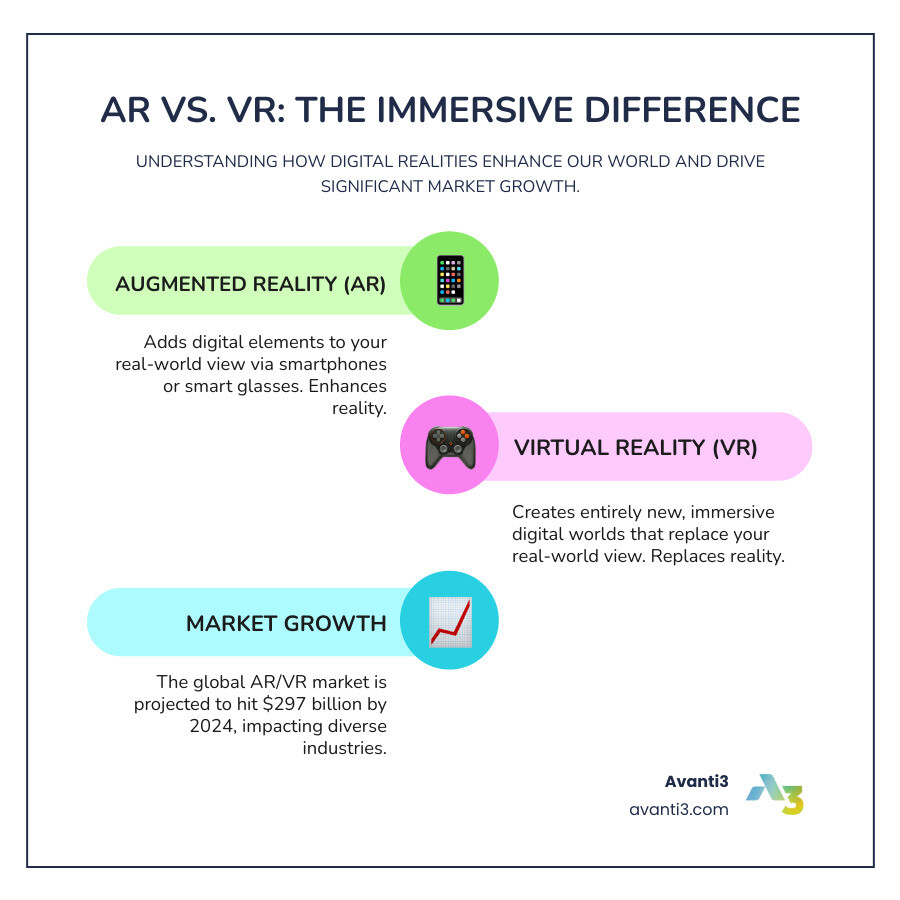
The global AR/VR market is projected to hit $297 billion by 2024, and it’s not just about fancy tech demos anymore. From helping doctors save lives to letting you virtually redecorate your home, these technologies are solving real problems for real people.
What makes AR different from VR is simple: Augmented Reality adds digital elements to your real world (like Pokemon Go), while Virtual Reality creates entirely new worlds you can step into (like exploring ancient Rome through a headset).
I’m Samir ElKamouny, and I’ve helped countless businesses and creators harness cutting-edge technologies to transform their audience engagement and open up new revenue streams. Throughout my experience scaling businesses across 25 countries, I’ve witnessed how AR VR application development can completely reshape how brands connect with their communities and monetize their content.
Basic ar vr application glossary:
What’s the Difference? Augmented Reality vs. Virtual Reality
Ever wondered why some people talk about AR and VR like they’re the same thing? I get it – both sound pretty futuristic. But here’s the thing: they’re actually quite different, and understanding this difference will help you choose the right AR VR application for your needs. (Need a quick primer? Check out this concise Wikipedia article on augmented reality for more background.)
Think of it this way: Augmented Reality is like having a helpful friend who points out interesting things as you walk through your neighborhood. You’re still in your familiar world, but now you’re seeing it with fresh eyes. AR takes your real environment and sprinkles digital magic on top of it.
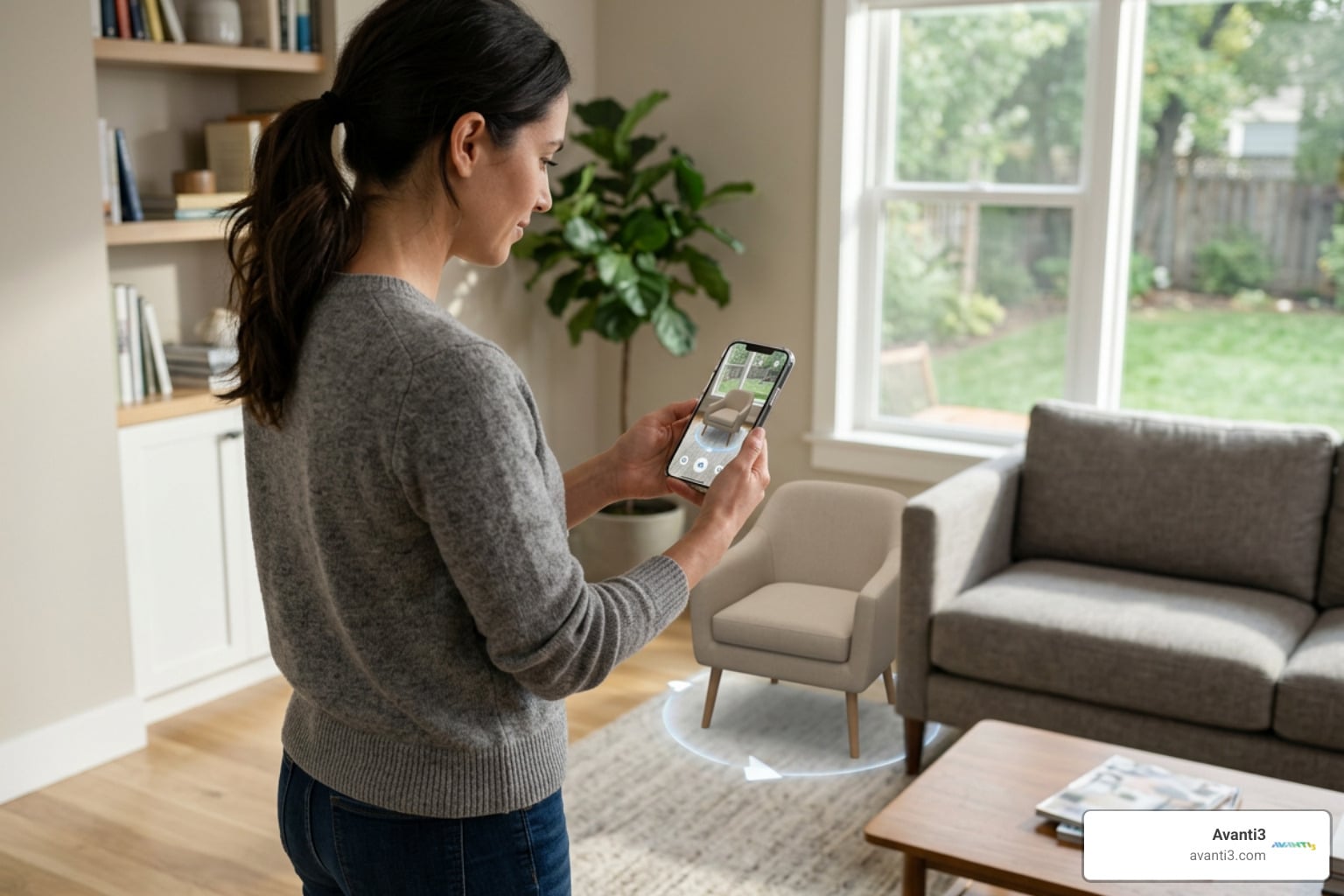
When you use your smartphone to see how that new couch would look in your living room, that’s AR working its charm. The app shows you your actual room through your camera, then places a realistic 3D couch right where you want it. You can walk around, check different angles, and even sit down next to where the virtual couch appears.
Virtual Reality, on the other hand, is like stepping through a portal into another world entirely. Put on a VR headset, and suddenly you’re not in your living room anymore – you might be exploring the depths of the ocean, walking through ancient Egypt, or attending a concert on Mars.
The hardware tells the whole story. AR works with devices you probably already own – your smartphone, tablet, or those sleek AR glasses that are becoming more popular. These devices let you see both the real world and digital content at the same time.
VR requires specialized headsets that cover your eyes completely, blocking out your physical surroundings. These headsets create a bubble of digital reality around you, making your brain believe you’ve been transported somewhere else entirely.
Here’s how they stack up side by side:
| Aspect | Augmented Reality (AR) | Virtual Reality (VR) |
|---|---|---|
| Definition | Overlays digital content onto the real world | Creates a fully immersive, simulated digital environment |
| Hardware | Smartphones, tablets, AR glasses | VR headsets with eye-covering displays |
| User Experience | Improves and interacts with the real world | Replaces the real world with a new one |
| Immersion Level | Partial immersion; you stay aware of surroundings | Full immersion; you’re isolated from the real world |
The real world interaction aspect is what makes AR so practical for everyday use. You can try on makeup virtually while still seeing yourself in the mirror, or get navigation directions overlaid on the actual street in front of you.
Complete immersion is VR’s superpower. When you’re training for a dangerous procedure or exploring historical sites that no longer exist, you want that full replacement of reality. The technology tricks your senses so effectively that your brain genuinely believes you’re somewhere else.
Both technologies power amazing interactive games and enterprise solutions, but they solve different problems. AR improves what you’re already doing, while VR takes you somewhere completely new to do it.
A World of AR & VR Application Examples Across Industries
The numbers tell an incredible story: the global AR/VR market is racing toward $297 billion by 2024. But behind those impressive figures lies something even more exciting – these technologies are quietly revolutionizing how we work, shop, learn, and connect with each other.
What started as cutting-edge experiments in tech labs has evolved into practical AR VR application solutions that solve real problems across every industry imaginable. From helping doctors perform life-saving surgeries to letting you see how that perfect couch looks in your living room, these immersive experiences are becoming as common as checking your smartphone.
The shift is remarkable. Businesses aren’t just experimenting with AR and VR anymore – they’re building entire strategies around them. Enterprise solutions are streamlining operations, while consumer applications are making our daily lives more convenient and enjoyable than ever before.
More info about AR VR Immersive Experiences
Revolutionizing Retail and Marketing
Picture this: you’re shopping for a new sofa, but instead of guessing how it might look in your space, you simply point your phone at your living room and watch as a perfect 3D model appears exactly where you want it. This isn’t futuristic thinking – it’s happening right now, and the results are pretty amazing.
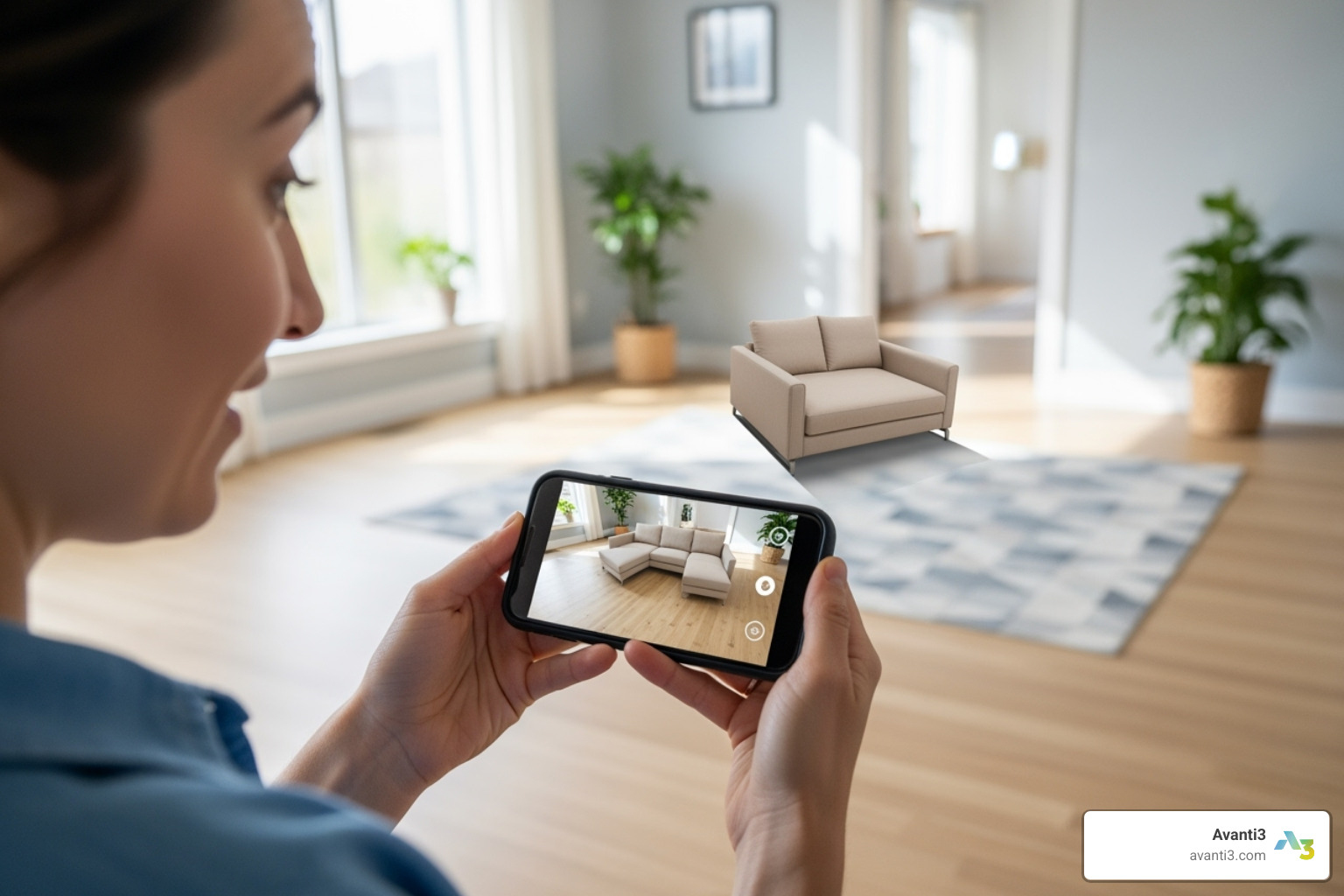
The statistics behind AR VR application in retail are eye-opening. 71% of users shop more when they have access to AR experiences, and here’s the kicker – 72% of shoppers end up buying products they hadn’t originally planned to purchase after trying AR. It’s like having a magic mirror that shows you exactly what you’re getting before you commit.
Virtual try-on technology has completely changed the beauty and fashion game. For example, virtual makeup apps let you experiment with different looks without actually applying anything. The result? A whopping 94% higher conversion rate for beauty products when AR is involved. No more wondering if that lipstick shade will work with your skin tone.
IKEA Place-style AR furniture visualization has made furniture shopping almost foolproof. You can see exactly how that bookshelf fits in your corner or whether that dining table is too big for your space. It’s not just convenient – it’s dramatically reducing returns because people know exactly what they’re getting.
But perhaps the most impressive example comes from interactive advertising. Remember when Pepsi transformed a regular bus shelter into an incredible AR experience? Commuters waiting for the bus suddenly saw lions walking down the street and UFOs hovering overhead through the shelter’s screen. The campaign reached 385 million people organically and boosted sales by 35% that month. That’s the power of making advertising feel like entertainment.
More info about AR Marketing Solutions
A Transformative AR VR Application in Healthcare
Healthcare might be the most exciting frontier for AR VR application technology, and for good reason – we’re talking about literally saving lives and changing how medical professionals learn and work.
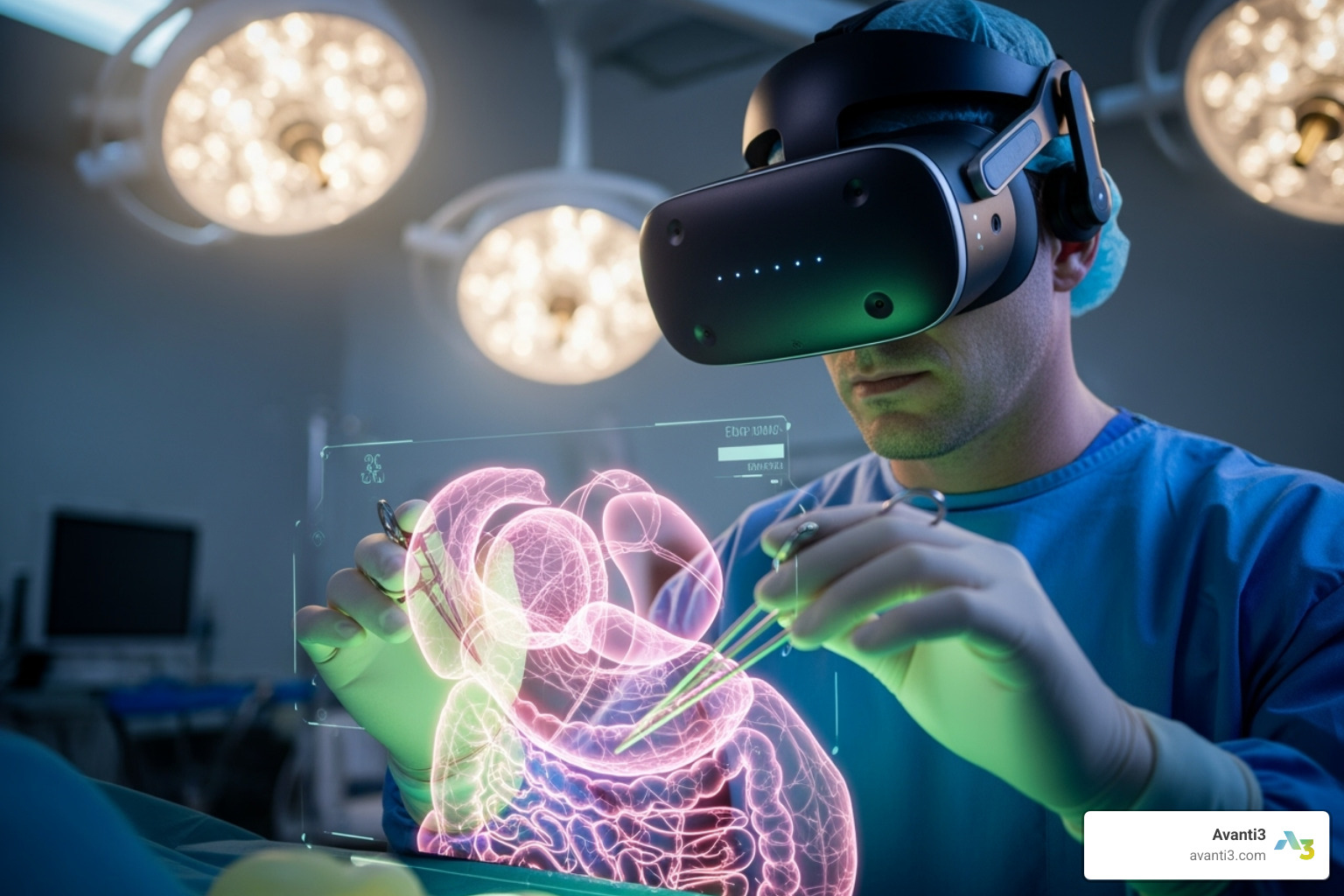
Surgical training in VR is because it lets doctors practice complex procedures over and over without any risk to patients. Imagine being able to perform your first heart surgery a hundred times in virtual reality before ever touching a real patient. These medical VR training platforms are creating more confident, skilled surgeons while keeping everyone safer.
Medical imaging gets a major upgrade with AR. Surgeons can now see X-rays and MRI scans overlaid directly onto a patient’s body during operations. It’s like having X-ray vision – they can see exactly where to make incisions and steer around critical organs with unprecedented precision.
Perhaps most groundbreaking is VR’s role in pain management. The FDA approval for a VR system for pain management marked a historic moment. EaseVRx helps chronic pain patients by immersing them in calming virtual environments, offering relief without relying solely on medications. It’s proof that sometimes the best medicine doesn’t come in a pill bottle.
Remote consultation has become incredibly valuable, especially for patients in rural areas. Doctors can virtually “visit” patients, guide local healthcare workers through procedures, and even help troubleshoot medical equipment from thousands of miles away. Patient education also benefits hugely – imagine learning about your upcoming surgery by taking a virtual tour through your own body.
Redefining Training, Education, and Collaboration
Here’s where AR VR application technology gets really exciting for learning. We’re not just talking about making education more fun – we’re talking about making it fundamentally more effective.
The research is compelling: people learn 4x faster in VR compared to traditional methods, especially for soft skills training. That’s not just a slight improvement – that’s a complete game-changer for how we think about professional development and education.
Immersive learning lets students experience things that would be impossible, dangerous, or expensive in real life. Want to walk through ancient Rome? Dissect a virtual heart? Explore the inside of a volcano? VR makes it all possible. Students aren’t just reading about history or science – they’re living it.
Digital twin campuses are creating virtual versions of real educational institutions, allowing students from anywhere in the world to attend classes, use virtual labs, and collaborate on projects. It’s democratizing access to quality education in ways we’ve never seen before.
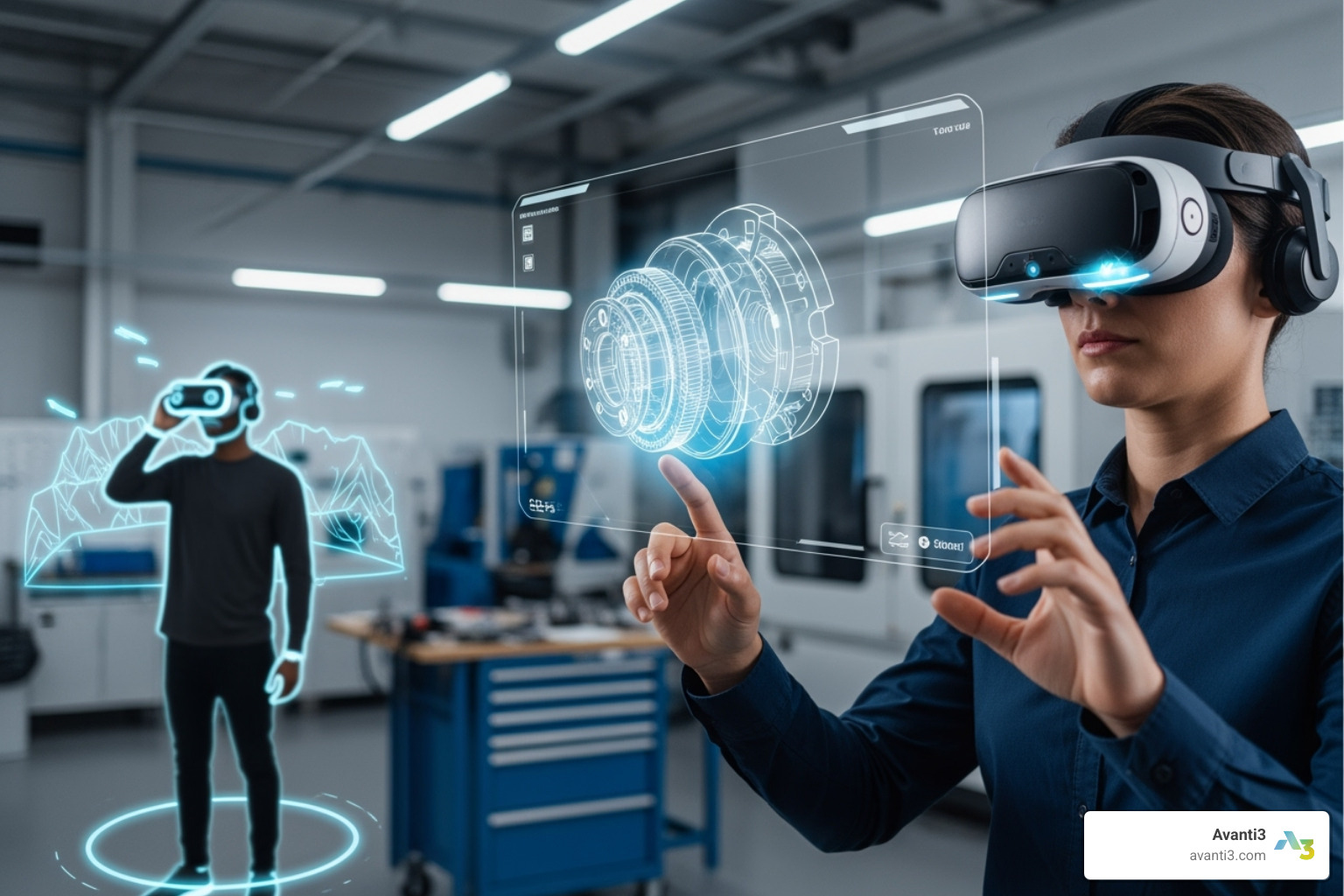
Remote assistance through AR is solving complex problems in real-time. A factory technician wearing AR glasses can receive step-by-step instructions overlaid on the equipment they’re repairing, guided by an expert who might be on another continent. Companies using this technology are seeing 40% fewer errors and 25% higher productivity.
Field service applications help technicians diagnose problems faster and more accurately. Instead of carrying heavy manuals or making multiple trips for parts, they can see exactly what needs to be done through their AR display.
The benefits of AR/VR training are clear: Risk-free environment for practicing dangerous procedures, Higher retention rates thanks to immersive experiences, Scalability to train large teams consistently, and significant Cost savings by reducing travel and equipment needs.
More info about Virtual Reality Experiences
The Future of Entertainment and Social Interaction
Entertainment is getting a complete makeover thanks to AR VR application technology, and we’re not just talking about better video games. We’re entering an era where the line between digital and physical entertainment is beautifully blurred.
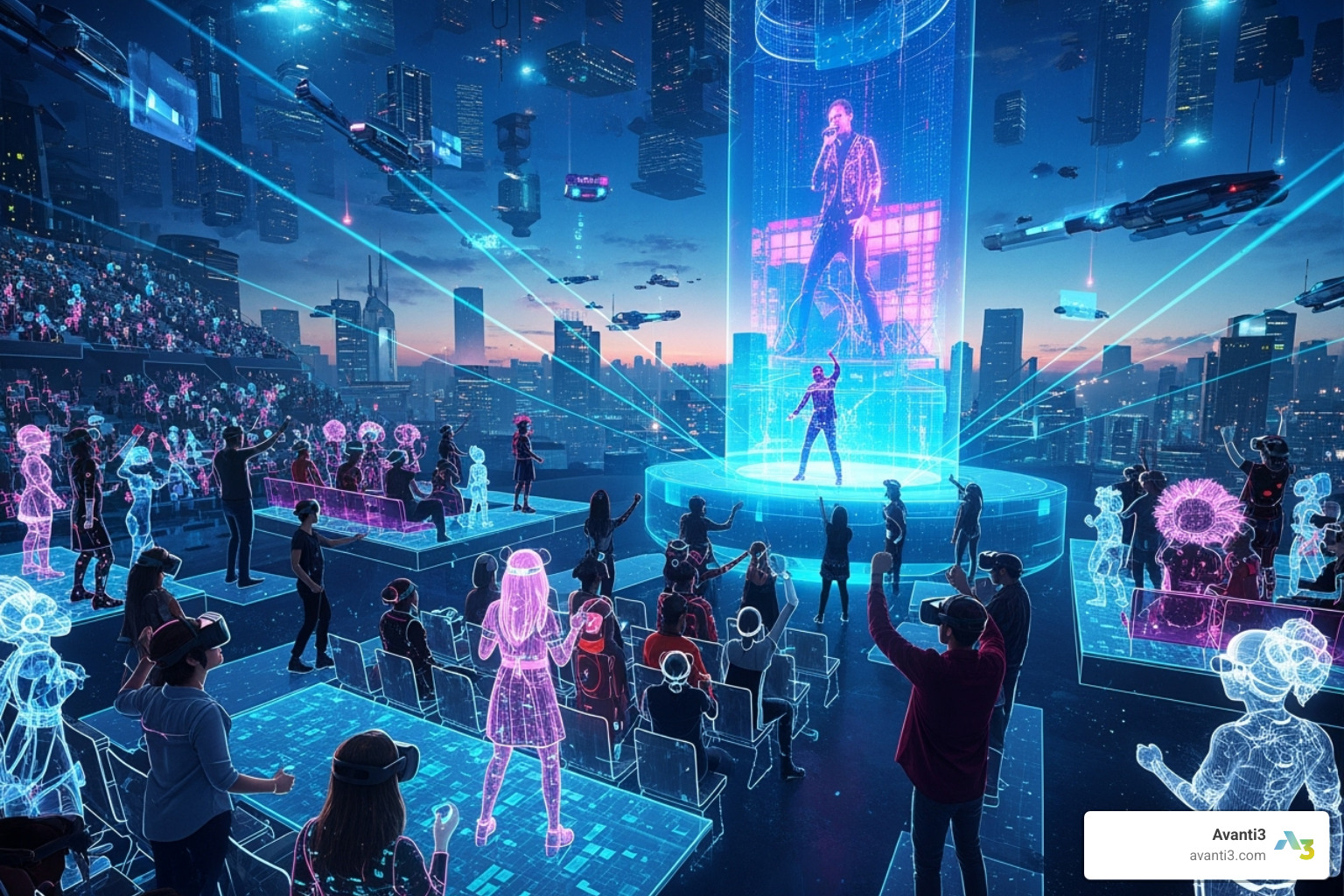
Augmented Reality Concerts are letting music fans experience performances in completely new ways. Imagine your favorite artist performing right in your living room, or attending a concert where digital effects blend seamlessly with live performance. It’s not replacing traditional concerts – it’s creating entirely new possibilities for how artists connect with their audiences.
360-degree films put you right in the middle of the story. When UNICEF created the VR documentary “Clouds Over Sidra” about Syrian refugees, donations doubled because viewers didn’t just watch the story – they felt like they were living it. That’s the power of immersive storytelling.
Social VR platforms are building new kinds of communities where people meet, create, and collaborate in virtual spaces. Whether it’s attending a virtual conference, exploring virtual worlds with friends, or participating in social and creative VR communities, these platforms are redefining what it means to “hang out” together.
Live sports in VR gives fans unprecedented access to games. You can watch from multiple camera angles, feel like you’re on the field, or even get stats and player information overlaid on the action in real-time. It’s not replacing going to games – it’s making sports more accessible and interactive for everyone.
Virtual Art Experiences are opening up entirely new creative possibilities. Artists can sculpt in 3D space, create room-sized installations, and collaborate on projects that exist only in virtual reality. It’s not just changing how we consume art – it’s changing how art gets made.
Benefits, Challenges, and the Road Ahead
Like any groundbreaking technology, AR VR applications are reshaping our world in remarkable ways while also presenting some real challenges we need to steer. The excitement around these technologies is absolutely justified, but it’s important to understand both the incredible opportunities and the obstacles that come with them.
The change happening across industries isn’t just hype – it’s backed by real results and genuine improvements in how we work, learn, and connect with each other. At the same time, we’re still working through some growing pains that are natural for any emerging technology.
The Bright Side: Key Advantages of AR/VR
The benefits of AR VR applications are genuinely changing how businesses operate and how people experience the world around them. What’s most exciting is seeing these advantages play out in real-world scenarios across so many different industries.
Increased engagement is perhaps the most immediately noticeable benefit. When customers can virtually try on makeup or see how furniture looks in their actual living room, they’re not just browsing – they’re actively participating in the shopping experience. This deeper level of interaction naturally leads to higher conversion rates, with some retailers seeing dramatic increases in sales simply by letting customers visualize products in their own space.
The improved safety aspect is particularly compelling in high-risk industries. Firefighters can practice navigating burning buildings, surgeons can rehearse complex procedures, and pilots can experience emergency scenarios – all without any real-world danger. This risk-free environment allows for better preparation and ultimately saves lives.
Improved learning retention is another game-changer. When someone can walk through ancient Rome or manipulate 3D molecular structures with their hands, they’re not just memorizing facts – they’re experiencing concepts in ways that stick. The research consistently shows people learn faster and remember more when they’re immersed in the subject matter.
For businesses, cost savings in prototyping are substantial. Car manufacturers can test hundreds of design variations in virtual environments before building a single physical prototype. Architects can walk clients through buildings that exist only as digital models. These approaches save both time and money while allowing for more creative exploration.
The improved data visualization capabilities are revolutionizing workplaces too. Warehouse workers can see picking instructions overlaid directly on shelves, maintenance technicians can view equipment manuals floating next to the actual machinery, and designers can see real-time performance data integrated into their physical workspace.
The Problems: Current Limitations and Challenges
Despite all the promise, AR VR applications still face some significant obstacles that we’re actively working to overcome. Understanding these challenges helps set realistic expectations and guides future development priorities.
The high cost of hardware remains a barrier for many potential users. While prices are dropping, quality VR headsets and AR glasses still represent a significant investment for individuals and businesses. This cost factor naturally limits how quickly these technologies can reach mainstream adoption.
Motion sickness affects some users, particularly with VR experiences. The disconnect between what your eyes see and what your body feels can cause discomfort for certain people. Developers are getting better at minimizing this issue, but it’s still a consideration for widespread adoption.
The search for a “killer app” continues. While we have many useful and impressive applications, we’re still looking for that one experience that makes everyone say “I absolutely need this in my life.” The smartphone had texting and calls, but what will be the equivalent for AR/VR?
Complex development requirements mean creating high-quality immersive experiences demands specialized skills and significant resources. Working with 3D modeling, spatial computing, and advanced game engines isn’t something every developer can jump into easily. This complexity also drives up development costs and timelines.
Data security concerns are becoming increasingly important as these technologies collect detailed information about our physical environments and behaviors. People are rightfully cautious about privacy, especially after seeing how other technologies have handled personal data.
The need for robust connectivity is crucial for many AR/VR experiences. Cloud-based processing, real-time collaboration, and high-quality streaming all require fast, reliable internet connections. While 5G networks are expanding, consistent connectivity isn’t available everywhere yet.
These challenges aren’t impossible – they’re simply the natural growing pains of transformative technology. As the industry matures, costs will decrease, development will become more accessible, and the infrastructure will improve to support these incredible experiences.
What’s Next? The Future of the AR VR Application Landscape
The future of AR VR application technology is unfolding before our eyes, and it’s more exciting than we could have imagined just a few years ago. We’re standing at the edge of a digital revolution where the boundaries between our physical and virtual worlds will become beautifully blurred.
Think about how frustrating it can be to download yet another app just to try an AR experience. That’s where WebAR comes to the rescue. This breakthrough technology lets you jump straight into AR experiences through your web browser – no app downloads, no storage worries, just scan a QR code and you’re instantly immersed. It’s like having a magic portal in your pocket that opens with a simple tap.
The rollout of 5G integration is about to change everything we thought we knew about mobile AR and VR. Imagine downloading a massive VR world in seconds, or having AR experiences that respond to your movements with zero lag. With 5G’s lightning-fast speeds and near-instant response times, we’re talking about AR experiences so smooth they’ll feel like actual magic overlaid on your world.
Here’s where things get really interesting: AI-powered assistants are becoming the smart companions we never knew we needed in our AR/VR experiences. Picture walking down the street wearing AR glasses, and your AI assistant recognizes that coffee shop you’ve been wanting to try, instantly showing you reviews and your friends’ recommendations floating right above the storefront. Or imagine learning a new skill in VR where the AI adapts the lesson in real-time based on how quickly you’re picking things up.
The introduction of the Android XR platform shows just how seriously tech giants are taking this future. Android XR isn’t just another platform – it’s positioning extended reality as a core part of our digital lives, right alongside our phones and smart TVs.
The Mirrorworld concept sounds like something straight out of science fiction, but it’s closer than you think. Imagine a complete digital twin of our entire world, where every building, street, and landmark has a rich digital layer of information and experiences waiting to be finded. Walking through your neighborhood could become an trip where historical events play out in AR, or where you can leave digital messages for friends to find later.
But why stop at just seeing and hearing? Haptic feedback suits are bringing the sense of touch into virtual worlds. Soon, you’ll be able to feel the texture of virtual objects, the resistance of a virtual rope, or even the warmth of a virtual campfire. It’s like giving your digital experiences a physical soul.
The creative possibilities are expanding too, especially with innovations like Augmented Reality NFTs. These aren’t just digital collectibles – they’re interactive experiences that can transform your physical space into personalized art galleries or gaming environments.
The numbers tell an incredible story of growth ahead of us. The AR VR application market is racing toward $62.9 billion by 2029, with projections showing the global market could hit a staggering $237 billion by 2032. But beyond the impressive figures, what really matters is how these technologies will weave themselves into the fabric of our daily lives.
We’re not just talking about better games or cooler apps. We’re looking at a future where learning happens through immersive experiences, where shopping means trying before buying in ways we never thought possible, and where connecting with others transcends physical distance in meaningful ways.
The road ahead isn’t just about more powerful hardware or faster internet – it’s about creating AR VR applications that feel natural, helpful, and genuinely improve how we work, learn, play, and connect with each other.
Conclusion: Embracing Our New Reality
We’ve taken quite a journey together through AR VR applications, haven’t we? What started as a simple question about the difference between augmented and virtual reality has revealed something much bigger: we’re living through a technological revolution that’s quietly changing every aspect of our lives.
Think about it. Just a few years ago, the idea of trying on makeup virtually or practicing surgery in a completely safe digital environment seemed like something out of a science fiction movie. Today, these AR VR applications are helping people make better shopping decisions, saving lives in operating rooms, and creating learning experiences that stick with us four times longer than traditional methods.
From retail stores where you can see exactly how that new couch will look in your living room, to healthcare facilities where doctors practice complex procedures without any risk to patients, these technologies aren’t just changing how we work—they’re changing how we connect with each other. We’re attending concerts as digital avatars, learning history by walking through ancient civilizations, and collaborating with colleagues on the other side of the world as if they’re right next to us.
We’ve talked about the challenges too. Hardware can be expensive, some people get motion sickness, and creating these experiences requires specialized skills. But here’s what excites me: every single one of these obstacles is being tackled by brilliant minds around the world. WebAR is making experiences accessible through any web browser. 5G is eliminating lag and making everything smoother. AI is making these technologies smarter and more personalized.
The market numbers tell the story too—we’re looking at $297 billion by 2024. That’s not just hype; that’s real businesses solving real problems for real people.
At Avanti3, we’re not just watching this revolution happen—we’re helping create it. We integrate Web3 technologies like NFTs, blockchain, AR/VR, and AI to empower creators and brands with tools that were unimaginable just a few years ago. Whether you’re looking to transform how your audience engages with your content, create unique digital experiences, or build stronger communities, we’re here to help you harness these cutting-edge technologies and open up entirely new revenue streams.
The future isn’t coming—it’s already here. The only question left is: are you ready to be part of it?