

The Browser Revolution: Why WebAR is Changing Digital Engagement
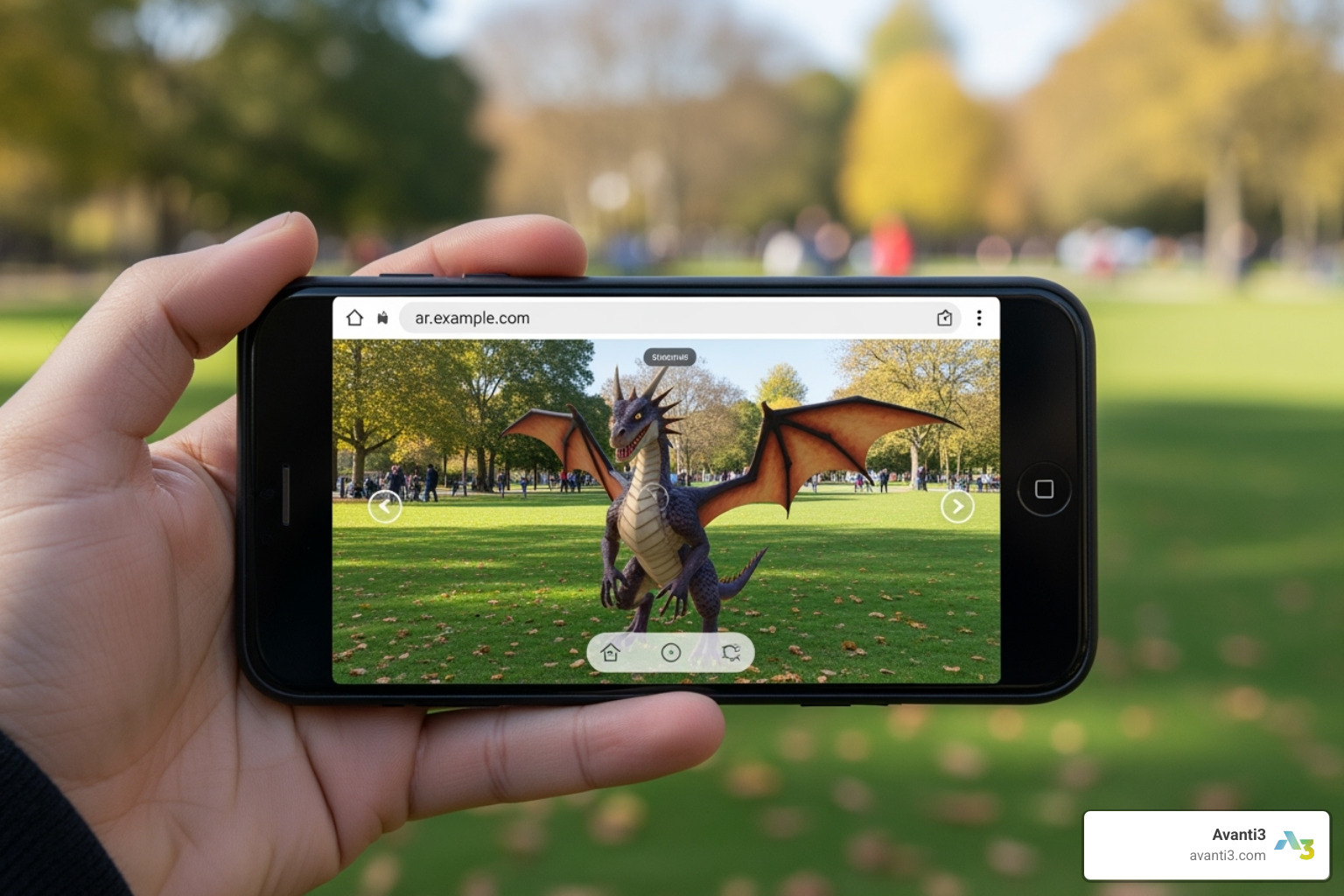
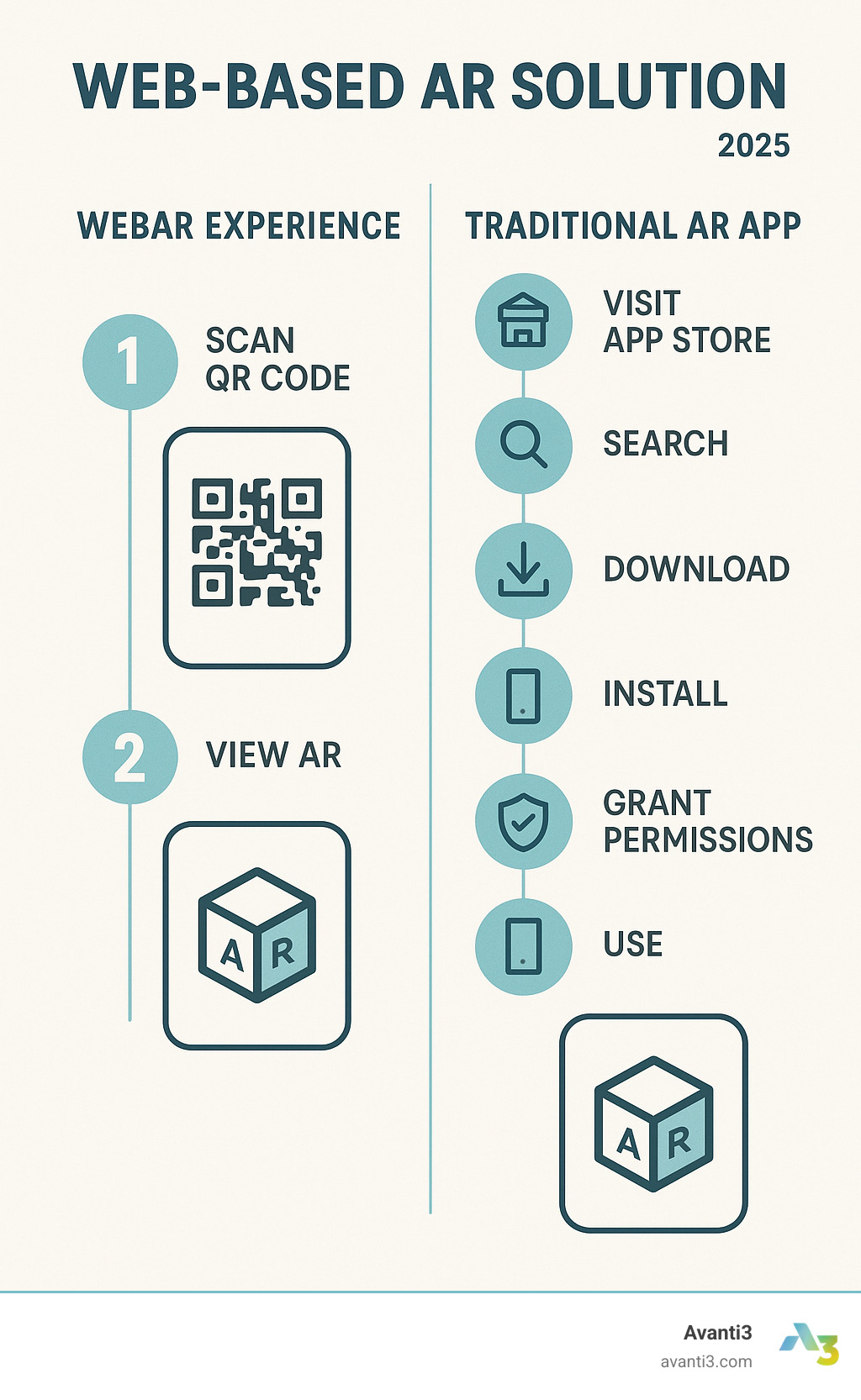
A web based ar solution eliminates the friction of app downloads, allowing users to access immersive augmented reality experiences directly through their web browser. This removes the biggest obstacle between your audience and your content: the download barrier.
Quick Answer: What is a Web Based AR Solution?
- No App Required: Users scan a QR code or click a link to access AR instantly
- Universal Compatibility: Works on iOS, Android, and desktop browsers
- Higher Engagement: 94% higher conversion rates and 200% more interactions
- Instant Sharing: Share AR experiences via URLs, social media, or QR codes
- Cost-Effective: Faster development and deployment than native AR apps
The days of hefty app downloads and multiple permissions are over. Today’s web based ar solution platforms have changed everything. The numbers tell the story: users spend over three minutes engaged in WebAR experiences, leading to 94% higher conversion rates. For brands, browser-based AR isn’t just convenient—it’s revolutionary.
I’m Samir ElKamouny, and I’ve helped brands leverage cutting-edge technologies to transform their digital presence. Through my work with innovative web based ar solution implementations, I’ve seen how removing friction drives engagement and creates lasting connections.
What is WebAR and Why is it a Game-Changer?
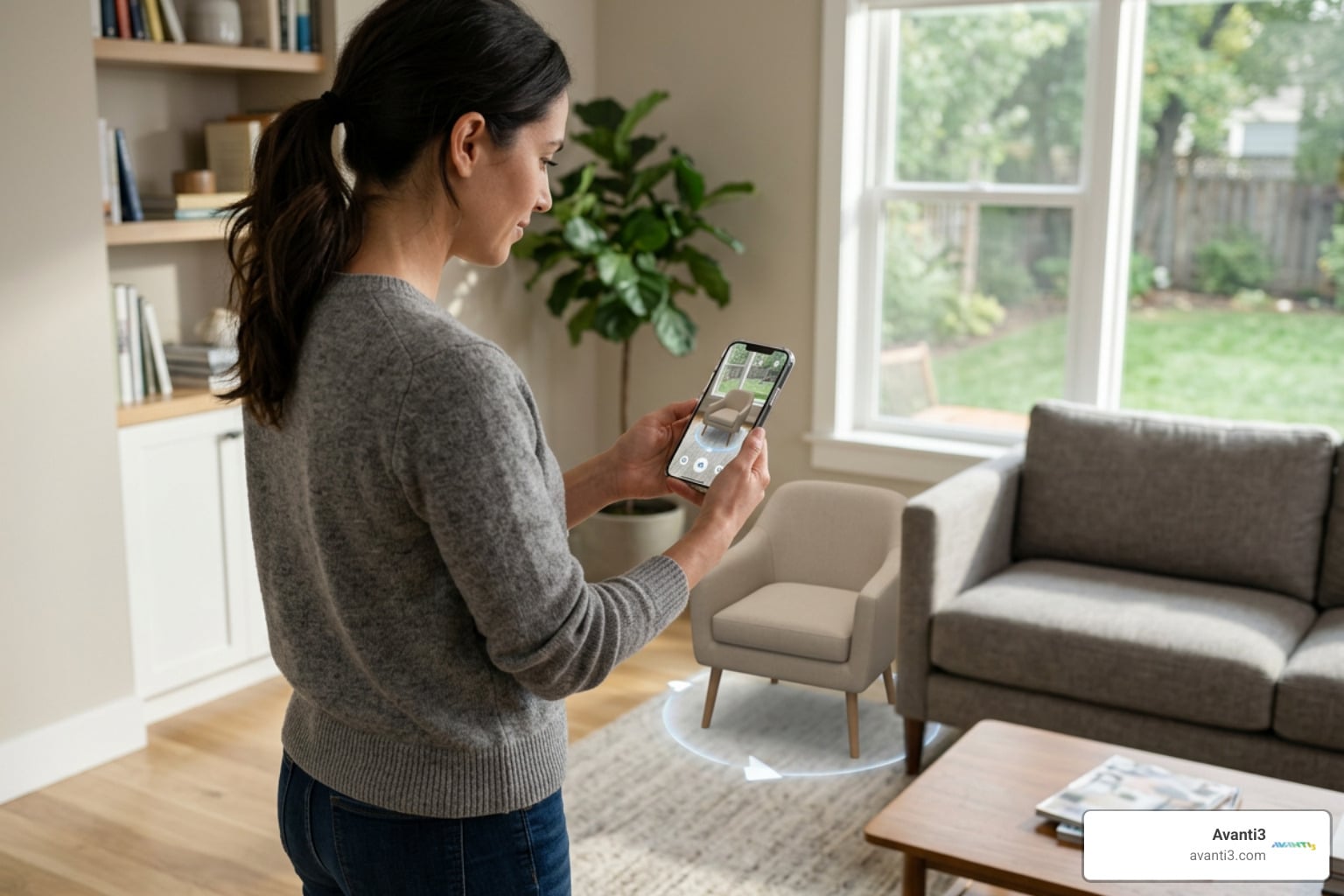
Imagine seeing a product online and, instead of downloading an app, you scan a QR code to instantly see it in your living room. This is the magic of a web based ar solution, and it’s changing how we interact with digital content.
WebAR, or web-based augmented reality, brings AR directly to your browser using technologies like WebXR, WebGL, and JavaScript. These tools tap into your device’s camera and sensors, turning any smartphone into an AR powerhouse without app stores or downloads. The difference is clear: traditional apps create friction, while WebAR offers instant access with a simple link or QR code. This universal approach works across iOS and Android devices, helping businesses achieve 94% higher conversion rates by removing barriers.
The Unbeatable Benefits of Going App-Less
The ease of use is why users spend over three minutes on average with WebAR content. Key benefits include:
- Wider Distribution: Share your AR experience with a simple URL on social media, in emails, or on your website, reaching a global audience without app store restrictions.
- Faster, Cost-Effective Development: Build with familiar web technologies for shorter timelines and lower costs compared to native apps.
- Instant Updates: Change a 3D model or update content on your server, and the changes are live for all users immediately. No app store reviews needed.
- Proven Engagement: WebAR drives a 200% increase in interactions and maintains an impressive 3-minute average engagement time.
How Does WebAR Fundamentally Work?
Behind the scenes, a web based ar solution uses your smartphone’s camera to view the real world and its sensors (accelerometer, gyroscope) to track movement. The browser uses computer vision to understand the real-world environment and find surfaces. WebGL then renders complex 3D models and animations, creating a seamless digital overlay that blends virtual objects with your physical space. All this happens within the browser, no special software required.
Exploring the Possibilities: Types of WebAR Experiences
The versatility of a web based ar solution is its greatest strength, changing digital content into immersive experiences. You can use dynamic 3D models, rich video content, fluid animations, and interactive buttons to create entire digital worlds that blend with reality. The canvas is limited only by creativity.
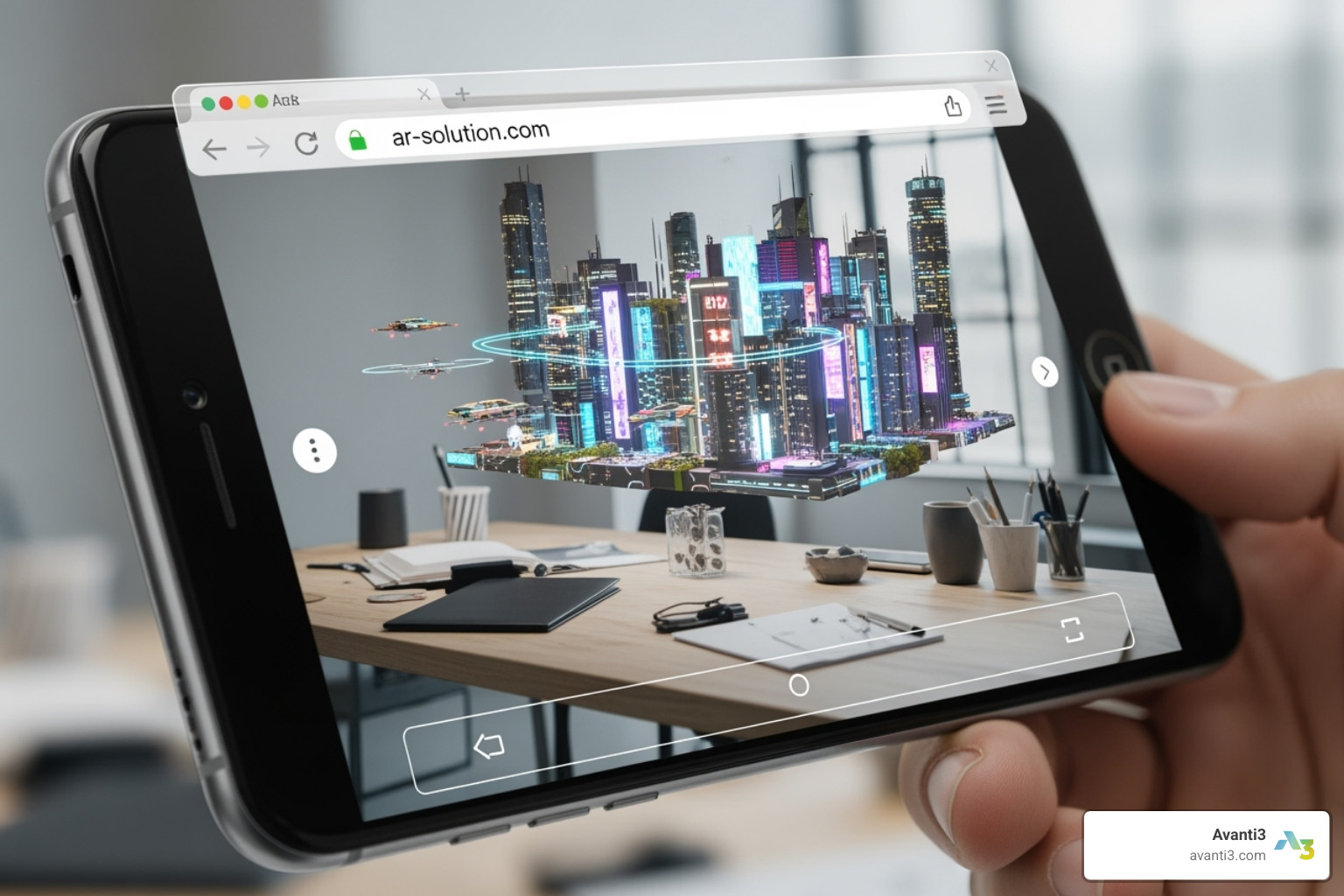
Understanding which type of WebAR fits your goals is key. To explore more, check out our insights on AR VR Immersive Experiences.
Marker-Based Tracking: Bringing Print to Life
This approach uses image tracking to recognize specific visuals, like a QR code trigger, and launch an AR experience. It works on both flat images (posters, business cards) and curved images (product packaging, bottle labels), turning physical marketing materials into interactive portals. For example, a wine bottle can tell its story, or a business card can become a portfolio.
Markerless World Tracking (SLAM)
Powered by SLAM (Simultaneous Localization and Mapping), this technology understands the environment without needing a specific marker. It uses surface detection to analyze rooms and outdoor spaces, allowing for stable 3D object placement. This is perfect for product visualization, such as placing virtual furniture in a room, or creating immersive portals that transport users to new worlds.
Face and Body Tracking
This technology turns the user into an interactive canvas. Virtual try-on for hats, glasses, or makeup uses face filters to let customers see products on themselves. Full-body tracking for apparel takes this further, showing how clothes fit and move. These personal and shareable experiences are social media gold.
Location-Based (Geospatial) AR
This type of WebAR uses the world as its canvas, delivering GPS-triggered content at specific real-world locations. It’s ideal for creating interactive historical tours, scavenger hunts, wayfinding systems for complex venues, or enhancing outdoor events with location-specific digital content.
The Ultimate Guide to Choosing a Web Based AR Solution
Choosing the right web based ar solution is about matching your project’s needs to the platform’s capabilities. Some platforms are for marketers who need speed, while others are for developers who require total control.
The WebAR world is divided into two main camps. For deeper evaluation strategies, this guide on Finding the best platform for your WebAR project offers valuable insights.
Understanding the Categories of WebAR Platforms
No-code and low-code platforms feature drag-and-drop interfaces, making them perfect for marketers and educators who want to launch campaigns quickly without coding. The trade-off is less customization, but the simplicity ensures a faster launch.
SDK-based platforms are power tools for developers and agencies. These Software Development Kits use JavaScript libraries and may integrate with engines like Unity for fully custom projects. They offer maximum flexibility but require technical expertise.
| Criteria | No-Code/Low-Code Platforms | SDK-Based Platforms |
|---|---|---|
| Ease of Use | Very High (Drag-and-drop) | Moderate to High (Coding req.) |
| Customization | Limited to Moderate | Very High |
| Target User | Marketers, Educators, SMEs | Developers, Agencies, Enterprises |
| Development Speed | Fast | Slower (More complex projects) |
| Cost (Initial) | Often subscription-based | Can be higher (Dev time, licenses) |
| Flexibility | Less | More |
Critical Evaluation Factors for Your Web based AR solution
When evaluating platforms, focus on these key factors:
- Tracking Quality: Is image tracking fast and reliable? Is surface detection for 3D objects stable? Poor tracking ruins the experience.
- Feature Set: Does the platform support your needs, like 3D object placement, face tracking, animation, or interactive buttons?
- Analytics: You need data on user engagement to measure ROI and optimize your experience.
- White-Labeling: Can you use a custom domain and remove the platform’s branding to maintain your own brand consistency?
- Pricing Models: Understand if it’s pay-per-view, a subscription, or if there are hidden fees for hosting or support.
- Support & Documentation: Good documentation and responsive support can significantly reduce development time.
Finding the Right Fit for Your Web based AR solution
The perfect web based ar solution is specific to your situation.
- Project Goals: A quick marketing campaign has different needs than a long-term e-commerce integration.
- Technical Expertise: Be realistic. Choose a no-code tool if you don’t have developers.
- Budget: Factor in platform costs, content creation, and potential scaling.
- Scalability: Ensure the platform can grow with your needs.
- User Experience: Prioritize a smooth, magical experience above all else. Test on multiple devices to ensure it works flawlessly for your end-users.
WebAR in Action: Transformative Use Cases Across Industries
The true power of a web based ar solution is evident in its transformative use cases across industries. By removing the app download barrier, businesses are creating deeper connections with customers, students, and art lovers.

This technology is revolutionizing brand engagement. For a deeper dive, explore our AR Marketing Solutions.
E-commerce and Retail: The Virtual Showroom
WebAR brings the showroom into the customer’s home, solving online shopping’s biggest weakness.
- Virtual Try-On: Customers can see how glasses, makeup, or sneakers look on them.
- Product Visualization: Users can place furniture or other items in their space to check the fit and style. This leads to 3 times greater shopper conversion and dramatically reduced return rates.
- Interactive Product Demos: Animated instructions and feature explorations turn passive browsing into an engaging experience.
The world of Augmented Reality Marketing offers brands unprecedented ways to connect with customers.
Marketing and Advertising: Engaging at a New Level
WebAR cuts through advertising noise with experiences people want to engage with.
- Interactive Packaging: Cereal boxes or product labels become portals for storytelling and exclusive content.
- Print Advertising with a Digital Soul: Magazine ads and billboards can launch 3D product demos or interactive experiences.
- Immersive Brand Storytelling: Layer digital narratives onto the physical world to foster genuine emotional connections.
- Live Events: Improve concerts, trade shows, and brand activations with AR. We’re especially excited about Augmented Reality Concerts.
Education and Training: Making Learning Stick
WebAR makes learning visual and interactive, leading to 70% improved learning outcomes and increased student engagement.
- Tangible Concepts: Students can dissect a virtual heart or walk through ancient Rome.
- Interactive 3D Models: Textbooks come to life as students explore everything from DNA to architecture.
- Virtual Labs: Safe, repeatable simulations for medical, engineering, and technical training.
Arts, Entertainment, and Web3
The creative industries are using WebAR as a powerful new medium.
- Interactive Art Installations: Physical art can reveal hidden layers or animated stories.
- Virtual Galleries: Democratize art by allowing users to curate and display digital works in their own homes.
- Augmented Reality NFTs: As explored in our guide to Augmented Reality NFTs, digital collectibles come alive in the real world.
- Gamified Experiences: Location-based treasure hunts and interactive challenges create new forms of entertainment.
The Future is Browser-Based: What’s Next for WebAR?
The web based ar solution landscape is evolving at breakneck speed. We’re just scratching the surface of what’s possible.
AI integration is set to revolutionize content creation. Generative AI will soon allow you to create 3D models and animations simply by describing them. AI-powered computer vision will also enable WebAR to understand environments with greater precision, recognizing objects and lighting conditions for more realistic experiences.
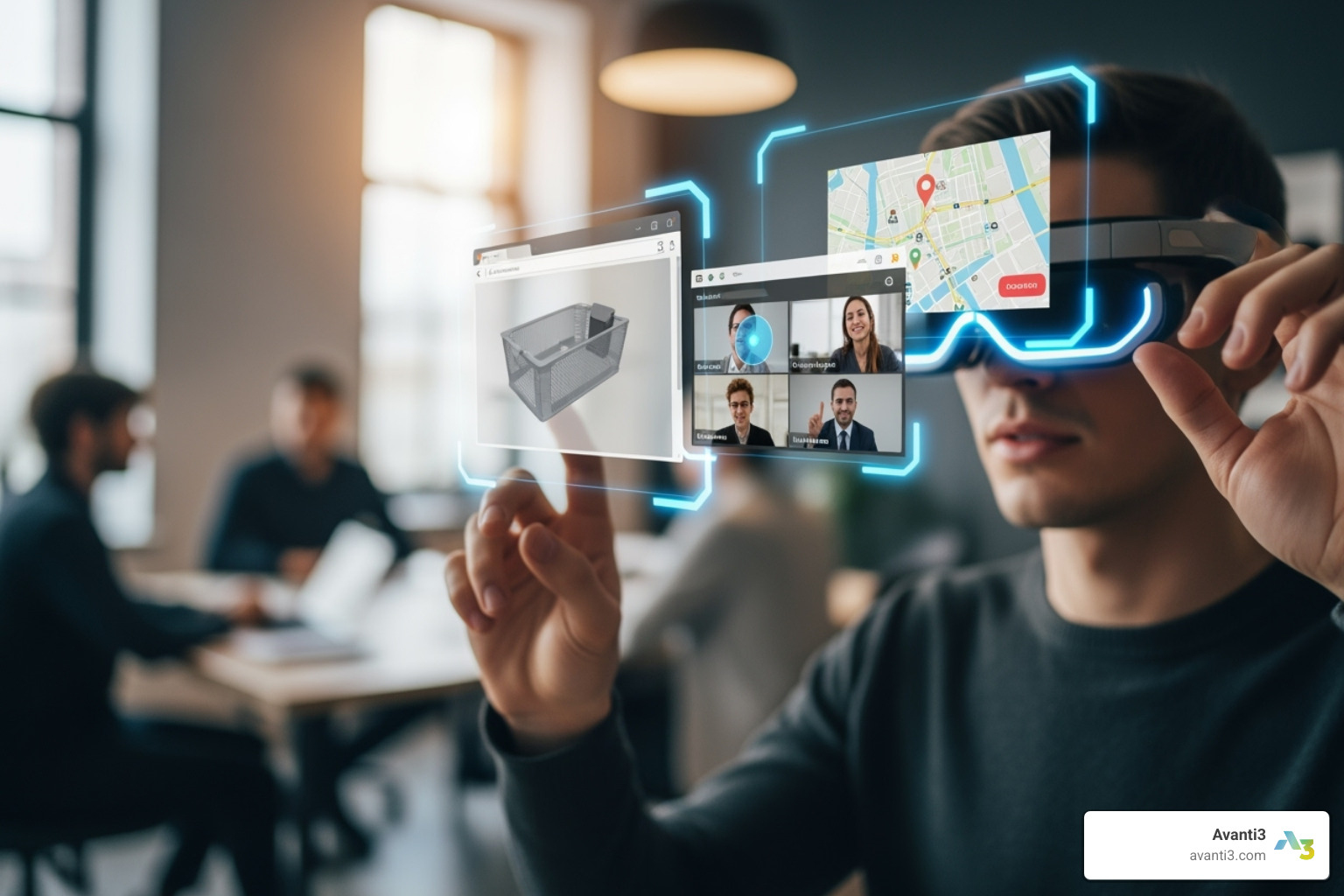
AR glasses are the next major leap, promising to overlay browser-based experiences onto our vision without needing a smartphone. This will enable the real-world metaverse, a persistent digital layer over our physical world, powered by Web3 technology for digital ownership and community building.
5G networks provide the necessary infrastructure, offering the speed and low latency required for streaming high-quality 3D models and supporting multi-user AR. This, combined with improved realism in computer vision, will blur the line between digital and physical. With the metaverse projected to reach a value of $5 trillion by 2030, we are laying the foundation for the future of human interaction with information and entertainment.
Conclusion
The rise of web based ar solution platforms has fundamentally changed the digital landscape. By removing the friction of app downloads, augmented reality has transformed from a niche technology into an accessible tool that anyone can use. The results are clear: conversion rates jump by 94% and interactions increase by 200%.
This frictionless engagement is reshaping industries, from e-commerce and marketing to education and the arts. By making technology disappear, it allows for more human-centered digital experiences where creativity and connection can flourish. This accessible technology is more than a trend; it’s a fundamental shift in digital innovation.
Looking ahead, the integration of AI and Web3 promises an even more immersive future. At Avanti3, we believe this future belongs to brands that create meaningful, interactive moments without barriers. By leveraging a powerful web based ar solution, you can capture attention, drive results, and achieve significant business growth.
The question isn’t whether WebAR will become mainstream—it already has. The question is how you will use it.
Ready to build your own immersive digital experience? Explore our AR VR Immersive Experiences to see how we can bring your vision to life.