Why Traditional Event Ticketing Is Broken
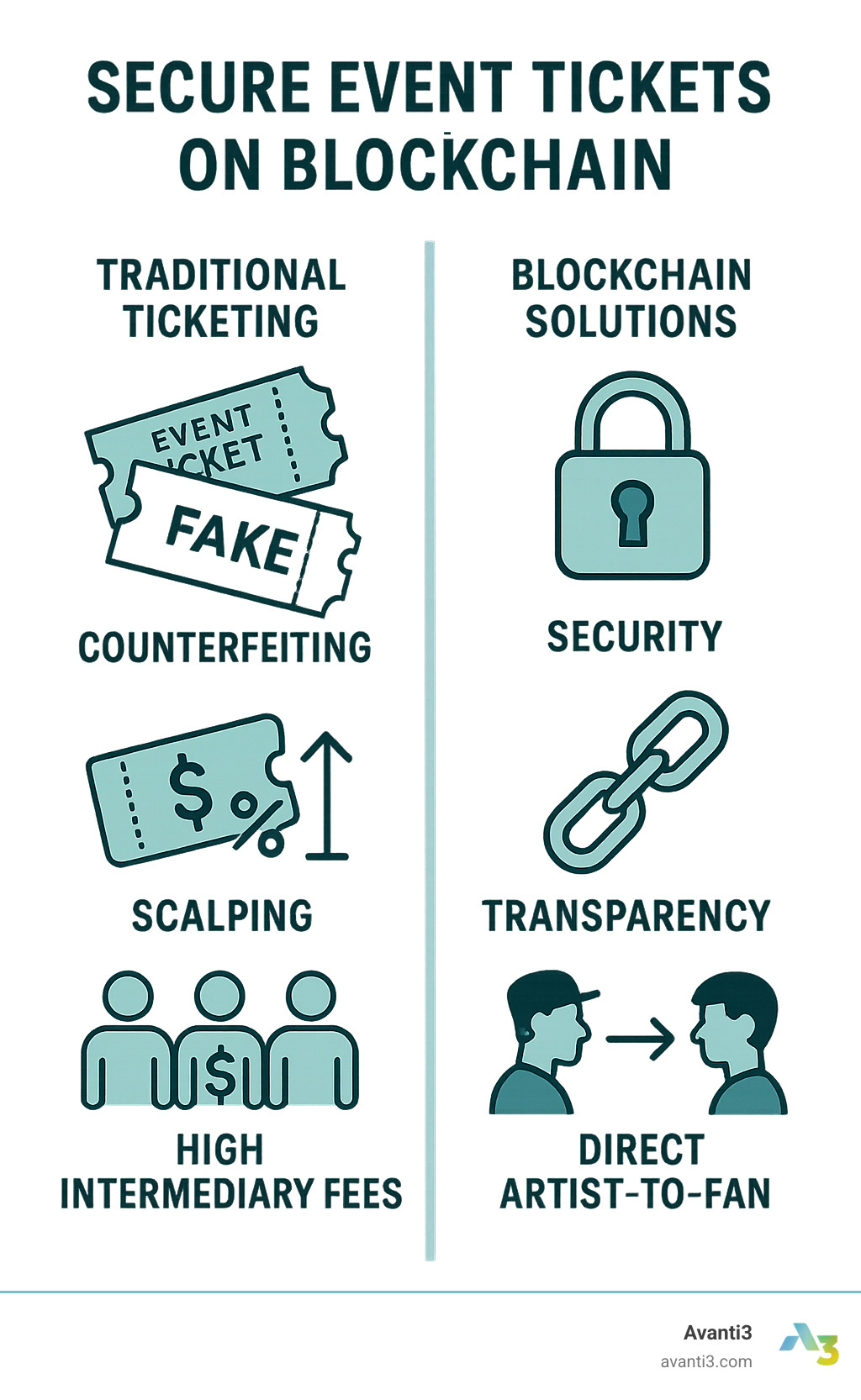
Secure event tickets on a blockchain solve the three biggest problems plaguing the event industry today:
- Counterfeit tickets – Blockchain creates unique, impossible-to-duplicate digital assets
- Ticket scalping – Smart contracts can enforce price caps and resale rules automatically
- Fraud and lack of transparency – All transactions are recorded on an immutable public ledger
In an era where digital solutions are increasingly becoming the norm, the event ticketing industry still grapples with several persistent issues. Counterfeit tickets, ticket scalping, and lack of transparency are some of the key problems that plague traditional ticketing systems.
The numbers tell a stark story. The 2019 UEFA Super Cup used blockchain technology to distribute over 80% of its tickets, while other platforms have successfully sold hundreds of thousands of tickets for major events, demonstrating that blockchain-based solutions aren’t just theoretical – they’re already working in the real world.
Traditional paper-based and centralized digital tickets create multiple vulnerabilities. Fans face the constant risk of purchasing invalid tickets or paying inflated prices from scalpers. Event organizers lose revenue to unauthorized resales and struggle with fraud prevention. The entire ecosystem suffers from a lack of transparency that makes it difficult to track ticket ownership or verify authenticity.
Blockchain technology offers a fundamental solution by creating tickets as unique digital assets that cannot be counterfeited, duplicated, or sold without proper authorization. Smart contracts automate the entire ticketing lifecycle, from initial sale to final validation, while maintaining complete transparency for all parties involved.
I’m Samir ElKamouny AV, and I’ve helped countless businesses leverage innovative technologies to transform their operations and open up new revenue streams. Through my experience working with cutting-edge solutions, I’ve seen how implementing systems to secure event tickets on a blockchain can revolutionize fan engagement while eliminating the fraud and inefficiencies that plague traditional ticketing.
The Problem with Traditional Tickets: Why We Need a Change
If you’ve ever been to a major concert or sporting event, you’ve probably experienced the frustration firsthand. Maybe you’ve paid triple the face value to a scalper, or worse yet, finded your “legitimate” ticket was fake when you reached the venue gates. These aren’t isolated incidents – they’re symptoms of a broken system that’s been limping along for decades.
Traditional ticketing creates a perfect storm of problems that hurt everyone involved. Event organizers lose millions in revenue to unauthorized resales, while fans get stuck with inflated prices and no guarantee their tickets are real. The current system is essentially built on trust, but there’s very little reason to trust it.
Let’s start with the elephant in the room: counterfeit tickets. Creating fake tickets has become surprisingly easy with modern printing technology. Fraudsters can replicate barcodes, holograms, and even official-looking designs that fool both fans and sometimes even venue staff. The result? Heartbroken fans who’ve spent their hard-earned money on worthless pieces of paper.
Then there’s the scalping problem, which has evolved far beyond the stereotypical guy outside the stadium. Today’s scalpers use sophisticated bots that can purchase hundreds of tickets within seconds of release. These automated systems create artificial scarcity, driving up prices in secondary markets where organizers have zero control. The need to secure event tickets on a blockchain becomes clear when you realize how powerless current systems are against these tactics.
The opacity of secondary markets makes everything worse. When tickets change hands multiple times through unofficial channels, it becomes impossible to track ownership or verify authenticity. Event organizers can’t implement fair pricing policies, and fans never know if they’re dealing with legitimate resellers or sophisticated scammers. As online ticket fraud continues to grow, these problems are only getting worse.
High intermediary fees add insult to injury. Traditional ticketing platforms often charge substantial service fees, processing fees, and “convenience” charges that can add 20-30% to the ticket price. These fees go to middlemen who provide little value while creating additional barriers between artists and their fans.
The Core Inefficiencies
The root of these problems lies in how traditional ticketing systems are built. Centralized systems create single points of failure that are vulnerable to cyberattacks, data breaches, and technical failures. When a major ticketing platform goes down, it can affect millions of users simultaneously.
These centralized databases also present significant data security risks. Personal information, payment details, and purchase histories are stored in massive databases that become attractive targets for hackers. When these systems are compromised, the damage can be extensive and long-lasting. Digital ticket security issues continue to plague the industry as thieves find new ways to exploit vulnerabilities.
Perhaps most frustrating is the lack of owner control that traditional systems create. Once an event organizer sells tickets through conventional channels, they lose almost all ability to manage how those tickets are resold. They can’t set maximum resale prices, ensure tickets go to real fans, or even track where their tickets end up.
This lack of control extends to verification processes, which remain inefficient and error-prone. Manual checking systems at venue entrances create bottlenecks and opportunities for human error. Staff members must rely on visual inspection and basic barcode scanning, which sophisticated counterfeiters have learned to circumvent.
The transparency problem affects everyone in the ecosystem. Organizers can’t get accurate data about their true fanbase, making it difficult to plan future events or create targeted marketing campaigns. Fans can’t verify ticket authenticity until they arrive at the venue, creating anxiety and uncertainty throughout the purchase process.
These inefficiencies aren’t just theoretical problems – they translate into real financial losses and damaged relationships between artists and fans. The traditional ticketing model has simply outlived its usefulness, and it’s time for a fundamental change in how we approach event access and fan engagement.
How Blockchain Fundamentally Secures Event Tickets
Think of blockchain as a digital ledger that’s shared across thousands of computers instead of sitting in one place. Every time someone buys, sells, or uses a ticket, that transaction gets recorded permanently across this network. It’s like having thousands of witnesses to every ticket transaction – making fraud nearly impossible.

The beauty of blockchain lies in its core principles: decentralization, immutability, and transparency. Unlike traditional systems where all your ticket data lives on one company’s server (which can be hacked or go down), blockchain spreads this information across a vast network. Once a ticket transaction is recorded, it becomes permanent – no one can go back and change it later.
This transparency means every ticket’s journey is visible and trackable. You can see when it was created, who owned it, and how it was transferred. This eliminates the need for multiple middlemen who usually charge fees and slow down the process.
But here’s where it gets really exciting: Non-Fungible Tokens (NFTs) transform tickets into unique digital assets. Think of an NFT ticket like a digital fingerprint – each one is completely unique and impossible to duplicate. Unlike a regular digital ticket that can be copied with a simple screenshot, an NFT ticket has a unique digital identity that proves its authenticity and ownership.
This is exactly what makes blockchain so powerful for event security. When you secure event tickets on a blockchain, you’re creating digital assets that simply cannot be counterfeited. At Avanti3, we leverage these capabilities to create ticketing solutions that finally solve the industry’s biggest problems.
The Role of Smart Contracts in Automation and Security
Smart contracts are like digital vending machines with built-in rules. They’re self-executing programs that automatically handle ticket transactions based on predetermined conditions. No human intervention needed – the code does exactly what it’s programmed to do, every single time.
Imagine buying a ticket where the “contract” automatically handles everything: issuing your ticket, managing any resales, and even processing refunds if the event gets cancelled. That’s the power of smart contracts in action.
Smart contracts automate the entire ticket lifecycle with remarkable precision. When an event organizer creates tickets, the smart contract mints them as unique NFTs on the blockchain, ensuring each ticket is one-of-a-kind from the moment it’s created. The secure transfer protocols built into these contracts make sure that when tickets change hands, the ownership transfer is properly recorded and verified.
One of the most exciting features is how smart contracts combat scalping through automated resale rules. Organizers can program price caps directly into the contract, preventing tickets from being resold above a certain amount. They can also set up royalty systems where a percentage of any resale goes back to the artist or organizer – creating ongoing revenue streams and fairer secondary markets.
At the event itself, automated redemption and validation happens instantly. The smart contract verifies ticket authenticity and ownership in real-time, then marks the ticket as used to prevent duplicate entries. If an event gets cancelled, the contract can automatically trigger refunds to all ticket holders without any manual processing – turning what’s usually a nightmare scenario into a smooth, transparent process.
This automation doesn’t just improve security – it creates a more efficient and trustworthy ecosystem for everyone involved. Fans get authentic tickets, artists maintain control over their sales, and organizers can focus on creating amazing experiences instead of fighting fraud.
Step-by-Step: Building Your System to Secure Event Tickets on a Blockchain
Building a blockchain ticketing system might feel overwhelming at first, but it’s really just a series of well-planned steps. Think of it like building a house – you need a solid foundation, strong walls, and a welcoming front door. Let’s walk through how to create your own system to secure event tickets on a blockchain.
Step 1: Choosing the Right Technology Stack
The foundation of your blockchain ticketing system starts with picking the right technology. This is like choosing whether to build your house on concrete or wood – each option has its strengths.
Blockchain platforms are your starting point. Ethereum offers robust smart contract capabilities that many developers love, while other platforms focus on being more energy-efficient or faster. The key is finding something that’s both scalable and won’t break the bank with transaction fees.
Gas fees are essentially the cost of doing business on the blockchain. Nobody wants to pay $50 in fees for a $20 concert ticket! Modern solutions have gotten much better at keeping these costs reasonable, often bundling them invisibly into the ticket price.
Smart contract languages like Solidity power the logic behind your tickets. Development tools such as Truffle and Web3.js make the coding process smoother, while digital wallets give users a simple way to store and manage their tickets.
The goal is creating user-friendly integrations that work seamlessly behind the scenes. Most fans shouldn’t even realize they’re using blockchain technology – it should just work. Our team at Avanti3 stays current with all the latest developments, sharing Avanti3 Technology Insights to help you make the smartest choices for your specific needs.
Step 2: Designing the Smart Contract for Secure Event Tickets on a Blockchain
Now comes the fun part – designing the brain of your ticketing system. Your smart contract is like the rulebook that governs everything about your tickets.

Ticket properties define what information each NFT ticket contains. This includes obvious details like the event name, date, and seat number, but also ownership data that tracks who currently holds the ticket. The transfer logic ensures tickets can only be moved by their rightful owners.
Here’s where it gets really interesting – resale parameters let you build fairness right into the system. Want to cap resale prices at 110% of face value? Write it into the contract. Want to ensure artists get a cut of every resale? That’s automatic too through royalty splits.
Anti-scalping mechanisms are your secret weapon against bots and bulk buyers. You can create allowlists for initial sales, limit how many tickets one person can buy, or even add time delays before transfers are allowed. It’s like having a bouncer built into every ticket.
At Avanti3, we specialize in crafting these custom solutions through our Avanti3 Enterprise Blockchain Frameworks. Every contract is designed to improve your Digital Fan Engagement while protecting both organizers and fans.
Step 3: Creating a Seamless User and Organizer Experience
The most brilliant blockchain system in the world is useless if people can’t figure out how to use it. This step is all about making the complex simple and the technical invisible.

User-friendly wallet integration is crucial. Most fans shouldn’t need to understand cryptocurrency or blockchain technology. They should be able to buy tickets with their credit card just like always, while the app handles all the technical stuff in the background.
The simple purchasing flow guides users through buying tickets without any confusing jargon. When they’re done, they have a beautiful digital ticket in their phone that works just like any other mobile ticket – except it’s infinitely more secure.
For organizers, the organizer dashboard becomes mission control. Real-time sales data shows exactly how tickets are selling, while attendee analytics reveal insights about your audience that were never possible before. You can see not just who bought tickets, but how they’re being transferred and used.
Ticket validation at entry happens through dynamic QR codes that change periodically. This makes screenshots worthless while keeping the scanning process fast and familiar for venue staff. It’s security that doesn’t slow anyone down.
This focus on seamless experiences drives everything we do at Avanti3, especially in our Community Loyalty Programs where user adoption depends entirely on making complex technology feel simple and rewarding.
Beyond Security: The Future of the Events Ecosystem
The impact of blockchain extends far beyond just securing tickets, creating a more integrated and engaging event environment. When you start thinking about how to secure event tickets on a blockchain, you’re really opening the door to a completely reimagined event experience that touches every aspect of how fans interact with their favorite artists and venues.
Think of blockchain ticketing as the foundation of a much larger digital ecosystem. Once you have secure, programmable tickets, you can build experiences that were simply impossible before. Your ticket becomes more than just entry to an event – it becomes a digital passport to a world of personalized experiences, exclusive content, and ongoing community engagement.
Integrating with Emerging Technologies
The real magic happens when blockchain ticketing teams up with other cutting-edge technologies. Artificial Intelligence can work alongside your blockchain system to spot suspicious buying patterns before they become problems. Instead of finding fraud after the fact, AI can flag unusual activity – like hundreds of tickets being purchased from the same IP address – in real time.
Predictive fraud analytics powered by AI can learn from past events to identify potential scalpers or fraudsters before they strike. This creates a protective shield around your event that gets smarter with each transaction.
The Internet of Things opens up even more possibilities. Imagine walking up to a venue where your blockchain ticket automatically communicates with smart sensors, granting you seamless access without fumbling for your phone. IoT sensors can track crowd density and send personalized messages to your phone, guiding you to shorter lines or less crowded areas.
Our work on Augmented Reality Concerts shows how these technologies can create truly immersive experiences. Picture pointing your phone at the stage and seeing exclusive AR content that only ticket holders can access. With NFT Engagement Tools, your blockchain ticket can open up digital collectibles, backstage footage, or even virtual meet-and-greets that continue long after the event ends.
Fostering a More Transparent and Trustworthy Ecosystem
Blockchain’s transparency can transform every aspect of event management, not just ticketing. Vendor contracts stored on the blockchain ensure that everyone – from sound engineers to catering companies – operates under clear, unchangeable agreements. When payments are automated through smart contracts, there’s no more waiting weeks for settlements or disputes over contract terms.
This level of transparency builds trust throughout the entire event ecosystem. Attendees know their data is secure, vendors know they’ll be paid fairly, and organizers can focus on creating amazing experiences instead of managing disputes.
Secure data management becomes natural when you’re already using blockchain infrastructure. Personal information can be stored privately while still allowing for necessary verification. This means you can comply with privacy regulations while still providing personalized experiences for your attendees.
Even sustainable event practices benefit from blockchain’s transparency. You can track the carbon footprint of your event, verify that merchandise comes from ethical sources, and even allow attendees to purchase carbon offsets directly through their blockchain wallets. Our expertise in Blockchain Art Authentication demonstrates how this technology can verify the authenticity and provenance of everything from concert merchandise to limited-edition collectibles.
The future of events isn’t just about better security – it’s about creating trustworthy, engaging experiences that continue long after the last song is played.
Frequently Asked Questions about Blockchain Ticketing
Let’s address the most common concerns people have when they first hear about blockchain ticketing. These questions come up in almost every conversation I have with event organizers and fans alike.
How does this system prevent someone from just taking a screenshot of my NFT ticket?
This is probably the most frequent question I get, and it’s a great one! The answer lies in how secure event tickets on a blockchain actually work behind the scenes.
Unlike traditional digital tickets that are just static images, blockchain tickets use dynamic QR codes that change periodically and are directly linked to your unique digital wallet. Think of it like having a password that automatically updates every few minutes – a screenshot would capture an old, expired version.
When you arrive at the event, the scanning system doesn’t just look at the pretty ticket design. It verifies real-time ownership on the blockchain, checking that you actually own that specific NFT ticket at that exact moment. A screenshot can’t prove ownership because it’s not connected to the blockchain network.
This real-time verification also prevents multiple copies of a ticket from being used, even if someone somehow managed to duplicate the visual appearance.
Are blockchain tickets more expensive for fans due to “gas fees”?
I understand why this worries people – nobody wants to pay extra fees just to use new technology! The good news is that modern blockchain ticketing solutions are designed to minimize transaction costs.
Most platforms bundle any minimal fees directly into the ticket price, so they’re completely unnoticeable to you as a user. It’s like how traditional ticketing platforms already include their processing fees in the final price you see.
Many platforms also use Layer 2 solutions or specific blockchain architectures that have significantly lower fees compared to older, more congested networks. The goal is always to make the total cost comparable to, or even less than, traditional ticketing fees when you factor in the reduced fraud and elimination of multiple intermediaries.
Do I need to be a crypto expert to buy or use a blockchain ticket?
Absolutely not! This is one of the biggest misconceptions about blockchain ticketing, and I’m passionate about clearing it up.
Modern blockchain ticketing apps are designed to be as simple as any other mobile app you already use. The complex technology operates entirely in the background, just like how you don’t need to understand internet protocols to browse websites.
You can often purchase tickets with a regular credit card, with the platform seamlessly managing the crypto wallet creation for you. The blockchain magic happens behind the scenes while you enjoy a familiar, straightforward buying experience.
At Avanti3, we believe that user experience should always be paramount. The benefits of blockchain – security, transparency, and fair pricing – should be accessible to everyone, regardless of their technical expertise. That’s why we focus on creating interfaces that feel natural and intuitive, letting the technology improve your experience without getting in the way.
Conclusion: A New Era of Trust and Engagement for Events
We’re standing at the threshold of a change in how events work. The days of worrying about fake tickets, getting ripped off by scalpers, or wondering if your ticket is even real are quickly becoming a thing of the past.
Blockchain technology isn’t just fixing the broken parts of traditional ticketing – it’s completely reimagining what’s possible. When you transform tickets into secure, programmable digital assets, something magical happens. Event organizers suddenly have unprecedented control over their events, while fans get access to experiences that were never possible before.
Think about it: tickets that can’t be counterfeited, resale prices that can’t be inflated beyond reasonable limits, and complete transparency in every transaction. This isn’t just about solving problems – it’s about creating opportunities we never knew existed.
The ripple effects go far beyond just security. When you secure event tickets on a blockchain, you’re opening the door to personalized fan experiences, loyalty programs that actually reward true supporters, and community-building tools that keep fans engaged long after the event ends. Artists and organizers can finally build direct relationships with their audiences, cutting out the middlemen who have profited from the chaos for too long.
This change creates a win-win-win scenario. Fans get fair prices and authentic experiences. Organizers gain control and new revenue streams. And the entire industry becomes more trustworthy and efficient.
At Avanti3, we’ve seen how these Web3 technologies can transform not just events, but entire industries. We’re passionate about helping creators and brands build these next-generation digital experiences that put control back where it belongs – with the artists and their fans.
The future of events is here, and it’s built on trust, transparency, and genuine engagement. Ready to be part of this change? Explore our Web3 Creator Platforms and find how you can build your own trusted and engaging event platform.